Geothermal power generation is moving towards a circular model of local production and consumption
Updated by Sogo Kato on November 17, 2025, 10:00 PM JST
Sougo KATO
Leaf Rain Co.
After working for a financial institution researching companies in the high-tech field, he worked as a supervisor at a landscape construction site before setting up his own business. He is interested in the materials industry, renewable energy, and wood utilization, and in recent years he has been writing about the forestry industry. With his experience of working in the forests in the past, he aims to write articles that explore the connection between the realities of the field and the industrial structure.
In the domestic geothermal power industry, small- to medium-scale, self-sustaining models have begun to emerge, which are unprecedented. Minami-Kayabe in Hokkaido and Okuhida in Gifu are symbolic of this trend. In Minami-Kayabe, Hokkaido, a 6,500 kW-class geothermal power plant was achieved using only a binary system, which had been considered a byproduct of large-scale steam power generation and difficult to operate independently, demonstrating a practical medium-scale model that does not rely on deep drilling. In Okuhida, Gifu Prefecture, a recycling-oriented approach that links shallow geothermal power with tourism, agriculture, and local heat supply, and in which energy supports local industries, is beginning to take off. All of these examples show that geothermal energy is changing from being a national policy-driven and big business-driven resource to a resource that can be self-sustaining while the community, forests, and industry coexist in harmony.
Since geothermal development in Japan has been limited to large-scale projects, the burden of cost, risk, and regional coordination has been rather heavy, making it difficult to spread the use of geothermal energy. As a result, even though the country ranks third in the world in terms of resources, only 0.3% of the country's electricity is generated. The lack of options for distributed deployment as small- and medium-scale power plants was another factor in the stagnation of diffusion. However, the emergence of a new self-sustaining model indicates that geothermal power is being transformed from a "development that cuts down forests" to a "resource that circulates through forests and communities," opening up new possibilities for forest utilization.
Conventional geothermal projects are mainly large-scale projects involving deep drilling in the 2,000 to 3,000 meter level below ground, and the amount of resources could not be determined until drilling was done. Many of the promising areas are located in national parks or hot spring areas, and adjustments over the Natural Parks Act and conservation of hot spring resources are often protracted. The social acceptability of the project has been low, as evidenced by the opposition to the project in Kusatsu Town in 2008 due to concerns about the depletion of hot spring resources. In addition, the cost of construction and maintenance of the power grid was a heavy burden, and profitability was unstable prior to the FIT (Feed-in Tariff) system.
On the other hand, drilling and heat exchange technologies have advanced in recent years through the application of oil and gas drilling technologies and policy support. Low-temperature binary and shallow geothermal systems, which do not require high-temperature steam and can reduce environmental impact, have entered the practical stage, and small-scale facilities of less than 1,000 kW can reduce initial investment to several hundred million yen, making it possible for local governments and local companies to introduce such systems. Distributed geothermal power," which uses waste hot spring water and shallow strata heat, is beginning to spread in combination with tourism, agriculture, forestry, and disaster prevention.
The Minami Kayabe geothermal power plant is operating a binary stand-alone power generation system that utilizes existing hot spring wells to achieve 6,500 kW-class output without using deep drilling or steam power generation. Conventionally, binaries have mainly been of the by-product type, which utilize surplus heat from large-scale geothermal power plants, and it has been considered difficult to increase the output of a stand-alone system. However, in Minami-Kayabe, the heat output is secured by bundling several hot spring wells with stable temperatures and gush rates, and by combining them with the latest high-efficiency binary machines, a medium-scale operation is now possible. This method of promoting local production for local consumption in cooperation with local companies and municipalities is attracting attention as a new business model that is profitable only with a binary system.

At the Nakao geothermal power plant in Okuhida Onsenkyo, the inns were cautious at the planning stage because they were concerned about the impact on hot spring resources, while the operator was unable to obtain sufficient hot water due to deep drilling that avoided the hot spring zone, and the project was about to be abandoned. The hot spring side was also concerned about the quantity of hot spring water due to aging wells, and as both sides shared their concerns, discussions progressed, and a system was established to return the hot water to the hot springs after power generation. This created a conflict of interest, with the inns gaining the practical benefit of securing a stable supply of hot spring water and a reduction in well maintenance costs, while the operator was also able to ensure stable operation. This is a symbolic case of converting a competition for resources into a circulation of local profits.
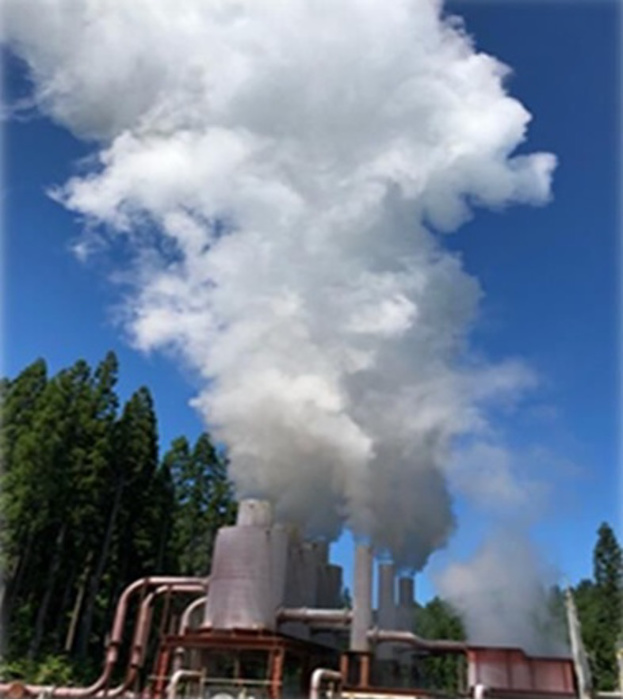
What both regions have in common is that they are working together with the local community to sustainably operate geothermal power, rather than leaving it to large corporations to run their energy businesses. Minami Kayabe has a "self-sustaining technological model" that can be achieved using only existing wells and binaries, while Okuhida has a "cooperative and symbiotic model" that can be developed while coexisting with tourism, agriculture, and hot springs. If these two directions spread, geothermal power will be able to be introduced in areas where it has been considered difficult to introduce geothermal power without resorting to large-scale development. The spread of geothermal power will be accelerated not by the scale of output, but by regional connectivity. The key to geothermal expansion lies in evolving from a national policy-driven approach to a dual axis of self-reliance and collaboration in response to local conditions.
Geothermal energy, along with biomass, is also being reevaluated as "energy produced in forested areas. The ability to utilize shallow heat and hot spring waste water that is widely distributed in mountainous areas is compatible with Japan, which has many forested and hot spring areas, and has the potential to become a new foundation for supporting regional energy security. Combined with forest resources, the use of geothermal energy is expected to be a realistic means of stabilizing regional energy supply and industrial structure in the future. (Sogo Kato, Forestry Writer, Leaf Rain Co.)