What happens if we leave forests unattended? From the perspective of "potential natural vegetation"
Updated by Kotaro Nagasawa on December 19, 2025, 9:14 PM JST
Kotaro NAGASAWA
(Platinum Initiative Network, Inc.
Born in Tokyo in 1958. Former Senior Managing Executive Officer of Mitsubishi Research Institute. During his tenure, he was mainly engaged in research and studies on infrastructure and social security. During his first few years with the company, he was involved in projects related to flood control, and learned from many experts on river systems at the time to think about the national land on a 100- or 1,000-year scale. Currently, he is an auditor of Jumonji Gakuen Educational Corporation. He is also a part-time lecturer at Tokyo City University. Co-authored "Introduction to Infrastructure" (Nikkei BP, 2017), "New Strategies from the Common Domain" (Diamond, 2021), and "40 Years After the Return" (Heibonsha, 2023). D. (Engineering).
After reading the previous work, "The Path of the Cedar" (by Tomitaro Toyama), I realized that while the cedar (Cedrus deodara, family Cupressaceae) is unique to Japan, it isn't considered part of the potential natural vegetation. Potential natural vegetation refers to the plant community that a forest would evolve into as its climax forest (the final stage of forest development) after human intervention ceases. In Japan's case, the potential natural vegetation is considered to be evergreen broadleaf forests (chestnut and oak types) in the southwest, and beech forests and Japanese oak forests in the northeast. This means that without human intervention, over an extremely long period, the cedar would disappear. I believe contemplating what happens when forests are left untouched is crucial for understanding our relationship with nature.
The term "potential natural vegetation" was brought back to Japan from Germany by the late Dr. Akira Miyawaki and widely popularized by him. This prompted me to revisit Dr. Miyawaki's writings. I chose Plants and Humans: The Balance of the Biosphere (NHK Books, 1970) because the author himself stated, "Everything I am is contained in that book." Its content is profound, and I spent considerable time reading it through.
This is undoubtedly a masterpiece. It contains profoundly thought-provoking descriptions across many subjects. Summarizing it is difficult. Below, I have compiled the sections that particularly caught my interest. Over fifty years have passed since its publication, and from a modern perspective, there may be points that warrant correction. I would be grateful if you could overlook these aspects as well.
The space where living things exist is called the biosphere. It is extremely narrow. In water, plants can perform photosynthesis only down to a depth of 300 meters. Animals reach depths of 10 kilometers. In the air, birds fly at most 400 meters above the ground, while airborne microorganisms and pollen reach 10 kilometers. In other words, broadly speaking, life exists only within a very limited space—±10 kilometers from the Earth's surface—a space as confined for the planet as an eggshell.
Plants are the protagonists of the biosphere. This is because they account for 90% of the total volume of all living organisms. Animals make up only 10%, and most of those are fish. One estimate suggests that if all humans on Earth were packed into a cube without gaps, a side length of 1 kilometer would suffice. (Note: This book was published in 1970. The world population at that time was 3.7 billion.)
The biosphere is a community. Dynamic equilibrium is maintained everywhere, including predator-prey relationships like snakes and frogs. Humans and plants alike exist within its structure.

Plants, the protagonists of the biosphere, cannot freely choose where to live. They are first constrained by climate, weather, soil, and other factors. Furthermore, there exists an internal order among plants. If plant B is relatively stronger in the physiologically optimal location for plant A, plant A must yield that space. Consequently, plant A ends up living in an ecologically optimal location rather than a physiologically optimal one.
Quoting from this book: "Plants, lacking mobility [...] are displaced from their species' optimal habitats more than humans, yet they endure, somehow sprouting, growing, and blooming." "A plant community is the prototype of a biological society where individual plants compete, endure, and coexist by partitioning their living space, maintaining a dynamic equilibrium both temporally and spatially." (Coexistence is crucial: Editor's note) Overly vigorous plants not only plunge their biological society into chaos but also degrade the environment, ultimately jeopardizing their own survival.
Plant communities, like individual organisms, emerge, flourish, decline, and are eventually replaced by other communities. This process is called succession. Succession is divided into three stages based on its developmental status: the pioneer stage (initial phase), the climax stage (most flourishing), and the regression stage (terminal phase). Furthermore, succession unaffected by human influence is called primary succession (natural succession), while succession involving human modification is called secondary succession (artificial succession).
"Plants and Humans" places particular emphasis on the succession of plant communities. "Annual weed communities, for instance, are replaced by other perennial herbaceous communities. Similarly, perennial herbaceous plant communities are replaced by shrub forests. Subsequently, the alternation between communities and their environment continues until the final community, balanced with the regional climatic conditions of the site, is reached—progressing through sun-loving tall-tree forests and shade-loving tall-tree forests."
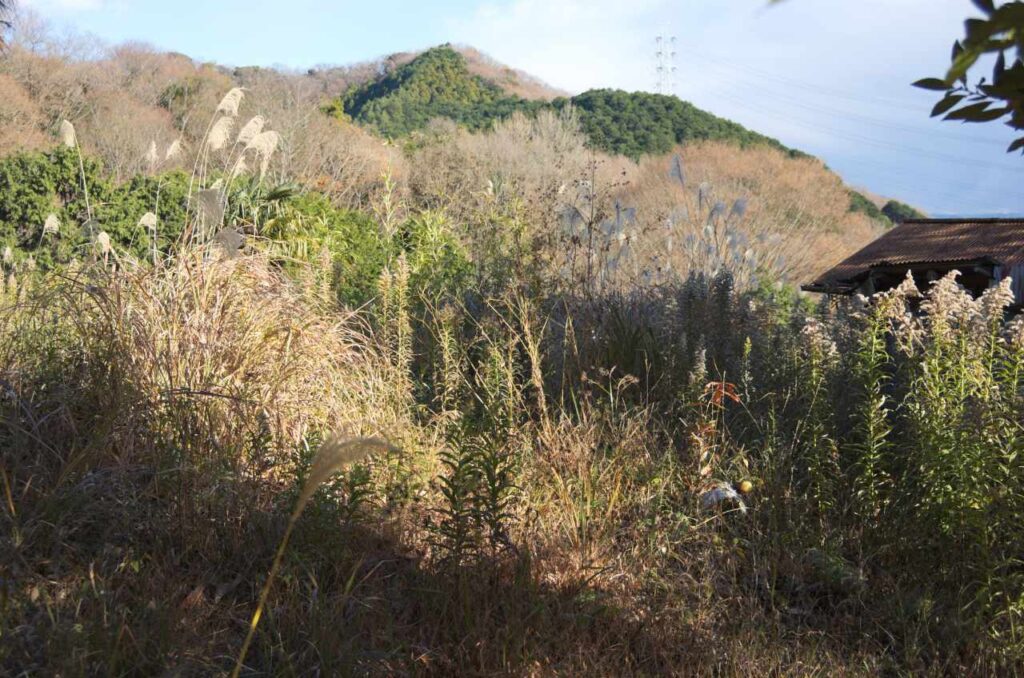
A more specific example can be given. In so-called abandoned farmland, weeds like Japanese knotweed (Eupatorium fortunei) proliferate to an unprecedented extent that year. However, the very next year, roadside weeds like Japanese mugwort (Artemisia princeps), Japanese knotweed (Polygonum cuspidatum), and Japanese fleabane (Cichorium intybus), which grow taller and were previously found along roadsides and vacant lots, replace the farmland weeds and become dominant. By the fourth or fifth year, it becomes a grassland dominated by perennial grasses like Japanese pampas grass (Susuki), Japanese silvergrass (Chigaya), and Japanese silvergrass (Todashiba). Subsequently, a mantled community of plants like Japanese spindle tree, Japanese spindle tree, and Japanese spindle tree covers the area. By the tenth to fifteenth year, it transitions into a mixed forest of Japanese white oak and Japanese chestnut. After eighty to one hundred years, it develops into the natural forest native to that land: along the coast west of the Kantō region, it becomes a forest of Japanese chestnut and Japanese chestnut, while inland it becomes an evergreen broadleaf forest of oak species.
Looking at history, the vegetation zones where humanity has sustainably built and maintained civilizations across the vast Earth are extremely limited. Representative examples include the evergreen broadleaf forests of Japan and China, the hardwood forests of southern Europe, and the deciduous broadleaf forests along both coasts of the North Atlantic.
By around the 5th century AD, the original hardwood forests (evergreen oaks, etc.) along the Mediterranean coast had been completely cleared. The deciduous broadleaf forests (European beech, European oak, etc.) that covered Central Europe were destroyed by the early modern period. The main causes were controlled burning and grazing. In recent times, the widespread use of nitrogen-based chemical fertilizers has caused nitrogen-loving grasses to proliferate vigorously, crowding out other grasses and disrupting the original symbiotic relationships. Europe is passionate about environmental issues because the breakdown of modern civilization began manifesting there first.
The destruction of North American nature began in earnest around the mid-18th century. However, learning from Europe's disastrous experience, it avoided repeating those mistakes. Pioneers like Emerson (R.W. Emerson, 1803-1882) emerged, advocating for the coexistence of humans and nature. In 1872, the world's first national park (Yellowstone) was designated.
The Japanese people were nurtured by the evergreen broadleaf forests (camphor trees, oaks, etc., also known as evergreen broadleaf forests). This is especially true in western Japan. The evergreen broadleaf forest belt extends from southeastern Asia, centered on China, to Japan. China destroyed its forests as the price for four thousand years of civilization. While deforestation also progressed in Japan, religious taboos preserved the original form in the forests surrounding shrines and temples. These are the sacred forests.
Forests are always surrounded by buffer vegetation zones and do not directly border rocky areas, rivers, lakes, or bare ground. Buffer vegetation zones can be broadly divided into "mantle communities" consisting of vines and shrubs, and "sleeve communities" consisting of perennial herbaceous plants growing on the outer edge.
Buffer vegetation zones such as mantles and sode communities, when destroyed by development projects, suddenly allow light and wind into the forest interior, drying out the forest floor and damaging the entire forest. At the same time, there exists a tension between the forest and these mantle and sode communities. In Southeast Asian jungles, some areas have been formed by the felling of tall trees creating open spaces, where vine plants proliferate and thrive.
Given the above, it becomes clear that plant communities possess their own unique physiology and are constantly moving slowly toward their final stage. However, over the past few millennia, the "noise" of humanity has been manipulating these natural movements in various ways. = To be continued (Kōtarō Nagasawa, Director, Platinum Concept Network)
Reference Links
NHK Books No. 109 Plants and Humans: The Balance of the Biological Society | NHK Publishing