The cycle of life in forests and oceans: The power of reading water as seen in the story of migrating trout
Updated by Hitoshi Kadowaki on January 21, 2026, 9:32 AM JST
Hitoshi Kadowaki
Author, Faculty Member at Tokyo University of Science / After working for an international aid journal based on the principles of the United Nations Commission on Sustainable Development, he moved to France. He completed the Advanced Research Program in Human Ecology at the University of Paris 8 (Vincennes-Saint-Denis) with a comparative study of forest ecosystems and forestry between Japan and France.After returning to Japan, he authored numerous works on forests and the global environment. He is particularly known for his book France: Land of Broadleaf Trees, which first introduced French forests and forestry to Japan, and his translation Tree Thieves, which reported on the current state of illegal logging in North America's Sequoia primeval forests.Other works include The World from an Ecocultural Perspective (Minerva Shobo), and translations include In Search of the Origin of Fragrance (Tsukiji Shokan), The Memory of Rivers as Told by Trout (Tsukiji Shokan), A History of Ecology (Ryokufu Publishing), and A History of the Environment (Misuzu Shobo, co-translated).
In December 2025, I translated a volume of nature writing. The trout tell the story of the river: the connection between water creatures, forests, and humankind. The author of this book, which describes the reality of the aquatic environment and is filled with fascinating scientific episodes, is Bill Francois, a popular French author and biophysicist. In the following, we will look at the fascinating story and the life cycle of the earth, starting with the forest.
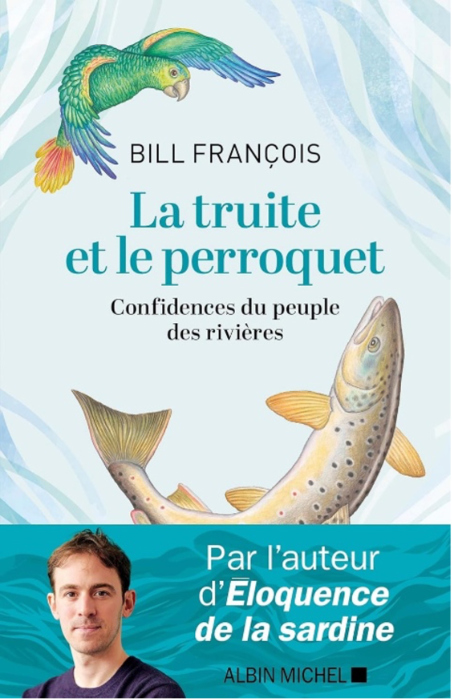

Forests store rainwater and create rivers. Nutrients from the humus are carried to the rivers, which nurture plankton-rich fisheries in the sea. This is well known. Conversely, however, the history of how rivers have cultivated forest lands is not so well known.
It began about 21,000 years ago, at the height of the last glacial period.
Salmon, trout, and other migratory fish move up the river and return to their birthplace to spawn. Birds and animals that had been living in the bush forests and tundra flocked to the rivers to fish for the abundant fish eggs, dropping off their excrement and leftovers to make the soil fertile. Thus a full-fledged forest was born on land that had previously been covered with pioneer plants such as willow and alder.
Nutrients from the sea were carried through the river, a background that is said to have nurtured the forest.
The earth, connected by this so-called "nutrient cycle," is the setting for this book. Evening Rise," in which tens of thousands of mayflies dance in unison, the mendicant eggs of the European bitterling, dolphins swimming through the flooded forest, and countless other characters, or rather animals, color the ecosystem and enhance the story of the waterfront that lies between the forest and humankind.
The two trout, the protagonists of the film, adapt to saltwater after their juvenile life in the Seine River, and then leave the Strait of Dover for the Atlantic Ocean. Not all trout migrate, and even fewer return from the open sea.
Meanwhile, the author himself is drawn to the villages of the Enawene Nawe, a small tribe left in the Amazon basin. He is drawn to the Enawene Nawe to scientifically investigate the legend of the "tapirage," which uses the poison of the hermit frog to dye the feathers of parrots with extreme coloration.
The story proceeds as an enjoyable read, with a dash of humor here and there. In the end, however, both the Seine and the Amazon share a common crisis: the lack of spawning grounds for the trout. There are no spawning grounds for the trout to return to.
The largest rivers were also dammed, lowering their water levels. Canals were built to facilitate ship navigation. (As more and more electricity was distributed, more and more dams and intakes were built. Migratory fish were endangered because their vital migration was interrupted. By 1900, only 0.01 percent of the salmon population that helped provide food for ancient Europe remained. Worse, their numbers have been reduced by three-quarters in the past 20 years. And the destruction continues. The destruction continues, in a surreptitious way, by turning all the small waterways, which are neither mapped nor legally protected, into dry land. The logging of riparian forests that used to protect the riverbanks has doubled in the past five years, compared to the past 10 years. (Chapter 11, "Reminiscence of an Empty Shell")
The upper reaches of the Xingu River (a tributary of the Amazon), which I visited with Carapallo, were not directly destroyed by the dams downstream. However, as in the case of the Enawene Nawe, there is a slow and steady progression of impacts. (The 20th century saw the industrialization of agriculture. Water was lost to the fields, streams were turned into drainage canals, and soils became overloaded with organic matter that suffocates marine life. Wetlands were destroyed at an unprecedented pace, with two-thirds of the remaining wetlands drying up in half a century. It was not until 1992 that this subsidized destruction finally came to an official end. (Chapter 10: Minister Catfish)
The loss of the upstream route means that part of the "rivers and fish nurture forests" action mentioned at the beginning of the book has also been compromised. In other words, the appeal of this book is not limited to waterside ecosystems. It also alerts us to the life cycles of the entire planet.
I wrote in my "Translator's Postscript" that such a reading of nature is persuasive only if the author has a certain "privilege. In the case of the Amazonian tribes, it is the quality of a shaman who has exceptional insight and foresight into all things in the forest. For Bill François, that quality was the special skill of "reading water.
What is "reading the water"? It is primarily a way of thinking and acting that correlates the movement of water currents with aquatic life. Originally taught by a fly fisherman, François applies this reading to the entire hydrosphere. On a scale somewhat reminiscent of the thermohaline cycle and teleconnection, Wernatzky's biogeochemical cycle, and Blocker's oceanic general circulation, François unravels and examines the various causal relationships that are actually occurring in the ecosystems around us.
On the other hand, since fish are the distant ancestors of mankind, the author tries to approach the senses of fish using the human senses as they are. He plunges the tip of his nose into the surface of the water and gazes into the murky water. At first glance, this may appear to be an impulsive performance, but it is based on theory and experience.
These cognitive abilities that involve physical sensations belong to the so-called "tacit knowledge" in that they are skills based on personal experience, intuition, and insight. From a different point of view, it is similar to scientific literacy and ecosophia.
What comes to mind further is the skills of forestry workers. When covering training in forestry techniques, one realizes that many of these skills are based on field experience and knowledge, such as safe felling, integration of the chainsaw with the body, mastery of grading, operation of hydraulic shovels, drying management, and so on. If we go further back to the traditional skills of woodcutters, the degree of tacit knowledge goes deeper and deeper, such as the use of a large saw, wood cutting and sumi-kake, and the breath of the two sawing techniques.
With all this knowledge at work, humankind has been able to read the water, read the forests, and by extension, the natural state of the global environment.
But on the other hand, there is also this situation.
As human beings go through generations, they forget their natural state. This phenomenon has a name. It is called "environmental amnesia," "environmental amnesia," and so on. Every generation thinks about the current state of the earth based on the environment they experienced in their childhood. For example, you may remember riding in the car on a summer evening and finding the windshield covered with insects. And now you notice that the bugs are gone. On the other hand, those born 10 or 20 years ago did not experience it. If they did not know it existed, they would not notice what they lost. Thus, memories are lost. (Chapter 12, "Caviar or Sturgeon")
This is also known as "migratory baseline syndrome. According to Daniel Pauly, who proposed it, we have placed our long-term degraded ecosystems at the baseline of our environment. In other words, it is not a memory impairment, but rather an ingrained assumption, a neglect or lack of imagination.
The film depicts an old fisherman who blurts out the size of a catch he caught in the past. The line "the old days were good" is a fixed place for his boast to settle down. But this is also "the right thing to do" in the sense that it actively keeps the richness of the water environment in the past in people's memories.
So how can we avoid environmental amnesia and attract as much environmental tacit knowledge as possible?
Often, forgetfulness and ignorance are the result of indifference or preconceived notions. Experiencing even a slight change in one's focus of interest can lead to a positive attitude and behavior.
For example, when we see a documentary film showing the love between a parent and its offspring, the needle of our liking for an animal such as a snake or a rat, which tends to cause feelings of dislike, can swing from a negative to a positive pole. This is thought to be because the affordances of individual animals are not fixed in the first place, but change depending on the psychological state of the viewer.
The human brain catches information not in the order of "knowledge => emotion => intention" but in the order of "emotion => intention => knowledge. This is something I once heard from a robotics researcher who develops mother machines for the manufacturing industry. He was not speaking as a general principle of brain science, but it makes a lot of sense. By capturing objects with the highest priority on emotion, the environment is not just a landscape, but for the first time, it becomes a "place where action is possible.
Utilizing this kind of interest, liking, and curiosity can reset the baseline of environmental memory and lead to conservation action. Environmental history and natural history have these goals, and many of the themes of nature content are also about reliving the nature that humanity originally knew.
François presents us with this way of relating to the environment through the act of "storytelling. The story begins with the "emotion" of two trout born on a spring evening, growing up and traveling to the sea together, and then gains the "knowledge" of the world's aquatic environment. Through this development, the story evokes the imagination of pristine nature and visualizes the life cycles of forests and oceans. Readers, inspired by the habit of "reading water," become the subjects of their own actions and confront the environment.
In an interview conducted shortly after the release of the French edition, François suggests it in plain language. I would like to quote it at the end of this article, together with a spillover story from the Senard Forest that I told at the end of the Japanese edition.
Science is first and foremost a story. Stories that surprise us, make us dream, and move us emotionally. I believe that people fall in love with what they know and what makes them dream. And we protect what we have come to love. (Interview on "France24" news program)
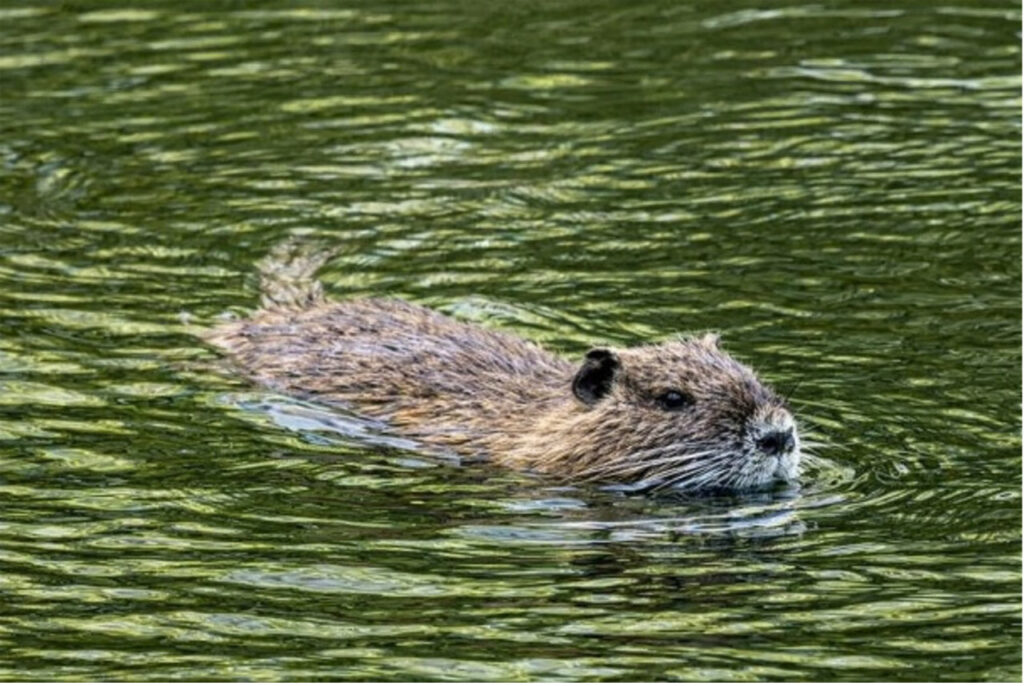
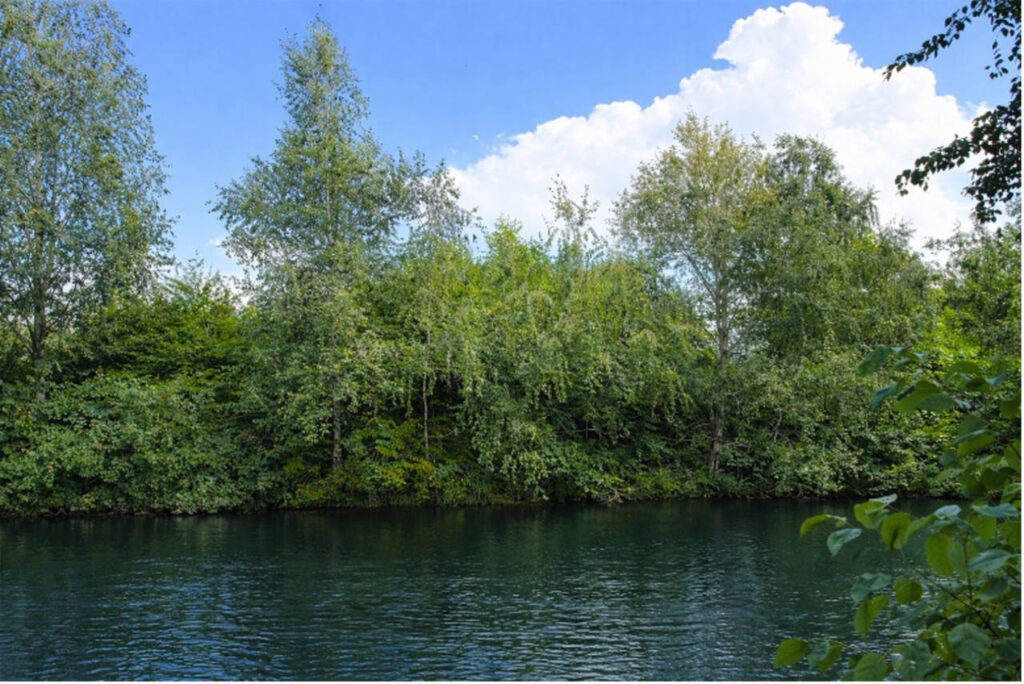
A nutria glides across the water in front of me. This rodent-like animal was once introduced from South America for its fur, but is now often treated as vermin. Like the sturgeon and the goraclewing in this book, it is a creature whose life and death have been controlled by human convenience.
There are those who say, "Lamenting over spilled water is not the answer. However, with effort and wisdom, even spilled water can be returned to the tray. What is required of us today is a restoration and creation effort that is rooted in the natural desire of human beings to "do our best to protect what we have come to know and love. (Translator's Afterword)
(Author, Tokyo University of Science faculty member Hitoshi Kadowaki)
Reference Links
Trout Speak, Memories of the River: The Links Between Riparian Creatures, Forests, and Mankind" (Tsukiji Shokan)