Updated by "Forest Circular Economy" Editorial Board on February 04, 2026, 9:15 AM JST
Editorial Board, Forest Circular Economy
Forestcircularity-editor
We aim to realize "Vision 2050: Japan Shines, Forest Circular Economy" promoted by the Platinum Forest Industry Initiative. We will disseminate ideas and initiatives to promote biomass chemistry, realize woody and lumbery communities, and encourage innovation in the forestry industry in order to fully utilize forest resources to decarbonize the economy, strengthen economic security, and create local communities.
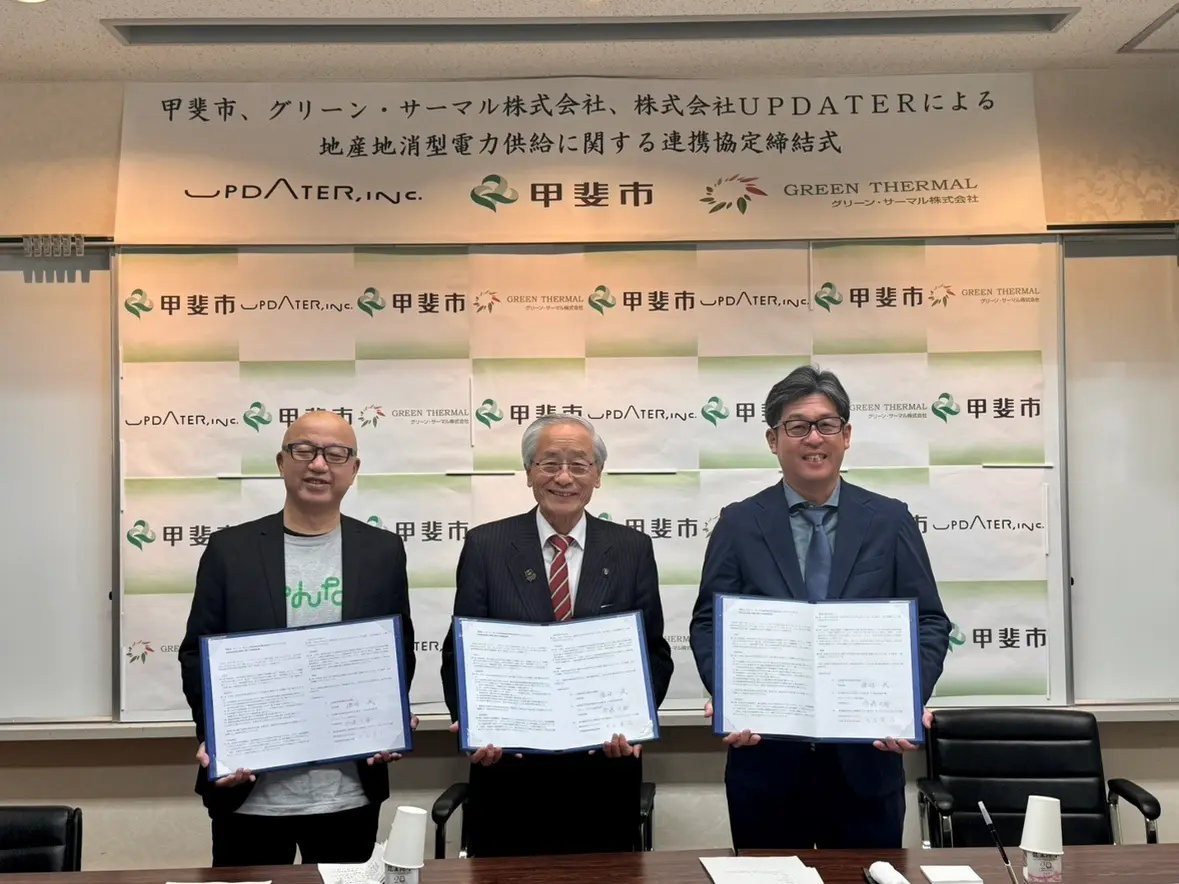
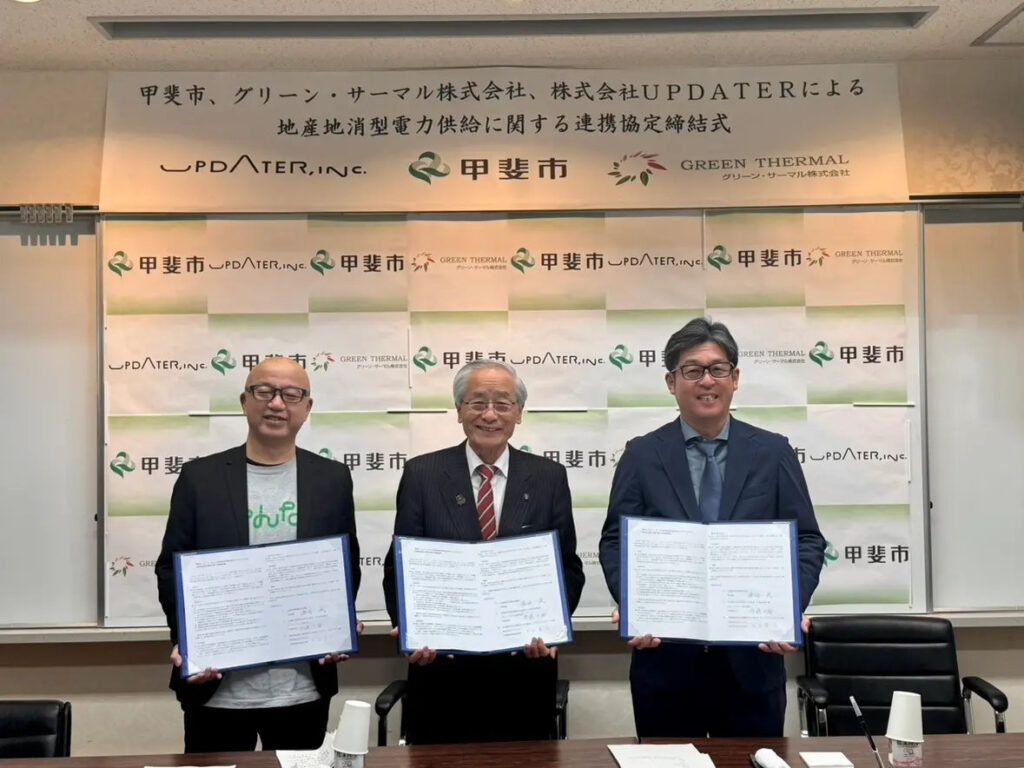
Kai City, Yamanashi Prefecture, will start supplying renewable energy generated from woody biomass power using unused wood and other resources in the city to 43 public facilities in the city in April. This initiative is based on the "Cooperative Agreement on the Supply of Locally Produced Electricity for Local Consumption" by Kai City, UPDATER, and Green Thermal. By promoting local production for local consumption of energy using local resources, the city aims to reduce CO2 emissions by approximately 2,500 tons per year and realize a sustainable decarbonized society.
A total of 43 public facilities, including Kai City's main government building, elementary and junior high schools, libraries, and nursery schools, will be covered by the project. Approximately 6 million kWh of electricity consumed annually at these facilities will be replaced with electricity derived from renewable energy sources generated at the Kai Futaba Power Plant located in the city. The power plant operates using approximately 80,000 tons of woody biomass fuel annually, including unused wood and lumber scraps.
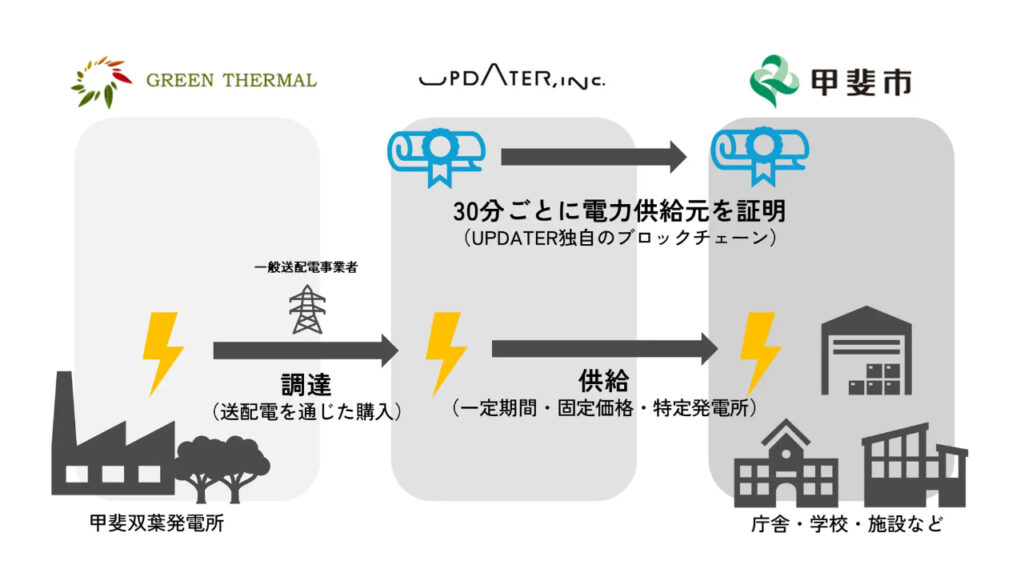
This system is supported by close collaboration between the local government and the private sector. Green Thermal, which is responsible for operating the power plant, will generate electricity using woody biomass fuel of local origin. The power is then procured by UPDATER, which uses proprietary blockchain technology to ensure transparency of the power source, and supplied to the city. In this way, energy generated from local resources is consumed at facilities in the city, which is expected not only to reduce environmental impact but also to create a regional cycle of economy through energy.
Kai City has been selected as a "Leading Decarbonization Region" by the Ministry of the Environment, and has set a goal of virtually zero CO2 emissions related to electricity in the consumer sector by FY2030. Through this agreement, Kai City intends to accelerate the realization of a zero-carbon city from multiple angles, not only by simply switching electricity, but also by conducting environmental education and maximizing the use of local resources.
In the future, the company plans to promote the spread of local renewable energy to businesses and residences in the city. The project will be closely watched as a pioneering model case for supporting local power generation in the community and linking it to the next generation while balancing the environment and the economy.
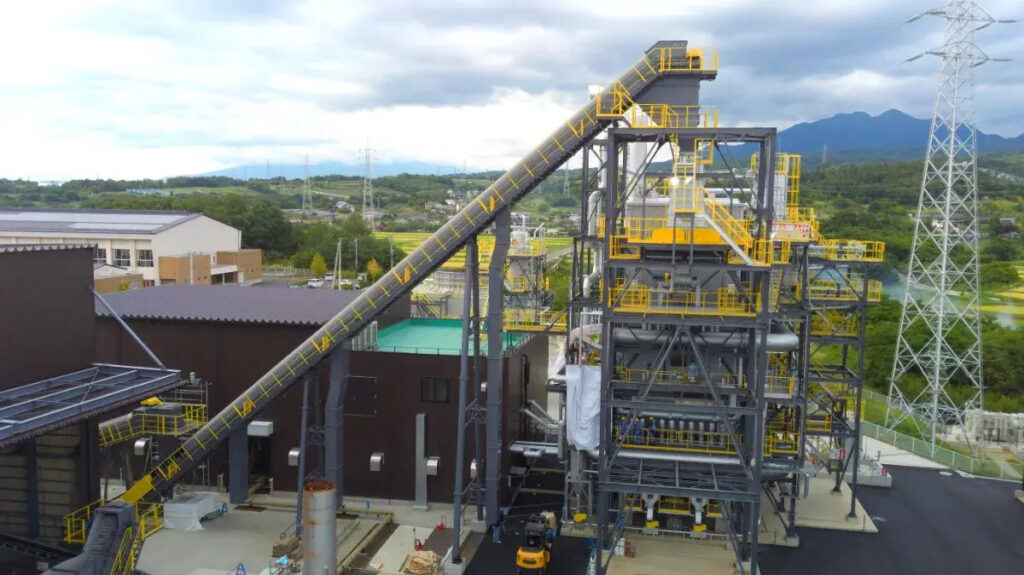
■Outline of supplied power plants
Power Plant Name: Kai Futaba Power Plant
Location: Kai City, Yamanashi Prefecture
Project Entity: DS Green Power Generation Kai LLC
Operator: Green Thermal Corporation (supervises and supports development, fuel procurement, etc.; subsidiary handles OM)
Power generation method: Woody biomass power generation
Power output: 6,950 kW (equivalent to approximately 13,000 ordinary households)
Annual operating days: more than 330 consecutive 24-hour days (periodic inspections of about 30 days)
Fuel consumption: approx. 80,000 tons per year (240 tons/day)
Fuel type: Unutilized woody biomass (e.g., thinned wood from forests), general woody biomass (e.g., lumber mill ends, driftwood from rivers, pruned branches)