Updated by "Forest Circular Economy" Editorial Board on April 15, 2026, 9:13 PM JST
Editorial Board, Forest Circular Economy
Forestcircularity-editor
We aim to realize "Vision 2050: Japan Shines, Forest Circular Economy" promoted by the Platinum Forest Industry Initiative. We will disseminate ideas and initiatives to promote biomass chemistry, realize woody and lumbery communities, and encourage innovation in the forestry industry in order to fully utilize forest resources to decarbonize the economy, strengthen economic security, and create local communities.
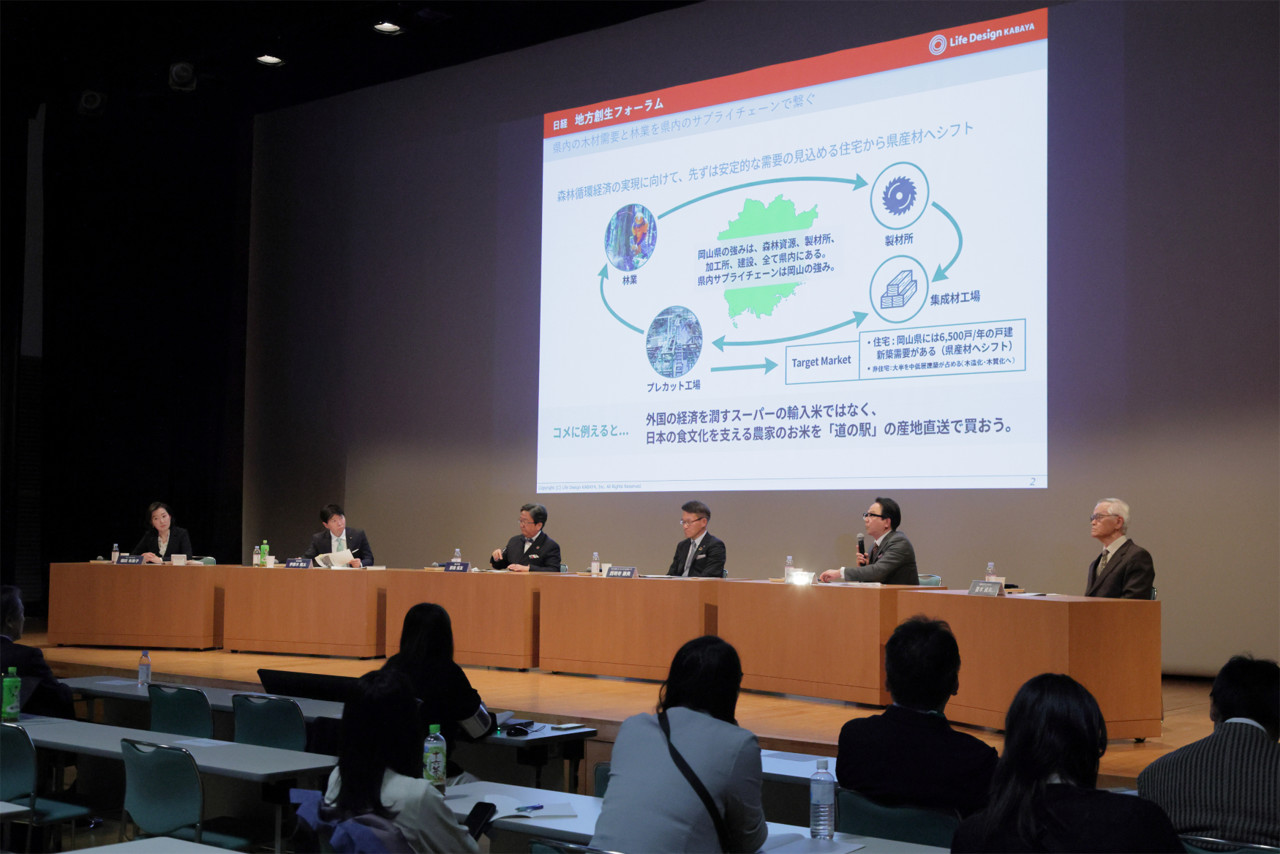
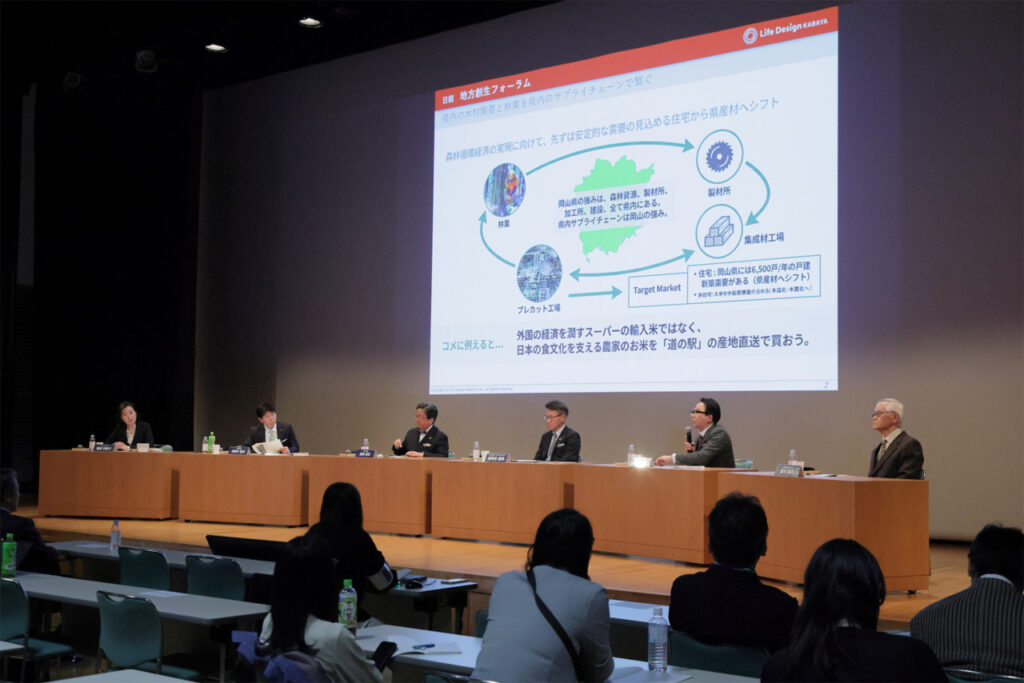
The Nikkei Forum on Regional Development "Creating Wooden Towns and Realizing a Circular Forest Economy" was held in Okayama City on March 30, Top executives from local governments, universities, regional financial institutions, and private companies gathered. Based on collaboration that transcends the boundaries of industry, government, academia, and money, there was a lively discussion on the social implementation of wooden town planning as an "Okayama model" for updating the forest industry and a new regional economy.
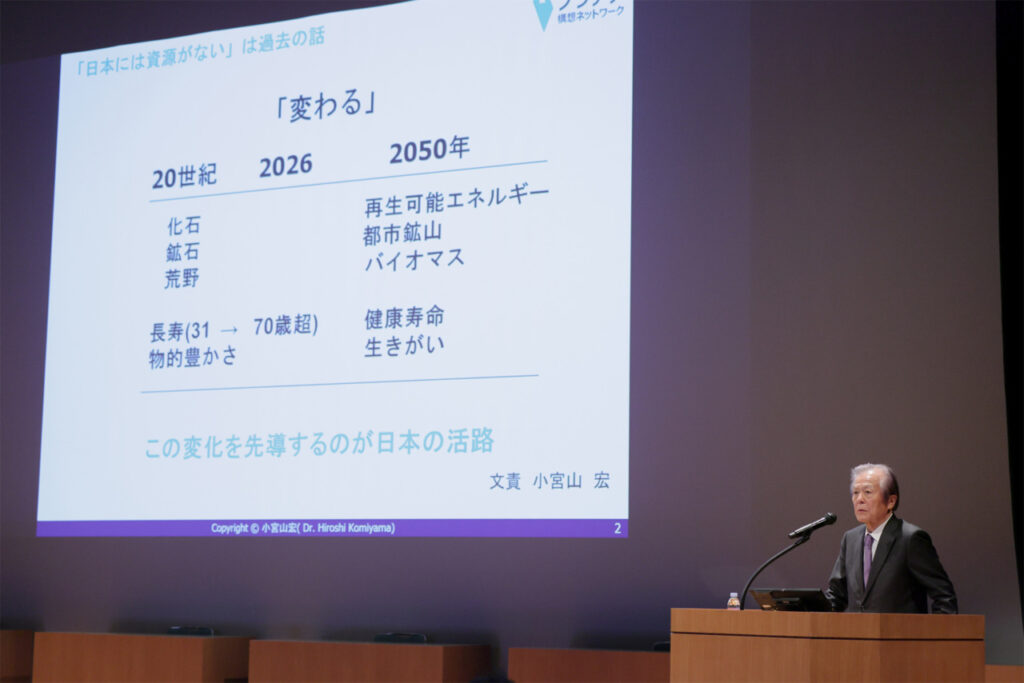
In his keynote speech, Hiroshi Komiyama, Chairman of the Platinum Network, said that Japan has the potential to break away from its dependence on fossil resources and become a "resource self-sufficient nation" that utilizes renewable energy, urban mines, and biomass.
The greatest significance of promoting wood-framed urban development is to create a huge demand for wood in urban areas and to drive the stagnant upstream forestry industry. In addition to the fact that technological developments have made it possible to build 10- and 20-story high-rise wooden buildings, Mr. Komiyama emphasized the potential of biomass chemistry using "woody biomass" as an alternative to petroleum resources, and outlined a concrete plan to triple Japan's current timber production and self-sufficiency by building 1,000 bases across the country to consolidate wood on a 10,000 hectare scale. He also presented a concrete plan to triple Japan's current timber production and achieve self-sufficiency.
He also introduced "investment by local residents" as a financial solution for maintaining the "common social capital" of forests. He pointed out that, with the huge amount of money flowing overseas due to the new NISA and other measures, it is essential for local residents and local governments to invest in "energy projects linked to domestic primary industries" and create a "catchment area for investment" that will return the money to the local community. The funds generated in this way will promote the monetization of these businesses, solve the problem of business succession in forestry and agriculture, and even serve as a source of funds for the mechanization of work through the introduction of AI and drone technology.
A longstanding bottleneck in the promotion of wooden town planning has been the problem of durability and strength of building joints. Sadao Hishiki, president of Dye-Q Technology, has proposed a solution to this problem: a unique "nano bonding technology" that unites materials.
Mr. Hishiki confessed his own original experience of starting his business at the age of 60 with "1 billion yen in debt. In a strength experiment conducted at Nihon University, he reported that the joints did not break even when subjected to severe vibration, and that the wood (base material) itself eventually broke.
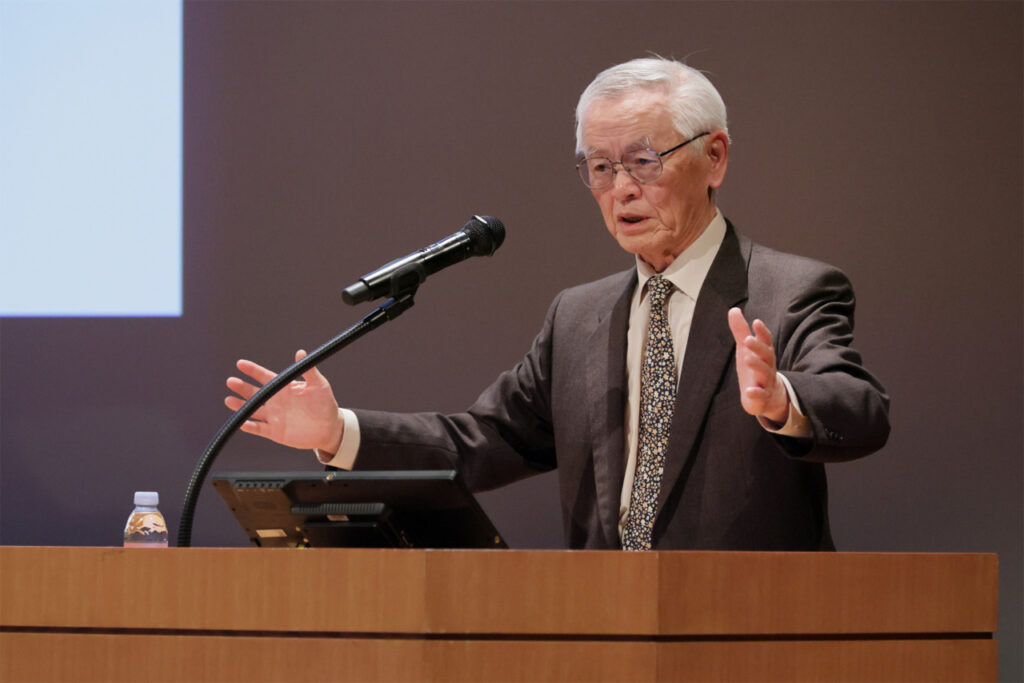
The possibility of "seismic reinforcement" through these strong joints has given Mr. Hishiki high hopes for even taller wooden buildings, saying, "I believe that skyscrapers can be built only with wood. He also said that the company has established a unique "wood part solution" technology that provides UV-cut, preservative-resistant, and waterproof effects while maintaining the inherent beauty of wood, and that it will contribute to the conversion to wood construction and the lengthening of the service life of all types of buildings.
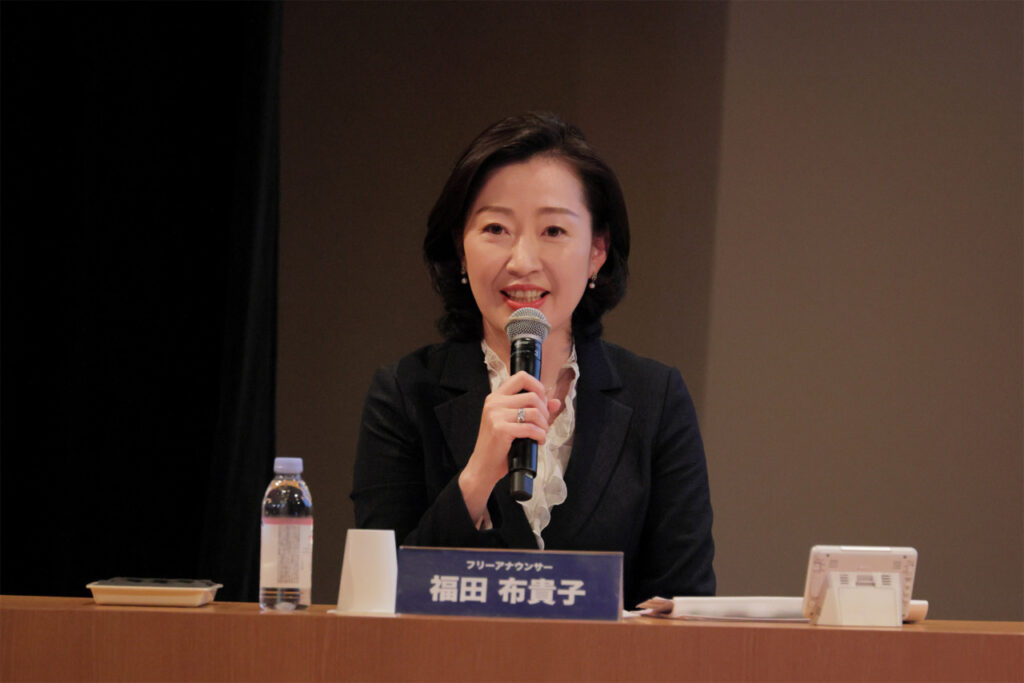
During the panel discussion, barriers to social implementation in the field were discussed.
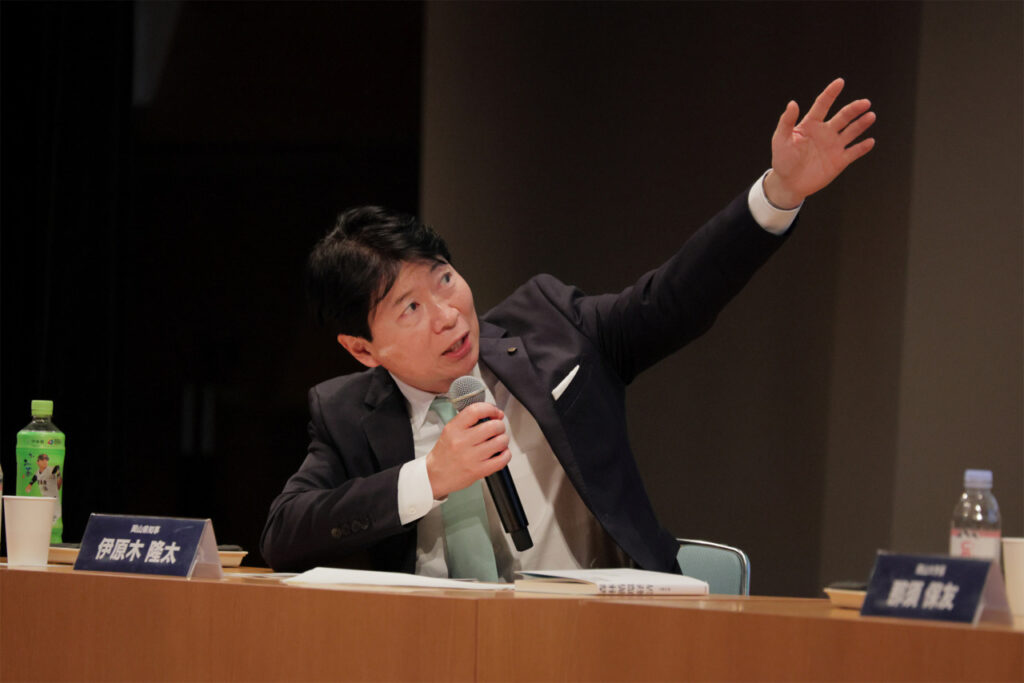
Mr. Ryuta Ibaraki, Governor of Okayama Prefecture, pointed out that trees in the prefecture's planted forests that have been fully grown 50 years after planting have not been harvested and remain in the forests, and that only one-third of the harvested area has been reforested. He also noted that the supply chain is fragmented, with each business prioritizing its own ease of handling, leading to local optimization, and reliance on imported timber with uniform standards, which is a barrier. In response, the prefectural government is working to link the entire supply chain by shifting to wood construction for non-housing and increasing demand overseas, and is strongly promoting the replacement of cedar and cypress seedlings with "low-pollen seedlings," which contain less than 1% pollen, in order to both improve the profitability of the forestry industry and the environment.
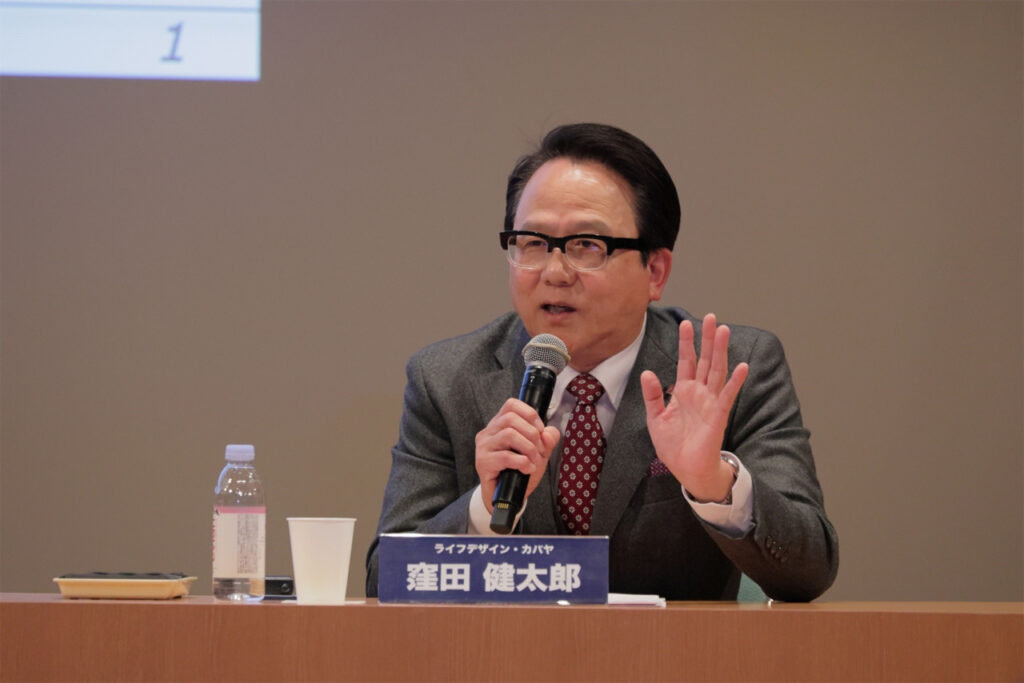
Kentaro Kubota, president of Life Design Kabaya, cited as an issue the fragmented supply chain in Okayama Prefecture, which is a rare environment where all industries from upstream to downstream are located, yet only half of the prefecture's lumber is consumed within the prefecture. As a solution, the company introduced its achievement of an agreement with the prefecture to use 10,000 cubic meters of prefectural timber over a five-year period. He proposed that downstream companies should work together to forecast demand and assure consumption, which would facilitate price controls and planned production, and create a model in which 100% of lumber is recycled within the prefecture. He also reported on his own efforts to increase the value of lumber through the supply chain, such as tree-planting activities by employees in Nishiawakura Village and the development of the CLT construction method through industry-academia collaboration.
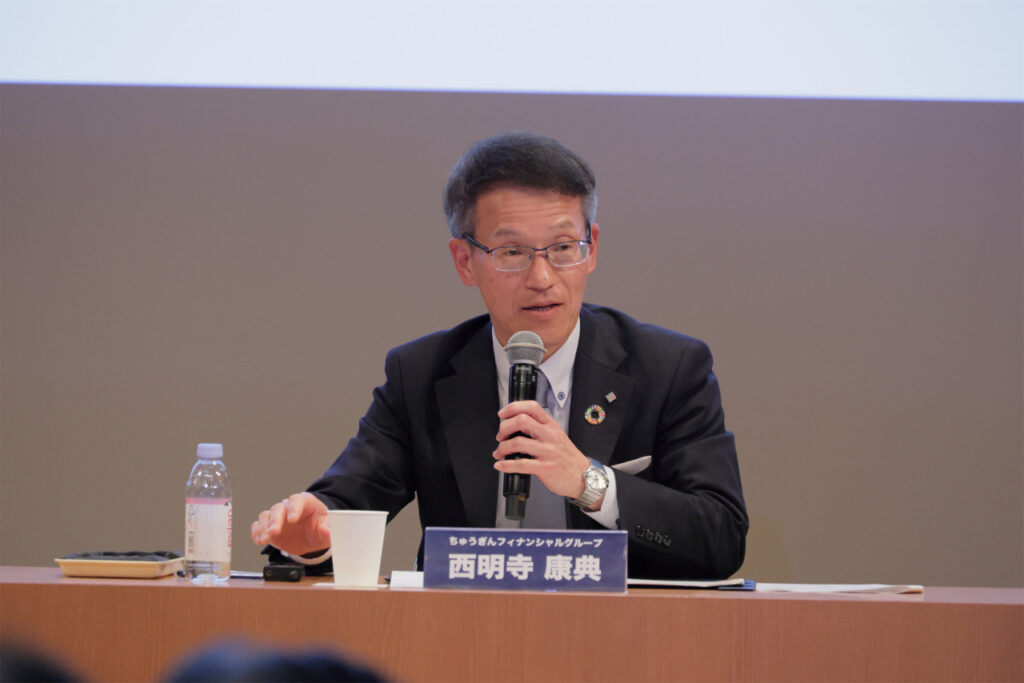
Yasunori Saimyoji, Managing Executive Officer of Chugin Financial Group, introduced the company's support for building LCA (Life Cycle Assessment) calculations. As a specific example, he cited the visualization of the environmental value of a 40% reduction in greenhouse gas emissions through the active use of certified timber from Okayama Prefecture and energy-efficient design. Furthermore, to address the issue of "natural capital finance," which is difficult to evaluate and raise funds using conventional financial logic, he introduced the "blended finance" scheme, in which regional financial institutions act as arrangers to raise funds, including public institutions and development finance, in addition to private funds such as institutional investors and business companies, and have them invest in the region. He said that he is aiming to establish a "blended finance" scheme in which regional financial institutions act as arrangers to gather funds from public institutions and development finance, in addition to private-sector funds from institutional investors and business companies.
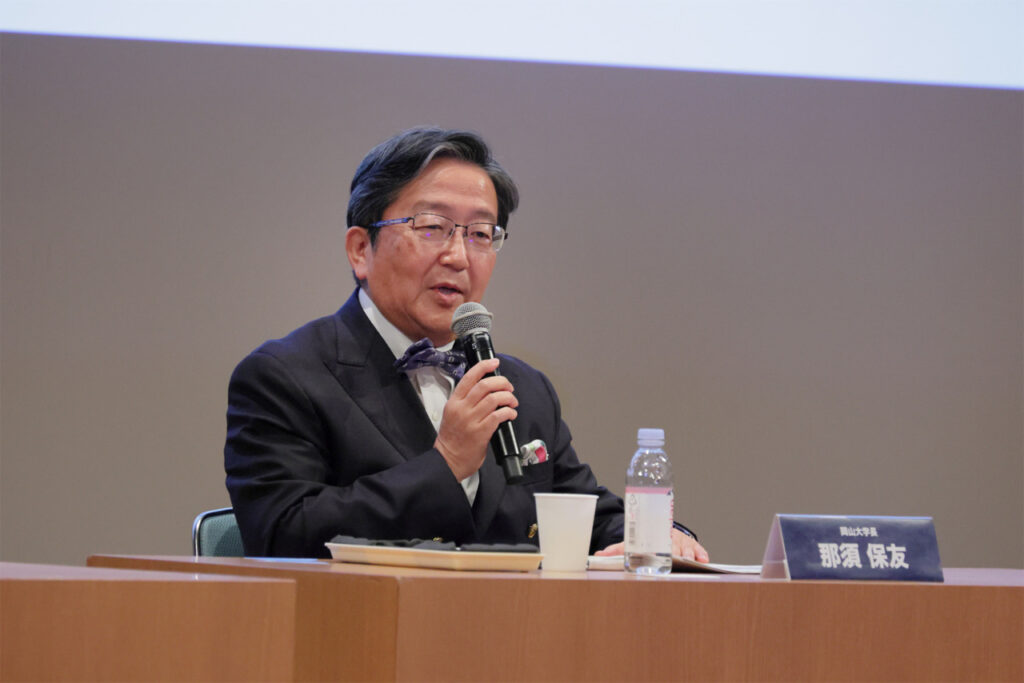
Okayama University President Yasutomo Nasu emphasized the importance of human resource development. On campus, the lecture building "Co-education Co-creation Commons (OUX)," made of orthogonal laminated timber (CLT), is used as a practical teaching tool. The power of wood has a positive impact on the learning environment and serves as a place for architecture students to study wood materials and structures. Furthermore, he reported that at the satellite campus in Maniwa City, students stay overnight to conduct workshops to confront local forestry issues. He expressed his commitment to producing "passionate students" who proactively tackle social issues in the field as the next generation of leaders who will create a sustainable future.
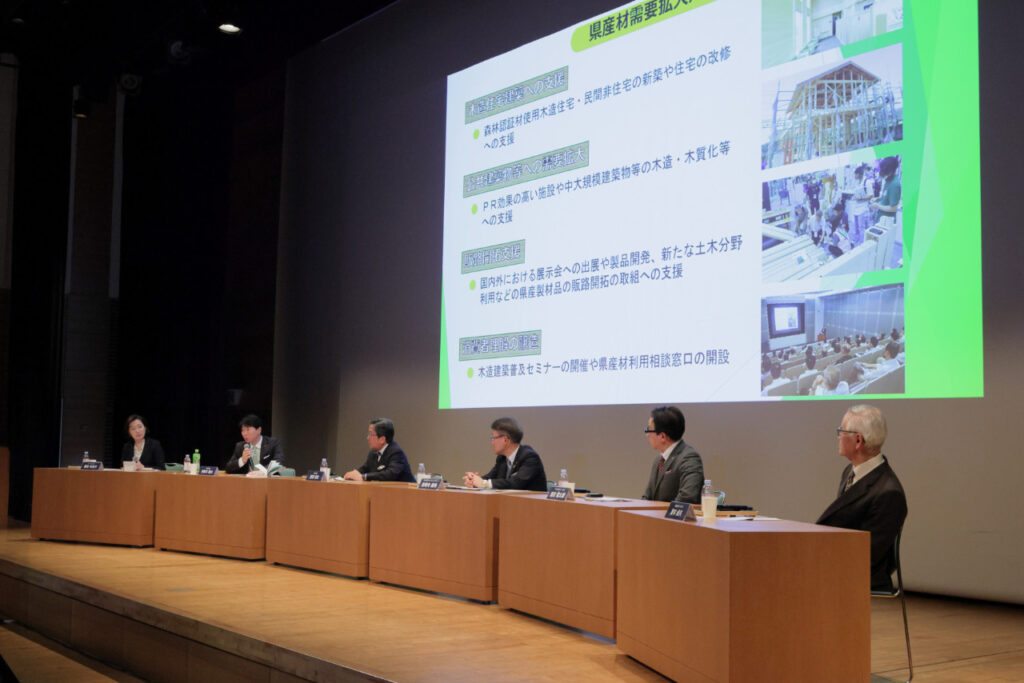
Through discussions at the forum, it became clear that "wooden town planning" is not just a transition of building methods, but can function as a "hub" to reconnect the fragmented supply chain of the local economy. New technologies will ensure the safety of mid- to high-rise wood construction, downstream companies will ensure the consumption of prefectural timber, financial institutions will evaluate the environmental value and attract investment, and universities will nurture human resources with enthusiasm in the field. As these industry-government-academia-finance partnerships work toward one clear exit, "urban woodification," economic value will be created in the stagnant planted forests, and a sustainable forestry cycle will be set in motion.
This model of collaboration, which we aim to put into practice in Okayama, represents an effective form of social system change to transform Japan's forest resources into a true national strength.
*Reference link
Progress of 21 Okayama Forest and Forestry Vision - Okayama Prefecture Web Site (Forestry Division)
3/30 "Nikkei Regional Development Forum" Hishiki's speech was delivered.
The President of Okayama University Participates in a Panel Discussion Toward the Realization of a Forest Circular Economy in Cooperation with Local Communities - National University Corporation Okayama University
Speaker at Nikkei Regional Development Forum "Creating Wooden Towns and Realizing a Forest Circular Economy" | Life Design Kabaya
Life Design Kabaya Wins Good Design Award and Wood Design Award for CLT Hybrid Construction Method to Promote Use of Lumber from Okayama Prefecture and Establishment of Circulating Wooden Housing Supply Chain
40% Reduction in GHG Emissions through the Use of CLT Timber Produced in Okayama Prefecture LCA Calculations for the New Serio Building Show "Regional Contribution Using Trees