Updated by the Editorial Department of *Forest Circular Economy* on June 17, 2026, at 9:37 PM JST
Editorial Board, Forest Circular Economy
Forestcircularity-editor
We aim to realize "Vision 2050: Japan Shines, Forest Circular Economy" promoted by the Platinum Forest Industry Initiative. We will disseminate ideas and initiatives to promote biomass chemistry, realize woody and lumbery communities, and encourage innovation in the forestry industry in order to fully utilize forest resources to decarbonize the economy, strengthen economic security, and create local communities.
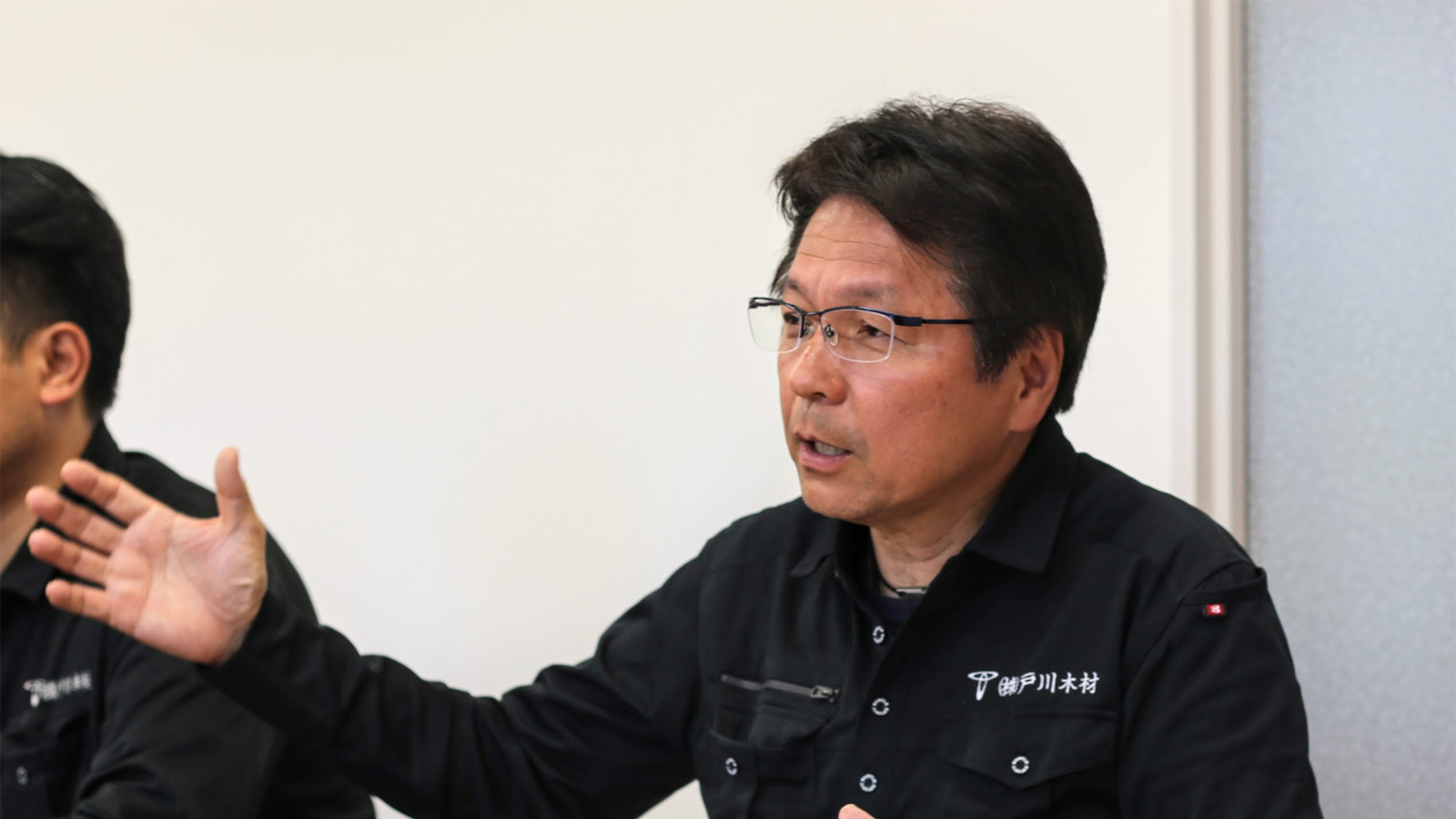
“Right now, more than 80 percent of the trees are 50 years old or older, and there are no young trees. If things continue like this, all jobs related to timber will disappear in 20 years.” Mutsunori Togawa, president of Togawa Lumber—a company engaged in timber production in Niimi City, Okayama Prefecture, a renowned region for hinoki cypress—harbors a strong sense of crisis. The turning point that helped them overcome this challenge was the acquisition of the first “tree harvesting rights” within the jurisdiction of the Kinki-Chugoku Forest Management Bureau. Building on this foundation, the company has invested in personnel and equipment to establish a circular business model that handles every step—from processing unused wood into chips to in-house production of container-grown seedlings, the introduction of large drones, and a full two-day weekend system—all under the philosophy of “harvest, use wisely, nurture, and plant.” We examine the strategies of upstream companies confronting the “barriers” that hinder the implementation of a circular forestry system, as well as the turning points in their journeys.
Niimi City is one of Okayama Prefecture’s leading forestry regions. Precisely because it is on the front lines of logging at an overwhelming pace—meeting demand from both within and outside the prefecture—President Togawa feels a strong sense of crisis regarding the future depletion of forests. “Ultimately, if those of us upstream don’t take action, the planted forests will eventually be depleted. Even now, more than 80 percent of the trees are over 50 years old, and there are no young trees. What will happen 20 years from now? Everyone involved in the timber industry will lose their jobs. That’s a foregone conclusion.”
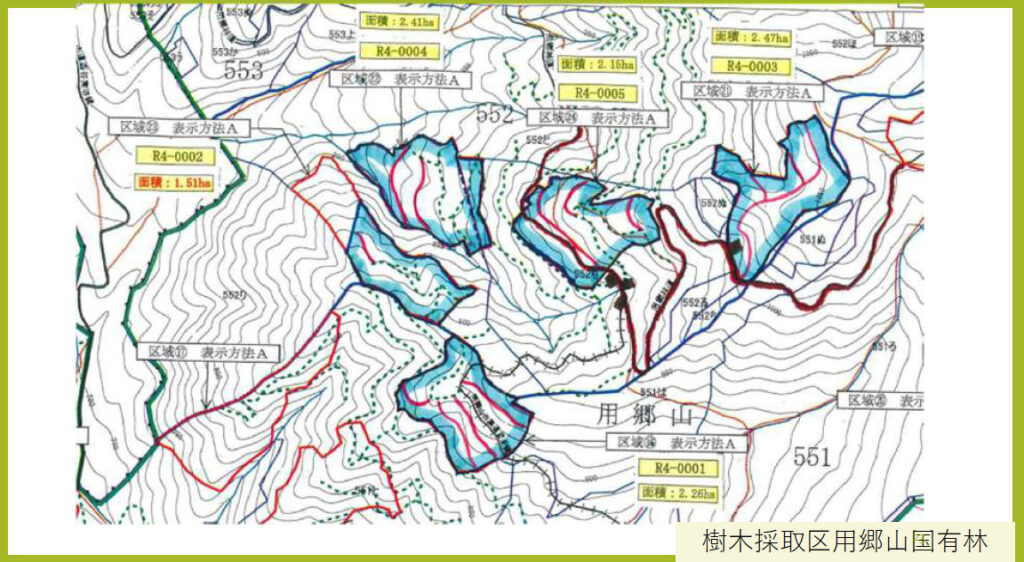
To overcome this crisis, in 2022 the company signed a contract to establish the “Niimi Timber Harvesting Area (251 ha),” the first of its kind within the jurisdiction of the Kinki-Chugoku Forest Management Bureau. A timber harvesting right is the right to harvest standing trees on a long-term and stable basis within a designated area of a national forest. “Normally, we would have to put each area out to bid individually, and when it’s unclear who will win, it becomes a huge burden—including the administrative work and the need to bring in machinery each time. This simplifies the process,” said President Togawa, explaining the benefits. Furthermore, this right not only ensures the stability of the company’s own operations but also, through partnership agreements with upstream and downstream companies, enables a stable supply of hinoki structural laminated timber and cedar packaging materials, creating a ripple effect that strengthens the entire regional timber supply chain.
The company’s FSC and SGEC CoC certifications underscore its strong partnerships with midstream and downstream partners. Recognized for its advanced technical capabilities, the company was commissioned to harvest timber from Asahi Breweries’ company-owned forest (an FSC-certified forest) in Hiroshima Prefecture; taking this opportunity, it obtained its own certifications to meet international environmental standards. Currently, by combining a “stable supply” secured through timber harvesting rights with “proof of quality” provided by the certification system, the company continues to be selected as a partner by partner companies that prioritize ESG procurement.
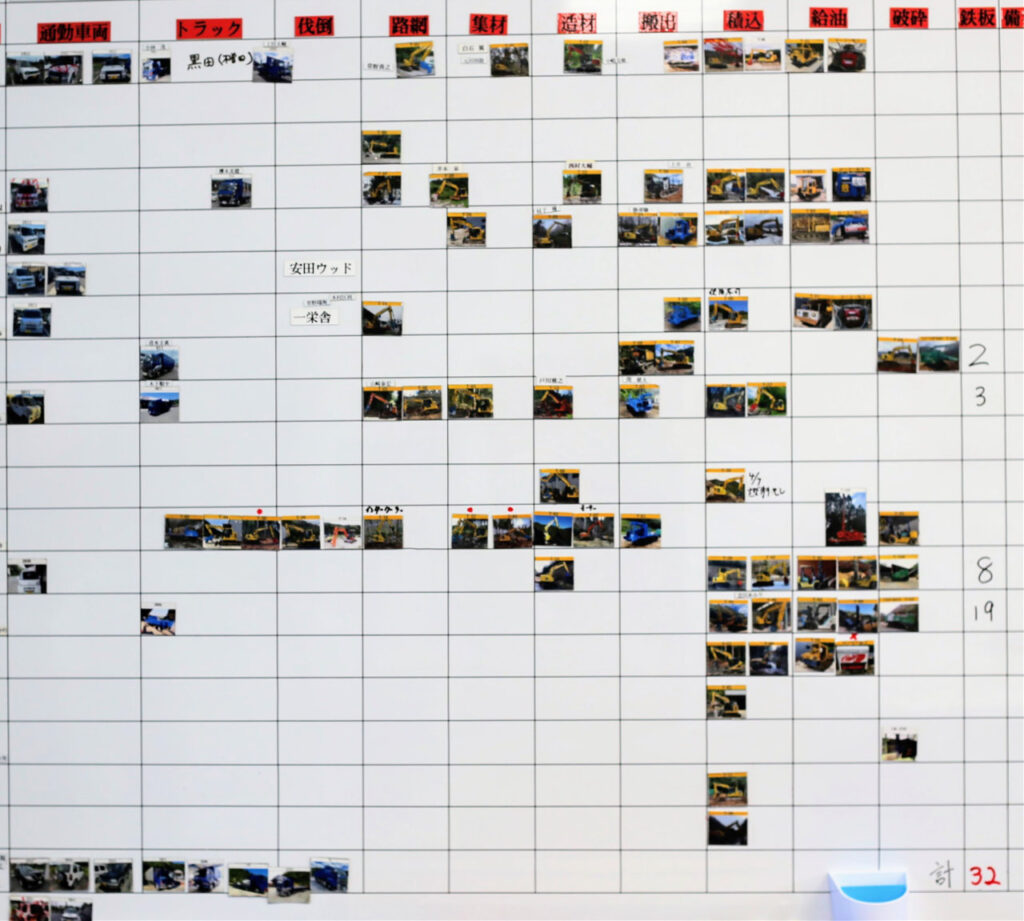
It is precisely because the company has a foundation that allows it to “maintain a stable business outlook over a nine-year period” that it has been able to make such substantial capital investments, including the acquisition of more than 60 pieces of equipment, such as high-performance forestry machinery like tower yarders. “To keep the business running, we always need machinery. As equipment ages, repair costs rise, so it’s best to always be mindful of replacing it,” he says, emphasizing the importance of proactive investment.
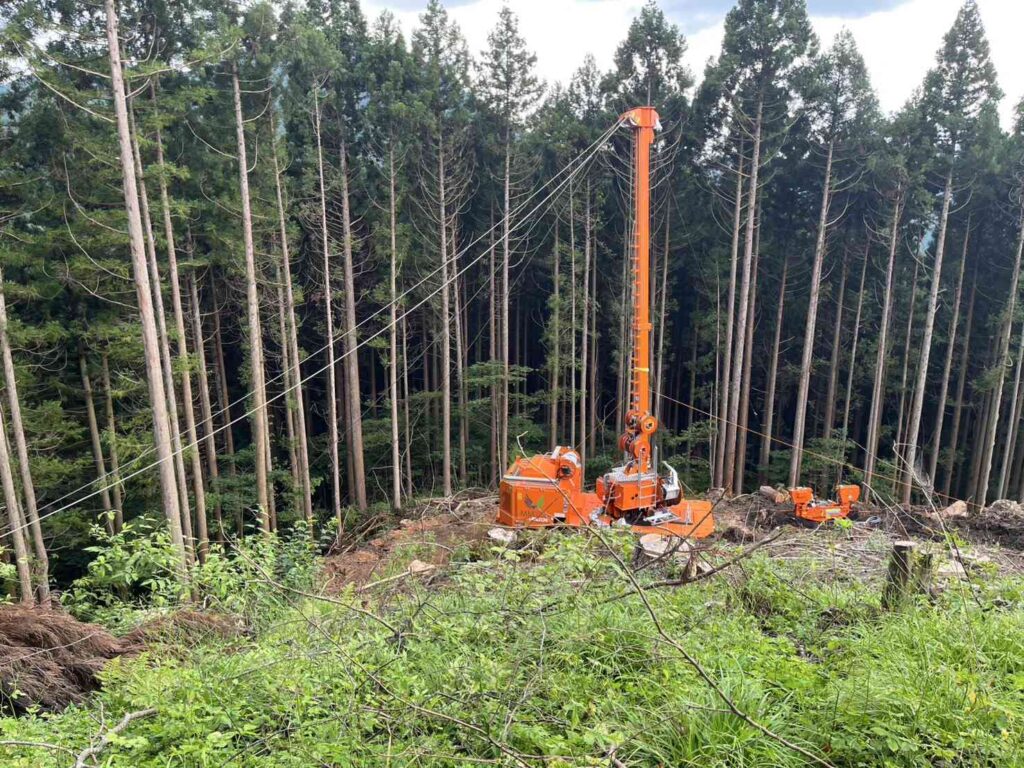
Togawa Lumber’s management philosophy is “Creativity and Ingenuity.” In the past, the company even built its own machinery to solve challenges on-site. Examples include the development of the “Super Long-Reach Grapple,” which doubled the operational radius, and the creation of the “Mobile House”—a modified forwarder equipped with a stove and other amenities to provide employees with a rest area in harsh natural environments. While some of these innovations are no longer in use due to safety or durability concerns, the experience gained from attempting to resolve on-site bottlenecks has by no means been wasted. The know-how gained from modifying machinery ourselves has led to our current “thorough repair and inspection system at our in-house maintenance facility.” Today, rather than relying on in-house modifications, we achieve both safety and overwhelming efficiency by being among the first to adopt state-of-the-art machinery.
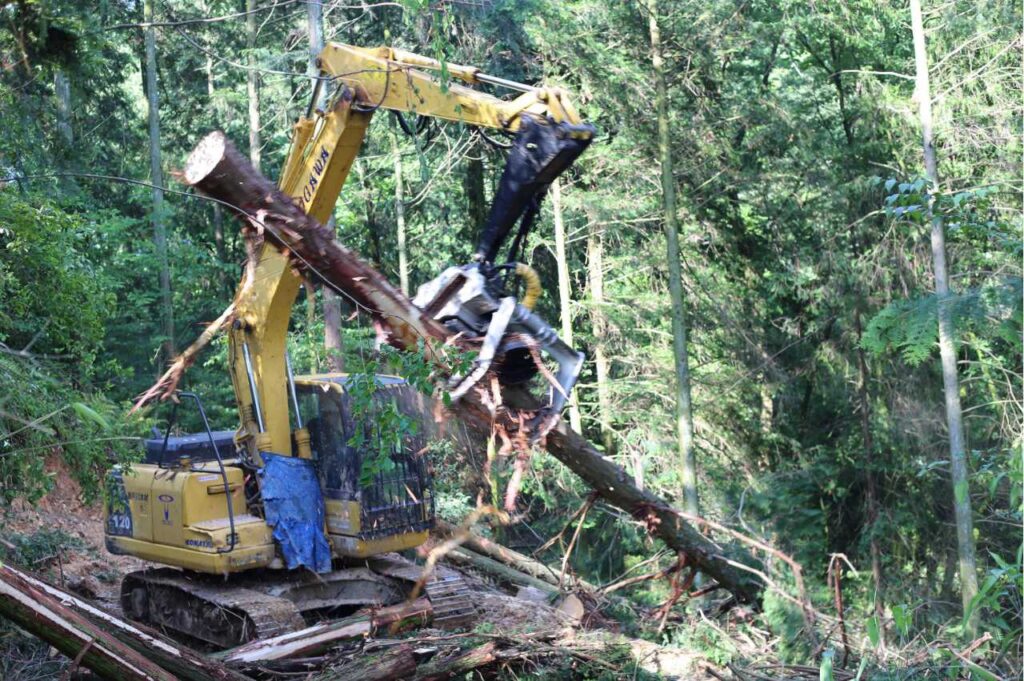
The company is also striving for efficiency in handling unused wood, such as branches, leaves, and crooked logs, that are generated during logging. “If we simply bring back the branches and other debris left in the mountains, it’s like transporting air. Even a 10-metric-ton truck can only carry about 2 metric tons of it. Since the costs associated with this are quite high, we actually bring a mobile chipper to the site to shred the material right there,” explains Masayuki Togawa, Senior Managing Director. Furthermore, the company’s characteristic efficiency is evident in the operation of its transport trucks. While typical chip transport trucks often use lightweight aluminum cargo beds to maximize load capacity, “Aluminum beds deform when loaded with branches and leaves, so they can only carry light chips. We deliberately use steel so our trucks can handle the demanding task of transporting branches and leaves as-is,” he explains, highlighting the company’s flexible approach tailored to on-site realities.
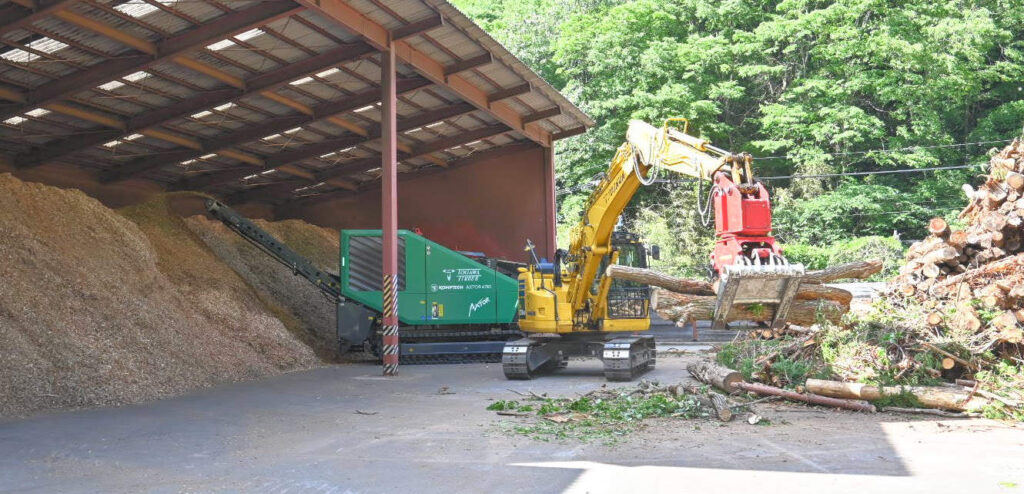
The wood chips produced are supplied on a steady basis to facilities such as the biomass power plant in neighboring Maniwa City. This has a significant impact for the company, which thoroughly recycles not only timber shipped as logs but also branches, leaves, and crooked logs left in the mountains. “About 40 percent of our raw material production consists of wood chips. “We transport them almost every weekday, producing about 23,000 to 4,000 metric tons annually,” says Executive Vice President Togawa. This initiative—chipping unused wood on-site and providing a steady supply to nearby power plants—not only supports the company’s revenue but also plays a key role in the local cycle of fully utilizing forest resources.
Although the company established a business model centered on “harvesting” and “utilizing” timber through its overwhelming mechanical capabilities, it now faces the greatest obstacle to a sustainable forest cycle. The problem is not that “there is no wood,” but rather the reality that “it cannot be planted.”
President Togawa describes the harsh reality facing Niimi City as follows: “Although we’ve received applications to plant about 170 hectares within Niimi City, in reality, only about 40 hectares are actually being planted each year. The backlog just keeps growing every year. If things continue like this, it’ll be a disaster, so we decided to start planting ourselves.”
The primary reason reforestation efforts are stalling is a severe shortage of seedlings. While the number of seedling producers continues to decline, structural challenges—such as the difficulty of balancing supply and demand—make it hard for new entrants to enter the market. Driven by a strong sense of urgency—that “we must address this situation where people want to plant but cannot”—the company has embarked on a new challenge: producing its own seedlings. “As long as the conditions are right, we are confident we can invest and produce hundreds of thousands of seedlings,” the company stated, and in February 2024, it launched a pilot seedling-rearing program. Drawing on the execution capabilities honed through years of experience, the company aims to resolve this industry bottleneck.
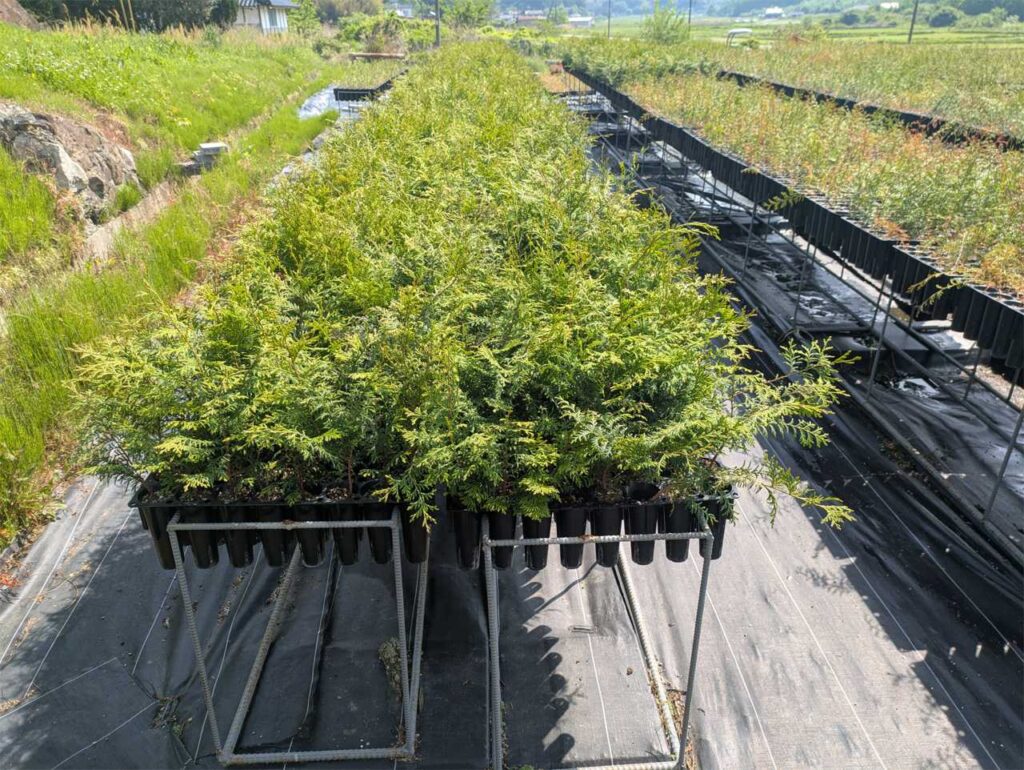
The company’s unique on-site expertise and ingenuity also shine through in the seedling-raising process. Focusing primarily on low-pollen hinoki cypress—for which there is high demand in Okayama Prefecture—the company handles everything from sowing seeds in cell trays to transplanting them into 40-cell containers. However, one aspect they are particularly meticulous about is ensuring that the containers are not placed directly on the ground by using a specially designed reinforced concrete base. President Togawa explains the reasoning: “By suspending the containers in the air (air-rooting), the roots do not grow downward. If they do, the seedlings become impossible to remove, and the roots won’t develop properly.” Furthermore, at the time of shipment, the company uses specialized machinery that pushes the seedlings up from below to remove them efficiently. With plans to introduce an automated irrigation system in the future, the company has established a unique and thorough management system.
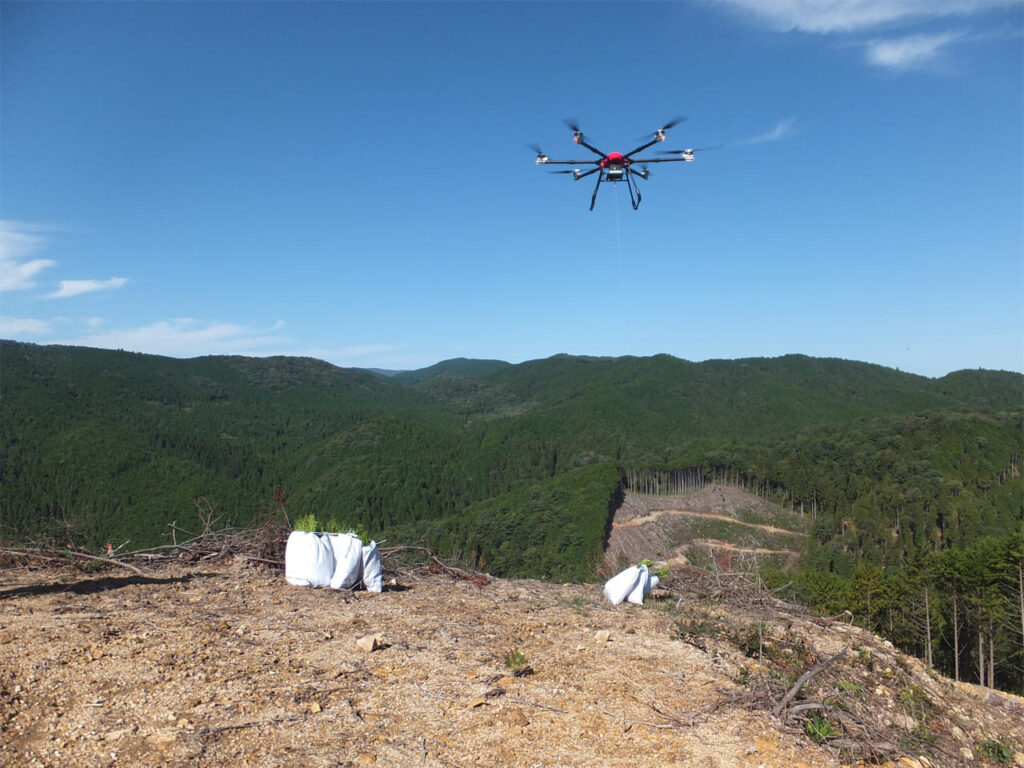
After launching its own reforestation project and experiencing firsthand the grueling task of transporting saplings up steep slopes, the company introduced the “Mori-Tobi 25,” a large drone. “We used to carry them up on our backs,” Now, using a system with a wire about 20 meters long, we transport four bags, each containing 50 saplings—a total of about 20 kilograms (200 saplings in all). We’ve even transported them to the top of a mountain 600 meters away.” By replacing this immense physical labor with drones, the company is achieving dramatic labor savings in reforestation efforts.
Amid a severe labor shortage, the company has also made a major shift toward work-style reform. “In an era where three-day weekends are becoming common, we realized that if we were still only offering Sundays off, no one would want to work for us, so we took the bold step of switching to a full two-day weekend system,” said President Togawa.
“The number of operating days dropped by 13%, and production volume fell by 13% as well. It was a year that really drove home the point that it’s impossible to maintain productivity by simply increasing the number of days off. But thanks to this, we’ve started attracting new graduates.” Despite the pain of a temporary drop in sales, the company chose to “invest in its people” by prioritizing a comfortable work environment. This strategy paid off, resulting in a paid leave utilization rate of 94.6% for fiscal year 2021—significantly higher than the national average. On June 4 of this year, the company also received “Youthエール” certification (*a national program that certifies small and medium-sized enterprises that are proactive in hiring and training young people and demonstrate excellent employment management practices). Furthermore, by having newly hired young employees master the use of state-of-the-art machinery, the company is ensuring the maintenance and strengthening of its production capabilities over the medium to long term.
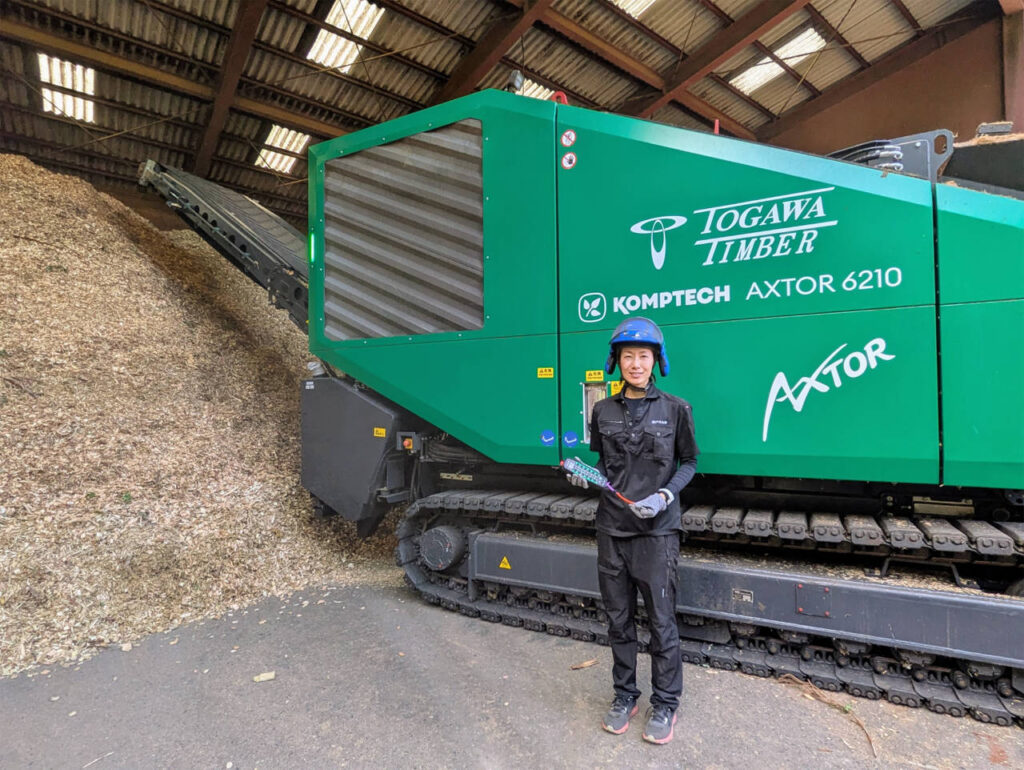
Another noteworthy point is the active participation of a diverse workforce. While securing female workers remains a challenge in the forestry sector, the company has taken steps to improve the work environment—such as installing women-only restrooms at job sites—and currently has three women working as field operators and in other roles. Female employees working on-site have commented, “The company has created a very work-friendly environment for those raising children, thanks to the introduction of a full two-day weekend system and the ease of taking paid time off.” The company’s strategy of using afforestation projects—which are less hazardous than logging sites and provide an opportunity to learn the basics of forestry—as a starting point for training young employees has also proven successful, and a diverse workforce representing the next generation is beginning to take root.
President Togawa has high hopes for the potential of forest resources. “Until now, they were used only as lumber for construction or simply burned, but now they could serve as a substitute for plastic or as fuel. Instead of burning them, they have much greater value, and the idea that Japan’s resources can be put to such good use really opens up new possibilities.” “Since we’re in the upstream sector, I’m confident we can ensure a stable supply of raw materials,” he said, expressing his enthusiasm.
At the heart of all the company’s practices lies a strong sense of mission to preserve lush mountains for future generations. “I thought it would be great if I—having been born and raised here—could make good use of the local environment and turn it into a livelihood. That’s really where it all began, isn’t it?” Despite facing institutional barriers and challenges, Togawa Lumber is forging a path forward one step at a time through investment and ingenuity. Although challenges remain—such as establishing in-house seedling propagation and afforestation systems—its business model, in which the company—as an upstream enterprise—self-manages the cycle of “harvesting, using resources carefully, nurturing, and planting,” is poised to become a powerful model for bringing Japan’s forest circular economy into practical implementation.
[Glossary] Right to Harvest Trees
The right to harvest standing trees in a stable manner over a long period of time from designated areas of state-owned forests. This system was established in fiscal year 2020 with the aim of supporting planned investments by forestry operators and ensuring a stable supply of timber.
About the Timber Harvesting Rights System: Forestry Agency
[Company Overview]
Company Name: Togawa Lumber Co., Ltd.
Headquarters Address: 3569-1 Yada, Tetsunishi-cho, Niimi City, Okayama Prefecture
Established: August 1, Heisei 8
Representative: Mutsunori Togawa
Main Businesses: Materials manufacturing, biomass chip manufacturing, construction (Licensed in March Heisei 20)
Number of employees: 37 (including executives)
Annual production volume: 56,000 cubic meters (of which about 30% is thinned timber)
Company URL:https://togawa-timber.co.jp/
[Click here to inquire about business partnerships and business discussions with Togawa Lumber]
Contact Form
[Click here for information on working at Togawa Lumber and job openings]
Careers Page
(Planning and Production Support: Togawa Lumber Co., Ltd.)
Special Interview Series on the Forest Circular Economy: “This Was the Turning Point”
This special interview series features companies and organizations working to implement a circular forest economy, delving into the events, decisions, systems, technologies, and collaborative approaches that served as turning points in their businesses and projects. What were the turning points for these companies and organizations? By connecting these insights to industry contexts such as regional circular economies, woody biomass, decarbonization, and natural capital, we convey them to policymakers and industry decision-makers.