Human resources with hands-on skills will drive the future: Restructuring technical colleges and vocational education will pave the way to an age of AI and robots
Updated by Hiroshi Komiyama on November 13, 2025, 7:06 PM JST
Hiroshi KOMIYAMA
(Platinum Initiative Network, Inc.
After serving as Professor at the University of Tokyo, Dean of the Graduate School of Engineering and Dean of the Faculty of Engineering, and President of the University of Tokyo (28th), he was appointed Chairman of the Mitsubishi Research Institute in 2009, and Chairman of the Platinum Initiative Network in 2010 (to be incorporated as a general incorporated association in 2022). Other positions include President of the STS Forum, Chairman of the Association for Super-Education, Chairman of the United Nations University Cooperation Foundation, Chairman of the International Science and Technology Foundation, and Chairman of the Heat Pump and Thermal Storage Center Foundation. He also received the Dubai Knowledge Award (2017), the Order of the Star of Solidarity of Italy (2007.) and "Information and Communication Month" Commendation from the Minister of Internal Affairs and Communications (2014), the Zaikai Award Special Prize (2016), and the Commendation for Merit in Promoting a Maritime Nation (2016), among many other national and international awards.
Now that generative AI provides knowledge instantly, simply "knowing" is no longer enough to create value. What society needs now are people who can move, try things out, and learn from their own mistakes, i.e., "people with hands on experience. In fact, demand for graduates of technical colleges (koto senmon gakko) is increasing. In the age of advanced AI and robotics, what is needed are "people who can move," who can implement theories in the field and solve problems. The key to Japan's future lies in expanding this educational model to public education as a whole.
Technical colleges are truly at the forefront of "hands-on" education. This is because students are taught the basics of engineering, such as electricity and machinery, so that they can "create, not reason.
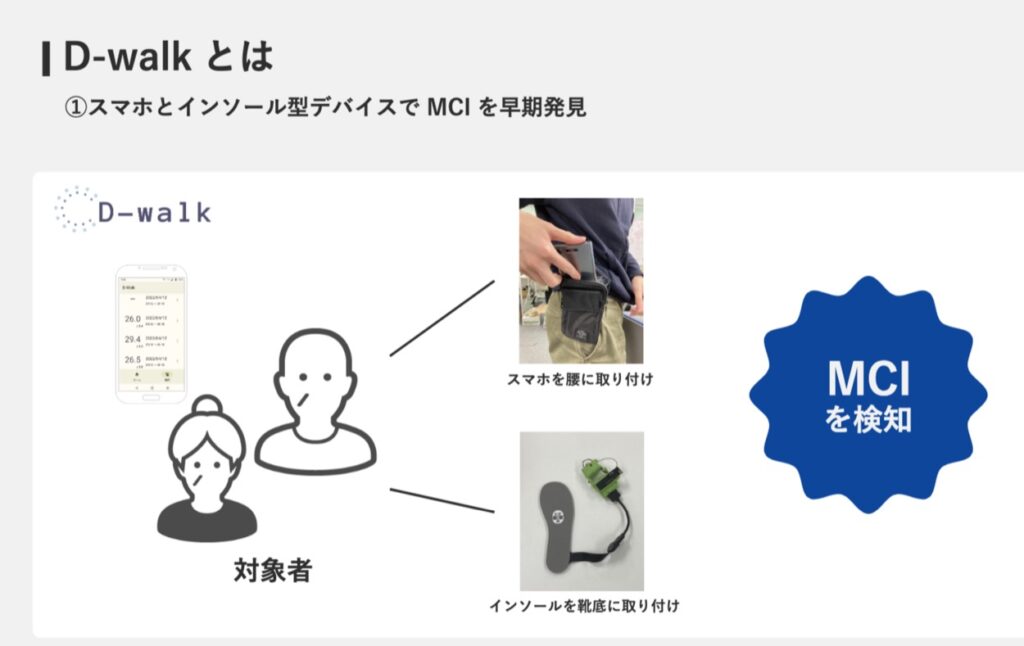
A team of students from Ichinoseki National College of Technology (Iwate Prefecture) won the Platinum Grand Prize and the Grand Prize of D-CON (Deep Learning Contest of National Colleges of Technology) for their project to measure signs of dementia by placing sensors in shoes. Doctors have long been studying the early signs of dementia in the way people walk. However, dedicated gait measurement equipment was not available in a form that could be used in ordinary homes. So they actually "did it" with the idea of putting sensors in the shoes they normally wear and logging them.
This shows the importance of learning that does not separate "thinking" from "creating. No matter how advanced wisdom is, it has social value only when it has the staying power to endure various difficult situations and operate to the end.
It would be a waste to keep this technical college model in the industrial field. It is necessary to expand the production of human resources who can work with their hands to vocational schools (vocational schools) in forestry, agriculture, fisheries, and other fields. The goal should be to shift to an educational model that links the field with local value creation.
Skills in the age of AI and robotics emphasize the ability to "use" and "train" existing robots in the field, rather than the ability to create precise robot components. However, there are significant challenges in the current education system. For example, teachers from agricultural departments often teach in agricultural schools, but they are not experts in AI or robotics. Also, in some cases, when mechanical engineering experts are asked to teach, they end up talking about detailed parts, such as the size of a robot's motor.
What is needed now is to encourage the fusion of specialized and digital knowledge and to develop leaders who can meet the needs of the field. This will require a fundamental review of the education system and teacher assignments. In the agriculture, forestry, and fisheries industries, it is essential to teach AI and robotics knowledge in addition to basic skills such as "how to cut a tree" and "how to catch a fish.
Creativity does not grow through classroom learning. It is through active learning that people grow, and curiosity, not a sense of obligation, is the driving force behind this growth.
As an engineering student myself, I remember feeling bored in psychology and philosophy lectures. However, as I grew older, I came to understand that they are important as a foundation for learning. The main things that should be "crammed" into young people's classrooms are the four arithmetic rules and literacy, etc. Other than that, it is much more conducive to their growth if they are allowed to "have fun" doing them.
Engineers who launched new plants during the period of rapid economic growth were able to grow despite long hours of overtime work, not because they were told that they were in training, but because they found the work "interesting. It is through repeated trial and error, forgetting about time, that people grow.
As a new industrial initiative of the Platinum Initiative Network, we are trying to advocate the reconstruction of learning through the integration of industry, education, and the community, with "active learning" as the keyword for human capital development.
As an example of inquiry-based learning, elementary and junior high schools in Shibuya Ward have expanded their "integrated study hours" from 70 to 150 hours per year, and we have heard that efforts are underway to involve local specialists in the classes. The creation of a system in which local communities are involved in education will be the foundation for the revitalization of public education.
Japan is an "issue-oriented country" that is experiencing aging and declining population ahead of the rest of the world. When I was President of the University of Tokyo, I aimed to be the "world's best university. This does not mean merely competing in terms of rankings, but rather defining ourselves as "the university that is leading the way in confronting the challenges facing humankind. As a specific initiative, we established the "Academic Overview Lecture Program. With the aim of providing a comprehensive understanding of academics, all fields of study are divided into six categories. Leading experts in their respective fields gave the lectures, and Dr. Masatoshi Koshiba, a Nobel Prize winner in physics, was among the speakers.
The concept of "Human Co-becoming" advocated by Professor Takahiro Nakajima, Director of the Institute of Oriental Culture at the University of Tokyo, presents a vision of a society in which education, industry, and the community work together to grow. Rather than someone teaching someone else, it is important to "grow together. It is also deeply connected to the philosophy of "lifelong growth" advocated by the Platinum Concept Network.
It is time for local national universities to redefine their role as centers for research and human resource development that uncover regional value. If they can integrate education and implementation in cooperation with local industries and shine in the region, they will be respected by Tokyo.
Innovation comes from curiosity and inquisitiveness. The essence of this is found in the words of Nobel laureates: "I did it because it was interesting. This is deeply connected to the cultural soil that Japan possesses. Japan has a culture of "Dao" (the way of the tea ceremony, flower arrangement, etc.), the mastery of the mind, and the world's highest literacy rate, which was cultivated during the 250 years of peace that prevailed in the Edo period. We believe that this is also the reason behind the successive Nobel Prizes awarded to Japanese people.
Restoring a culture of inquiry to public education is the most reliable investment in the future in the age of AI. This is the model that Japan, a country with advanced issues, should show to the world. (Hiroshi Komiyama, Chairman, Platinum Network)
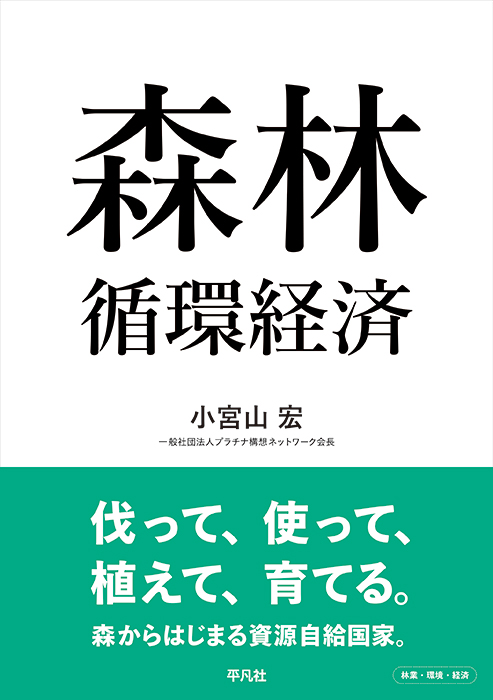
Forest Circular Economy" is now on sale!
Forest Circular Economy" (edited by Hiroshi Komiyama), a book of the same title as this web media, was published by Heibonsha on August 5. The book proposes a redesign of the economy, institutions, and local communities based on the three pillars of biomass chemistry, wooden cities, and forestry innovation in the cycle of "cutting down, using, planting, and nurturing" forests. This practical book provides a point of contact between concepts and examples for those involved in policy making, social implementation, and the creation of businesses that make use of local resources.
View on Amazon