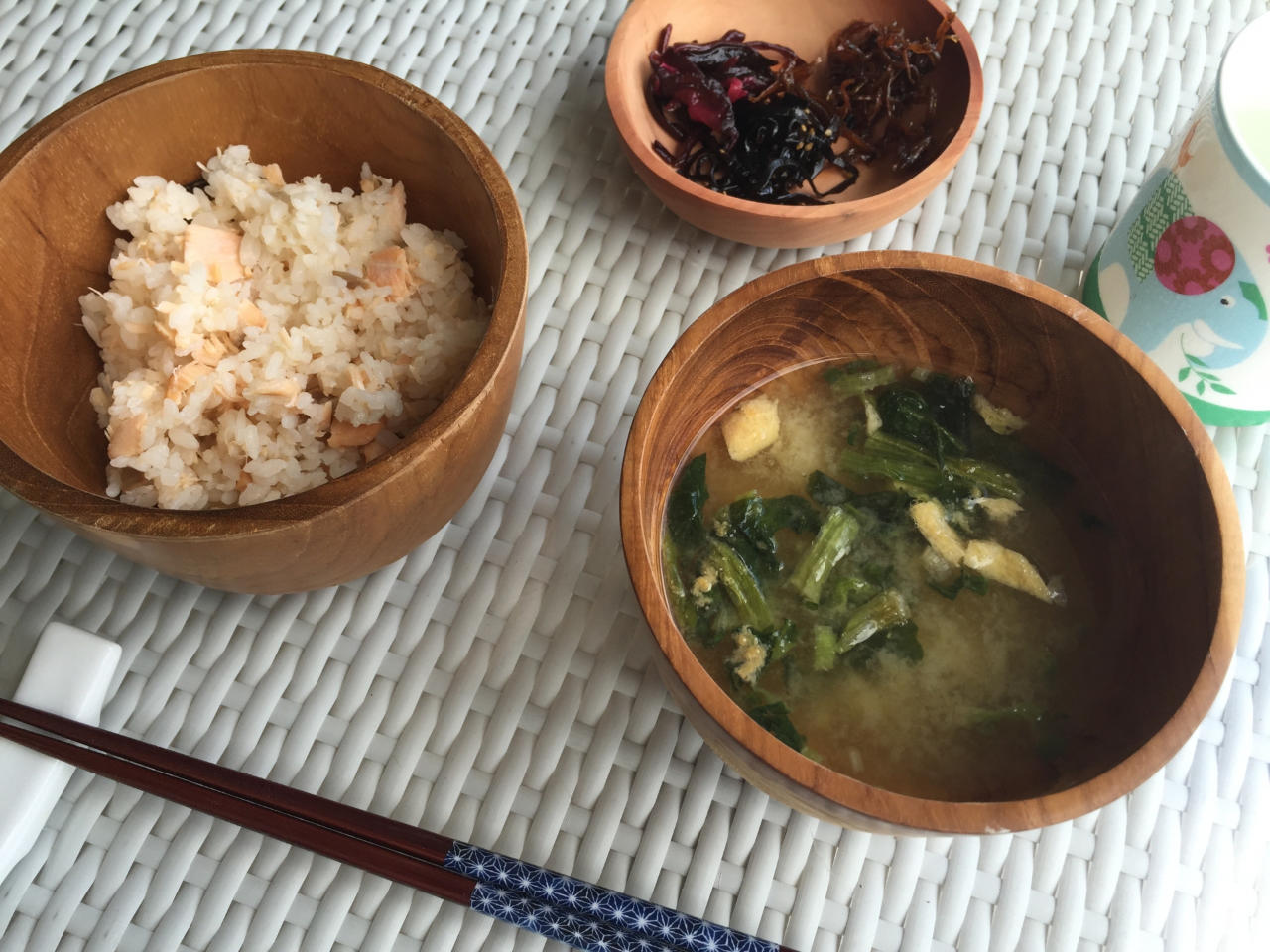
The warmth of wood that accompanies eating: the power of food-related tools to appeal to the five senses
Updated by Tomoko Ogura on November 20, 2025, 8:46 PM JST
Tomoko OGURA
Total Food Corporation / Japan Chopstick Culture Association
(Representative Director of Total Food Co., Ltd. and General Food Consultant / Visiting Professor at Miyagi University / Outside Director of a Tokyo Stock Exchange-listed company / Concurrent Lecturer at Asia University, Toyo University, and Tokyo Seitoku University / President of Shoku Kijuku / Representative of Japan Chopstick Culture Association, etc. / After working at Toyota Motor Corporation's Public Relations Department, he became Director of International Conference and studied overseas before assuming his current position. After working for Toyota Motor Corporation's Public Relations Department, he worked as a director of an international conference and studied abroad before assuming his current position. With "food and mind" as his main focus, he is well versed in all areas of food, from trends (analysis and development) to food culture, manners, nutrition, health management, food environment and mental health, and has a wide range of specialties. He has written academic papers on "chopstick culture and rituals," "Japanese chopsticks and peculiarities," and "waribashi and the food service industry," and has authored and supervised numerous books on chopsticks. He is said to be the only researcher of Japanese chopstick culture in the world.Total Food official website Japan Chopstick Culture Association website
In the past, Japanese dining tables were surrounded by wood. Nowadays, tables are made of glass, plastic, and other variations of materials, but for a long time, wood was the main material used for tables in Japan. As far back as the Warring States period, instead of a table, it was a table, but it was made of wood.
Wooden eating utensils were also the norm. While wooden miso soup bowls still have a strong presence today, rice bowls were originally made of wood as well. Chopsticks, choko (chopsticks), tochoko (sake cups), tokkuri (sake cups), and plates were also made of wood. Even today, wooden rice bowls are still sold, and I think they go well with Japanese rice, which is soft to the touch and has a soft, sweet taste.
Cooking utensils were also made of wood. Cutting boards are a typical example. The good thing about wooden cutting boards is that they make a soft thumping sound when cutting anything and are gentle enough not to damage the blade of a kitchen knife. However, it is heavy, and if it is not washed thoroughly, it is easy to leave a slimy residue, and it is difficult for detergent to flow through it. My family has stuck to wooden cutting boards for many years, using them for a limited number of ingredients. By regularly scraping and cleaning the surface, it can be used as if it were brand new. However, if used for a long time, it may not be suitable for cutting meat because blood tends to permeate through the wounds on the cutting board.
We also use wooden pot lids. Wood has natural antibacterial properties and allows moderate steam to pass through, which has the advantage of preventing hot water from spilling out of the pot. However, they are inconvenient to clean, and because it is difficult to see what is inside, it is hard to tell how well the pot is heating. When I cook Western dishes, I use Western lids because they adhere better.
The Chinese use of wooden cutting boards is breathtaking. A large log, more than 50 cm thick, is used as it is. After all, when it became dirty, the surface was scraped off with a planer, and the cutting board was passed down from generation to generation, and used by children and grandchildren, and the thickness became thinner as the generations passed. However, such usage has become obsolete even in China today, and convenience has become more important.
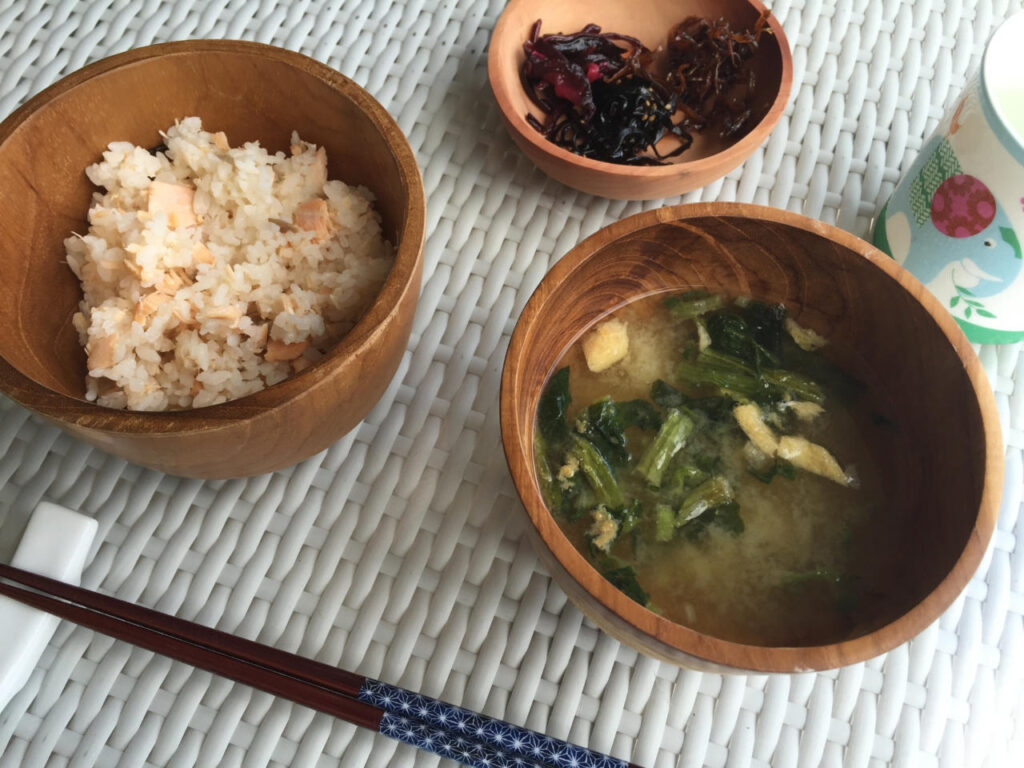
Many cooking utensils and tableware were transferred from wood with the arrival of ceramic culture from China. Mass production of porcelain became possible in the mid to late Edo period, and porcelain tableware, which became inexpensive, seems to have become popular among the general public. Tea bowls made of porcelain imported from China are called "chawan" because they were originally used for drinking tea. When they became inexpensive and popularized, teacups gradually came to be used as rice bowls. Over time, most tableware was replaced by ceramics. It may be no exaggeration to say that the miso soup bowl, which is said to have remained in order to prevent burns from direct contact with the mouth, is the only remaining wooden tableware. For this reason, rice bowls are written "碗" (bowl), but rice bowls (bowls until the Edo period) and miso soup bowls are written "椀" (bowl) to express the difference in materials.
The reasons for the change from wooden "bowls" to ceramic "bowls" even in the absence of detergent may include the fact that wooden bowls were less durable than ceramic ones and that there was more variation in design and coloring in ceramics.
However, it has been found that smelling and touching wood has a relaxing effect on the body and mind. Modern people have changed their lifestyles in favor of convenience and rationality, but perhaps a way to reduce stress in a stressful society can come from changing things that are closer to home than one might think. In particular, it may be an effective way to relax the brain by being gentle to the five senses during the act of eating. (Tomoko Ogura, President of Total Food Co., Ltd. and Representative of the Japan Chopstick Culture Association)