
Updated by the Forest Circular Economy Editorial Department on November 8, 2025, 8:55 PM JST
Editorial Board, Forest Circular Economy
Forestcircularity-editor
We aim to realize "Vision 2050: Japan Shines, Forest Circular Economy" promoted by the Platinum Forest Industry Initiative. We will disseminate ideas and initiatives to promote biomass chemistry, realize woody and lumbery communities, and encourage innovation in the forestry industry in order to fully utilize forest resources to decarbonize the economy, strengthen economic security, and create local communities.
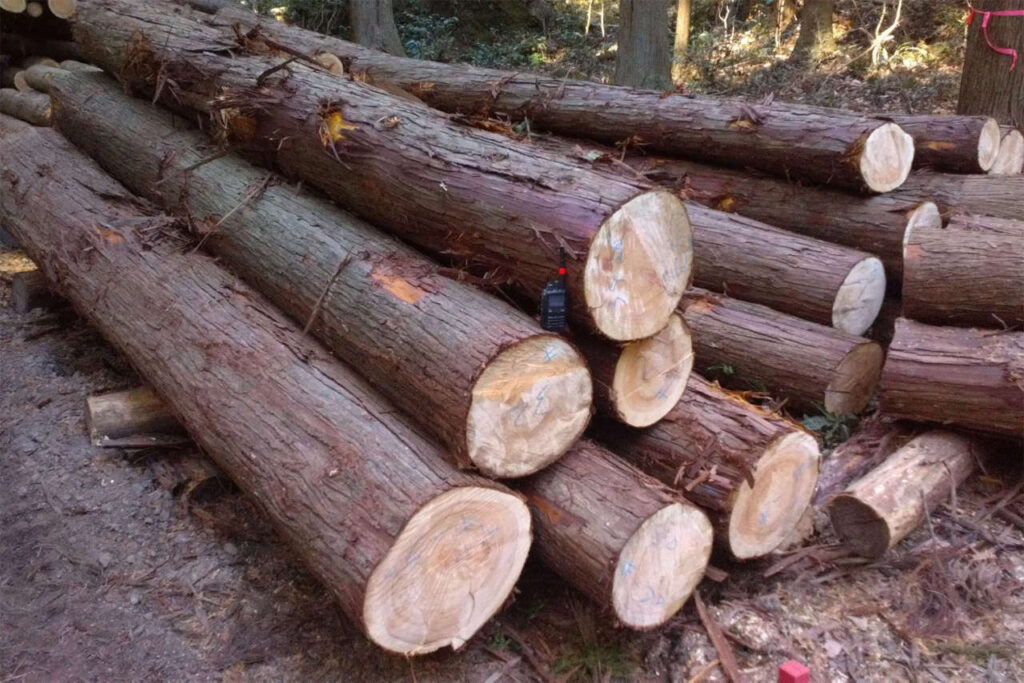
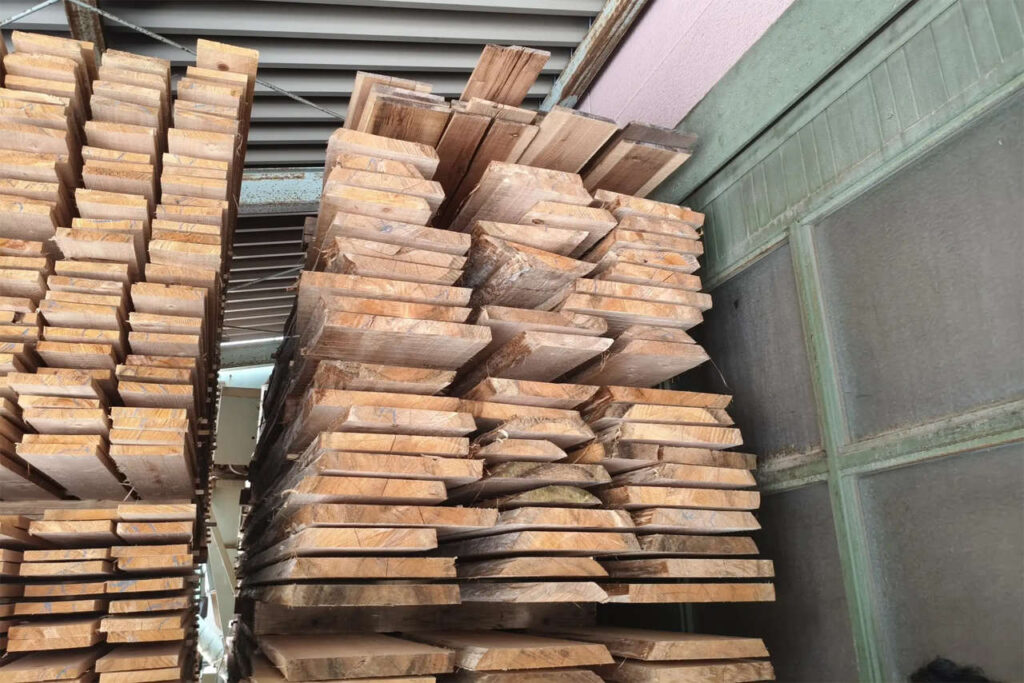
Wood requires a long drying period from felling to shipment, during which the top boards spend their “sleeping time.” A new circular project utilizing this time locally has begun in Okazaki City, Aichi Prefecture.The general incorporated association AndForest and Takikou Sewing have jointly developed the "Bench Sitting in the Forest," utilizing cedar tabletops currently drying. This initiative repurposes cedar tabletops drying for shipment as temporary benches. It discovers new value in the timber, connecting local craftsmanship and forest regeneration through innovative ideas.
The "Bench in the Forest" combines a drying cypress tabletop with bead cushions from a local company. The tabletop retains the wood's slight warping, root bends, and rough-cut irregularities—the subtle undulations of the timber. The cushion flexibly absorbs these variations, allowing stable use even on uneven outdoor ground.

The defining feature of this bench is its thorough circular design. After drying, the bench tops used temporarily for events are returned to the sawmill, where they are reborn as wood products like furniture, fixtures, and building materials. The bead cushions used for the legs are also reusable, achieving a structure that generates no waste throughout the entire project.
Furthermore, the project establishes a mechanism to provide fair compensation to forestry workers by purchasing materials like root-bent wood—often considered low in market value—at appropriate prices. The very "drying time" of the wood generates revenue, creating a financial cycle that supports forest regeneration. This truly represents a paradigm shift. It is an advanced example that maximizes the value of forest resources both over time and across uses, establishing a sustainable supply chain within the region.