The value of wood education that captures "space"
Updated by Kazuhiro Aoki on December 11, 2025, 7:26 PM JST
Kazuhiro AOKI
Representative Director, WSense Corporation / DELTA SENSE Production Committee
Representative Director, WSense Corporation / DELTA SENSE Production Committee Born in Aizuwakamatsu City, Fukushima Prefecture. From a family background of flower arrangement, tea ceremony, and Noh theater, he has been exposed to Japanese culture from an early age. His interest in wood began when he witnessed a shrine carpenter "sharpening a plane" and became aware of the depth of the craft. Currently, based on the knowledge he gained as a Shinto priest, he is promoting initiatives that lead to the public interest. He is a member of the Tokyo Junior Chamber of Commerce, holds a graduate degree and an MBA (Master of Business Administration), and has been a Boy Scout and a soccer player since he was 4 years old.DELTA SENSE Official HP WSense Corporation
Forests possess the power to regenerate time and again, even after being destroyed.
Fallen trees let in the light, moss covers the soil, and tiny sprouts gradually transform the landscape.
This "ability to bounce back even when broken or shaken" is what we call resilience.
For forests and local communities facing challenges such as population decline, climate change, disaster risks, and labor shortages, isn't this very resilience what is most needed right now?
However, time flows in the opposite direction for those on the front lines.
Amidst constant pressure to "never stop," "never break," and "always deliver results," wavering or hesitation tends to be labeled as "bad."
As the key to bridging that gap, I feel that the perspective of "Wood Education × Shinto" will become increasingly important.
In Japan, forests have long been cherished not only as a resource but also as a place where the gods reside.
In other words, the presence of sacred groves and shrines provided a space for people to pause and listen right in the midst of their daily lives.
When a norito is chanted, there is always a pause between the words and the speech.
A moment of silence allows meaning to sink in deeply, settling the atmosphere of the entire space.
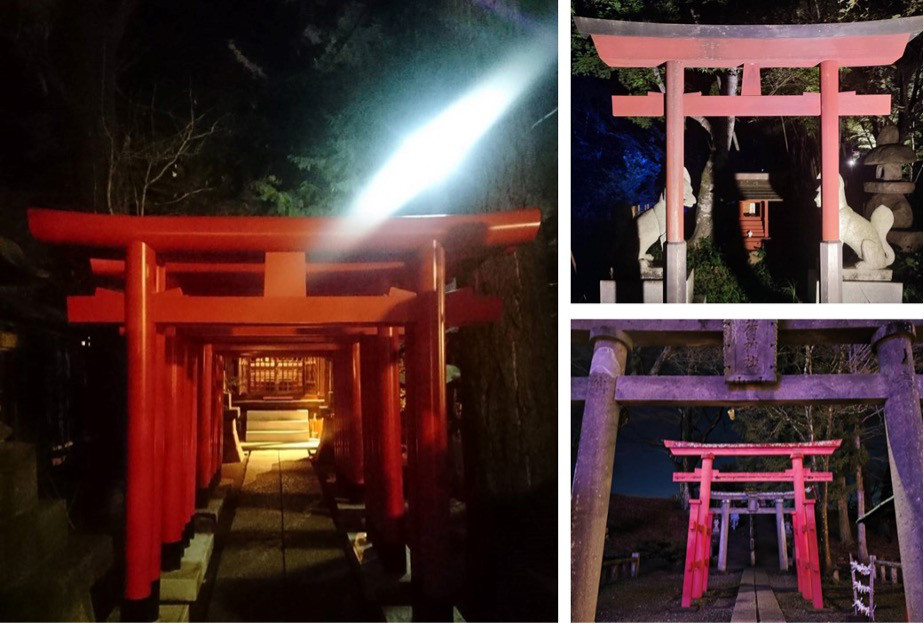
The forest, too, lives by maintaining its own space.
・Slopes that have collapsed due to heavy rain do not immediately return to their original state, but instead take years to regenerate.
・Even if it remains unstable immediately after maintenance, the forest's appearance will finally settle down after several years.
・The diversity that was once lost gradually returns over time.
In other words, forest resilience is not about eliminating fluctuations, but rather the ability to maintain order as a whole while embracing those fluctuations.
What is needed when we overlay this feeling onto the nature of people and communities.
That is what I consider to be wood education that focuses on the concept of "ma."
In wood education settings, there is time not only to learn about wood and forests, but also to engage directly with the wood itself.
Feel the warmth of the wood's grain in your palm, inhale its scent, and gaze at the ripples of its growth rings and grain.
Within that seemingly insignificant time lies an abundance of pauses.
Yes, our breath naturally deepens each time we stand before a tree.
Both children and adults start out lively, but before they know it, they become absorbed in the wood's texture and grain, and the pace of their conversation slows.
So, what is the purpose of this "time when there's no need to rush"?
Simply put, it's to create breathing room for when things get shaky.
・It's okay to hesitate a little
・It's okay if you don't have an answer right away
・It doesn't have to be the same as the other person's.
As this sense develops, both personal relationships and team dynamics gradually move away from the state of suddenly "breaking off."
In other words, learning from the resilience of forests through wood education can be described as an endeavor to reclaim "space" by engaging with trees, thereby creating a flexible cushion between people.
In Japan's forests, a tradition of "etiquette for encountering the unseen" has been passed down since ancient times.
As we approach the shrine's worship hall, we naturally adjust our stride, gently set aside the restlessness deep within our chests, and return to slow, steady breathing.
This is not merely a custom, but a process for preparing one's mind and space, and returning to a posture of listening.
In Shinto, objects made of wood, stone, or paper are called "yorishiro."
Invisible thoughts and prayers dwell there, and people confront their inner voices through the medium of the vessel.
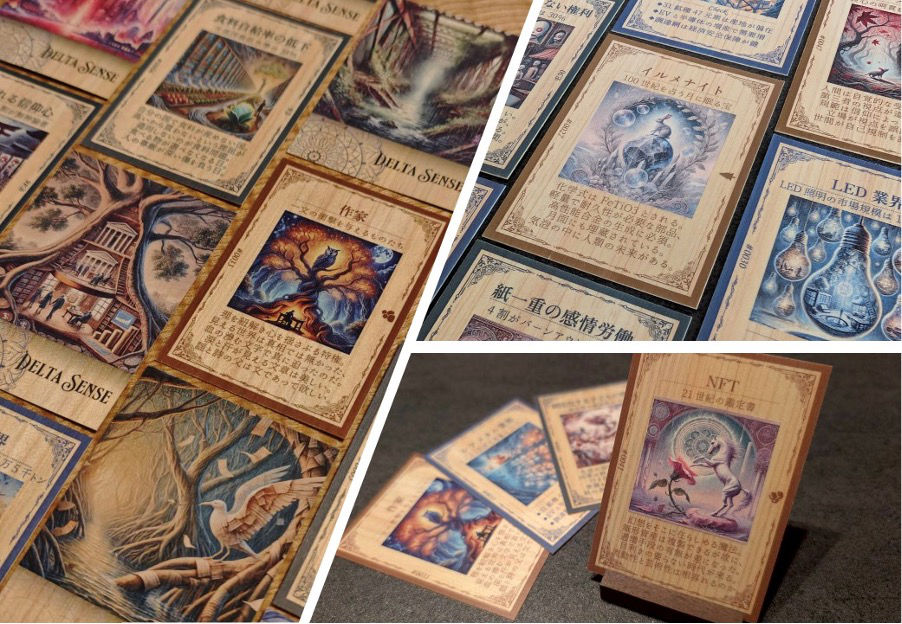
The wooden DELTA SENSE card functions very much like this vessel.
Each piece has a unique grain pattern, emits a faint scent when held, and no two grains are alike.
The very “fluctuations” carved by nature breathe within the cards.
Therefore, when faced with cards, people naturally breathe more deeply, preparing themselves to return to a “listening posture” rather than imposing their own opinions.
This is very much like the unique "pause" that flows through the space where norito are chanted.
Prayers are also a way for people to put the thoughts they hold in their hearts into words and release them into the world.
And as symbolized by the term "kotodama" (the power of words), it is believed that words possess the power to harmonize people and places.
The DELTA SENSE card is precisely that modern version.
The symbols depicted on the cards are neither mere icons nor mere words.
・"What kind of tremor is within you right now?"
・Which direction are you looking toward the future?
・"What kind of wishes do you hold for this region and forest?"
By drawing out these “hidden truths” and gently bringing them into the dialogue, light shines upon the previously silent feelings, much like a prayer.
Participants begin to express opinions they would normally find difficult to voice, along with their anxieties, conflicts, and wishes, through the cards they have chosen.
In other words, this is a state where "it is not the person speaking," but rather "the cards are making them speak."
Thus born, the words spread without aggression, permeating the space around them.
In the field of circular economy, which originated from the SDGs, the focus inevitably tends to be on "not breaking" and "holding out."
However, observing the workings of the forest reveals that structures capable of bending and swaying yet returning to their original state prove stronger over the long term than those designed to never break at all.
And perhaps wood education can be seen as something that helps people rediscover that sense within themselves.
In that sense, DELTA SENSE can be said to be something that helps build the structure within communities and organizations.
・Amidst the busyness, are you able to pause and find moments of respite?
・Is there enough breathing room to maintain the relationship even when opinions clash?
・Even in difficult situations, is there a foundation where we can say, "Let's rethink this together"?
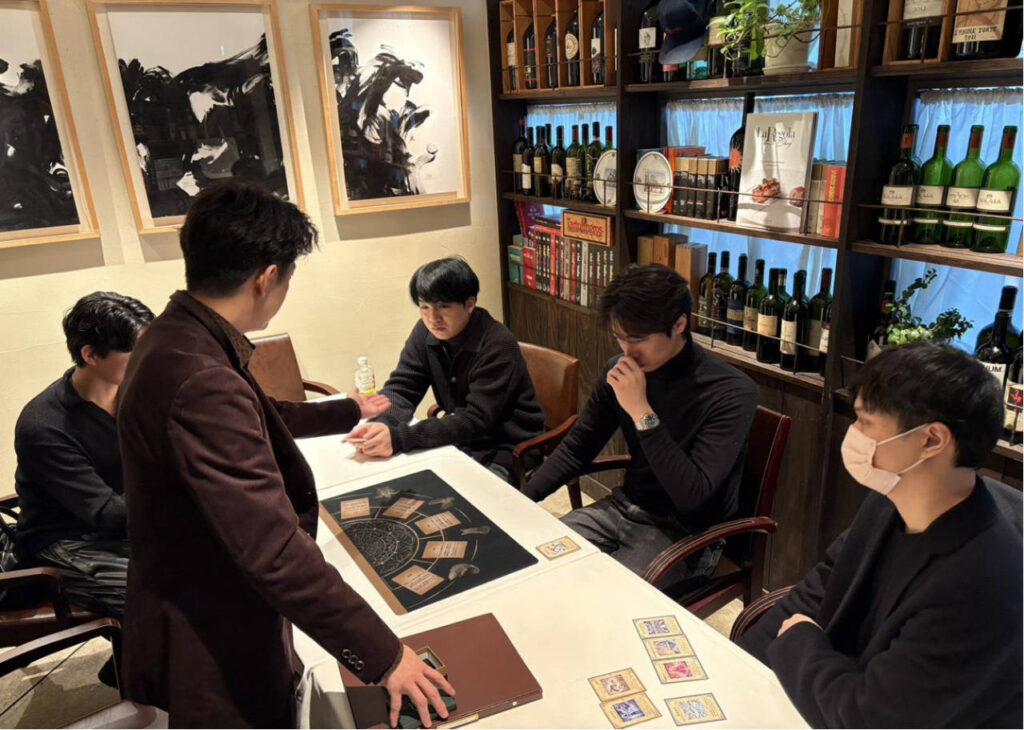
If you can answer "yes" to these questions, it suggests that resilience is present in your workplace. How about your organization?
Forests do not change quickly, but they do change steadily.
Fallen trees return to the earth, and soon new buds emerge. Before you know it, the forest has taken on a different look.
Our workplaces and communities should be the same at their core.
Rather than seeking only rapid change, I feel that nurturing the ability to revive repeatedly while maintaining a sense of "pause" is an important theme for the future of the forest circular economy.
Forest resilience-inspired "Ma" wood education.
And a wooden card game that fosters conversation.
These two steps may be small but sure ones toward creating a workplace where people can bounce back even after setbacks.
And then, one more round of parent-child dialogue unfolds. A deeper question emerges in the interview.
Strangers in the neighborhood exchange words when they see the card.
We believe that the accumulation of such small points of contact will eventually change culture, change the economy, and change the forest.
If you're even slightly interested in the DELTA SENSE card, let's walk this path together.
(President and CEO, WSense Inc. / DELTA SENSE Production Committee, Kazuhiro Aoki)