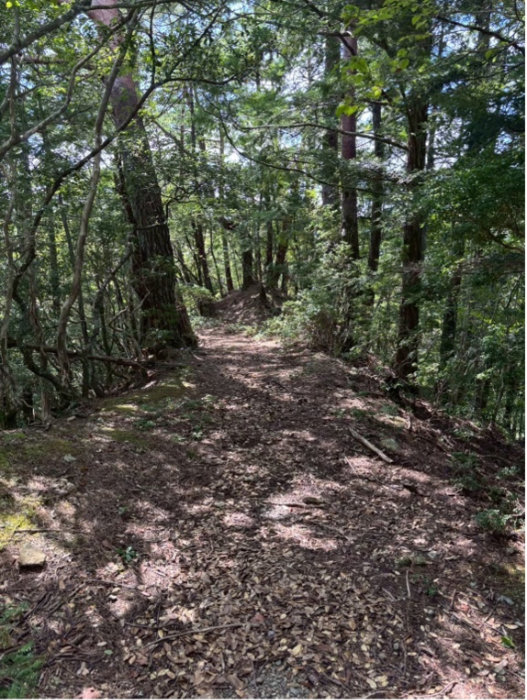
Preserving a mountain path that disappeared from maps for future generations: The challenge of the Totsukawa Village Nishikumano Kaido Regeneration Project
Updated by Nozomi Kanemoto on December 17, 2025, 8:44 PM JST
Nozomi KANEMOTO
Leaf Rain Co.
He joined the Japan Forest Technology Association in 2021 and has been involved in several ODA projects in the forestry sector, calculating GHG emission reductions and managing project operations. 2024 he became independent and is currently working in the forestry sector based in France.
The Kii Mountains, extending primarily across southern Nara Prefecture into Wakayama and Mie Prefectures, form one of Japan's most extensive forest regions, characterized by deep forests and steep mountain ridges. This mountainous area is dotted with sacred sites like Yoshino-Omine, Koyasan, and the Kumano Sanzan, which have long supported people's prayers and livelihoods. These sites are connected by pilgrimage routes leading to Nara and Kyoto. The landscape, where sacred sites, pilgrimage routes, and the surrounding forests form a unified whole, embodies a cultural landscape blending reverence for nature with Buddhism and Shinto. It is registered as a World Heritage site: "Sacred Sites and Pilgrimage Routes in the Kii Mountain Range" (*1).
Within the Kii Mountains, Totsukawa Village (※2)—boasting the largest area of any village in Japan—is a place where nature and history intertwine intensely. The village is dotted with diverse attractions: the Kobeji pilgrimage route connecting Koyasan to Kumano Hongu Taisha; the Kana settlement, known as a "village in the sky"; the Tanise Suspension Bridge, one of Japan's longest; and the Totsukawa Onsen hot spring area, renowned for its commitment to using only natural spring water. Currently, a new movement is underway in Totsukawa Village to revive its local resources. This is the "Nishikumano Kaido Revitalization Project," connecting the Nishikumano Kaido—a road that has linked settlements and people—to the future.
Leading the project is Masayo Minami, a native of Totsukawa Village who returned from Osaka. She came back with her family wanting to raise her children amidst the beloved nature of Totsukawa, but as she rebuilt her life, she noticed changes that made her hometown different from what she remembered.
"Compared to when I was a child, the number of people going into the mountains had really decreased."
Mr. Minami wanted to share the joy of the mountains with his own children. With this in mind, he asked a respected member of the community to guide him, and that's how he learned of the "Nishikumano Kaido." Used as a lifeline until the early Showa period, this road extended all the way to Gojo City. However, after the national highway opened, people stopped using it, and it gradually fell into disrepair.
"As long as our seniors are still with us, we can pass down the story of the trail. But as the generations change, it will be buried in the mountains and lost forever."
Witnessing the imminent threat of loss, Mr. Minami began gathering his comrades, thinking, "We must act now."

*Reference 1:UNESCO "Sacred Sites and Pilgrimage Routes in the Kii Mountain Range"
*Refer 2:Totsukawa Village "Overview of the Village"
The first person to reach out was Mr. Matsuda, who had been organizing trail running activities in Totsukawa Village. From there, the circle expanded to include his mountain-loving acquaintances. With limited information available at the museum, he continued researching online and eventually found the blog of Mr. Kojima, an expert on the mountainous region stretching from southern Nara to Wakayama who also worked on map production for a major publisher. This led to their connection.
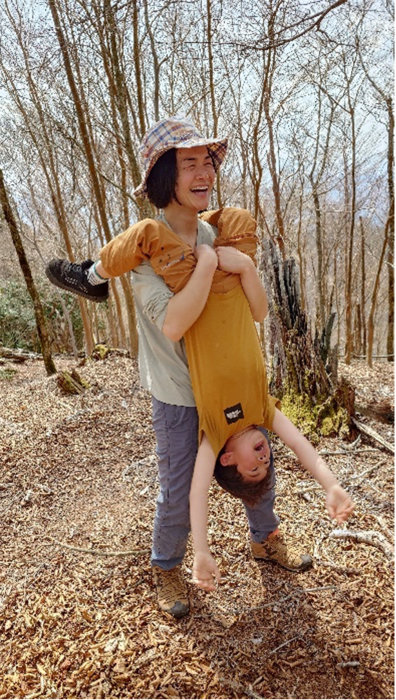
Thus, the "Nishikumano Kaido Revitalization Project" officially launched in 2020. Activities take place once a month. Mr. Minami participates alongside his son. For his son, who adores all living things, the mountains are literally a treasure trove. Seeing him interact with nature, his eyes sparkling, gives the project hope.
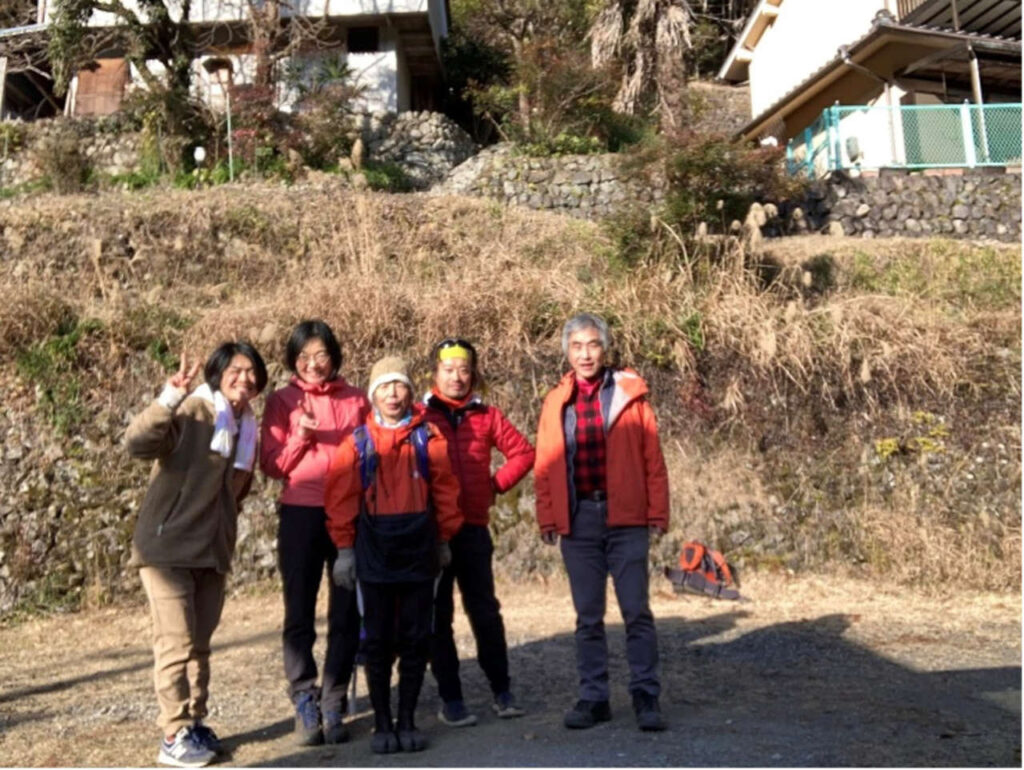
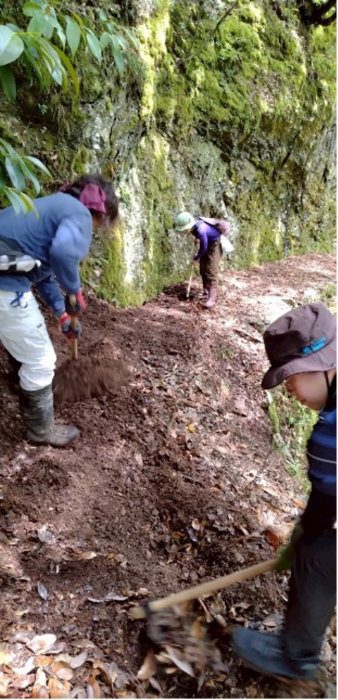
Maintaining rough mountain trails is no easy task. If no one passes through, the path quickly becomes overgrown with plants.
In the freezing cold, snow flutters down and sometimes the feeling fades from my fingertips. There are moments when I wonder why I'm here, even though no one is watching.
Every time we enter the mountains, we are reminded of nature's harshness. On days when snow flurries fall, our fingertips grow numb; on rainy days, the paths become slippery. Work done unseen can sometimes feel disheartening, yet still, the members keep moving forward, heading into the mountains.
Looking back, the path we forged stretches out like a single line. In that moment, I feel glad we kept going.
Approximately 60% of the routes currently suitable for maintenance have been restored, and the Nishikumano Kaido may be included in the next map. Recovery is steadily progressing.
As preparations progress, Mr. Minami is also considering ways to utilize the road.
"Events like trail runs also have the benefit of attracting people from outside. But I want it to be 'the path right beside us,' just like it used to be."
A place that can also be used for tourism and education. They express their desire to create a trail that blends into the community's daily life, serving as a hiking course and a resource for local studies. They hope future children will feel close to the mountains, just as they once roamed them freely. That wish is the driving force behind the project.
The stone walls along the Nishikumano Kaido bear witness to the advanced techniques of our ancestors. "These are skills we cannot replicate today. They are extremely valuable," says Mr. Matsuda. It is not possible to restore the entire route. Some sections lie buried beneath National Route 168, while others were submerged by dams. Nevertheless, the road from Kazegoya to the Naki settlement remains relatively well-preserved and is the most advanced in its restoration.
A path protected by people, passed down by people, and carried forward by people into the future. The revival of the Nishikumano Kaido is itself a challenge to the question of how the region engages with the mountains and what it leaves for the next generation.
The wisdom of our ancestors and the aspirations of those living today—both intertwine, and the path is about to reveal itself once more before people. (Leafrain Co., Ltd. Forest Consultant, Nozomi Kanemoto)