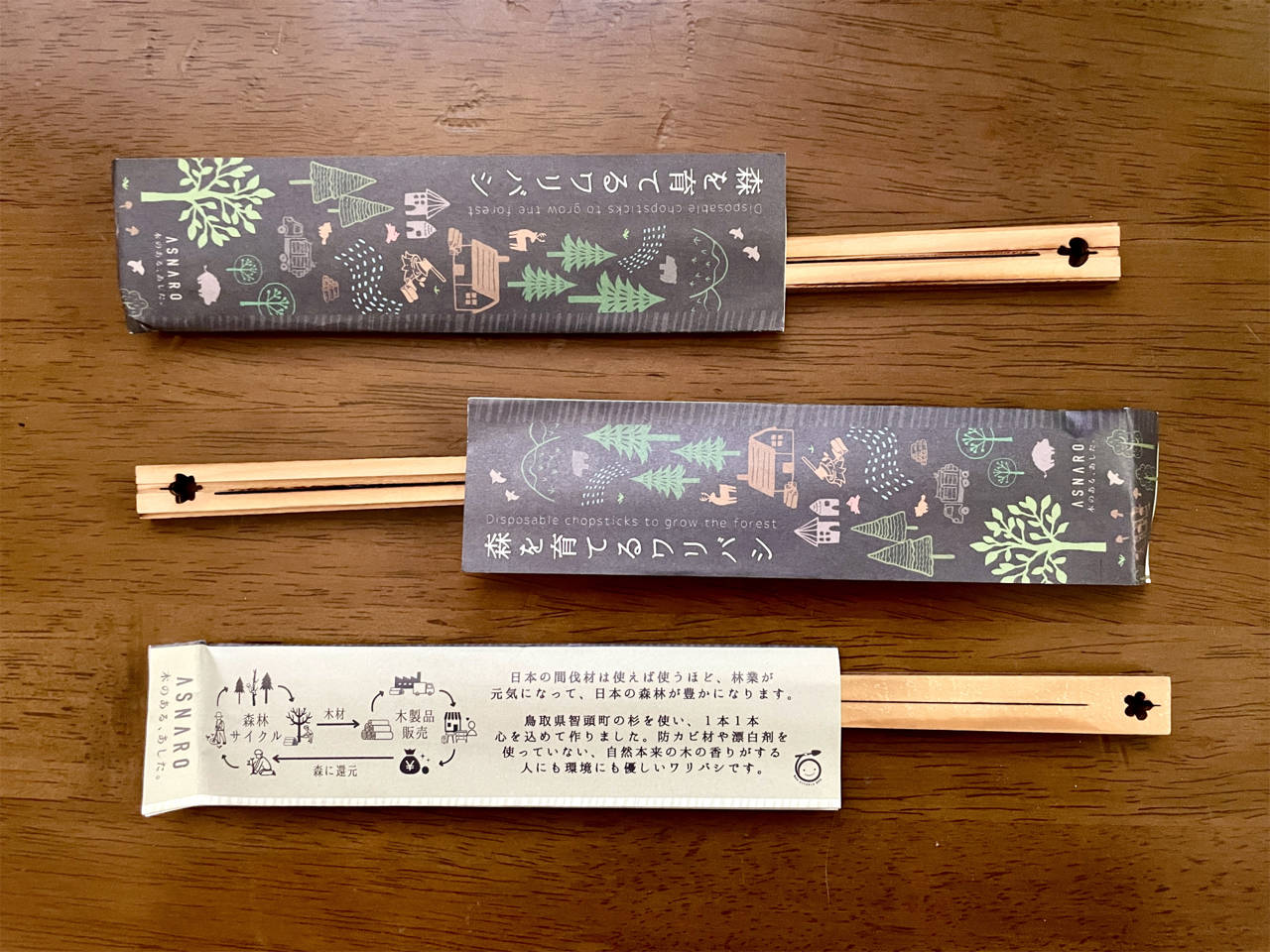
Disposable chopsticks, a familiar Japanese tradition, raise questions about the future of domestic timber utilization and forest circulation
Updated by Tomoko Ogura on January 28, 2026, 9:46 PM JST
Tomoko OGURA
Total Food Corporation / Japan Chopstick Culture Association
(Representative Director of Total Food Co., Ltd. and General Food Consultant / Visiting Professor at Miyagi University / Outside Director of a Tokyo Stock Exchange-listed company / Concurrent Lecturer at Asia University, Toyo University, and Tokyo Seitoku University / President of Shoku Kijuku / Representative of Japan Chopstick Culture Association, etc. / After working at Toyota Motor Corporation's Public Relations Department, he became Director of International Conference and studied overseas before assuming his current position. After working for Toyota Motor Corporation's Public Relations Department, he worked as a director of an international conference and studied abroad before assuming his current position. With "food and mind" as his main focus, he is well versed in all areas of food, from trends (analysis and development) to food culture, manners, nutrition, health management, food environment and mental health, and has a wide range of specialties. He has written academic papers on "chopstick culture and rituals," "Japanese chopsticks and peculiarities," and "waribashi and the food service industry," and has authored and supervised numerous books on chopsticks. He is said to be the only researcher of Japanese chopstick culture in the world.Total Food official website Japan Chopstick Culture Association website
In the 1990s and early 2000s, when global environmental issues came under close scrutiny, issues such as deforestation and carbon dioxide generation led to the "disposable chopstick controversy. The disposable chopsticks became widely recognized as a symbol of environmental problems, with critics claiming that they are made from healthy trees and that their disposable nature leads to deforestation. On the other hand, there were those who defended disposable chopsticks, saying that only a small amount of wood is used for disposable chopsticks and that the wood from thinning and scraps from lumber milling are used effectively. Against this background, consumption styles were influenced.
The food service industry has also seen changes, and the "My Chopsticks" movement, in which customers bring their own chopsticks and use them when dining out, has come under close scrutiny. An increasing number of restaurants are shifting from disposable chopsticks to returnable chopsticks made of plastic.
Convenience stores were faced with the problem of how to handle disposable chopsticks, which until then had been provided free of charge to customers who purchased boxed lunches and other items. Some stores charged for them, while others introduced a manual that asked customers whether they wanted them or not, and handed them out only to those who wanted them. Other shops responded in a variety of ways, such as by emphasizing the fact that the disposable chopsticks were made from waste wood.
Now that the "My Chopsticks" movement has settled down, in the restaurant industry, plastic chopsticks are also used in fast food restaurants and izakayas (Japanese style pubs), but disposable chopsticks are the norm in restaurants with high customer spend, such as kaiseki restaurants, long-established kappo restaurants, long-established sushi restaurants and restaurants within hotels. Customers rarely bring their own chopsticks. At convenience stores, supermarkets, take-out restaurants, and other restaurants that mainly serve mid-meal meals, disposable chopsticks are placed in front of the cash register, and customers are free to take as many chopsticks as they want.
Disposable chopsticks originated in Japan and were originally used only by Japan in the world, but according to the Forestry Agency, around 2010, more than 97% of disposable chopsticks were made from imported wood. According to the Forestry Agency's website, the consumption of disposable chopsticks in Japan had been hovering around 25 billion pairs in recent years, but it has been on a downward trend since 2007, reaching 19.4 billion pairs in 2010 (about 150 pairs per capita per year). In 2010, the number was 19.4 billion (about 150 dishes per capita per year).
However, the majority of disposable chopsticks produced in Japan are made from domestically produced wood. According to a 2010 survey by the Forestry Agency, of the 550 million pairs of disposable chopsticks produced in Japan, about 470 million were made from domestic wood and about 080 million were made from imported wood.
With the demand for global environmental protection, it is likely that something like the "disposable chopstick controversy" will continue to occur in the future. Disposable chopsticks, which are non-slip and not used by anyone else, are becoming more and more popular among people overseas because of their cleanliness. Of course, they will continue to be indispensable in the lives of Japanese people. There seem to be many factors to consider in the forest cycle with disposable chopsticks, such as the fact that they are made entirely from wood, the fact that they are mostly imported despite being a cultural practice that originated in Japan, and how the wood from which they originate is used to make disposable chopsticks. Reviewing our relationship with disposable chopsticks may be a good opportunity to think about forest circulation. (Tomoko Ogura, President of Total Food and Representative of the Japan Chopstick Culture Association)