Sustainability of Aromatic Plants Supported by the World's Forests: The Perspective of Dominique Roques, Perfumer with a Forester Father
Updated by Hitoshi Kadowaki on December 4, 2025, 9:36 AM JST
Hitoshi Kadowaki
Author, Faculty Member at Tokyo University of Science / After working for an international aid journal based on the principles of the United Nations Commission on Sustainable Development, he moved to France. He completed the Advanced Research Program in Human Ecology at the University of Paris 8 (Vincennes-Saint-Denis) with a comparative study of forest ecosystems and forestry between Japan and France.After returning to Japan, he authored numerous works on forests and the global environment. He is particularly known for his book France: Land of Broadleaf Trees, which first introduced French forests and forestry to Japan, and his translation Tree Thieves, which reported on the current state of illegal logging in North America's Sequoia primeval forests.Other works include The World from an Ecocultural Perspective (Minerva Shobo), and translations include In Search of the Origin of Fragrance (Tsukiji Shokan), The Memory of Rivers as Told by Trout (Tsukiji Shokan), A History of Ecology (Ryokufu Publishing), and A History of the Environment (Misuzu Shobo, co-translated).
Let us take a look at Dominique Roche's work and persona. He is a fragrance forager who has traveled the globe for thirty years in search of aromatic plants, and the author of In Search of the Origin of Fragrance, published this past June. Below, drawing also on passages from the book, I will introduce a dialogue between him and myself, the translator, organized by topic.
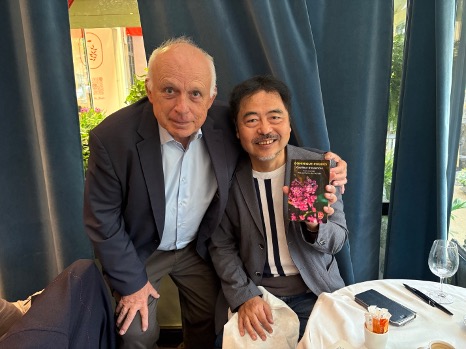
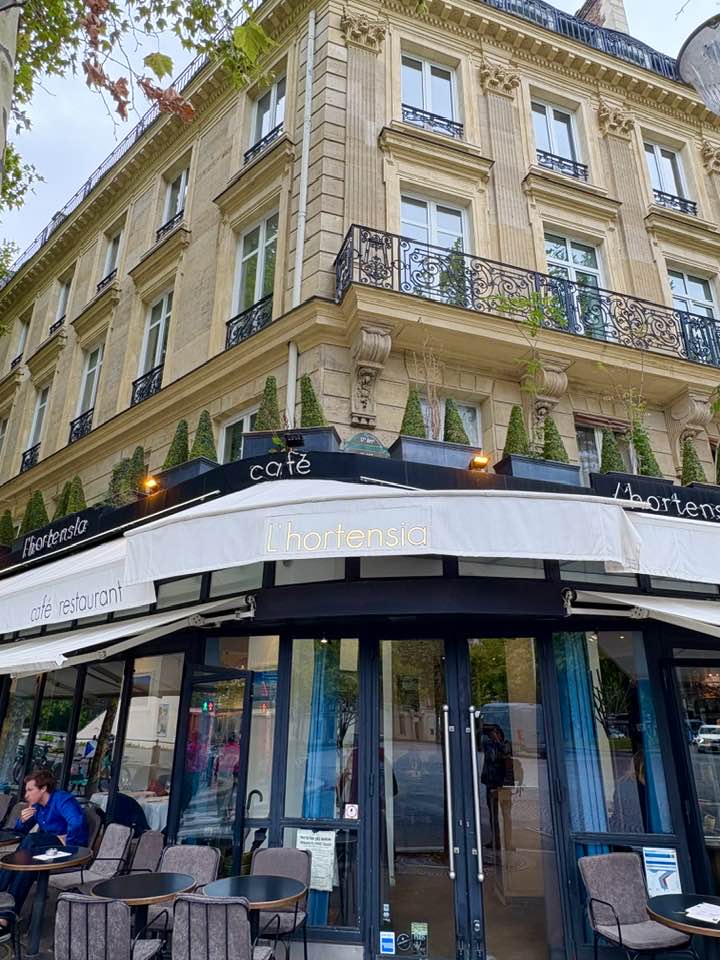
Early September in Paris's 17th arrondissement. At the bustling Café Ortensia, filled with lunchtime patrons, I met Dominique Roque for the first time. After a smiling greeting and handshake, we sat down at a table, and I promptly shared some good news with him.
"Sales of the Japanese edition are going well. There have been several newspaper reviews too."
"Was the book review favorable?"
‘Of course. Some even call it 'an undeniably excellent book.'"
Roque's lips curled into a smile. Beneath his rugged, yet approachable exterior lay a reserved, genuine face. The man who had searched for spices across some fifty countries worldwide—including remote wildernesses and war-torn regions—now sat before me.
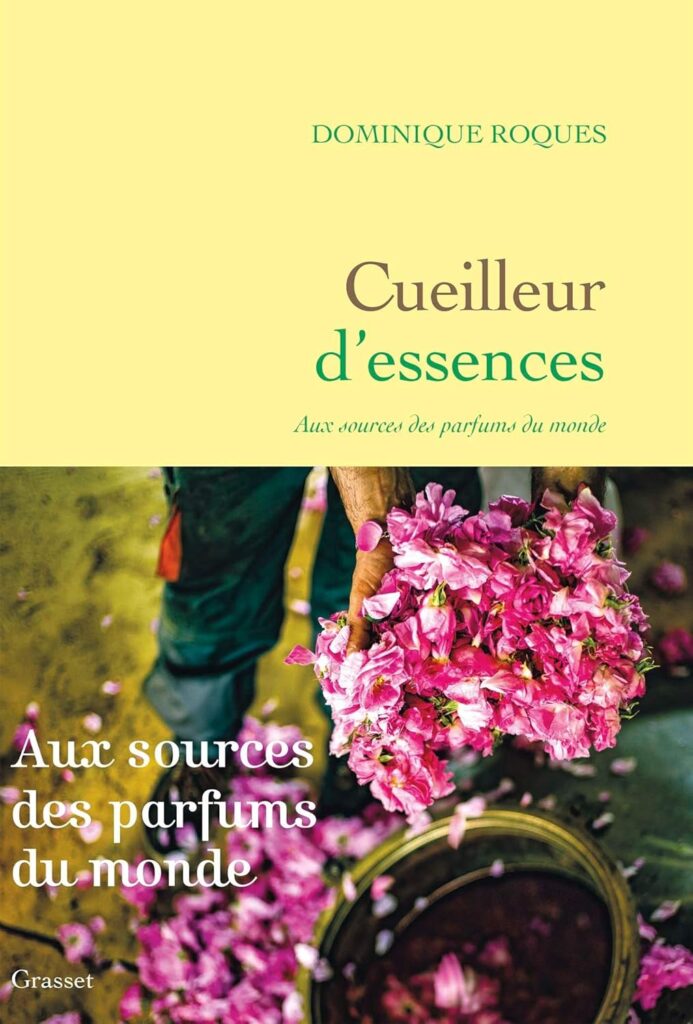
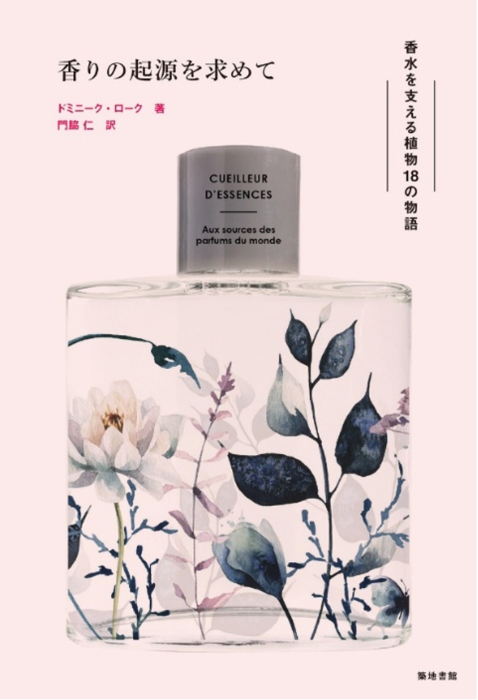
The ‘Japanese edition" refers to the Japanese translation of his masterpiece, Cueilleur d’essences, titled In Search of the Origin of Fragrance. While books written by perfumers exist, no book has ever chronicled the process of sourcing raw materials. Bolstered by such acclaim, sales rapidly surged over the course of a single summer. What first catches the eye in this book is its depiction, akin to a world travelogue of rich fragrance cultures.
From the large red house at the center of the estate and its rooftop terrace, the entire plantation can be seen below. The jasmine fields are a marvel, lush and thriving, literally covered in flowers. The legendary fertility of this soil, combined with the blessings of the Nile's waters and the sun, yields a magnificent harvest.The flowers are large, the yield per hectare is record-breaking, and the produce is truly beautiful. It is a sun-drenched, fruity, deep, mouthwatering, almost sensual floral oil.
("The Master and the White Flower")
"By the way, your father, who was a lumberjack, was someone who crossed over to America, right? When he returned, he was the first to bring a chainsaw to France. Next year, I'll be visiting your family home in the Landes department for a forestry inspection. Could you introduce me?"
"Oh, sure. He's got connections with the local forestry association too."
The bond between father and son, forged through trees, forms the very foundation of his life. As I envisioned the primeval redwood forests along the west coast of North America, my thoughts drifted to his own story of parent and child.
Twenty-five years ago, my father began gathering trees to create an arboretum on several hectares of land in Rand County. One of the first trees he wanted to plant in the center of his property was a Sequoia. The redwood, far from its native California, took root there and should now stand 20 meters tall.
My father watched over the tree's growth with special care, keeping in mind his memories of being a lumberjack in California. (...) Since my father kept asking about my book project, I told him I wanted to write about aromatic plants.
Then my father said.
"Remember this. Every forest grows back. Whether on its own or with help. Trees hold no grudges. They simply have far more time than humans."
("Sacrificial Forest")
His background in forestry added a unique dimension to Roak's career as a spice procurer.
He is not merely a buyer; he is involved in every process, from selecting the origin to producing and shipping raw materials, and even extending to perfume creation and product distribution. This resembles forestry operators who oversee every phase, from seedling production and operational management to harvesting, lumbering, and marketing wood products. What both share is the ultimate challenge of "sustainable material production" and the "stable economic and social infrastructure" that supports it.
However, one key difference between the perfume industry and forestry lies in the scarcity of raw materials. Numerous species—such as benzoin, tonka bean, frankincense, and sandalwood—have long been prized precisely because of their rarity. When risks like climate change and illegal logging come into play, the discussion inevitably expands to encompass issues of poverty and endangered species.
Targets of massive illegal trade, every accessible tree was completely logged, and through collusion with authorities, containers filled with hundreds of rosewood logs were exported without any repercussions. This has been going on for years, and now tens of millions of dollars are being laundered through vanilla.
("The Melancholy Princess of the Tropics")
Everything was far away, and for Francis, the journey remained complicated.
I'm new here. When it comes to regulations and taxes, I have to make absolutely sure there's nothing to criticize. Building trust takes time, but it can be lost overnight. Far too many Europeans forget that. Because it's been known for years that I do things properly, now the government and ministers treat me seriously and support me.Most problems stem from smuggling. I'm the only one paying the benzoin harvest license fees and all the taxes and export duties."
(Pioneer and the Three Pickers)
For them, sourcing perfume ingredients is the work of systematically deriving the optimal solution to all these challenges. Behind the glamorous and sophisticated cosmetics business lies a solemn, down-to-earth mission: addressing risks in labor conditions and quality, developing local infrastructure, and eradicating poverty. Precisely because of this, the rewards are substantial when they overcome the challenges and constraints and establish an unshakable production system.
There lies a unique sense of smell and creativity distinct from that of a perfumer—one that belongs to the sourcing specialist. Needless to say, both are indispensable to perfume.
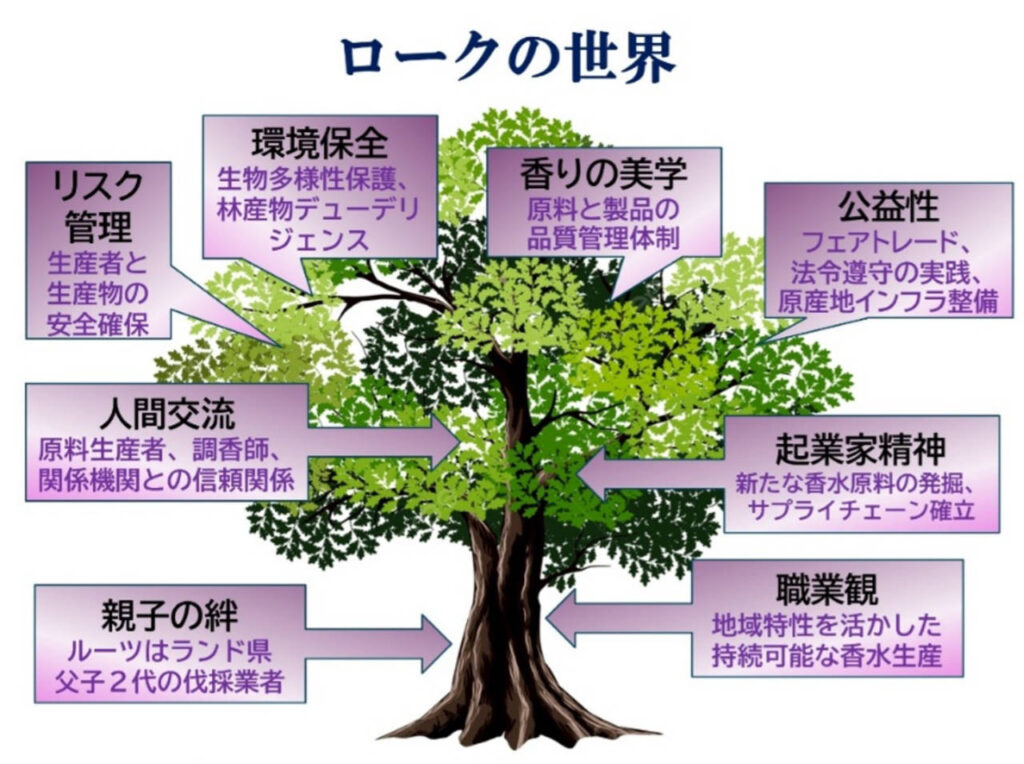
Considering the complexity of the production system Roque revealed, the creation of a perfume seems like a rare journey, almost a one-in-a-million chance. But the difficulty in achieving it stems not from probability, but also from the increasingly demanding nature of market orders.
Ironically, modern Western consumers have an unprecedented interest in ingredients derived from "nature." They seek natural extracts for health in cosmetics and food flavors, expect healing from aromatherapy, and desire richness and authenticity in perfumes. At the same time, they increasingly demand more information and transparency about the ingredients' origins, environmental impact, and ethical relationships with local farming communities.
(Afterword)
Here, abruptly, perfume originally served not merely for grooming or elegance, but also to stir the instinct for battle. As seen in the tale of Taira no Atsumori, who applied light makeup and incense to himself, tucked a transverse flute under his arm, and perished at Ichinotani, fragrance possesses a spiritual aesthetic that condenses the tension of life and ignites it in an instant.
Modern people, too accustomed to the term "sustainability," have largely lost sight of the fact that beyond the limits of growth lies the "demise" of the human environment. Yet when Roach states that "there has never been an era where the continuity of production is so uncertain," even considering just one product like perfume, should we not pause to reflect anew?That the entire global society is on the verge of crossing the tipping point toward its end. For this insight comes from a person who dedicated their life to the earth that yields natural materials, sharing joys and sorrows, fate and destiny with every stakeholder.
As I stepped out of the café, a light drizzle was falling. Workers in orange uniforms were pruning the horse chestnut trees, which had grown tall during the intense summer heat. Batomouche, bouquinistes, street performers—while preserving its unchangeable symbols, Paris is undergoing a profound transformation.
"I'm heading to India tomorrow. To attend Raja's niece's wedding, you see."
As Roak casually mentioned his upcoming schedule, something suddenly struck me.
"Raja! I remember. That chapter where he brought everyone together—"
And the very next moment, at exactly the same time, we were shouting out that chapter title.
"Elephant and Wedding Celebration!"
Rook and I burst out laughing at a scene straight out of an anime.
In the fall of 2026, he will visit Japan to establish a new circle of people connected through scent.
We firmly agreed to meet again in Tokyo, and I bid farewell to the procurement agent.
(Author, Faculty Member at Tokyo University of Science, Hitoshi Kadowaki)
Reference Links
In Search of Fragrance's Origins: 18 Stories of the Plants Behind Perfume (Tsukiji Shokan)
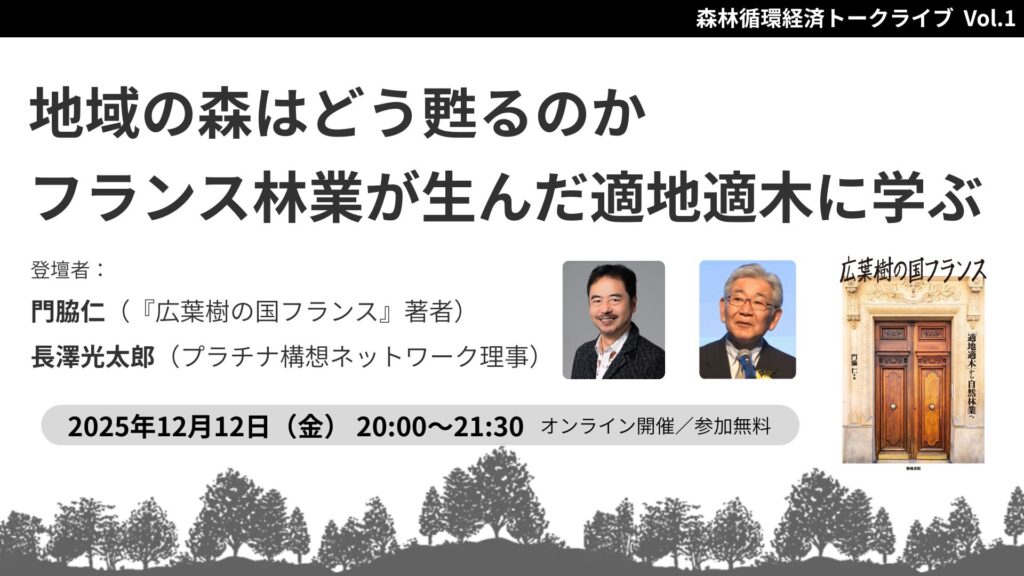
■Announcement of Event Featuring Mr. Kadowaki
Forest Circular Economy Talk Live Vol.1 How Can Our Local Forests Be Revitalized? Learning from France's Forestry Approach: Right Tree for the Right Place Friday, December 12, 2025 | 8:00 PM - 9:30 PM | Online |