Updated by "Forest Circular Economy" Editorial Board on December 19, 2025, 5:46 PM JST
Editorial Board, Forest Circular Economy
Forestcircularity-editor
We aim to realize "Vision 2050: Japan Shines, Forest Circular Economy" promoted by the Platinum Forest Industry Initiative. We will disseminate ideas and initiatives to promote biomass chemistry, realize woody and lumbery communities, and encourage innovation in the forestry industry in order to fully utilize forest resources to decarbonize the economy, strengthen economic security, and create local communities.
Sekisui House, in collaboration with the University of Tokyo's KUMA LAB and other industry-academia groups, recently announced a project called "Traveling CLT" to reuse the orthogonal laminated timber (CLT) used in the Japanese Government Pavilion (Japan Pavilion) at the Osaka Expo in Kansai. The project is an attempt to circulate the materials that will be dismantled after the Expo is over, not only reusing them for a single time, but also letting them travel around the country as they are repeatedly dismantled and rebuilt. The project is attracting attention as a challenge to the circular economy, in which lumber, which bears the memory of the national event that was the Expo, is sublimated into a resource for the next generation.
This project is positioned as part of the verification for the realization of the "House to House" concept announced by Sekisui House in December 2024. In addition to the CLT panels used in the Japan Pavilion, there are plans to try combining materials from the company's demolished houses. The project will verify and experiment with technologies and design methods that enable the dismantling of houses for reuse, as well as the use of digital information, to explore the possibility of buildings transcending the framework of individual buildings and becoming a stock of materials that can be dismantled and reconstructed.
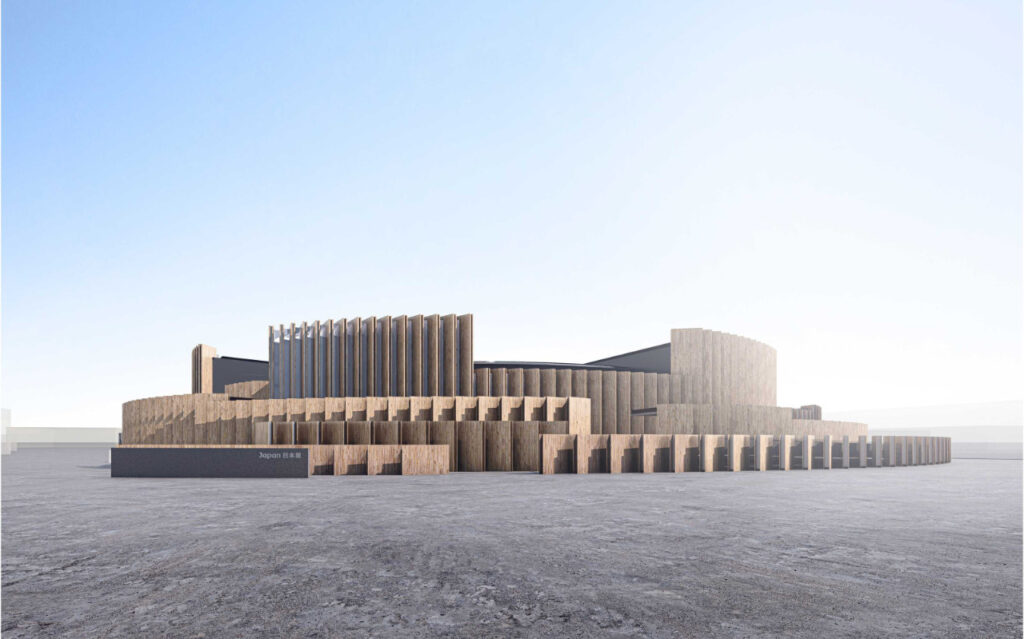
CLTs are becoming increasingly popular from the perspective of promoting the utilization of domestic forest resources and revitalizing local economies, but there are still many unestablished evaluation guidelines for their reuse after dismantling. In this project, together with Professor Kenji Aoki of the University of Tokyo and Associate Professor Tomoyuki Gondo of the University of Tokyo Graduate School, we will build scientific evidence to give demolition materials a "second role" by understanding their history and measuring their residual strength.
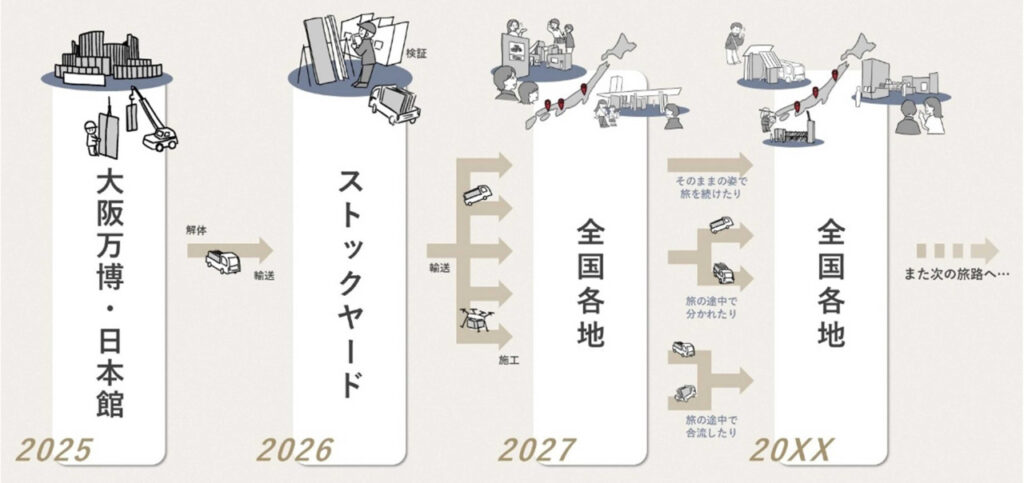
This "journey," which respects the "sensory value" of time-worn wood in terms of its texture and history, while implementing it into society as a system, will expand the possibilities for the future of housing. In addition, as architecture shifts from an existence of consumption to one of circulation, the role of wood will play an even greater role.