The Rayon Pulp Industrial City Built in Shisuka, Karafuto: Following in the Footsteps of Young Forest Technocrats
Updated by Nobuyuki Yamamoto on January 14, 2026, 8:37 PM JST
Nobuyuki YAMAMOTO
Forestry and Forest Products Research Institute, National Forestry Research and Development Institute
Director of Forestry Management and Policy Research Area, Forestry and Forest Products Research Institute, National Institute of Forestry Research and Development / Specializes in forest policy and forestry economics. His recent research focuses on modernization and forests and forestry. His publications include "Forests and Time: A Social History of Forests", "Long-Term Sustainability of Local Forest Management: Future Perspectives from 100 Years in Europe and Japan", and "Theory of Forest Management Systems". His research on the modernization process of forest management systems won the Prize for Academic Achievement from the Forestry Economics Society of Japan, and "The Origins of the Forest Planning System in Japan" won the Paper Award from the Forestry Society of Japan.
It is a little harder to get there now, but I once visited Sakhalin in the summer of 2015, before Russia launched an inexcusable war against Ukraine. It was a 159-km, five-and-a-half-hour one-way trip by passenger boat from Wakkanai to the southern Sakhalin port city of Korsakov (formerly Odomari), across the Soya (La Perouse) Strait.
We walked around the island, which Kenji Miyazawa visited and used as a motif in his "Night on the Galactic Railroad," taking the train that runs north to south and the public buses that stretch across the island. From Yuzhno-Sakhalinsk (formerly Toyohara), the provincial capital, we crossed the 50th parallel, the prewar border between Japan and the Soviet Union, to Nogliki, an oil and natural gas development center on the east coast of the northern part of the island, and to Kholmsk (formerly Moka) and Nevelsk (formerly Hontou), fishing towns from the days of Japanese Sakhalin on the west coast of the southern part. (formerly Moka) and Nevelsk (formerly Hontou), fishing towns from the days of Japanese Sakhalin.
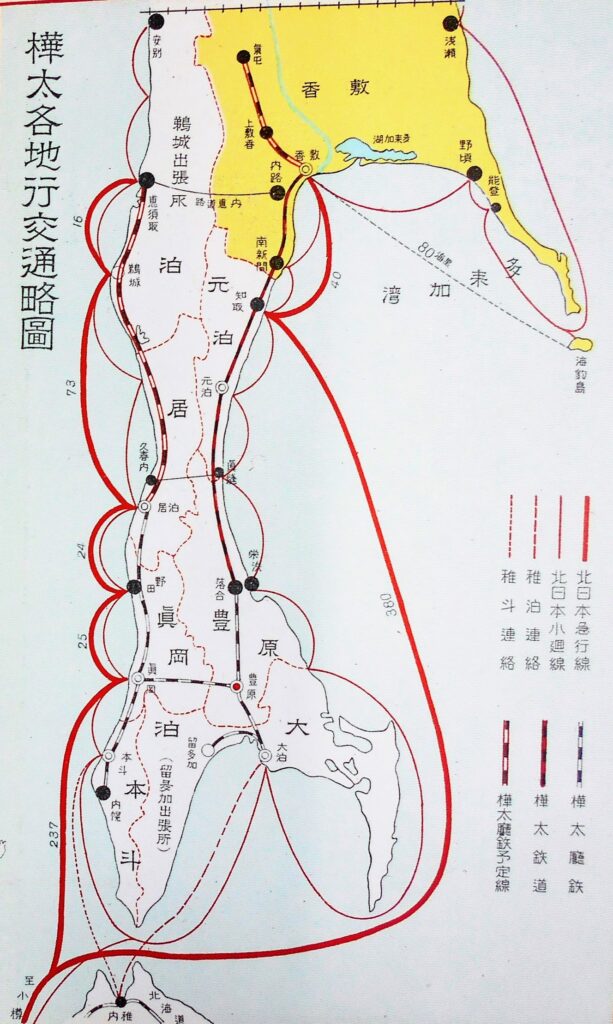
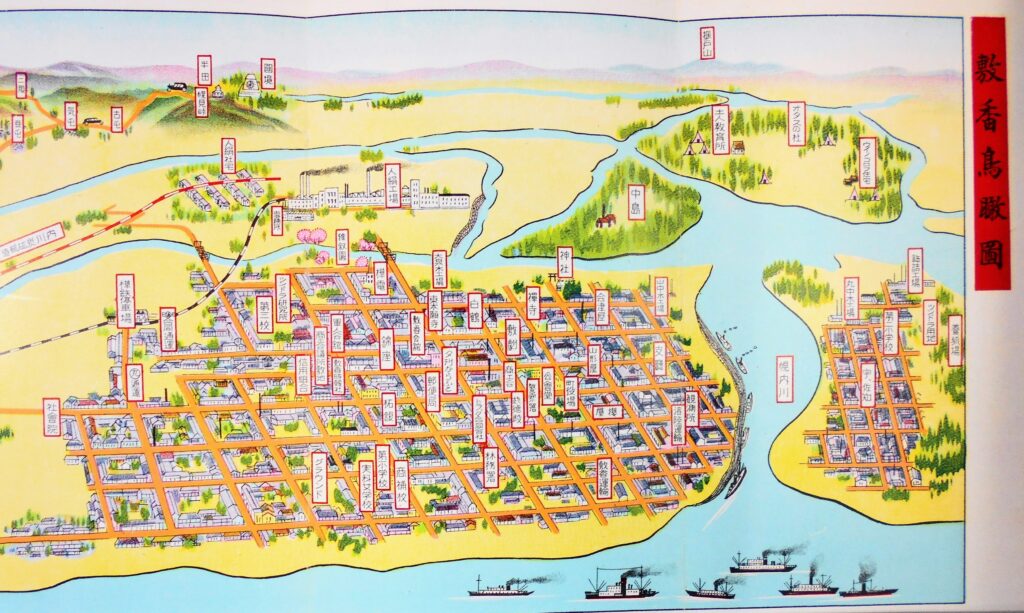
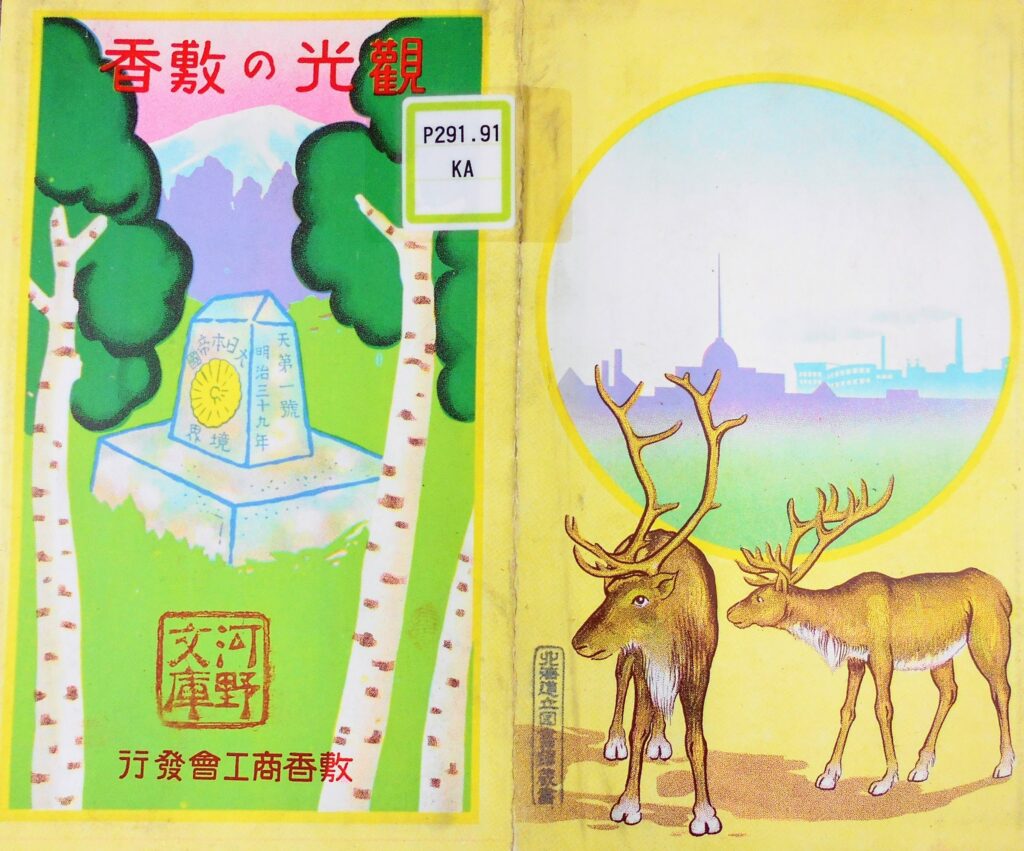
Here and there on the island, one can still see the pulp and paper mills built in the first half of the 20th century by Oji Paper, Fuji Paper, and Kabata Kogyo, the three major paper companies in Japan in the prewar period. Many of them continued to operate as pulp and paper mills until the collapse of the Soviet Union in the latter half of the 20th century, and some of them continued to operate as district heat supply facilities. It was evident that many towns in Sakhalin had developed together with pulp and paper mills, backed by abundant forest resources. This overlapped with the modern history of the towns scattered throughout Nordic Finland, which I have visited several times in my research, and was very interesting.
In "Forests and Time," I was in charge of chapter 4, "Modernity and Forests of Hamadori, Fukushima Prefecture: A Chapter", which depicts the relationship between the modern progress of Hamadori, Fukushima Prefecture and its forests, centering on the interaction between forest technocrats and lumber millers. One of the main characters of the story, Yutaka Honoda, graduated from the Department of Forestry of Tokyo Imperial University in 1934. Many young people who completed forestry education at the Imperial University, the higher educational institutions of agriculture and forestry, and the secondary educational institutions of agriculture and forestry at this time were aiming for Korea, Taiwan, "Manchukuo," and Sakhalin, which were colonies of Japan at the time. Honoda was one of these young men, and immediately after graduation he went to work for the Sakhalin Agency, arriving in Shikika (now Poronaisk), a town on the eastern coast near the 50th parallel of northern latitude, as a young forestry technocrat.
At the time, the town of Shikika had a population of 30,000. The newly established Shikika Plant of Japanese Silk Pulp and Paper, an affiliate of the up-and-coming Oji Paper Company, was newly established, and the town was booming in the lumber business. Jinken (artificial silk thread) is the Japanese name for rayon. The Shikika Mill was the first domestic mill in Japan to produce rayon for practical use. The Shikika Forestry Office of the Sakhalin Government greatly increased its staff in order to procure materials for this state-of-the-art factory. Honoda was appointed as one of the young and capable staff members. The plant produced 45,000 tons of rayon and 25,000 tons of kraft paper a year from the raw materials, which were Ezo spruce and Abies sachalinensis from the upper reaches of the Horonai River (now the Poronai River), a large river that flows through Shikika.
On the 2015 trip, I really wanted to visit Poronaisk, where Honoda spent his youth. However, the night train arrived and departed from Poronaisk in the middle of the night, and I gave up on the idea of being thrown into a strange and foreign station in the dark. If I ever visit Sakhalin again, I would like to walk around the town of Poronaisk again, looking for the image of Honoda. (Nobuyuki Yamamoto, Director of Forestry Management and Policy Research, Forestry and Forest Products Research Institute, National Institute of Forestry Research and Development)
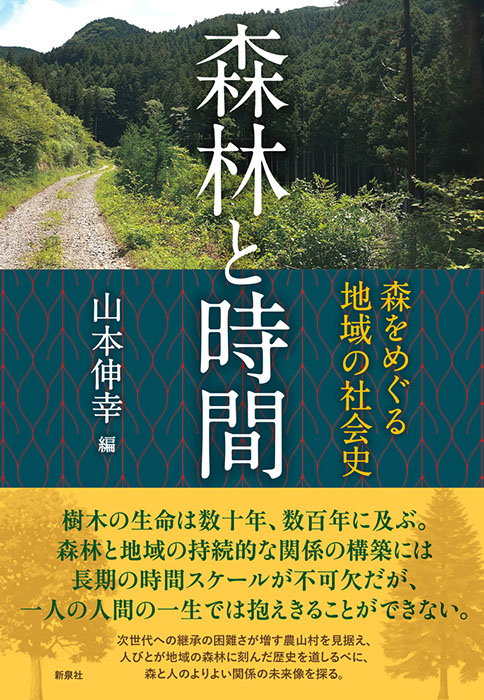
Forests and Time."
Edited by Nobuyuki Yamamoto, published by Shinsensha
The life of a tree can span decades or centuries. A long-term time scale is essential for building a sustainable relationship between forests and local communities, but it is not something that can be carried out in the lifetime of a single person. With an eye on farming and mountain villages, where it is becoming increasingly difficult to pass on the forests to the next generation, we will explore the future of a better relationship between forests and people, using the history that people have carved into the local forests as a guidepost.
<Table of Contents
Introduction: Forest Time and Human Time Nobuyuki Yamamoto
Chapter 1: People Who Encountered Yamazukuri Shimazaki Yoji and the Forest School Atsuro Miki
Chapter 2: Inheritance of Mountain Village Society and Women's Life Course: Women's Progress in 200 Years of a Mountain Village in Tochigi Prefecture Miho Yamamoto
Chapter 3: Life History of a Village and Its Residents Living with Mountains and Rivers Taro Takemoto, Shuhei Sato, Sho Matsumura
Chapter 4: Modernity and Forests in Hamadori, Fukushima Prefecture, Chapter 4: Nobuyuki Yamamoto
Chapter 5: The Interconnection between the Pulp and Paper Industry and Local Sustainability
Chapter 6: The Era of the Akai School: The Origin of Domestic Timber Supply Development in a Local University Yoichiro Okuyama
Chapter 7: Party and Expertise in Forest Management Changes in Forest Policy and Local Practices in Tenryu and Fuji Minami-Foothills Kazuto Shiga
End of Chapter Nobuyuki Yamamoto, Continuing to Re-weave the Relationship between Forests and People