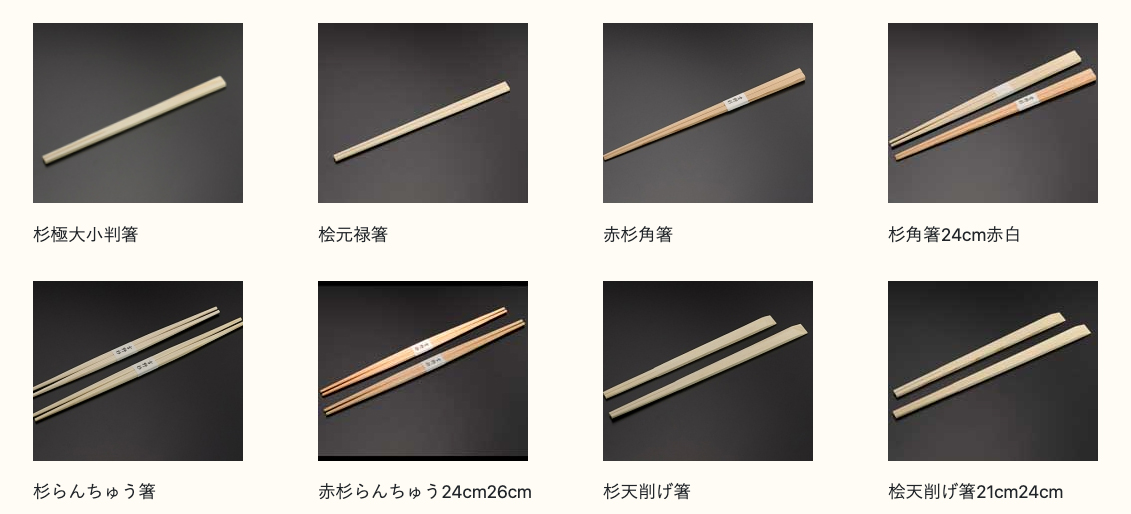
The historical significance of disposable chopsticks, which originated in Japan; The use of cedar wood supported the dining-out culture of the Edo period The historical significance of disposable chopsticks, which originated in Japan
Updated by Tomoko Ogura on February 25, 2026, 10:22 AM JST
Tomoko OGURA
Total Food Corporation / Japan Chopstick Culture Association
(Representative Director of Total Food Co., Ltd. and General Food Consultant / Visiting Professor at Miyagi University / Outside Director of a Tokyo Stock Exchange-listed company / Concurrent Lecturer at Asia University, Toyo University, and Tokyo Seitoku University / President of Shoku Kijuku / Representative of Japan Chopstick Culture Association, etc. / After working at Toyota Motor Corporation's Public Relations Department, he became Director of International Conference and studied overseas before assuming his current position. After working for Toyota Motor Corporation's Public Relations Department, he worked as a director of an international conference and studied abroad before assuming his current position. With "food and mind" as his main focus, he is well versed in all areas of food, from trends (analysis and development) to food culture, manners, nutrition, health management, food environment and mental health, and has a wide range of specialties. He has written academic papers on "chopstick culture and rituals," "Japanese chopsticks and peculiarities," and "waribashi and the food service industry," and has authored and supervised numerous books on chopsticks. He is said to be the only researcher of Japanese chopstick culture in the world.Total Food official website Japan Chopstick Culture Association website
Disposable chopsticks were born in Japan. Therefore, among countries where people mainly use chopsticks to eat, the use of disposable chopsticks is one of Japan's unique characteristics. Today, disposable chopsticks are valued for their convenience and price in the food service industry, but I would like to write about the significance of disposable chopsticks other than convenience, based on a paper I submitted to the Japan Food Service Society (2016), in which I researched from the perspective that there may be other roles.
There are two theories about the origin of disposable chopsticks. One theory is that it began in the 14th century, when Emperor Godaigo offered cedar chopsticks from Shimoichi around 1336-39, when he was in his imperial palace in Yoshino. The other theory is that it began in the 19th century when Soan Sugihara, a pilgrim monk, visited Yoshino and saw barrel round chopsticks being made in the Yoshino area.
In any case, the key word is "cedar" tree. Why was it cedar?
One of the reasons why the production of disposable chopsticks flourished in the Yoshino region, which also produces cedar, is due to the amount of rainfall. The high annual rainfall in the Yoshino region caused the trees to grow dense, which necessitated the thinning of the cedar trees at regular intervals, and the thinned cedar trees were used for a variety of tools.
The other theory of the origin of the chopstick is that the demand for cedar wood for sake barrels increased during the Edo period (1603-1868) with the advent of the barrel-carrying ships that connected Osaka and Edo (present-day Tokyo). In the Edo period (1603-1867), there were many restaurants in Edo (present-day Tokyo), and disposable chopsticks made from reused sake barrels were in high demand because they were easy to manage and did not need to be washed, in addition to the fact that unused chopsticks could be offered to customers. It can be inferred that the demand for disposable chopsticks was high.
In the early Edo period, the business of chopstick shop was established in Nihonbashi by the store of Shirohashi-ya Kuro, along with the business of making chopsticks for the emperor in Ichijo Shinmachi in Kyoto. Furthermore, by the mid-Edo period, there were 6,000 restaurants, including many cooking teahouses, in Edo alone, and the place for meals expanded from the home to eating out. Leisure time activities such as theatrical performances, cherry blossom viewing, and picnics also became popular, and the use of disposable chopsticks increased. In this way, a style similar to today's food service industry was established in the Edo period.
One example of eating out in the Edo period is an eel restaurant. At eel restaurants, "hikiwari chopsticks" or "warikake chopsticks," which are disposable chopsticks made of bamboo, appear. The reason why bamboo is used is that bamboo skewers are easy to tear for piercing eel, and have advantages such as being resistant to smell and oil soaking through.
During the same period, cut buckwheat noodles, which were made of buckwheat flour in the form of dumplings, were replaced by long and thin cut buckwheat noodles, which are said to have originated because they were easier to eat quickly with chopsticks. Furthermore, the techniques of local cuisine of each clan were passed on to the next generation, leading to the development of modern-day local restaurants. Chopsticks and bamboo chopsticks that took advantage of local characteristics were added, and the variety of chopsticks used in restaurants spread throughout the country.
Based on the above, it is likely that restaurants came into vogue during the Edo period along with the movement of people and goods, and were distributed from east to west, but disposable chopsticks also played a role in deepening ties between people and their food.
It is said that disposable chopsticks in the form we use today first appeared in Japan around 1897. Restaurants and cafes began to offer a wider variety of food styles, from kaiseki cuisine to light meals, and the demand for disposable chopsticks also increased as transportation systems were improved and business traffic increased.
During the Meiji and early Taisho periods, five types of disposable chopsticks were invented and disposable chopsticks became an industry. Later, with the development of machines, by the early Showa period (1926-1989), a variety of trees could be used to make disposable chopsticks, even if they were not made from cedar.
As a form of service that "provides customers with unused chopsticks that others have not used," disposable chopsticks became a useful tool in the food service industry, and with the cooperation of various types of "wood," disposable chopsticks continue to be an indispensable tool in the food service industry. (Tomoko Ogura, President of Total Food and Representative of the Japan Chopstick Culture Association)