Updated by "Forest Circular Economy" Editorial Board on January 21, 2026, 1:03 PM JST
Editorial Board, Forest Circular Economy
Forestcircularity-editor
We aim to realize "Vision 2050: Japan Shines, Forest Circular Economy" promoted by the Platinum Forest Industry Initiative. We will disseminate ideas and initiatives to promote biomass chemistry, realize woody and lumbery communities, and encourage innovation in the forestry industry in order to fully utilize forest resources to decarbonize the economy, strengthen economic security, and create local communities.
Mitsui Home Hokkaido was selected by the Hokkaido Police Department for the "FY2025 Purchased Police Boxes and Police Stations Development Project. The five police boxes to be built in Sapporo and Eniwa will be constructed using a unit construction method with domestically produced CLT (laminated laminated laminated timber) for the structure. The construction of wooden police boxes is the first attempt by the group to build such a structure. The project aims to realize sustainable local communities and a decarbonized society by actively utilizing local timber such as Abies sachalinensis, Japanese larch, and Japanese white birch.
The five police boxes to be constructed are box-shaped units made of CLT, a domestic material with superior strength. The main structural components are assembled at the factory before delivery to the site, ensuring high quality and safety. As a result, the construction period has been shortened by approximately three months compared to conventional construction methods, and all buildings are scheduled to be delivered by the end of April 2026.
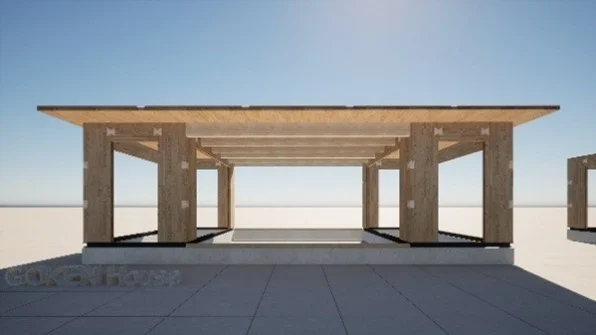
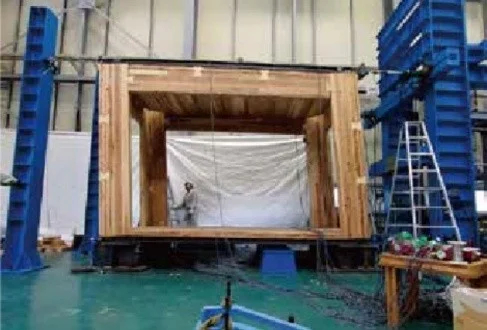
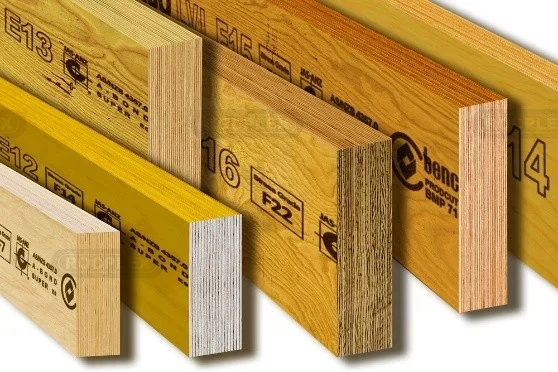
Another feature of this project is its collaboration with various local companies in the design, construction, and quality control processes. By incorporating lumber produced in Hokkaido into the building, not only for the base material and structural plywood, but also for furniture such as counters and desks, the company supports the promotion of local production for local consumption and the revitalization of the local economy.
In terms of performance, in consideration of the environment of Hokkaido, which is a cold region, the building is equipped with exterior thermal insulation and plastic sash windows with three-layer insulated glass. The combination of heat-exchange ventilation fans, high-efficiency air conditioners, and LED lighting has also improved energy-saving performance, reducing environmental impact and creating a comfortable working environment.
The conversion of public buildings to wooden structures will also serve to integrate the material "wood" into the city and make people reaffirm the value of forests. The addition of new values such as "environmental friendliness" and "contribution to the community" to the function as a base for community safety is expected to serve as a bridge between the forest and the city.
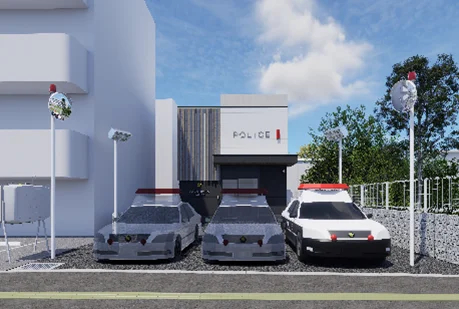
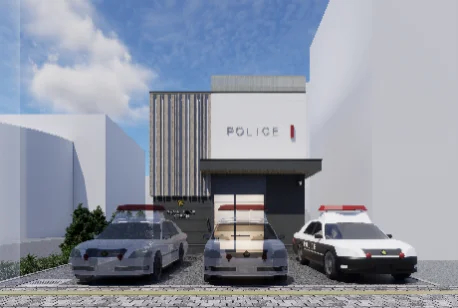
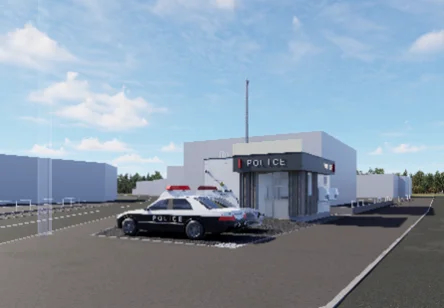
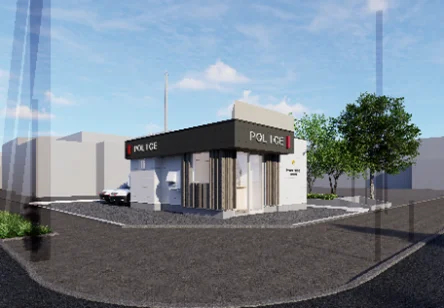
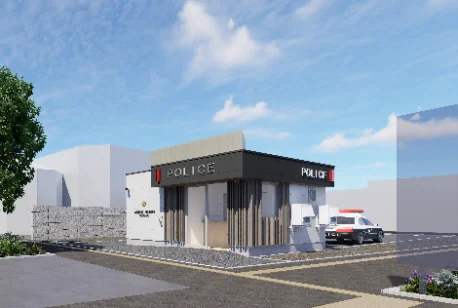
Project Summary
Client : Hokkaido Branch of Police Mutual Aid Association
Construction name: 2025 purchase-type police box and police station development project (Phase I)
Design supervision: Mitsui Home Hokkaido Co.
Construction: Mitsui Home Hokkaido Co.
Scale/structure: 5 one- and two-story buildings, wood construction (box-shaped unit structure using CLT)
Construction period: Late December 2025 to late April 2026 (planned)