Maate, Kanaate...Why does Ishikawa Prefecture's tree "ate" have so many names? The formation of a local timber brand as seen in Noto Hiba
Updated by Yuho Hitomi on February 12, 2026, 9:09 PM JST
winning hand containing one of each terminal and honor tile plus one extra copy of any of them
Yuho HIFUMI
Ishikawa prefecture (Hokuriku area)
He joined the Ishikawa Prefectural Government in 2012. After working on forest planning and forest GIS, he worked as a forestry extension advisor at the Agriculture and Forestry General Office, where he was involved in the registration of "Noto's Ate Forestry" as a forestry heritage site and the establishment of the "Creative Reconstruction Platform for Noto Using Ate Forestry and Noto Hiba" after the Noto Peninsula Earthquake of 2024. He holds a Master's degree in Global Environmental Studies from Kyoto University. He is a Noto Satoyama Satoumi Meister at Kanazawa University. Forest General Supervisor (Forester).
It is known that the names of plants have regional characteristics (dialects), which are related to how the species was introduced and the history of its use as a resource. The "Nihon Botanical Dialects" contains 11 dialects of the genus Thujopsis, and the Hinoki Asunaro (Acer palmatum), the "prefectural tree" of Ishikawa Prefecture, has also been given many other names.
Ate is the name given in the Noto region to Hinoki asunaro. Most individuals are clones of a common parent and genetically belong to several groups, but their appearance and characteristics are surprisingly diverse, making beginners weep (?). However, their appearance and characteristics are surprisingly varied, which is a pain in the neck (?) for beginners. However, differences in material quality and growth are important for the use of the trees and the success or failure of forestry, and it is still important for those involved in forestry in Noto (especially when dealing with Noto hiba) to be able to distinguish between these species.
Our predecessors have left behind good books that accurately describe the identification method, materials, and uses of ate. In "Ate: Rohanbaku (Nihei, Tsuji)," published in 1917, the three main strains of Ate are introduced as follows.
Ma'ate
The leaf scales are wider and larger than those of other species, and the leaf color is generally darker. The outer bark is reddish brown and has broad longitudinal lobes, similar to those of the Japanese cypress. The trunk is often twisted to the right and the cross section is irregular. The wood is hard and can withstand water and moisture, and has beautiful planing marks and a strong luster.
It is the most abundant of the Ate species and is planted in a wide area of Noto, mainly in Wajima City. The trunk is reddish brown and twisted, and the leaves are dark green with large scales. Maate shrinks little with age, and the wood's grain does not show up on lacquered surfaces, making it ideal for use as a base for lacquerware. It is written that "no other wood is ever used." It seems that high-quality pieces were used for lacquerware, while other pieces were processed into boards and shipped to the Kaga area.
Ma-ate is highly shade-tolerant and can be renewed by fusejo, which is why selective logging forest management has been practiced in Noto. When you visit a mountain of maate that has been groomed for generations, you will see thin maate growing from the base of the thick maate. This is the trace of the rooting of new shoots from the branches at the edge of the ground. In forests where selective logging and rooting have been repeatedly carried out, the same area has grown into a multi-tiered forest with shoots of different heights, creating a unique forestry landscape.
Kusaate (Kusa Archives)
The leaf scales are long and slender, and the distance between them is small. The leaf scales are long and slender, and their distance from each other is small. The leaf color is generally shallow. The outer bark is grayish brown, thin and longitudinally lobed, like cedar bark, and the trunk is straight without twisting. The transverse section is straight. The wood is soft and rough due to its rapid growth.
The kusa-ate is named for its rapid growth. The bark is gray, similar to that of the Japanese cedar, the trunk is not twisted, and the leaves are a pale green color with finer scales than those of the maate. The bark is gray, similar to that of Japanese cedar, and the trunk is untwisted. Because it is softer and less twisted than maate, it can be easily processed as a building material and used for various purposes, such as posts, foundations, and fixtures.
The wood was planted in large numbers from the northern part of Nanao City to Anamizu Town, and harvested wood was shipped by boat to Toyama in the old days. It is also called "boya" because of its coarse texture and soft wood.
Kana'ate (Golden Archives)
The leaf scales are shorter and narrower than those of the Astragalus membranaceus, and the overall shape is smaller than that of the Astragalus membranaceus. The leaf flesh is also thinner, and the growth is slowest, so that the branching head is not extracted and the branches are very long. The cross section of the trunk is irregular. The wood is very hard and can withstand water and moisture very well, and the grain is very dense. The outer surface of the trunk is uneven in places and not straight.
The name "kanaate" is derived from the wood's tight grain and hardness. It is characterized by a bumpy blackish-brown trunk and leaves with the tips of the scales curved inward. It is highly durable and is used for long-lasting items such as floorboards of storehouses and wooden vats, and is still in high demand as a material for building temples and shrines and for kiriko, a traditional Japanese wood used in the construction of temples and shrines.
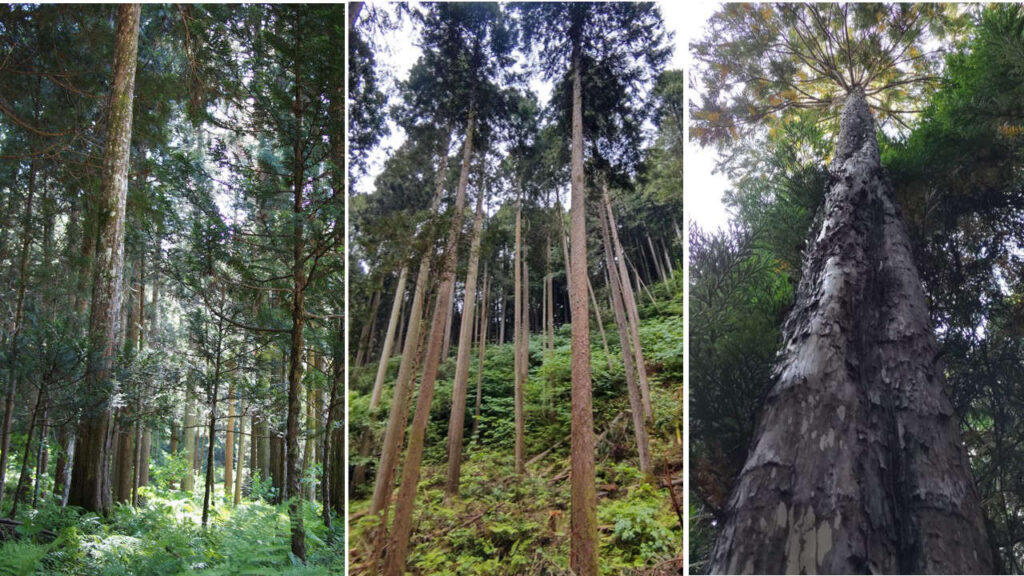
Kusamaki (Chinese juniper)
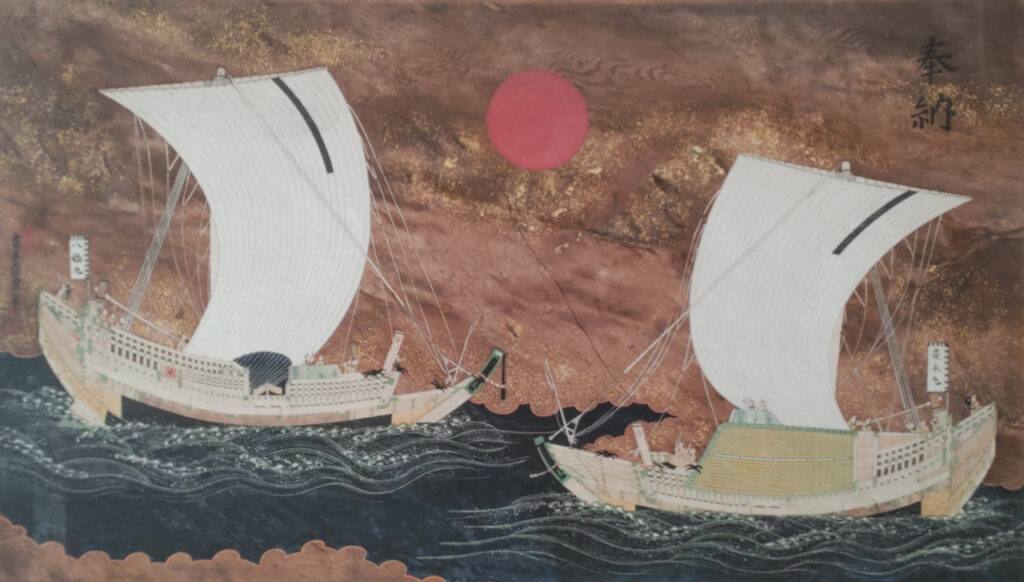
Kusamaki is a southern regional term for hiba (hiba), but in the old days in Kaga Province, it was called "kusamaki" after his place, so "kusamaki" may be more easily understood by carpenters and Buddhist altar craftsmen in Kanazawa. The reason for this has to do with the Kitamaebune shipping route, which at that time was a major artery of logistics connecting the Japan Sea coast. Kanazawa was the second largest city in Japan after Osaka and Kyoto during the feudal era, and the Kaga clan imported large amounts of lumber (sugi and hiba) from Aomori, Tsugaru, and Akita clans, which was used to rebuild Kanazawa Castle and other structures. The annual volume of such imports was in excess of 100,000 koku, and more than 60 vessels made the round trip from the Hokuriku minato to the Shimokita Peninsula in search of hiba (cypress). Hiba is highly water-resistant and termite-resistant, so it has long been valued in the rainy and humid climate of Hokuriku.
Noto ate was also shipped to Kanazawa in the form of logs, squares, and planks, but the name did not seem to stick because it was mixed in with kusamaki, which is much larger in distribution volume.
Asunaro (Japanese cypress) and Hiba (cypress leaf)
The genus Asunaro is an evergreen conifer of the cypress family distributed from Hokkaido to Kyushu, and for many years it was considered to be one genus and one species of Asunaro (T. Dolabrata). Before that time, it was believed that the Asuhi of Kiso, the Hiba of Aomori and Niigata, and the Atebi were all Asunaro (Asunaro, Rohan Kashiwa) in Japan.
Furthermore, the Kaga clan had a system called "shichiki-sei," which forbade individuals from cutting down forests. Ate does not appear in this system, but is written as "hinoki," which points to the possibility that ate was called "hinoki" in the Kaga region in the past. Ate in Noto and hiba in Aomori are classified as the same cypress asunaro, but there was a time when hiba was treated as the same asunaro and cypress.
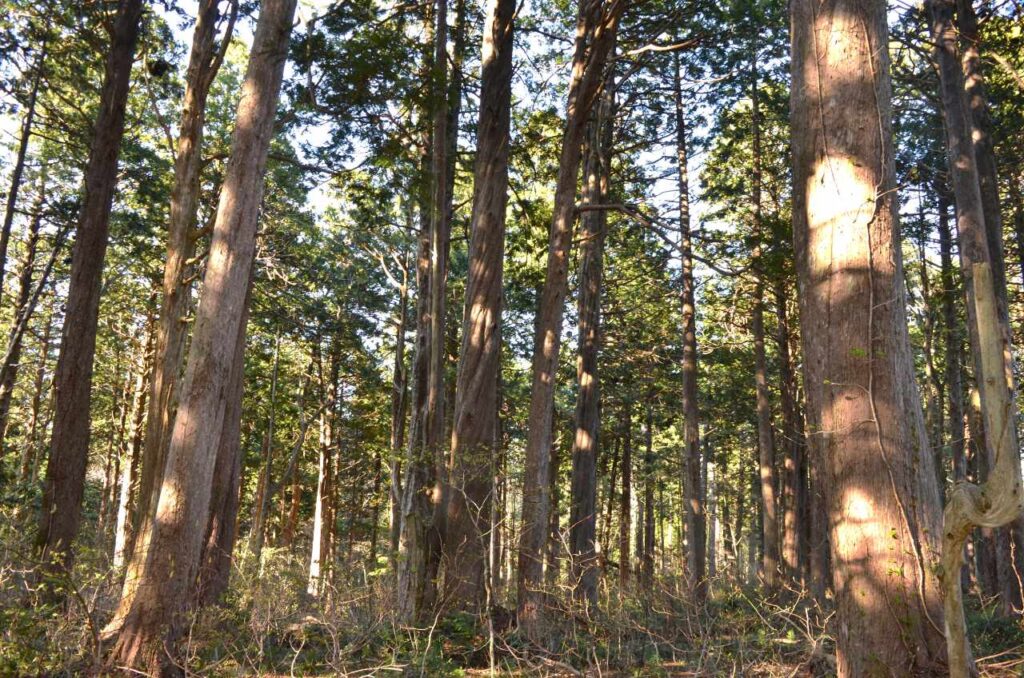
Japanese cypress
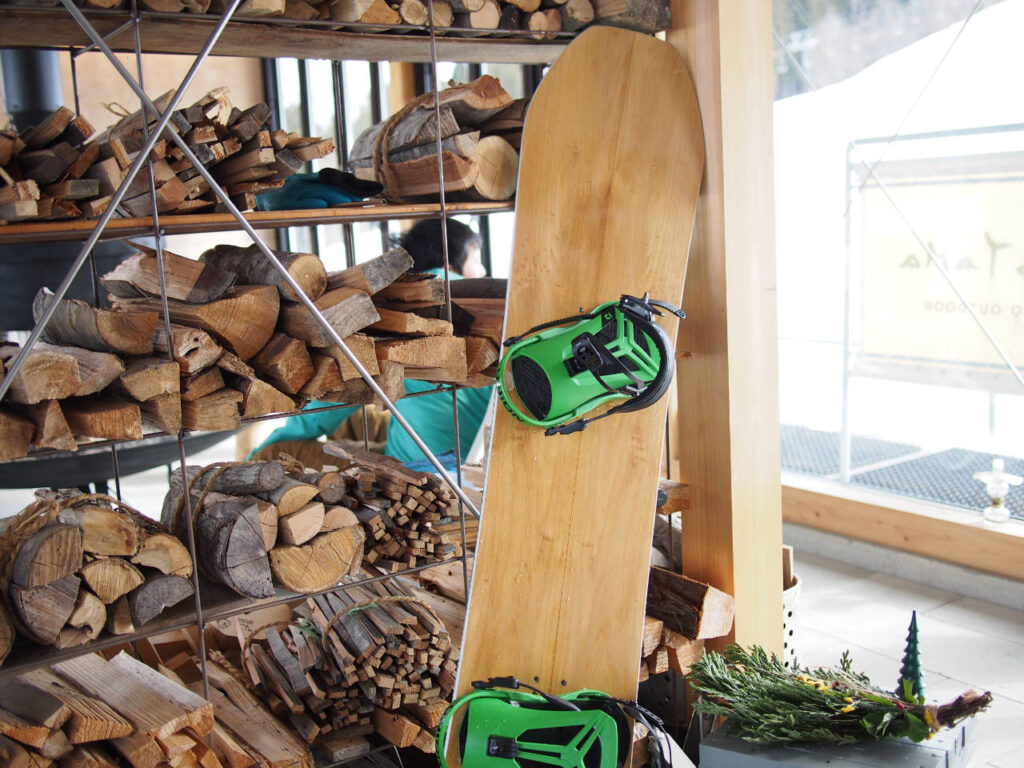
In 1993, the name "Noto Hiba" was unified for the distribution of ate, and branding is being promoted as the prefectural timber of Ishikawa Prefecture. Public facilities in the prefecture are actively promoting the use of "prefectural tree" Noto hiba, and it is used in various places in tourist facilities and gardens in the prefecture, such as the snow hangings at Kanazawa's tourist attraction Kenrokuen, the gates of Kanazawa Castle, and the floor and ceiling of the prefectural library.
Hiba lumber is resistant to moisture and termite damage, and because of its excellent properties as a building material, it has long been used in Noto for houses, temples, shrines, and Buddhist temples, including the Kamijikoku Residence and the former Kakumi Family, both important cultural properties of Japan. In particular, its bending strength, longitudinal compression, and shear properties are higher than those of Japanese cedar, and tests have shown that it meets the standard strength for lumber. In addition, Noto hiba contains abundant aromatic components such as hinokitiol, and there are many product developments that suit modern lifestyles, such as interior goods and accessories featuring antibacterial and deodorizing effects, and aroma goods to enjoy the scent of hiba.
Combined with its status as a prefectural tree, its human-friendly aroma and active ingredients, and its brand image as a traditional craft, Noto hiba adds character and depth to Ishikawa's wood culture.
Forrester's textbook cites the "principle of synoptic nature" as the basis for forest management and forest operations, and stresses the importance of learning about natural principles and the local environment through observation and utilizing these forces to cultivate forests. There is much to be learned from the attitude of our forefathers, who found a lineage of trees with superior growth and wood quality among countless species, and developed forestry techniques and methods of utilizing timber by making the most of their physiology and ecology.
Noto's ate forestry was registered as a ”Heritage of Forestry” by the Forestry Society of Japan in 2023. The techniques and wisdom of the forestry industry are also "Heritage" that should be handed down to the future along with the forests. Although it may be confusing and inconvenient to have many different names for trees, it is because trees have been a part of Japanese life and culture for many years that they have been given so many names, each with its own meaning and history. (Yuho 123, Forest Management Division, Department of Agriculture, Forestry and Fisheries, Ishikawa Prefecture)
*References
Jinbei Heiji, Tsuji Keiji (1917), "Ata : Rohan Kashiwa", Ishikawa Yamarinkai
Saito, Koukichi (1972), History of Ate Forestation, Ishikawa Forestry Experiment Station
Forestry AgencyForest General Supervisor (Forester) Basic Text (Part 2)