[The principle of "Kannagara" that restores the flow as a way of forest circulation
Updated by Kazuhiro Aoki on February 18, 2026, 9:44 PM JST
Kazuhiro AOKI
Representative Director, WSense Corporation / DELTA SENSE Production Committee
Representative Director, WSense Corporation / DELTA SENSE Production Committee Born in Aizuwakamatsu City, Fukushima Prefecture. From a family background of flower arrangement, tea ceremony, and Noh theater, he has been exposed to Japanese culture from an early age. His interest in wood began when he witnessed a shrine carpenter "sharpening a plane" and became aware of the depth of the craft. Currently, based on the knowledge he gained as a Shinto priest, he is promoting initiatives that lead to the public interest. He is a member of the Tokyo Junior Chamber of Commerce, holds a graduate degree and an MBA (Master of Business Administration), and has been a Boy Scout and a soccer player since he was 4 years old.DELTA SENSE Official HP WSense Corporation
*Previous column is here.
The "Nakami-Imai" time frame transcends the division of responsibility between the past and the future as a manner of forest circulation.
Toshi Shin (kanagara), at the risk of sounding rough, refers to the attitude of "following the reason of nature (natteiru).
Nature here is not nature as a landscape, but as an interdependent system that includes topography, water, soil, climate, ecology, and even human life and culture. Forests not only produce timber, but also regulate the flow of water, preserve the soil, influence the appearance of temperature and humidity, and affect local risk and sense of life.
Nevertheless, only the value of wood is easily visualized in discussions, while invisible values are usually treated as “nothing.
Tōshin is valuable in redefining this invisibility into a structure rather than a mentality. For example, if we look at a forest as a supply chain, we see a process of "logging, transporting, processing, selling, and using. However, the chain is only supposed to "move forward. Yes, what is needed for circulation is "going back. In other words, I believe that the main reason why forests do not circulate is not the logging itself, but the design that does not return value to the forest.
If we take a doshin's perspective, we see that the forest should be a circle, not a chain. In a circle, the user becomes the supporter.
Consumption returns to care. Profit returns to nurture. Wisdom returns to the community.
In other words, this is a cycle.
However, there is a criticism here as well. When a community adopts a theocentric approach, the value judgment that “following nature is right” comes first, and it is easy to become unclear who or what determines what is "in accordance with nature. Furthermore, while theistic narratives are effective within a community, they run the risk of being treated as sentiments when explained to external stakeholders (investors, business partners, urban consumers, and government systems). In other words, the dégénation is characterized by its ease of resonance within, but its difficulty in propagating outside.
Therefore, if we are to apply the spirit of Toshijin to the modern world, we need to divide our attitude into two levels.
The first step is to use tōshin as an “attitude to not lose the value of the unseen. The value of forests is not limited to timber. Water source recharge (the ability to store rainwater and gently channel it to rivers), sediment control, landscape, culture, and mental and physical restoration. These are hard to put a price on. Toshijin can be effective as an attitude to avoid ”nothing" in terms of value that cannot be put on a price.
The second step is to translate the attitude into "institutions, contracts, and KPIs". Circulation does not revolve around attitude alone. If you talk about Doshin without translating this, it is beautiful as words, but it will not reach the field.
When talking about forest cycles in Shinto, the most dangerous short-circuit is to say that Shinto is right because it coexists with nature. In real forests, there are interests. There are boundaries. There is ownership. There are dangers. There is taxation. There are subsidies. These cannot be solved by theistic vocabulary alone.
Therefore, I believe that what we can talk about in Shinto is not “solutions” but “how to ask questions. Nakagin asks questions of time. Tadakami asks the question of relationship. Putting the two together, I think we can redefine the forest cycle as follows.
The forest cycle is not about turning trees.
It is to absorb the time difference and turn it without breaking the circle of relationships.
In order to keep the wheel turning, a return path (reflux) is necessary as an institution.
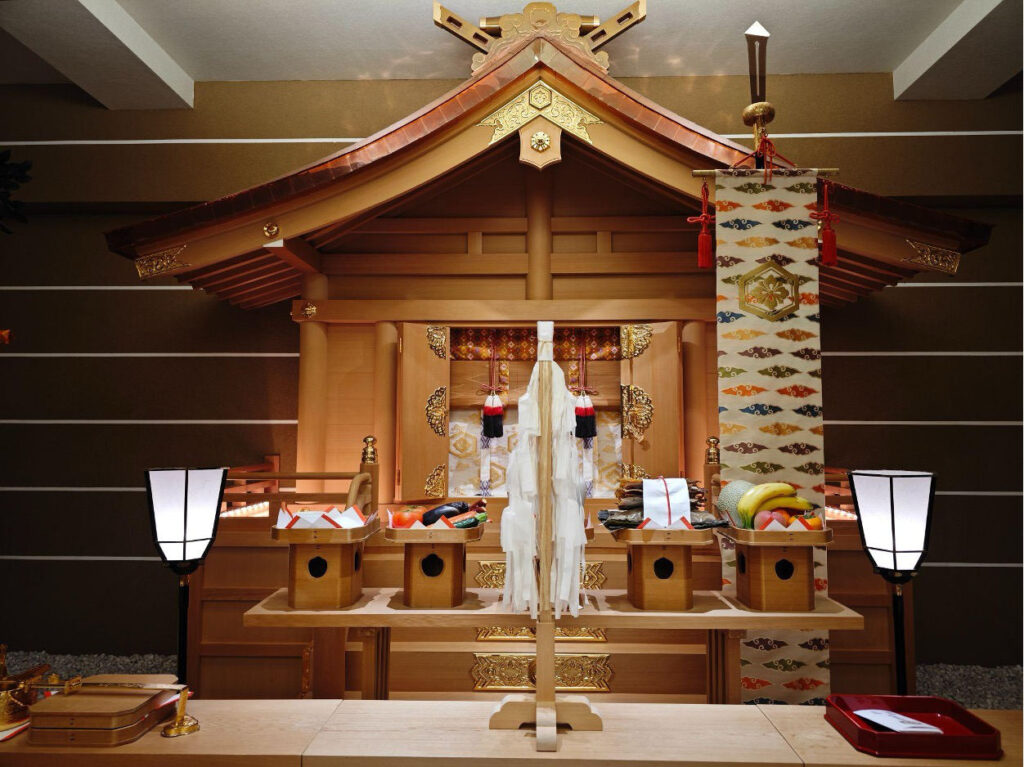
Here, for the first time, the minimum requirements for implementation can be seen.
The good intentions of returning to the forest when sales are made are noble but fragile. If the economy is bad, it will disappear. So the key lies in the mechanism, not the morality.
Simply put, whether reflux is the "rule from the beginning" rather than the "good after the fact". This will be the turning point between turning the cycle around or stopping it.
This paper draws the line at not using Shinto as a “justification device. Nakagami and Tadashin sharpen the questions that are necessary for the implementation of forest cycles. However, even if the questions are sharpened, the forest will not be ready unless there is a mechanism to move the hands. Shinto is useful only to the point where this ”need for a mechanism“ is made clear to the people in the language of time and relationships.
I feel that this is the limitation of Shinto in the forest circular economy at this stage.
This paper has so far raised the following
The present reminds us of the “now” as a point of responsibility that we must pass on to the future. But this is not to glorify patience. It is to create a design that absorbs time differences.
Tadashi regains the perspective of treating the forest not as a thing, but as the ”reason of the cycle. However, this is not to escape from emotion. It is to institutionalize the path of return as a circle, without losing the value of the unseen.
When these two are in place, the forest cycle moves beyond the "protect/use" struggle and approaches a "the more you use, the more orderly" system. But that is only when the order is in order.
So what is the order?
The key is to separate the "areas not to be touched," "areas to be cared for," and "areas to receive blessings," and to observe the following order.
<Untouchable area
Water sources, collapsible slopes, key ecological sites, etc. It is necessary to understand that "do not touch" is not the right thing to do here, but that there are conditions that should not be touched.
<Area to be cared for.
Thinning, pruning, renewal (replanting), work road maintenance, animal damage control, etc. This is the heart of the cycle, where costs are concentrated, and where the bearers are needed.
<The area where we receive blessings.
An area that creates an outlet for value exchange, not only in wood use, but also in fragrance, experience, education, tourism, and wellbeing.
Design the value created in the third area to return to the second area. If this can be done, the forest can be converted from “the more it is used, the thinner it gets” to “the more it is used, the better it becomes. Conversely, as long as there is no return, no matter how much we talk about ideals, the cycle will not continue. Toshi Shin is a perspective that treats the forest not as a ”thing" but as a "principle of circulation," and it is ultimately the rules and institutions that establish this relationship.
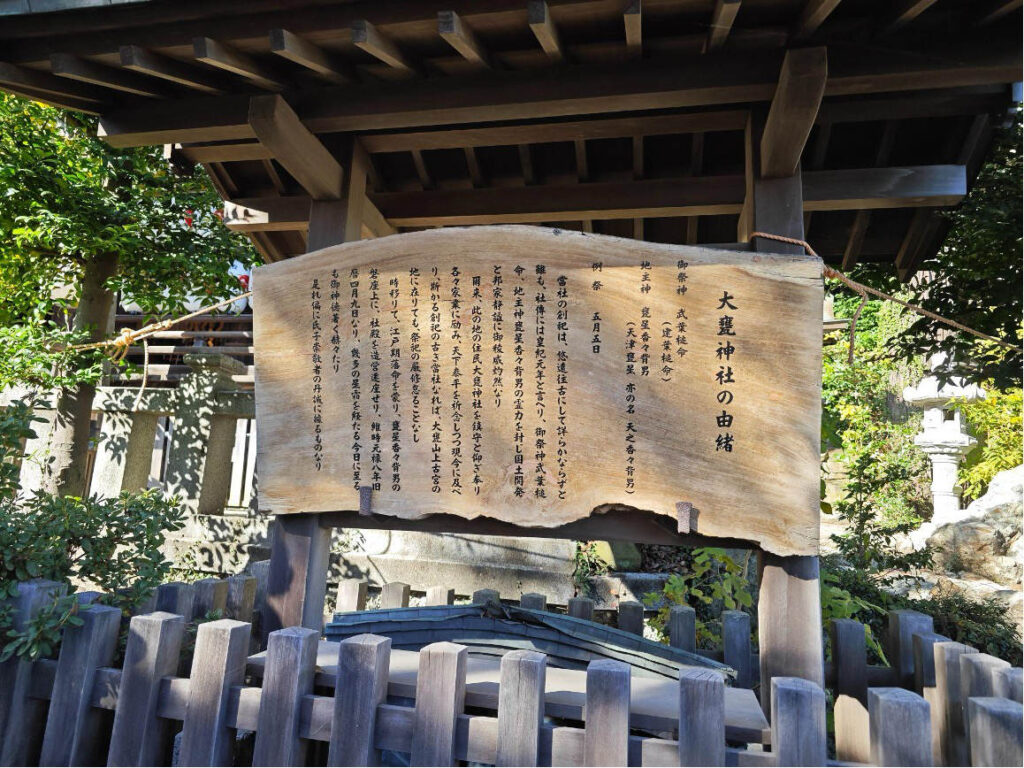
And again, the key to continuing the forest cycle is not to make the reflux rule a "good afterthought.
The idea of returning to the forest after sales is gentle but fragile. If the economy is bad, it will be cut back. Therefore, reverse the order. From the beginning, decide that a certain percentage of sales will go back to the forest, back to fostering bearers, and back to education. It does not matter what the scale of the project is. The important thing is to decide first. If you decide first, the business will begin to invent a profitable form within the constraints of that decision.
I would like to end with one final question.
Are there areas of your work and life that you do not touch, areas that you care for, and areas that you receive blessings from?
If the boundaries are blurred, the circulation is prone to clogging. Clogs always start quietly. That is why we need the middle now. We need the Nakagokoro in order to set the boundaries and the order at one point, the present moment. And we need Tadasama. To not define the world by human beings alone.
The forest shows it on a millennial scale. I believe there is still much we can learn from their silent manners. (Kazuhiro Aoki, President, WSense Corporation / DELTA SENSE Production Committee)