Updated by the Editorial Department of *Forest Circular Economy* on July 23, 2026, at 8:40 p.m. JST
Editorial Board, Forest Circular Economy
Forestcircularity-editor
We aim to realize "Vision 2050: Japan Shines, Forest Circular Economy" promoted by the Platinum Forest Industry Initiative. We will disseminate ideas and initiatives to promote biomass chemistry, realize woody and lumbery communities, and encourage innovation in the forestry industry in order to fully utilize forest resources to decarbonize the economy, strengthen economic security, and create local communities.
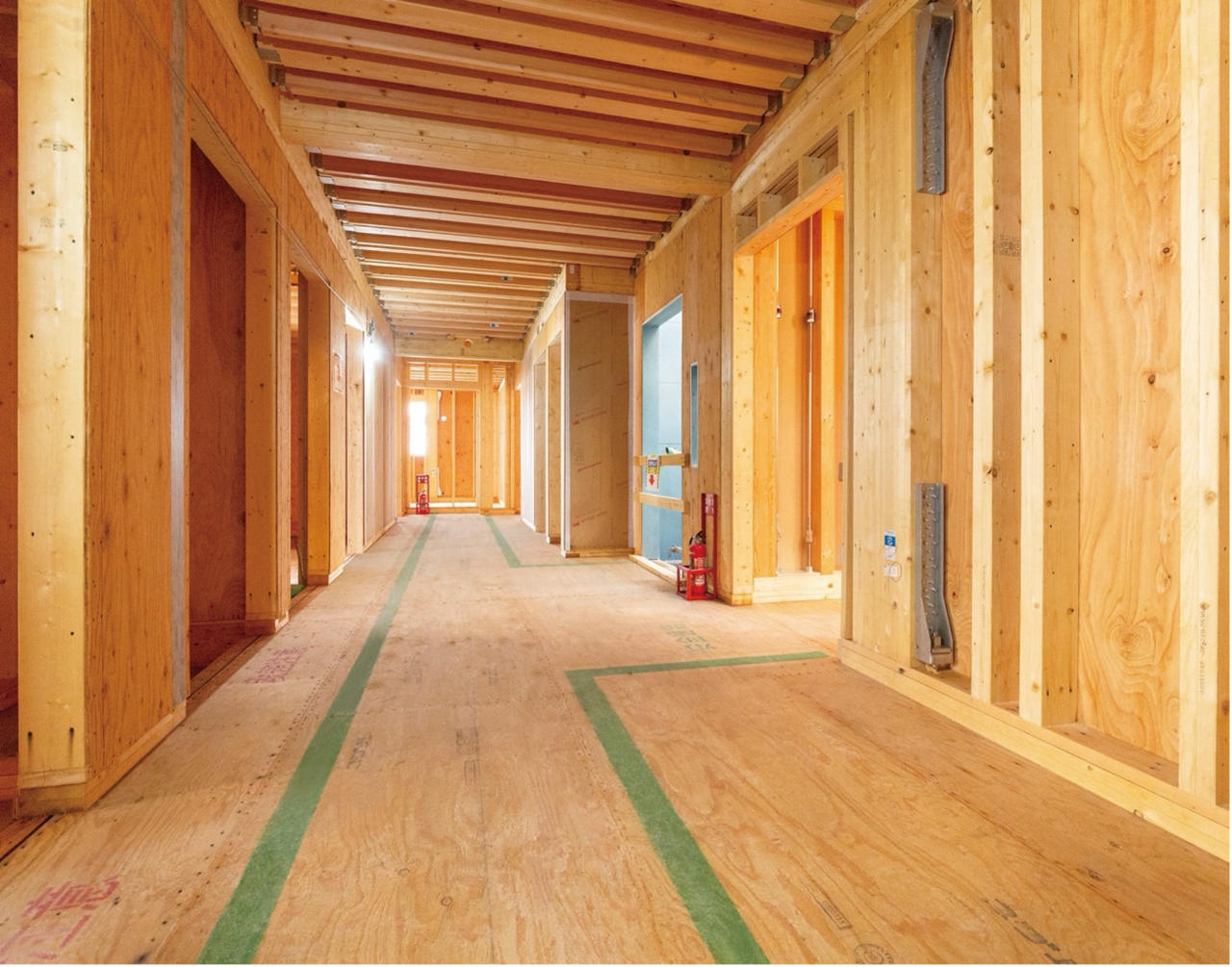
Against the backdrop of efforts to achieve a decarbonized society and promote the use of wood in mid- to high-rise buildings, interest in “fire-resistant wood-frame construction” in urban areas is at an all-time high. However, significant barriers have long existed in actual construction, including strict fire resistance standards and legal regulations, as well as a limited selection of fire-resistant components. To overcome these challenges, a broad range of initiatives is emerging to expand the possibilities of fire-resistant timber construction—from the development of the latest aesthetically superior fire-resistant components following the expansion of the Minister of Land, Infrastructure, Transport and Tourism’s certification for fire-resistant structures, to the widespread adoption of timber-framed apartment buildings, and the emergence of new services addressing the large-scale use of timber in commercial facilities and interior design restrictions.
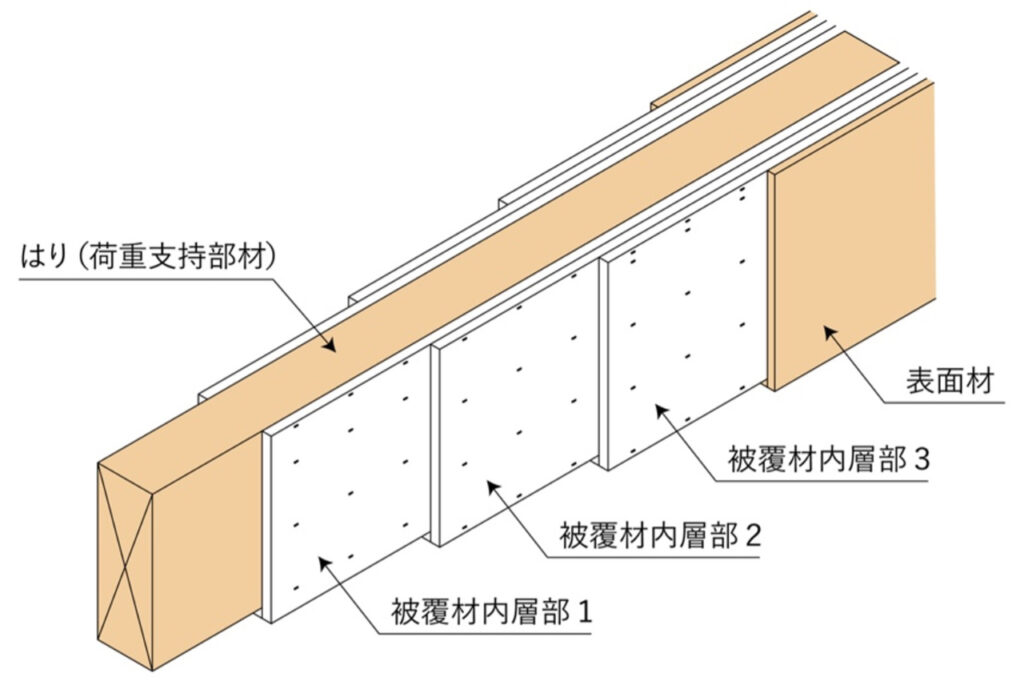
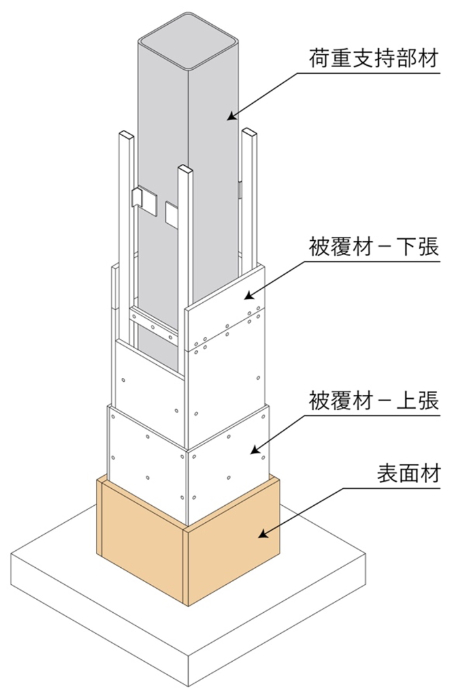
The Japan Association for Wooden Fire-Resistant Construction began administering 74 new Minister of Land, Infrastructure, Transport and Tourism certifications for fire-resistant structures obtained by five of its full members on June 25. Combined with the 153 certifications the association already administers, the total number of available ministerial certifications has expanded to 227. The newly added certifications include “hybrid wood-based fire-resistant members,” in which square steel tubes are covered with reinforced gypsum board and wood surface materials, as well as “pure wood-based fire-resistant members” impregnated with chemicals. With this expansion, the Association has achieved comprehensive coverage of fire-resistant structures for columns and beams that meet all required fire resistance ratings ranging from 1 to 3 hours. These certified specifications were published as a supplement to the *Design Manual for Wooden Fire-Resistant Buildings Using Wooden Fire-Resistant Components 2025*, which was published under the supervision of the Building Research Institute following the 2024 revision of the Building Standards Act—a revision that significantly streamlined fire safety regulations—and are made available to members who have completed the required training. With the increased options for fire-resistant structures, the design flexibility and aesthetic potential of wooden fire-resistant buildings are expected to improve significantly.
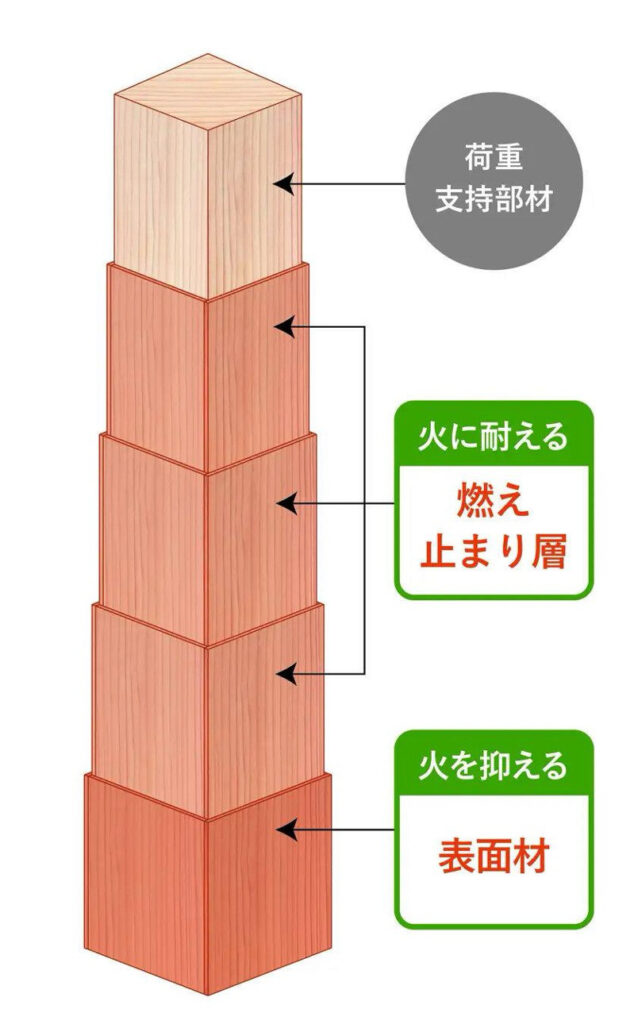
Shelter, a company leading the way in urban wood-based construction through advanced timber technology, has obtained certification from the Minister of Land, Infrastructure, Transport and Tourism for one-hour fire resistance for the columns and beams made from “Shokamoku™,” a fire-resistant wood component jointly developed with Hulic, Hulic Property Solutions, and Yamato Protec. A key feature of these components is that they are made entirely of wood—without the use of gypsum board or other materials—making them pure-wood fire-resistant components. The core of the design lies in the use of cedar wood impregnated with two different types of fire-suppressing agents: one for the fire-retardant layer and another for the surface material. By combining a surface layer that generates an aerosol to suppress surrounding combustion during a fire with a fire-retardant layer that inhibits ignition and protects the load-bearing members at the core, the product achieves one-hour fire resistance. Since this cedar lumber can be sourced nationwide, transportation costs are kept low. Furthermore, because it can be easily joined with other wood-based fire-resistant structures, it significantly contributes to streamlining design and construction processes and allows for greater design flexibility. As it allows for designs that showcase the natural wood grain, it enables the creation of fire-resistant wooden buildings that make the most of the warmth of wood.
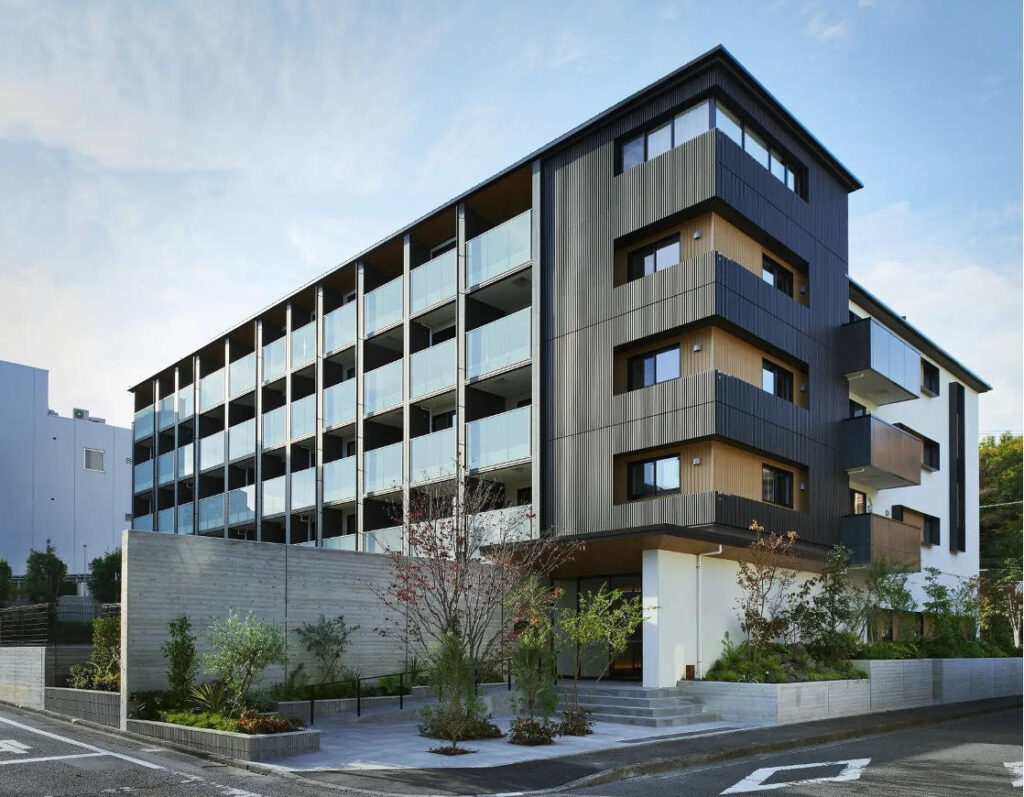
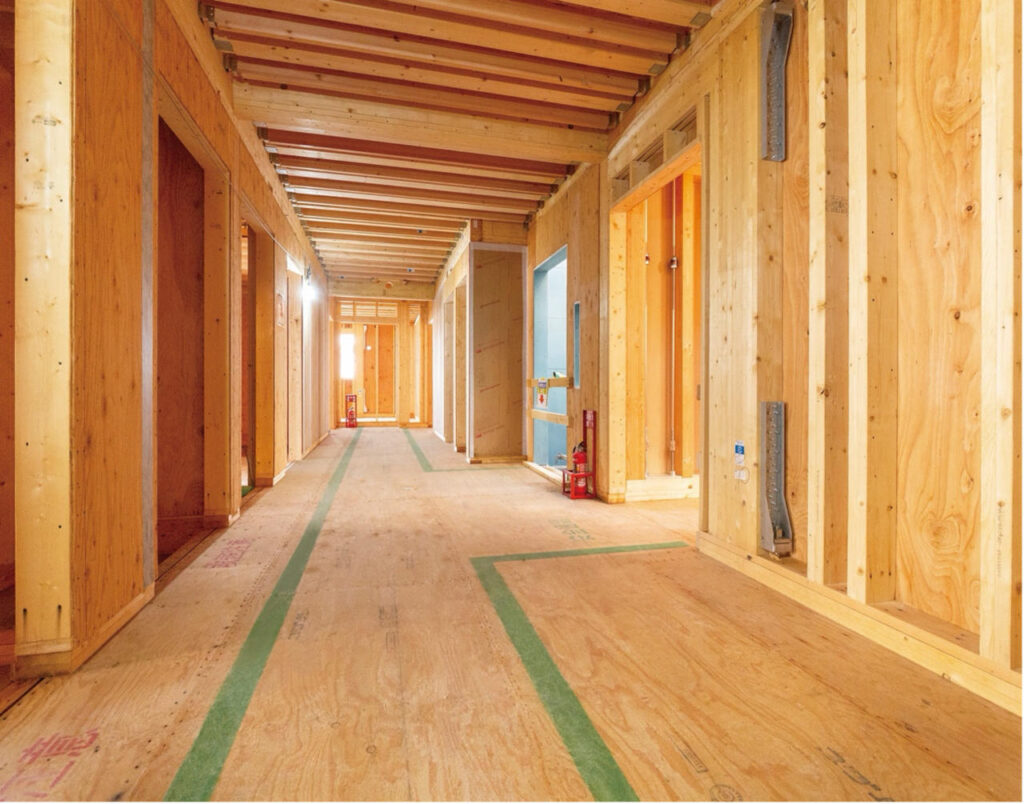
Mitsui Home, a major homebuilder, announced that it has reached a cumulative total of 100 units in orders for its wood-frame apartment buildings. The company has been promoting its wood-frame apartment brand, “MOCXION,” since 2021 and has been leading the way in the adoption of wood construction for mid- to high-rise apartment buildings. Overturning the perception that wooden structures are typically classified as “apartments,” the company mandates “Deterioration Prevention Grade 3” as a prerequisite, and by meeting strict standards—specifically, either “Seismic Resistance Grade 3” or “Fire Resistance Grade 4 (capable of withstanding fire for 60 minutes) or a fire-resistant structure”—the company has effectively opened up a new market where these buildings are recognized as having performance equivalent to reinforced concrete (RC) structures. To address challenges such as fire resistance, seismic resistance, and sound insulation, the company applied its proven 2x4 (wood-frame construction) technology and introduced proprietary technologies such as the high-strength load-bearing wall “MOCX WALL.” The company has put fire-resistant design models for mid- to high-rise buildings into practical use, including “hybrid structures” (RC on the first floor and wood on upper floors) and “ALL-wood” structures. Through real-world examples such as the five-story hybrid-structure building “MOCXION INAGI”—which was selected for the national Pioneering Project for Sustainable Buildings—the company has demonstrated the system’s reliable fire resistance and practicality. Its environmental advantages, such as reducing CO₂ emissions during construction by more than 40% compared to reinforced concrete (RC) construction, have also earned high praise from residents.
*Reference link
Mitsui Home Reaches 100 Units*1 in Orders for “Wooden Condominiums,” a New Option Pioneered by the Company | Mitsui Home Co., Ltd.
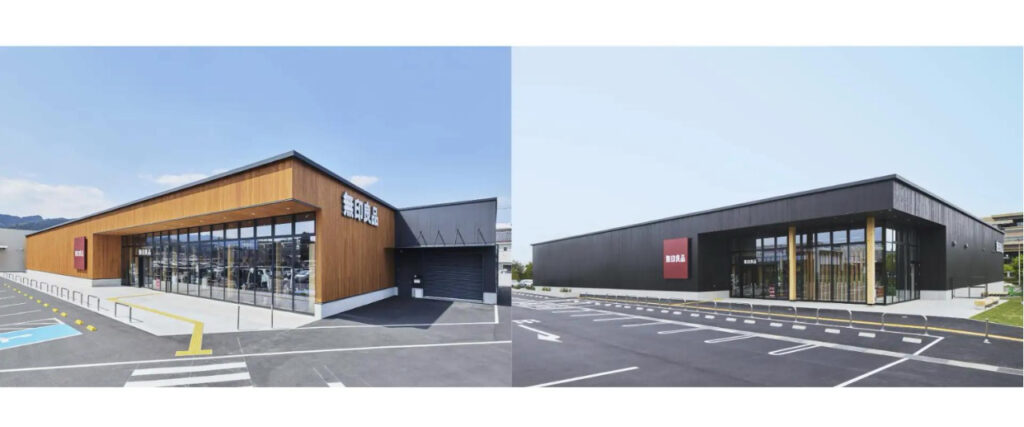
MUJI HOUSE, which operates the “MUJI House” brand, is accelerating its large-scale timber construction business for corporate clients. As part of this initiative—which gained full momentum following the company’s achievement in 2024 of Japan’s first “ZEB” certification for a large-scale timber-frame building—two new stores have opened: “MUJI Nakagawa” and “MUJI Seikadai.” Both stores utilize the “SE Construction Method,” which combines excellent seismic resistance with open, spacious interiors. A major achievement for the “Seikadai” location is that it successfully opened within a “fire prevention zone,” an area subject to strict regulations. The building was designed as a fire-retardant structure by implementing thorough safety measures, including exterior walls with 90-minute fire resistance, fire compartments for every 500 square meters, and a comprehensive sprinkler system. Constructing commercial spaces using wood provides a valuable opportunity for visitors to experience firsthand the comfort of wood and the cycle of forest resources, and is expected to serve as a catalyst for raising society-wide awareness of decarbonization.
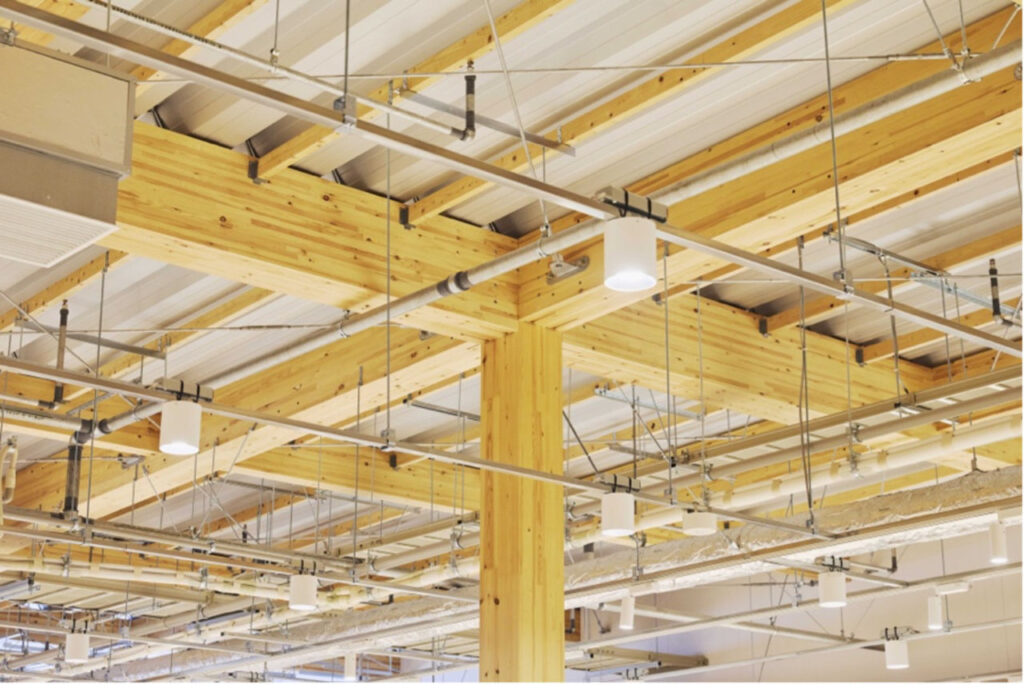
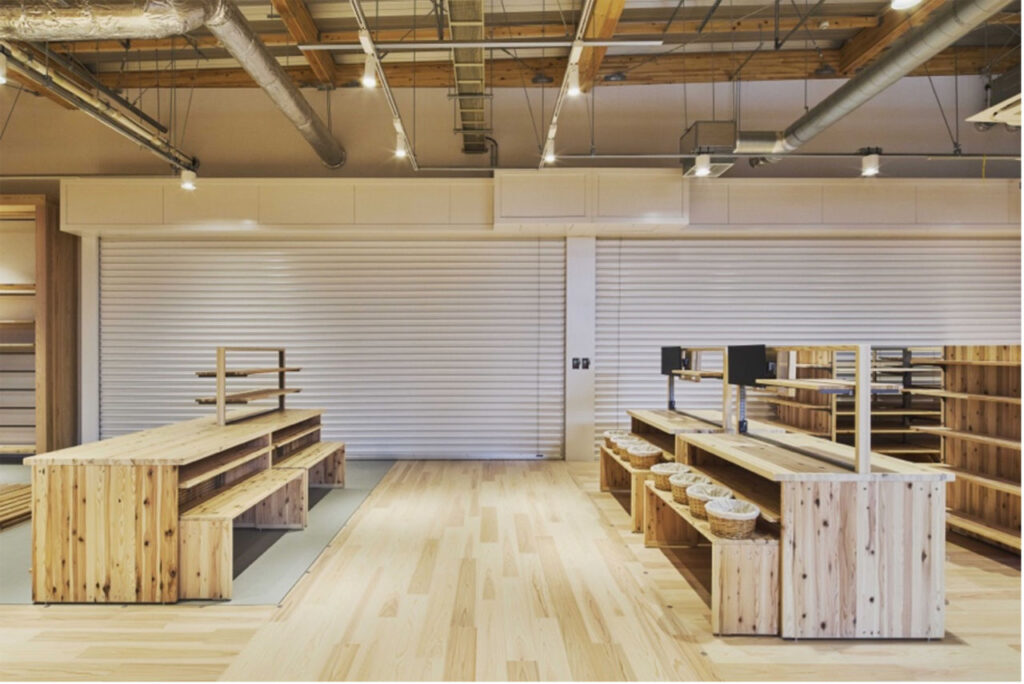
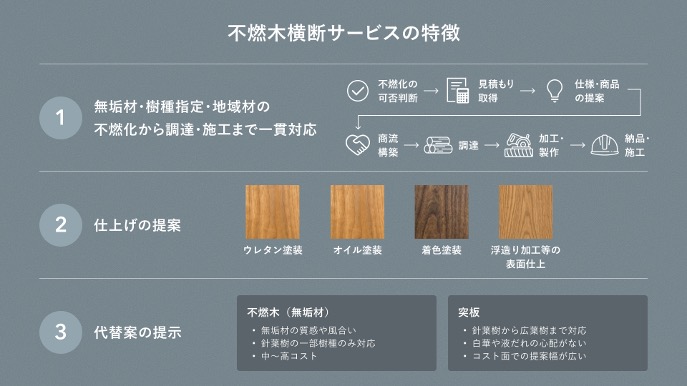
Mori Mirai, a company engaged in the timber distribution business, has launched a “Non-Combustible Wood Cross-Sector Service” specialized in interior design to facilitate the use of wood in spaces subject to interior design restrictions. In recent years, demand for wood in offices and commercial facilities has been rising, driven by a desire for environmental sustainability and to enhance the value of these spaces. However, in locations subject to legal restrictions, wood must be “fire-resistant,” and factors such as the selection of appropriate tree species, complex standards, quality risks—including efflorescence—and the cumbersome nature of the application process have posed significant hurdles to its adoption. This service takes on all of these practical burdens, providing end-to-end support ranging from the selection and quotation of non-combustible wood to procurement, processing, and installation. In addition to making solid wood and locally sourced wood fire-resistant, the service flexibly covers comparative evaluations with alternative options such as veneer and fire-resistant decorative panels. This system, which streamlines the complex process of balancing fire safety regulations with design aesthetics, lowers the barriers to fire-resistant wood construction and has the potential to significantly advance the use of wood in interior design for urban buildings.
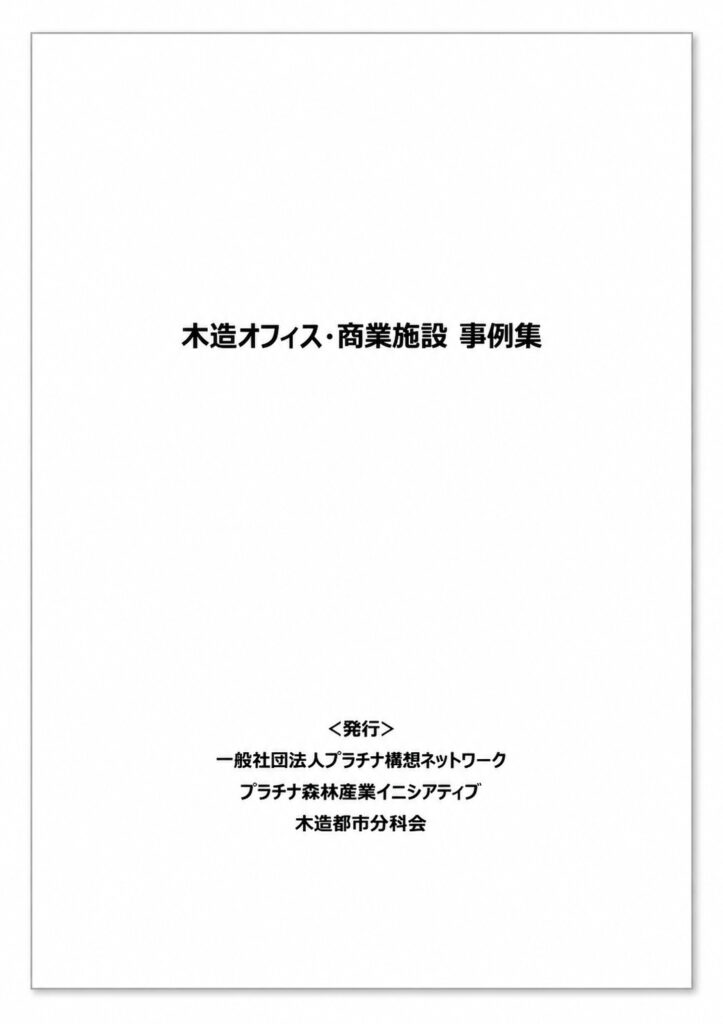
In recent years, against the backdrop of efforts to achieve a decarbonized society, the expansion of ESG investing, and growing interest in well-being, attention has been rapidly increasing toward wood-frame offices and commercial facilities. At the same time, information regarding how the adoption of wood construction in non-residential buildings is actually progressing—including leading examples, technologies, and regulatory frameworks—is scattered across various media, making it difficult to gain a systematic understanding. In this 23-page document, the “Platinum Forest Industry Initiative: Wooden City Subcommittee” of the Platinum Vision Network (a general incorporated association) has compiled four leading case studies of wooden offices and commercial facilities, along with the concepts, technologies, and institutional trends related to wooden cities. Please use this document as a resource for planning and proposing wood-frame buildings, gathering information, and staying abreast of the latest trends in non-residential wood-frame construction.Read More