Updated by the Editorial Department of *Forest Circular Economy* on July 28, 2026, at 8:21 p.m. JST
Editorial Board, Forest Circular Economy
Forestcircularity-editor
We aim to realize "Vision 2050: Japan Shines, Forest Circular Economy" promoted by the Platinum Forest Industry Initiative. We will disseminate ideas and initiatives to promote biomass chemistry, realize woody and lumbery communities, and encourage innovation in the forestry industry in order to fully utilize forest resources to decarbonize the economy, strengthen economic security, and create local communities.
There is growing attention on the environmental value (credits) inherent in natural capital, particularly forests. This goes beyond the simple offsetting of CO₂ emissions seen in the past and includes initiatives such as converting CO₂ reductions achieved through energy-efficient housing into environmental value and returning that value to residents; long-term conservation support for rural areas by major energy companies; the creation of voluntary credits by local governments and startups; financial and insurance institutions establishing new markets, and even the participation of metal manufacturers with historical ties to the region. Companies across diverse industries and local governments are moving to create, purchase, and utilize credits in line with their respective objectives, with the aim of quantifying CO₂ reductions and the value of natural capital.
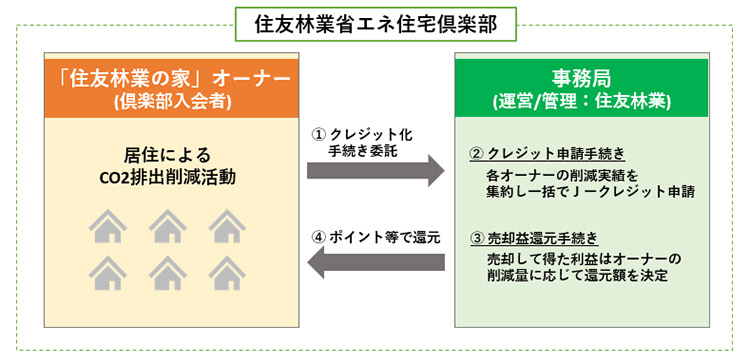
Sumitomo Forestry has launched the “Sumitomo Forestry Energy-Efficient Home Club” for individual owners of single-family homes and began accepting membership applications on July 1. This initiative views living in a “Sumitomo Forestry Home”—which features high thermal insulation and energy-saving equipment—as an activity that reduces CO₂ emissions, and seeks to collectively convert those emission reductions into environmental value through the J-Credit system. The credits generated will be sold to third parties in the company’s name, and the proceeds from these sales will be returned to homeowners annually on a regular basis, proportional to the amount of emissions reduced. According to the company, this is the first initiative of its kind in the industry—a rebate-based system implemented by a homebuilder. To calculate the credits, the company utilizes evaluation reports from “BELS,” a third-party certification system that assesses the energy-saving performance of buildings, for which it applies for every home it builds. The reduction amount is calculated based on the difference compared to standard housing specifications, and the company consolidates the data for multiple homeowners to handle the procedures. By visualizing the environmental contribution not only during construction but also during daily living, the company aims to raise residents’ environmental awareness while simultaneously enhancing the added value of their homes.
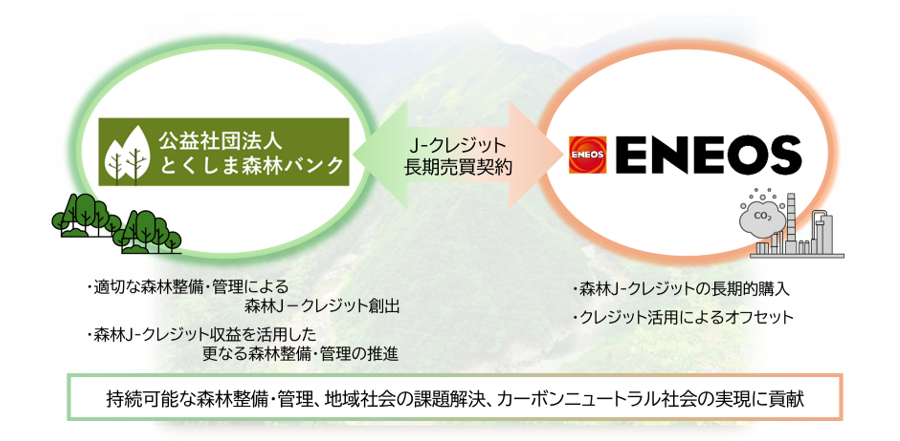
Tokushima Forest Bank and ENEOS have entered into a long-term purchase and sale agreement for forest-derived J-Credits. The decline in public benefits caused by abandoned forests—resulting from the absence of owners and a shortage of forest managers—and the resulting negative impact on the local environment and sustainable forest management have become serious issues nationwide. With support from municipalities and businesses within Tokushima Prefecture, and in collaboration with related organizations, the Tokushima Forest Bank is spearheading the nation’s first initiative to promote sustainable forest management by consolidating forest resources through contracted management and land acquisitions. The bank is striving to establish a self-sustaining business model in which proceeds from the sale of forest credits generated through conservation activities are reinvested as a new source of funding for subsequent forest management projects. Meanwhile, ENEOS, which has set a target to reduce its Scope 1 and 2 greenhouse gas emissions by 46% compared to fiscal year 2013 by fiscal year 2030, will utilize forest-derived J-Credits for its own carbon offsetting through long-term procurement. This long-term contract is expected to serve as a foundation for supporting forest conservation in rural areas struggling with financial difficulties through a stable cash flow, and it is likely to contribute significantly to solving issues such as addressing neglected forests and revitalizing local economies.
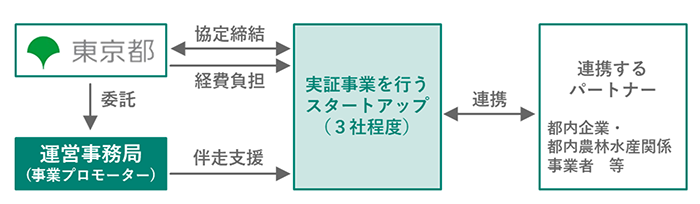
As part of the “Project to Promote the Creation of Carbon Credits for Absorption and Removal,” a startup collaboration initiative led by the Tokyo Metropolitan Government, Japan’s first forest-based voluntary carbon credits were issued from forests within Tokyo. iForest, the organization leading the demonstration project, conducted state-of-the-art monitoring in the forests of Hinohara Village using unmanned helicopters and satellite data. In addition to CO2 absorption, the project quantified multifaceted natural values, including biodiversity. Following certification by the Natural Capital Credit Consortium (NCCC), a general incorporated association, the project successfully generated 77 metric tons of CO2 credits. The credits were sold to Tokyo Tatemono, a partner in the project, and plans for their future use are currently being considered. The project is projected to generate a cumulative total of 1,725 metric tons of CO2 (equivalent to the annual emissions of approximately 486 standard households) by 2045, serving as a pioneering model for the creation of Japanese Voluntary Credits (JVC). A key feature of this mechanism is its ability to evaluate forest-derived credits as comprehensive environmental value, encompassing biodiversity restoration and the enhancement of natural capital.
*Reference link
Japan's First "Project to Promote the Creation of Absorption and Removal-Based Carbon Credits": Voluntary Credits Generated from Tokyo's Forests! | Tokyo Metropolitan Government, Bureau of Industry and Labor
iForest to Create and Issue Japanese Voluntary Credits (IFOREST CREDITS) for Forests in Hinohara Village, Tokyo | PR TIMES
Sompo Japan Insurance has purchased voluntary carbon credits derived from grassland restoration and soil sequestration, certified by the Natural Capital Credit Consortium (NCCC), a general incorporated association in which the company participates. According to the company, this marks the first transaction of its kind involving natural capital-derived credits in Japan. The initiative took place at a solar power facility in Akaiwa City, Okayama Prefecture, where a specialized construction method was used to expand green spaces on the site, thereby monetizing the CO2 absorbed by the soil. Data transparency and reliability were ensured through the analysis of satellite imagery and the use of AI. By acting as a buyer itself to establish a track record of transactions, the company aims to lead the revitalization of the still-developing natural capital market. A key aspect of this initiative is that it goes beyond mere CO₂ offsetting to deliver multifaceted environmental benefits, including ecosystem conservation through soil restoration and disaster prevention and mitigation through ground reinforcement. This new approach—which goes beyond traditional forest credits to convert diverse forms of natural capital into economic value—is drawing attention as a model that simultaneously achieves regional decarbonization and enhances resilience.
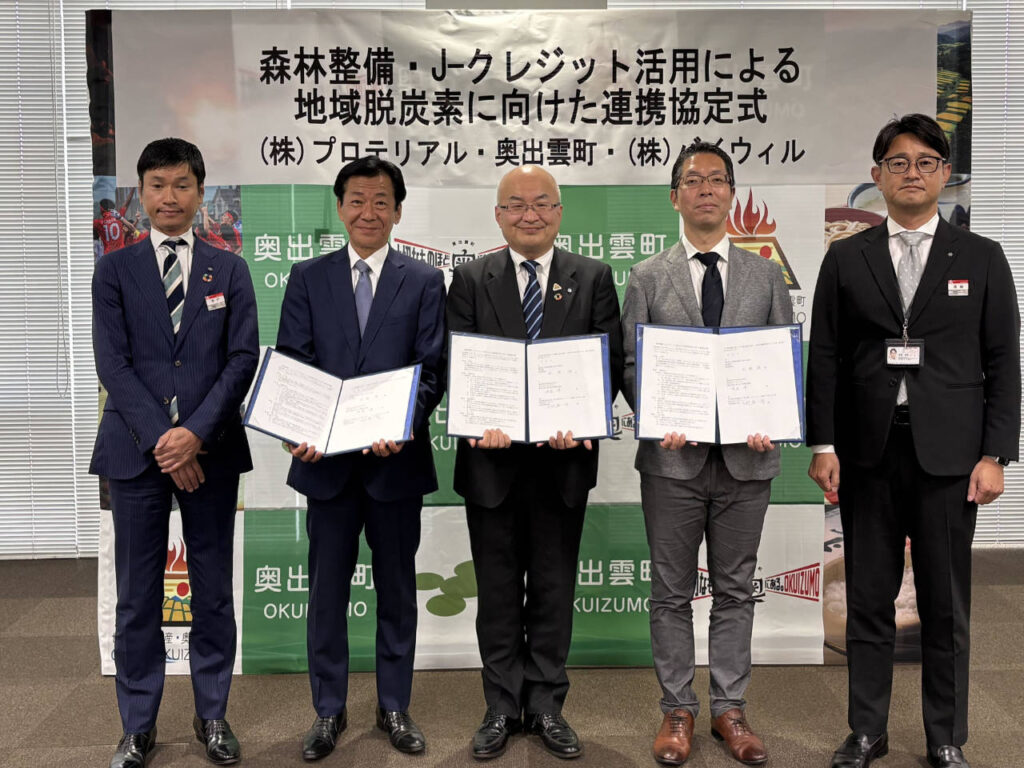
Okuizumo Town in Shimane Prefecture, ByWill, and Proteリアル have signed a partnership agreement regarding the sale of forest-derived J-Credits. A key feature of this agreement is that it goes beyond single-year emissions offsetting; instead, it establishes a long-term purchase contract spanning multiple years with a view to preserving the forests’ inherent CO2 absorption capacity and biodiversity over the long term. The proceeds from the sale will be directly used to fund thinning operations and planned forest management in the town. Okuizumo Town is a region where the ancient Japanese “tatara ironmaking” tradition is still practiced today; for Proterial’s Yasugi Plant—whose origins lie in this technology—the local forests, which have long supplied large quantities of charcoal, represent a historic symbiotic relationship. It is reported that a comprehensive partnership agreement, including conservation activities involving employees, is also planned for the future. This project, carried out in collaboration with the San-in Godo Bank, goes beyond mere CO₂ offsetting; as an advanced model for forest credits that combines local traditions with environmental value, it is expected to strongly support the return of funds to rural areas and forest regeneration.