Japan was a "photosynthetic country" - A vision for a society supported by forests and the sun towards 2050
Updated by Hiroshi Komiyama on February 10, 2026, 10:46 PM JST
Hiroshi KOMIYAMA
(Platinum Initiative Network, Inc.
After serving as Professor at the University of Tokyo, Dean of the Graduate School of Engineering and Dean of the Faculty of Engineering, and President of the University of Tokyo (28th), he was appointed Chairman of the Mitsubishi Research Institute in 2009, and Chairman of the Platinum Initiative Network in 2010 (to be incorporated as a general incorporated association in 2022). Other positions include President of the STS Forum, Chairman of the Association for Super-Education, Chairman of the United Nations University Cooperation Foundation, Chairman of the International Science and Technology Foundation, and Chairman of the Heat Pump and Thermal Storage Center Foundation. He also received the Dubai Knowledge Award (2017), the Order of the Star of Solidarity of Italy (2007.) and "Information and Communication Month" Commendation from the Minister of Internal Affairs and Communications (2014), the Zaikai Award Special Prize (2016), and the Commendation for Merit in Promoting a Maritime Nation (2016), among many other national and international awards.
Today, political divisions are deepening, especially in Europe and the United States, and existing values such as democracy and liberalism are being shaken. Behind this lies the old obsession that resources are finite and we have no choice but to compete for them. Whatever the political system, the fact remains that a material base of energy, food, and water is indispensable for human survival. We are now overlooking a critical perspective. It is the physical limit point of "2050.
If the current situation continues, there is a solid prospect that, at the same time that climate change reaches its limits, social infrastructure materials such as iron and plastics will become globally widespread and "saturated" with demand. In other words, the conventional model of "digging and consuming underground resources" will physically and environmentally fail around 2050, and a shift to a "recycling model" that turns the resources accumulated in cities will become inevitable.
This is both a crisis and an opportunity for Japan. This is because Japan is one of the few countries in the world that can achieve both "resource recycling" through urban mining and "biomass self-sufficiency" by taking advantage of its blessed natural environment, where photosynthesis is possible on nearly 90% of its land.
I call this a "platinum society," a society where people can overcome the age of deprivation and achieve self-fulfillment while being materially satisfied, autonomous, and of high quality. Now is the time for Japan to realize and present this "2050 society model" ahead of the rest of the world, as the world is enveloped in a sense of stagnation and lack of vision.
Let me introduce some interesting estimation data for reassessing Japan's resource potential. Which do you think produces more biomass (biological resources) per year, rice in paddy fields or forests in mountains?
Intuitively, one might think that rice is more overwhelming, with fertilizer and water under control. In fact, the "rice (milled rice)" we eat yields about 5-6 tons per hectare. However, a surprising fact emerges when we compare them in terms of "total dry matter" (*total weight including stems and leaves as well as fruits), which is the net weight of the plant after excluding water.
<Biomass production in Japan (per hectare, annual average)
Rice (grains + straw) in paddy fields: approx. 11-13 tons
Japanese cedar and cypress plantations (trunk + branches + leaves + roots): approx. 8-12 tons
In fact, there is little difference in production between the two. Forests have huge trunks, but they are past accumulation (stock); if we compare only the amount of growth in a year (flow), both rice plants and trees produce about the same amount of biomass and fix carbon.
Why is this? The reason lies in the limitation of the fundamental energy source, sunlight. Plants can only use a portion of visible light for photosynthesis, and since they consume energy through their own respiration, their final energy conversion efficiency remains at a level of less than 1%. In other words, no matter how much work is done or how natural the plants are, as long as they receive sunlight at Japanese latitudes, the upper limit of their production capacity is somewhat fixed.
This scientific fact is not something to be pessimistic about. Rather, it highlights the uniqueness of Japan's land.
About 70% of Japan's land area is forested. If agricultural land and water bodies (lakes and rivers) inhabited by phytoplankton are included, photosynthesis takes place in nearly 90% of the country. Only about 10% is used by cities and roads. I believe that it is rare in the world for a country to have such a large amount of biomass production throughout its land.
We should reaffirm our identity as this "Land of Photosynthesis". We should utilize sunlight, water, and greenery to become self-sufficient in energy and materials. This is the shortest route to survival for Japan, which has been called a resource-poor country.
So what exactly should be done? What is needed are two "land use transformations" that will redefine the limited land based on scientific rationality.
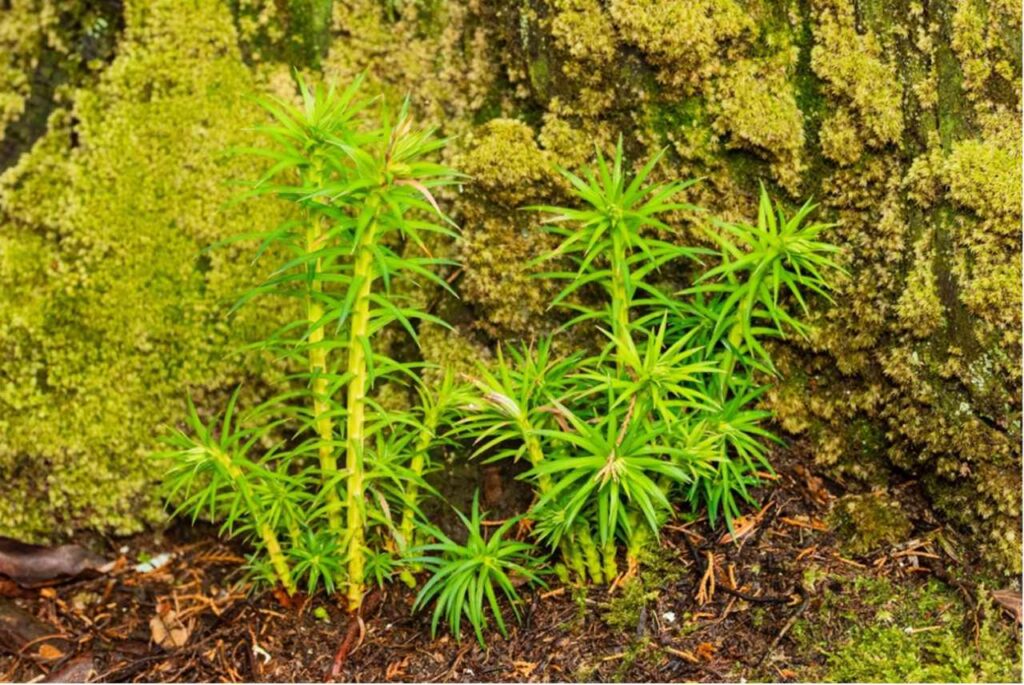
Of course, we understand the sentiment that "the ancient vegetation should be preserved" and that "it is unwise to tamper with nature. However, unmanaged and neglected forests not only reduce CO2 absorption capacity, but also cause damage to deer, wild boars, bears, and other animals.
Not all forests are to be changed. Particular focus should be placed on utilizing abandoned and non-reforested forest lands that are spread across the country. We should select land that is flat and efficient to work on, and steer the way toward "recycling-oriented forestry," in which land is systematically cultivated and harvested like agricultural crops, and forest land that has been logged but not reforested is also utilized to conduct operations in a shorter logging season. Harvested wood can be cascaded from building materials to new materials and energy, thereby achieving both carbon fixation and economic efficiency. This rational zoning is the key to resource self-sufficiency in 2050. This is not ecological destruction, but a rational choice for humans and nature to coexist.
Combining the two is "solar sharing," in which panels are installed on top of farmland. It is estimated that just 10% of all farmland (about 1.5% of Japan's total land area), including abandoned farmland, could be used to meet most of Japan's current electricity needs. Photosynthesis (material production) on the first floor and power generation (energy production) on the second floor. This multi-layered land use is the wisdom for Japan, a small country, to enjoy maximum affluence.
This shift is not just about government and big business. I want to develop this as a "photosynthesis movement" with the participation of the entire nation.
For example, school education. Convert summer vacation observations of morning glories, for example, into scientific active learning. Students can learn about resource recycling by comparing and experimenting to see which plants grow most efficiently and how they can be made to grow faster. In addition, experiencing how the plants they grow through home gardening and citizen farms are connected to resource and energy issues is essential for shaping the vision of the next generation. This kind of literacy improvement among citizens will encourage innovation in society as a whole.
In a world divided and concerned about competing for resources, Japan should demonstrate a model of self-sufficiency. A society that combines the power of nature (photosynthesis) and human technology (solar sharing and breeding technology) to secure material wealth while also achieving spiritual fulfillment. This is the concrete image of the "platinum society" I advocate.
Japan has the natural environment, technology, and wisdom to achieve this goal. As the "Land of Photosynthesis," Japan must show the world a model of an independent and sustainable society. This is the role of Japan in the age of division in the history of mankind. (Hiroshi Komiyama, Chairman of Platinum Network and Honorary Editor-in-Chief of "Forest Circular Economy")