Updated by "Forest Circular Economy" Editorial Board on February 14, 2026, 8:07 PM JST
Editorial Board, Forest Circular Economy
Forestcircularity-editor
We aim to realize "Vision 2050: Japan Shines, Forest Circular Economy" promoted by the Platinum Forest Industry Initiative. We will disseminate ideas and initiatives to promote biomass chemistry, realize woody and lumbery communities, and encourage innovation in the forestry industry in order to fully utilize forest resources to decarbonize the economy, strengthen economic security, and create local communities.
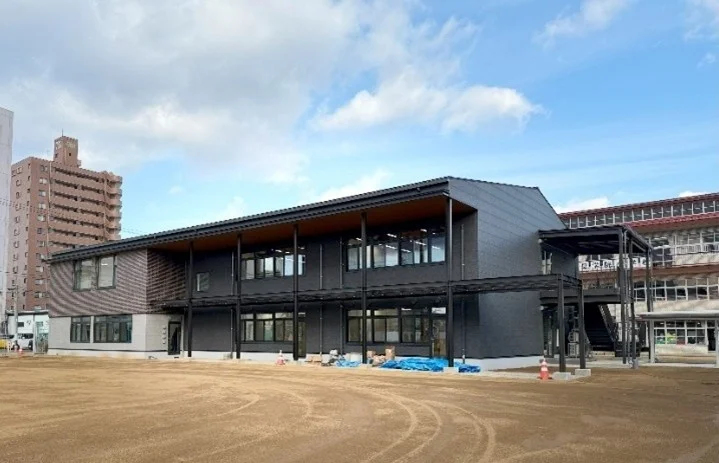
Mitsui Home and Mitsui Fudosan completed construction of a two-story wooden junior high school building addition in February at Sakura no Seibo Gakuin Elementary and Junior High School in Fukushima City, Fukushima Prefecture. The purpose of the addition is to create an integrated elementary and junior high school educational environment and create a facility that will realize a new era of learning in line with the guidelines of the Ministry of Education, Culture, Sports, Science and Technology. Against the backdrop of the 2022 revision of the Building Standards Law, this is an advanced example of a quasi-fireproof wooden addition to a fireproof RC building, combining the warmth of wood with a high level of safety.
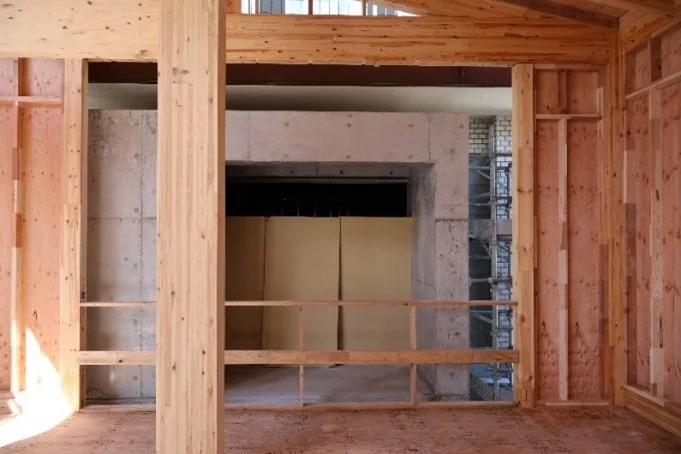
The project employs a method of adding a quasi-fireproof wooden structure to a fireproof RC building by using fire-heat barrier walls and other means. This was made possible by the revision of the Building Standards Law, and is an attempt to expand the possibilities of wood construction in school facilities.
In terms of technology, this is the first Mitsui Home to introduce the SE construction method and burnout design. This method ensures earthquake and fire resistance in large spaces, while at the same time utilizing the texture of wood such as columns and beams as part of the design. The second-floor hall connecting the elementary and junior high schools is also richly wooded, creating a learning environment in which students can feel the warmth of wood close at hand.
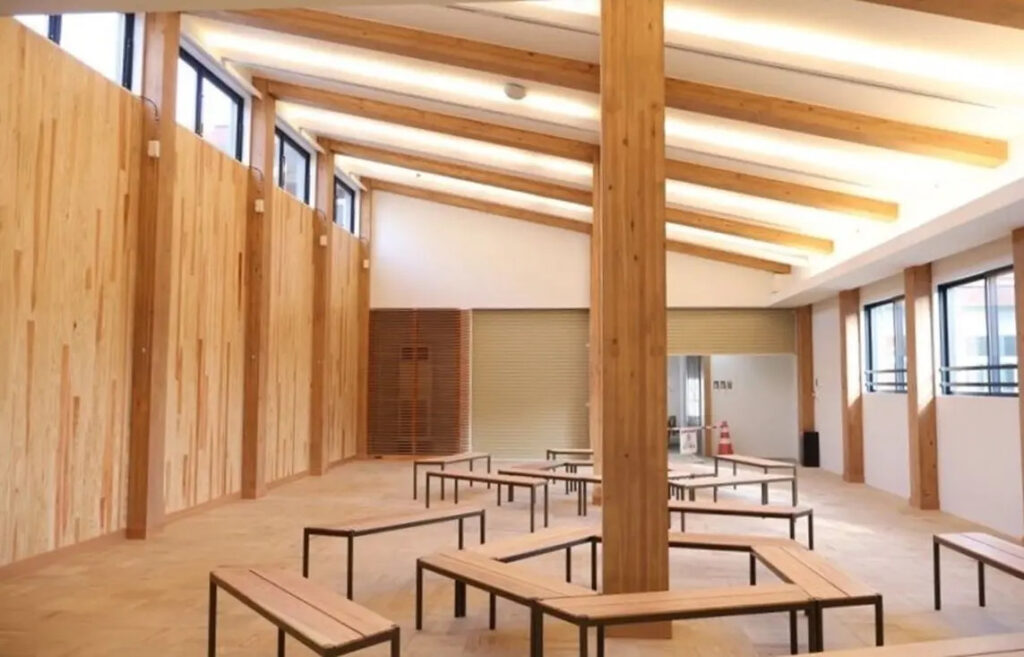
By actively utilizing timber from Fukushima Prefecture for flooring and wall materials, the facility is contributing to the local economy and strengthening its function as a place for environmental education. The amount of wood used amounts to 371 cubic meters, and the carbon storage capacity reaches 294 tons of carbon dioxide equivalent. This is equivalent to the amount of carbon absorbed by 583 50-year-old cedar trees.
Utilization of locally produced timber not only promotes the recycling of forest resources, but also helps to foster environmental awareness by exposing students to local resources on a daily basis. Visualization of environmental contributions through such construction will help students, who will lead the next generation, learn the significance of a decarbonized society. The company intends to continue contributing to decarbonization through the promotion of wooden architecture.
Facility Overview
Land: 31-1, Hanazono-machi, Fukushima City, Fukushima Prefecture and 9 other lots
Architect: Congregation de Notre Dame
Name of facility: Sakura no Seibo Gakuin Elementary and Junior High School
Design supervision: Mitsui Home Co.
Construction: Mitsui Home Co.
Site area: 8699.44 square meters
Building area extension: 943.76 square meters
Total floor area extension: 1466.13 square meters
Scale/structure: 2 stories, wood-frame frame construction (SE construction method), partly RC (connection between elementary school and junior high school)
Construction period: May 2025 - February 2026