Updated by "Forest Circular Economy" Editorial Board on June 02, 2026, 8:38 PM JST
Editorial Board, Forest Circular Economy
Forestcircularity-editor
We aim to realize "Vision 2050: Japan Shines, Forest Circular Economy" promoted by the Platinum Forest Industry Initiative. We will disseminate ideas and initiatives to promote biomass chemistry, realize woody and lumbery communities, and encourage innovation in the forestry industry in order to fully utilize forest resources to decarbonize the economy, strengthen economic security, and create local communities.
As Japan's planted forests enter the period of full-scale utilization, the effective use of thick, mature "large-diameter" timber is an urgent issue. Until recently, the use of large-diameter lumber has tended to be limited due to its inability to fit into existing sawmill lines, but in recent years there has been an accelerating movement to redefine its multifaceted value and actively steer its utilization. Originally, large-diameter lumber has a long history of being used as an important structural material in traditional Japanese wooden architecture. Currently, there is a multifaceted effort to return large-diameter wood resources to society at large, including the presentation of cutting-edge test and research results by the government, the development of publicity tools for the increasing use of large-diameter wood resources in satoyama, the introduction of unique consolidation technology by companies for public spaces, the development of recyclable furniture, and the study of forest policy based on knowledge from traditional architecture. In addition, companies are developing furniture with recyclable materials, and considering forest policies based on the knowledge of traditional architecture.
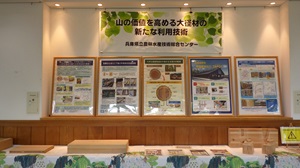
The Kinki Chugoku Regional Forest Office of the Forestry Agency is exhibiting the results of "Testing, Research, and Development Technologies for Increasing the Added Value of Large-Diameter Japanese Cedar Logs" conducted by the Hyogo Prefectural Technical Center for Forestry and Forest Products at its "Forest Gallery" on the first floor until June 5. In Hyogo Prefecture, logs produced from planted forests are becoming larger in diameter as forest resources mature, and the development of new uses for these logs has become an issue. The center introduces its research on utilization technologies and wood samples that it has been working on. By widely disseminating information to a wide range of people, the center will promote the dissemination of knowledge about large-diameter logs and sustainable resource recycling in the local forestry industry.
*Reference link
Gallery of Forest|Kinki Chugoku Regional Forest Office
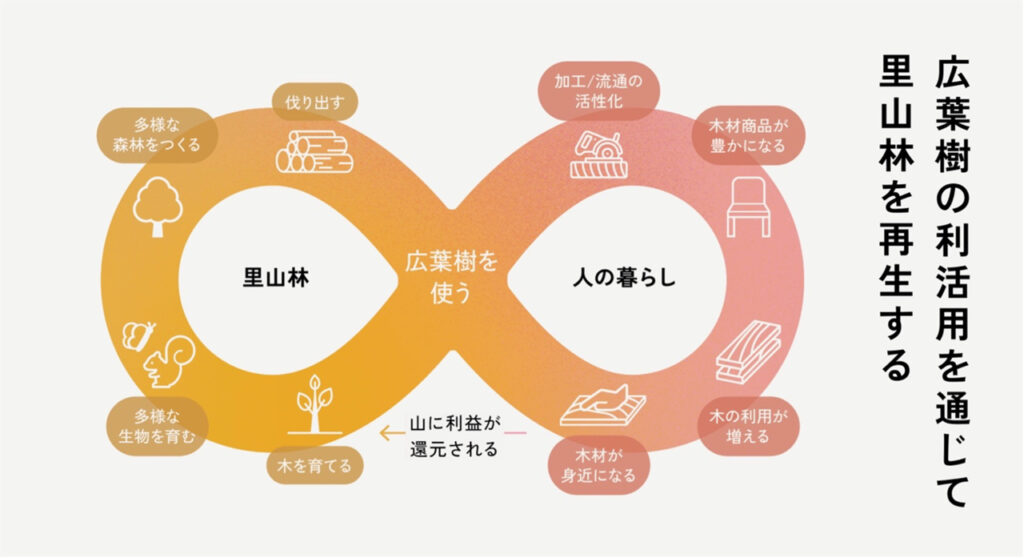
Mori Mirai, which operates a lumber distribution business, conducted a survey on the demand for domestic hardwoods and produced a public relations tool to promote their utilization under a project commissioned by the Forestry Agency. The use of domestic hardwoods has been sluggish due to the difficulty of standardizing them in line with the trend toward mass production, and the aging and increasing diameter of trees in village and mountain forests has progressed due to neglect caused by the energy revolution and depopulation. The company is now facing serious negative impacts on the ecosystem. The company conducted 811 surveys and analyses of domestic hardwood needs throughout its supply chain, and produced a brochure and concept movie. By widely communicating the multifaceted value and potential of Japanese hardwoods, the company hopes to stimulate new demand and encourage the regeneration of large-diameter forests and the creation of a foundation for sustainable resource recycling.
*Reference link
Mori Mirai Promotes Utilization of Domestic Hardwoods | Mori Mirai Co.
Broadleaf Tree Initiatives | Forestry Agency
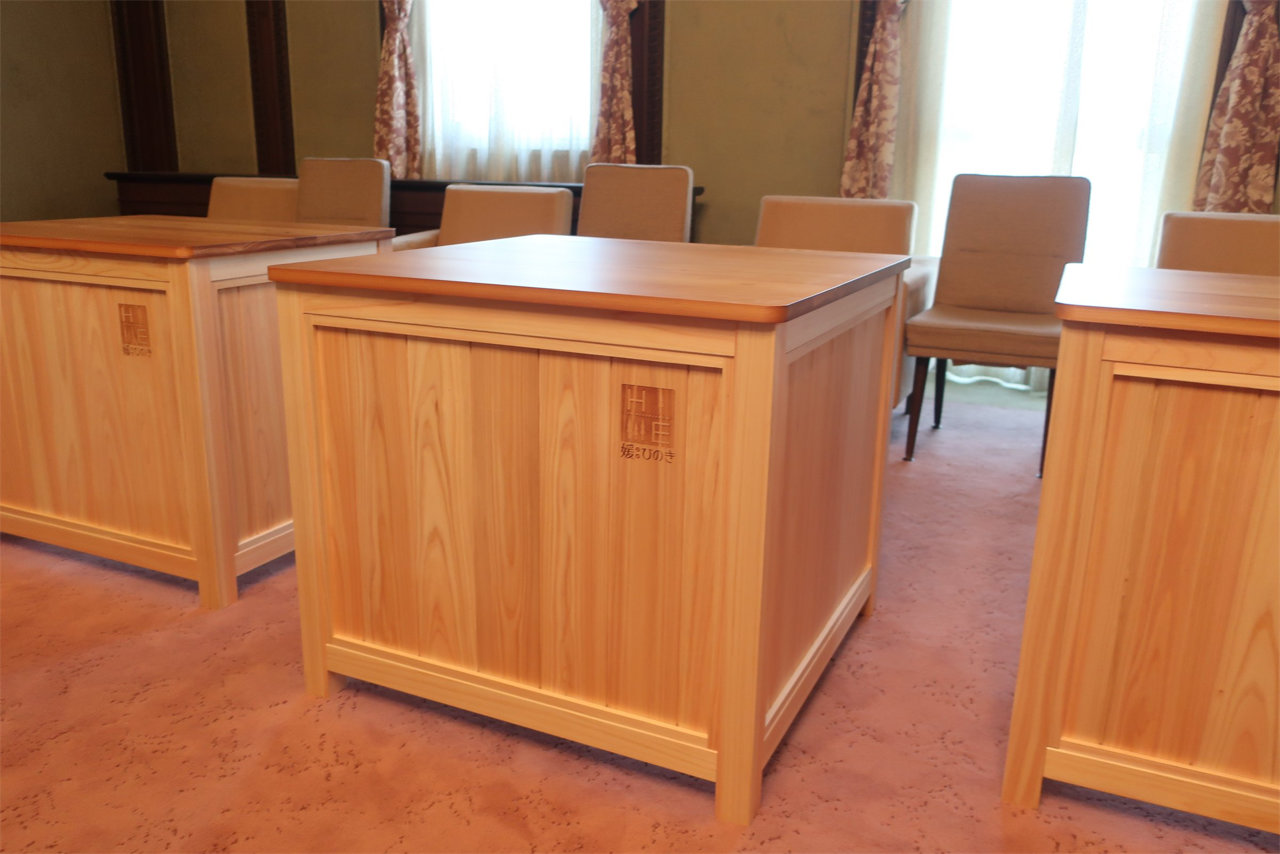
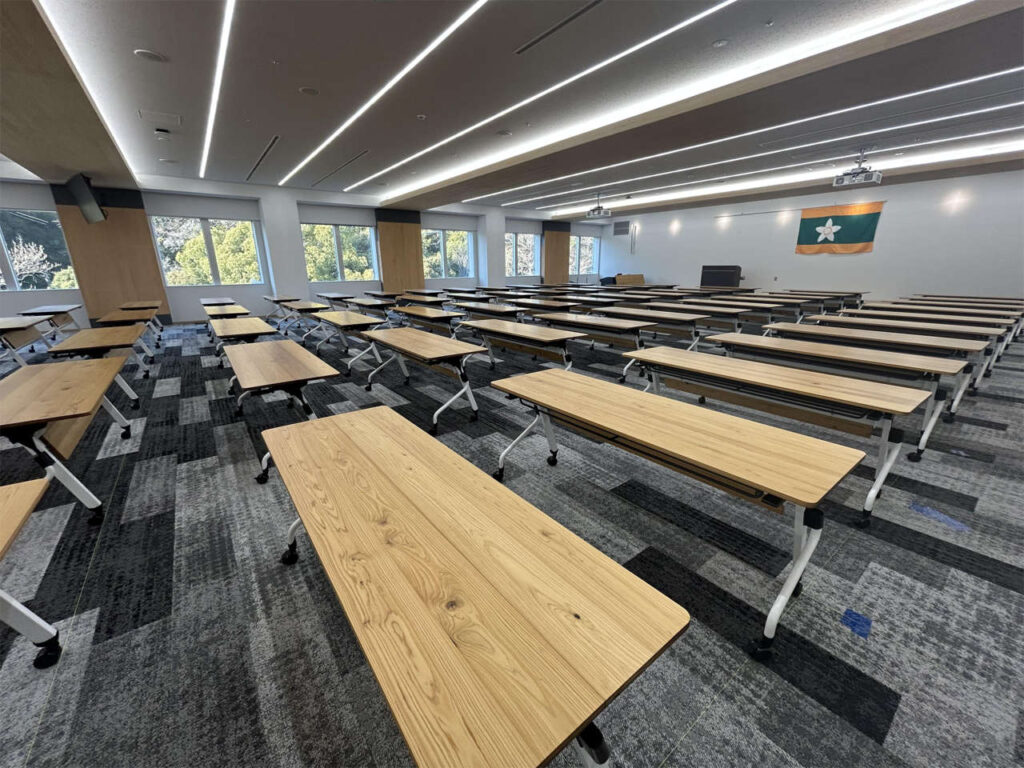
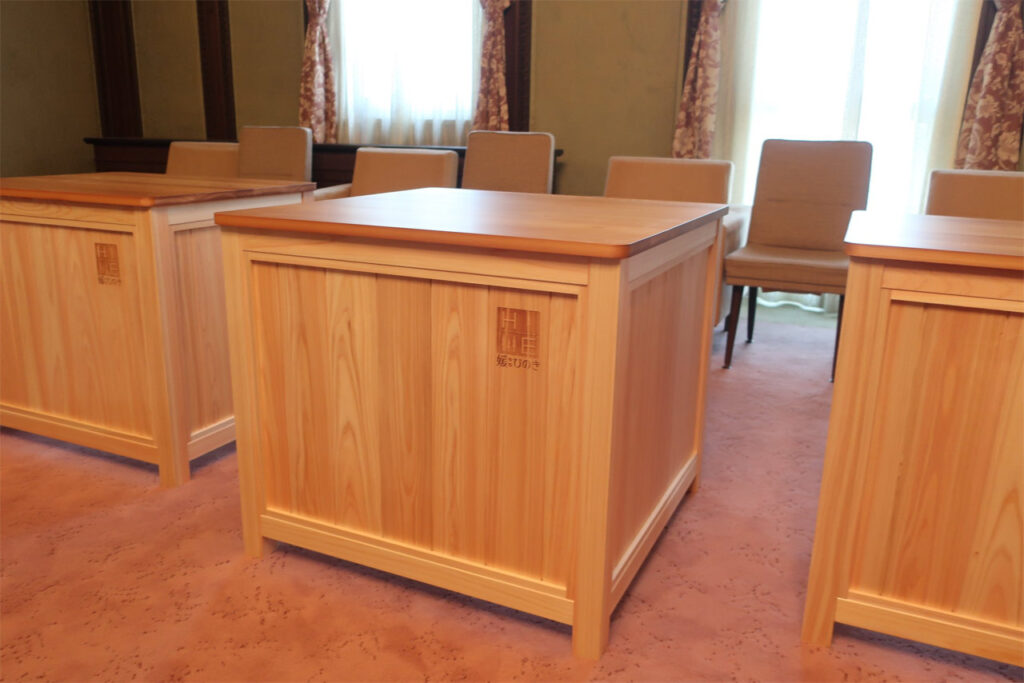
A total of 113 conference tables made of "Ehime Hinoki Gywood," jointly developed by NICE and the Ehime Prefecture Lumber Products Market Development Council, have been installed in the Ehime Prefectural Government. In addition to the main conference room, the tables are also used for the tops of the desks of the governor and vice-governor for press conferences. Gywood(R)" is made mainly from large-diameter Japanese softwoods, the surface layer of which has been densified using proprietary technology. The new product retains the lightness and shock-absorbing qualities of softwood while providing the strength against scratches and dents that are essential for furniture. In addition, the use of high quality prefectural cypress this time brings out its unique grain and smooth texture to the fullest extent. The introduction of the new system has resulted in the use of 8.1 cubic meters of wood and the storage of 5.7 tons of carbon dioxide, making it a model case that simultaneously realizes local production for local consumption, high value-added utilization of large-diameter wood, and reduced environmental impact.
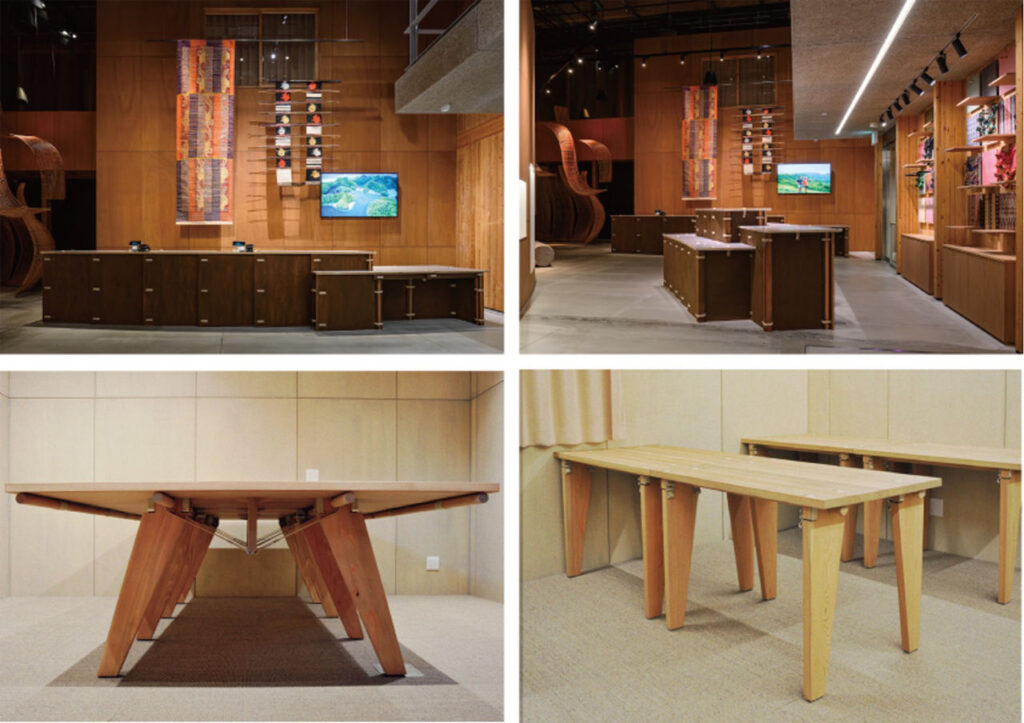
KNOTTER has launched a bed frame and side table from its "Traveling Furniture|KNOTTER" series of furniture that can be assembled, disassembled, and transported freely on Makuake. Combining traditional Japanese construction methods that do not rely on nails or glue with modern pre-cutting technology, the bed frame and side table can be reassembled many times without the need for tools. Idle wood is used for materials, with knotty timbers used for the beds and 80-year-old large-diameter logs used for the side tables. The "back split," a groove in the log to prevent splitting, is utilized for electrical wiring and used for lighting and smartphone storage, giving new value to the large-diameter wood and sublimating it into a product that fits in with the living space. Furthermore, the company is also promoting traceability management that can call up the story of the mountain's history and the age of the trees using "wood grain authentication technology (currently undergoing verification experiments)" of the wood. The company also has a recycling design that allows products to be collected free of charge after they have served their purpose. This is a wood furniture that embodies "circulation" in the sense that it is not for transient consumption, but for continued use over generations while being restored.
*Reference link
Don't throw away, but reuse. Solid wood bed frame made by traditional construction method and modern building technology.
[ Launch of Advance Sales and Website Renewal ] Release of RAFT and BEACON on Makuake, Website Renewal | KNOTTER Inc.
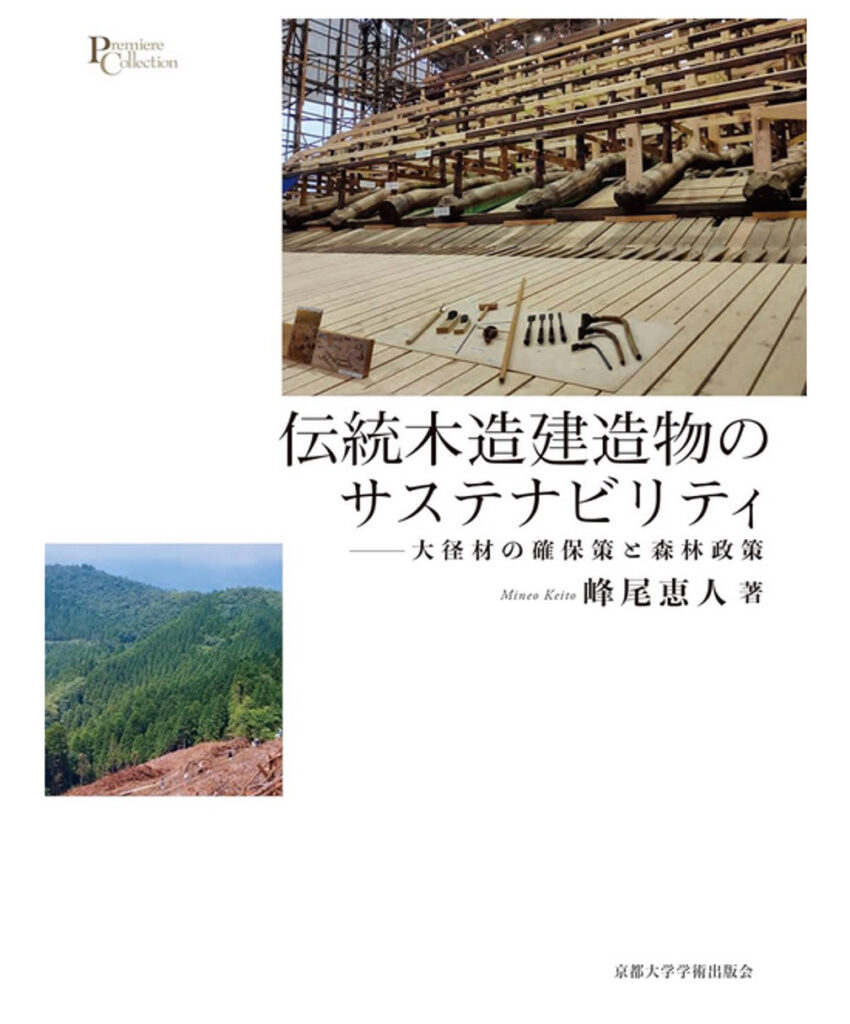
Sustainability of Traditional Wooden Buildings: Measures to Secure Large-Diameter Timber and Forest Policy" (Kyoto University Press), written by Keito Mineo, a specialist in forestry policy and a designated assistant professor at Kyoto University's Institute for Chemical Research, was published in March. The book focuses on how to secure large-diameter timber, which is indispensable for the construction and repair of traditional wooden buildings in Japan, from Horyu-ji Temple to local temples and shrines, in the face of serious difficulties in obtaining such timber. The author analyzes the background of the supply system for large-diameter timber, which has rarely been discussed since the Meiji era, using a multifaceted approach that includes a questionnaire survey of temples, economic analysis, and an organization of the current system. The author empirically presents the future of forest policy and the future of bearers such as national forests and temples and shrines. The content redefines the long-term resource value of large-diameter timber and the need for institutional design from the perspective of maintaining historical buildings.