Photo by Saeko Nishimura
"Children grow up in the forest, children are raised in the forest" - Forest kindergarten in Chizu, a forestry area, offers the option of "rural parenting ."
Updated by Saeko Nishimura on May 07, 2026, 6:09 PM JST
Saeko NISHIMURA
NPO Chizu no Mori Kosodateisha
Born in 1972. Studied forestry as a student, and studied tropical forests (mangroves) in Myanmar as a graduate student. After marrying, she moved to Tottori Prefecture and joined the Tottori Prefectural Government in 2003, retiring in 2012. 2009, she established "Chigashi-cho Morino no Yochien Marutambo" (Forest Playground Marutambo). In 2024, she took over the business and is now enjoying life in Chigashimachi. He is enjoying his life in Chigashira town.
Since 2009, I have been involved in the upbringing of children and people in the town of Chigashira, Tottori Prefecture, through the activities of "Morino no Yo-no-En" (Forest Playground). I moved to Chigashira-cho because I wanted to raise my child in a mountain village, and the experience of raising a child in Chigashira-cho was more wonderful than I had expected.
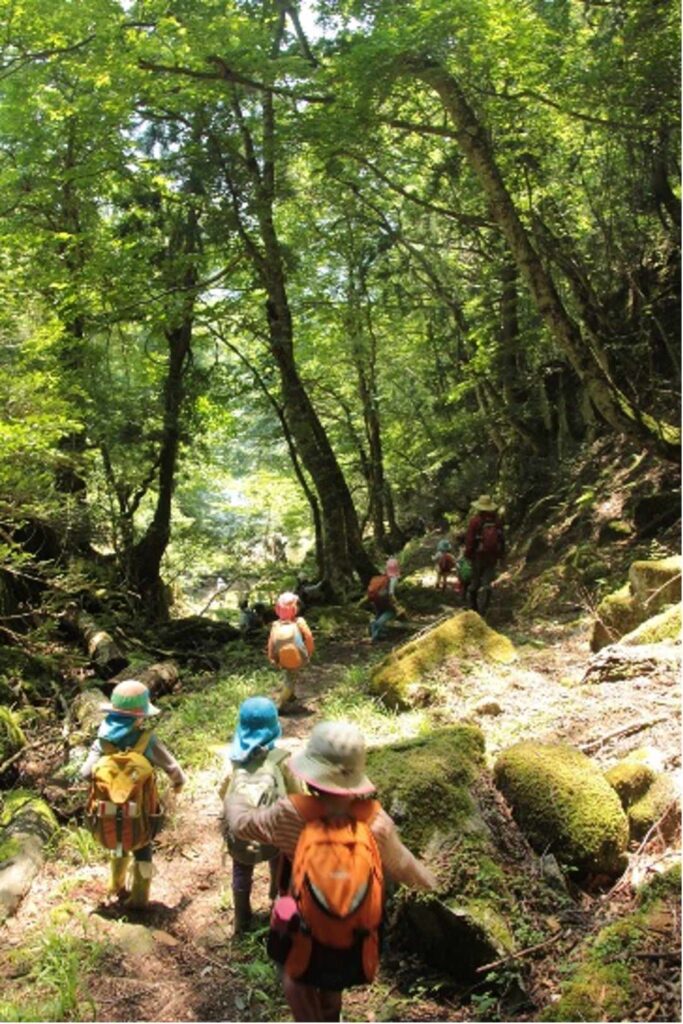
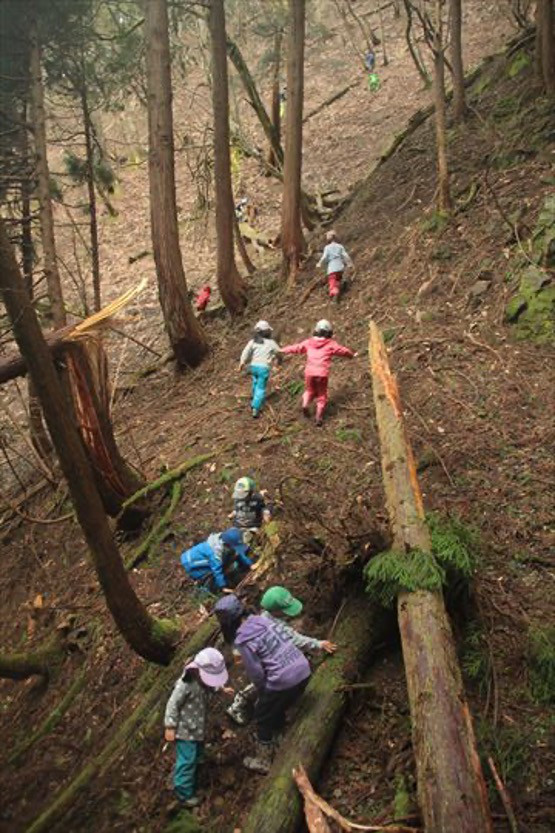
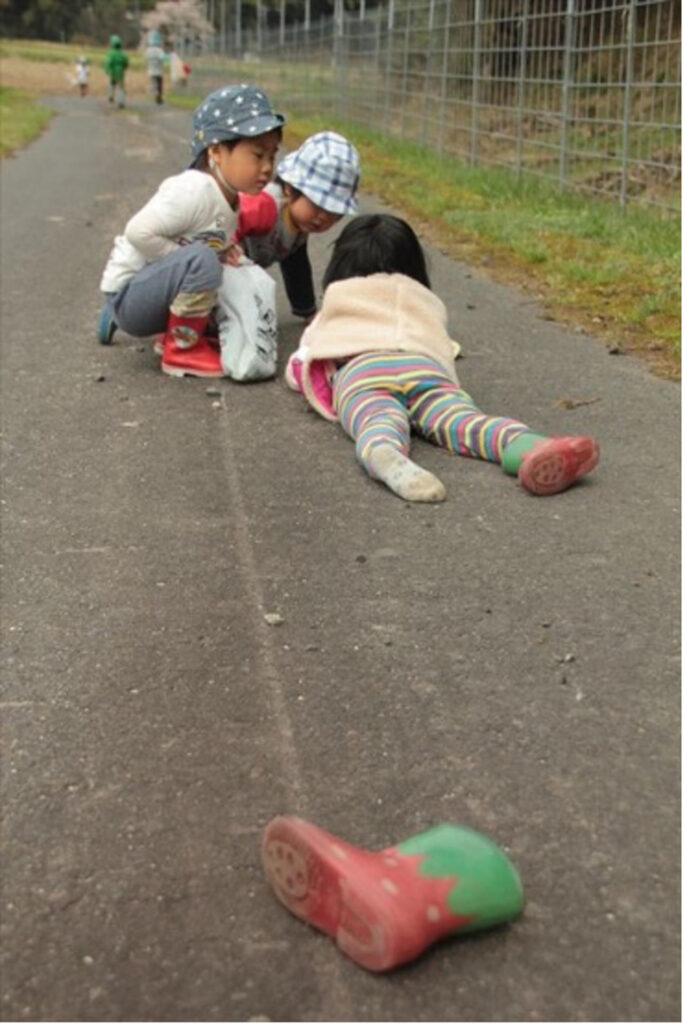
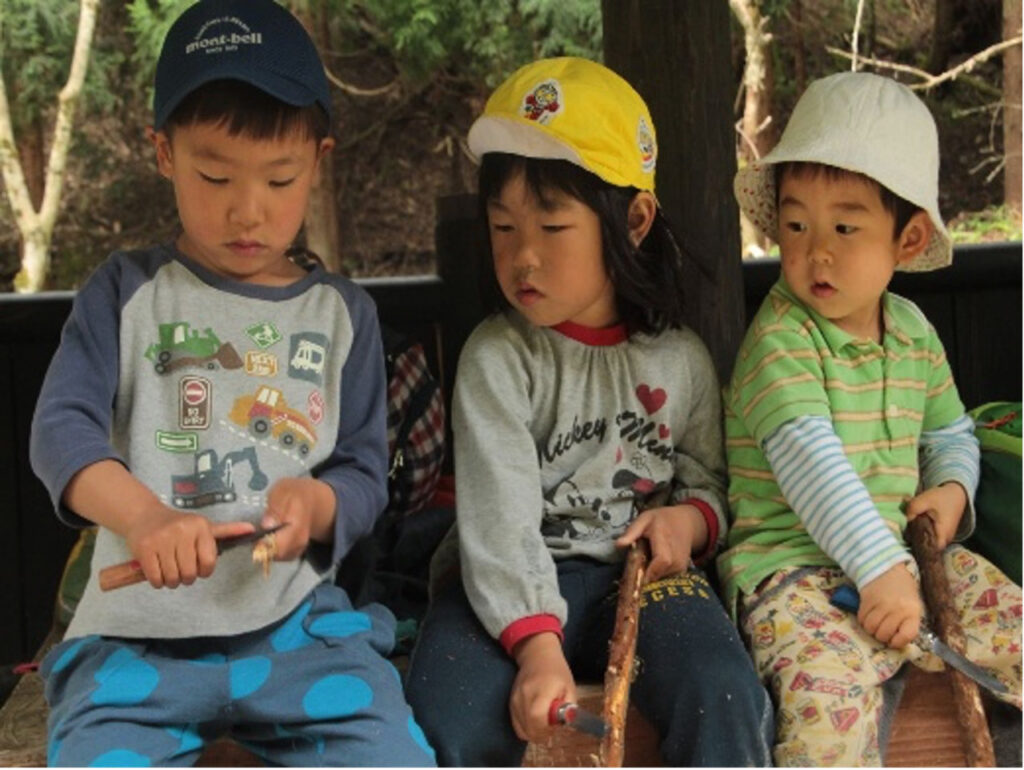
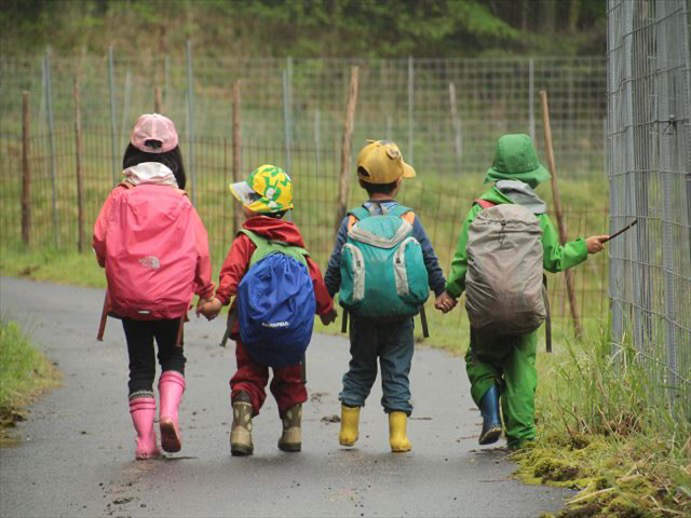
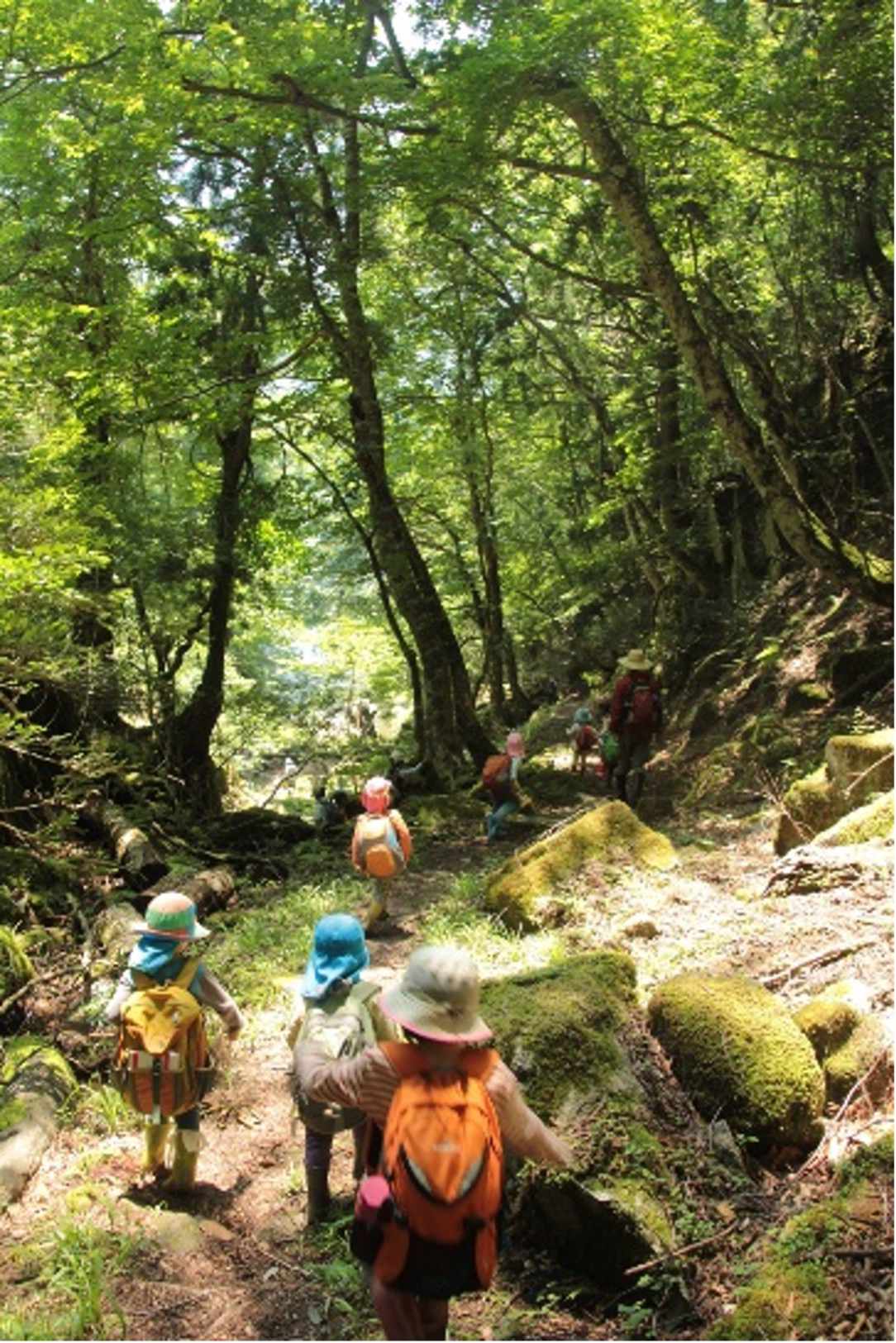
As the name implies, a "forest playground" is an activity in which a forest is used as a school building and childcare and early childhood education are conducted in the forest. There are a variety of styles, such as calling themselves "Forest Grove" or not, having a building or not, etc. However, in general, it can be said that the activities are not indoor activities, but rather those that place emphasis on activities and nurturing in nature.
Although we call them "forests," we refer to them not only as forests, but also as outdoor activities centering on nature, such as oceans, rivers, lakes, parks, human settlements, and so on.
Our forest yo-en has developed in Chigashira Town, a forestry area famous for its Chigashira cedars. The features of our program are as follows: (1) 93% of the town area is forest, making it a real mountain village; (2) it is the first full-scale forest daycare in Chugoku, Shikoku, and Kyushu; (3) it was established by "mothers" raising children, not education specialists; and (4) from its opening, it was operated with support from the government, including Chigashira Town (and later, Tottori Prefecture).
It is said that this forest nursery originated in Scandinavian Denmark, where a Danish mother in the 1950s wanted to raise her child in the forest and started taking her child to the forest every day. Gradually, mothers in the neighborhood began to take their children to the forest as well, and the activity spread.
Currently, such efforts are spreading throughout the world. Germany, in particular, a country with cultural soil that is familiar with forests, is a leading country in the field of forest playgrounds, and the number of facilities is said to be as many as 2,000 to 3,000.
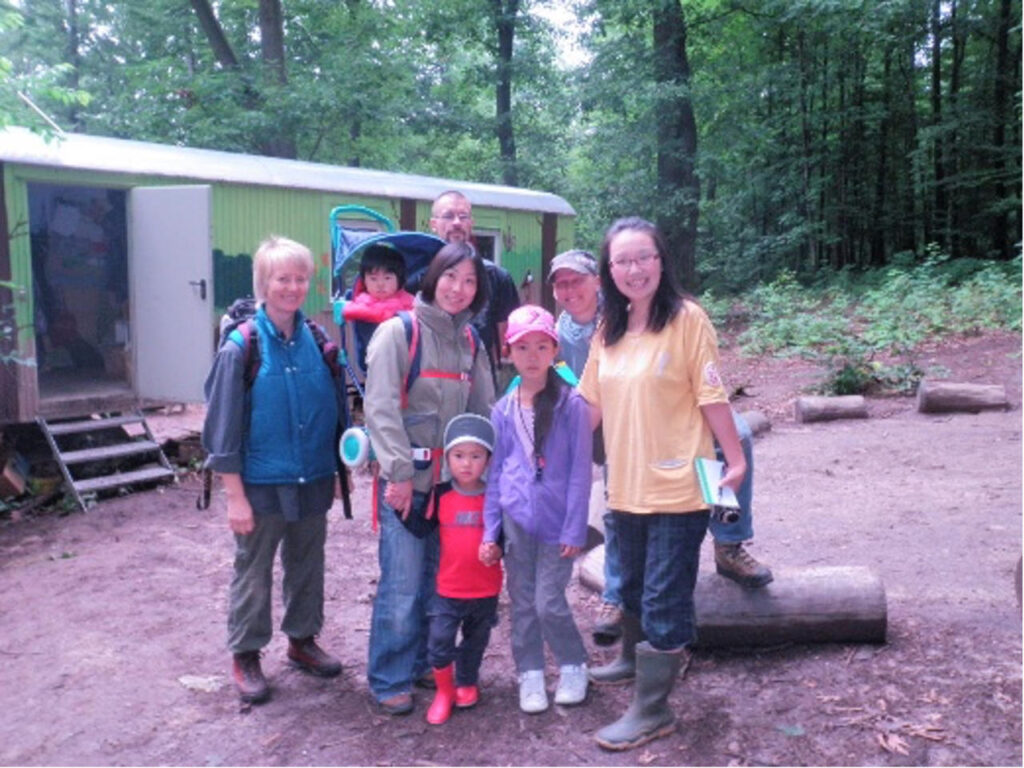
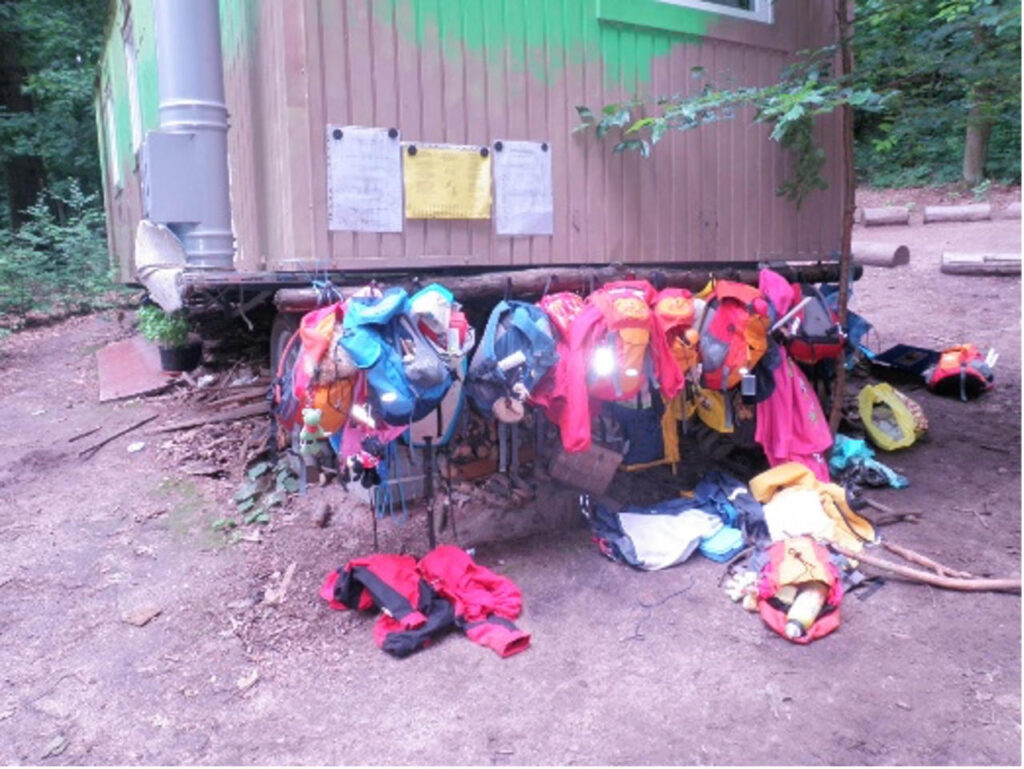
In Japan, which has had a close relationship with forests as much as in Germany, activities are also spreading. In the Taisho era (1912-1926), there was a period in Ikeda City, Osaka, when an activity called "kindergarten without a home," in which activities were conducted mainly outdoors, spread.
Influenced by European forest nurseries, the first generation of modern forest nurseries began in the 1980s and 1990s, following the lineage of so-called "free childcare" in the 1970s and 1980s and "voluntary childcare*" that started around the same time. In the 2000s, activities spread mainly in the Chubu region, particularly in Nagano and Aichi.
Around 2009, when we started our activities, the second generation activities were beginning to spread, and the fact that in 2005 the National Network of Forest Leisure Centers started the "Forest Leisure Centers National Exchange Forum" also helped the spread.
Our activities have attracted much attention, partly due to the cooperation with Chigashira Town, and were made into a documentary program by a local TV station (San-in Chuo TV) and NHK Tottori, which was broadcast nationwide in 2011. In particular, "In the Heart of Nature: Morino no Yochuen Marutambo Style," produced by Sanin Chuo TV, was nominated for the FNS Documentary Grand Prix and won the Galaxy Award from the Broadcasting Critics Roundtable. Later, the film was translated into English by NHK and broadcast in 160 countries around the world, which may have helped to spread awareness of the activities of Morino no Yojunen throughout Japan.
Voluntary childcare...A style of childcare in which mothers (or fathers) leave their children with other mothers (or fathers). It does not require a childcare specialist, but it is also a place for "parent upbringing.
Growing worldwide interest in the natural environment and the current decrease in nature experience activities for young children have led to a growing need for forests, and activities have been expanding both globally and domestically. In Japan, in particular, many of them were of the voluntary childcare type.
However, with the introduction of free preschool education starting in 2019 and the rapidly declining birthrate, Japan's forest preschools are currently at a crossroads.
Originally, Japanese forest daycare centers were in a difficult financial situation due to a general lack of support from the government. However, with the introduction of free public preschools and other free programs due to the government's introduction of free early childhood education, the number of families choosing forest daycares (which do not receive any support) has decreased dramatically, forcing them to operate in even greater difficulty. In addition, the government's promotion of free early childhood education has resulted in a situation where mothers who wanted to raise their children on their own are forced to choose facilities that offer more support, making it more difficult to operate Morino no Yochien as a voluntary daycare center, which used to be a distinctive feature in Japan.
The times are hard on the Forest Forest School, but even so, there are a number of reasons why the lights should not be turned off. In this series, we would like to introduce the appeal and significance of the Forest Forest Recreation Center. (Saeko Nishimura, President of NPO Chigashira no Mori Kosodatsusha)