One Design Changes Everything — A Solution to Society’s Challenges, Sought Throughout a Lifetime as an Engineer
Updated by Hiroshi Komiyama on August 28, 2026, at 9:45 p.m. JST
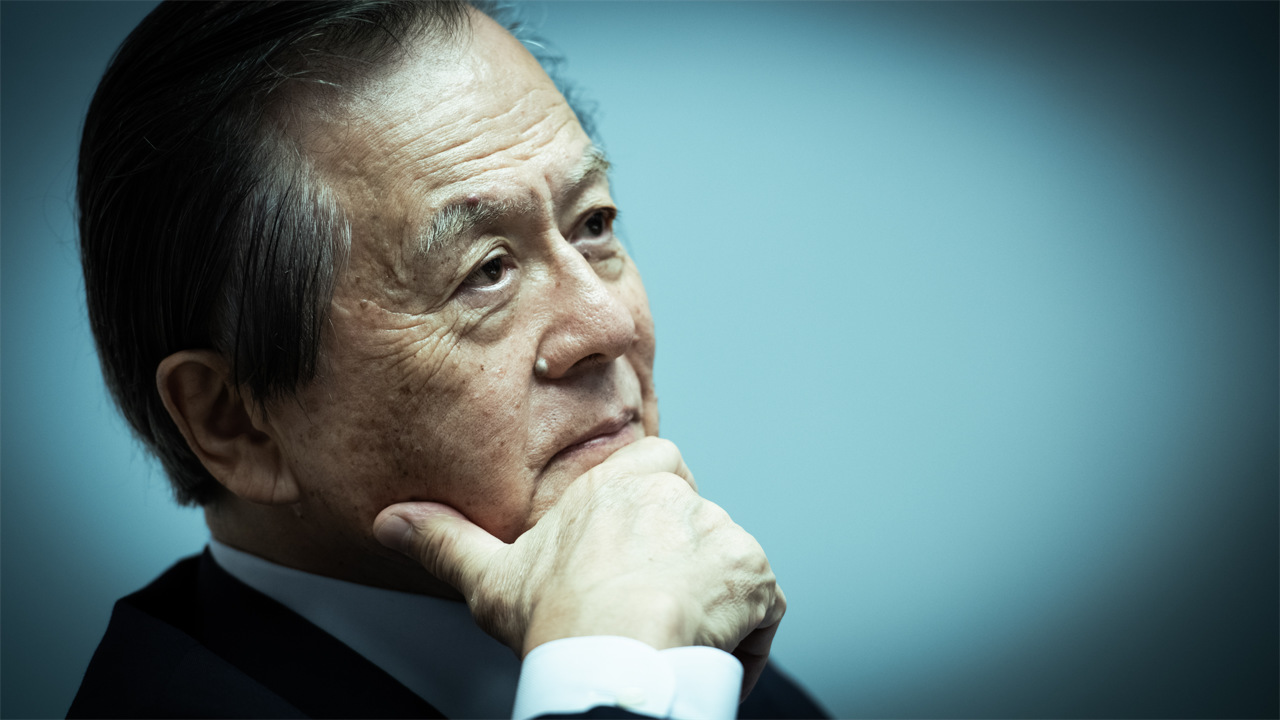
Hiroshi KOMIYAMA
(Platinum Initiative Network, Inc.
After serving as Professor at the University of Tokyo, Dean of the Graduate School of Engineering and Dean of the Faculty of Engineering, and President of the University of Tokyo (28th), he was appointed Chairman of the Mitsubishi Research Institute in 2009, and Chairman of the Platinum Initiative Network in 2010 (to be incorporated as a general incorporated association in 2022). Other positions include President of the STS Forum, Chairman of the Association for Super-Education, Chairman of the United Nations University Cooperation Foundation, Chairman of the International Science and Technology Foundation, and Chairman of the Heat Pump and Thermal Storage Center Foundation. He also received the Dubai Knowledge Award (2017), the Order of the Star of Solidarity of Italy (2007.) and "Information and Communication Month" Commendation from the Minister of Internal Affairs and Communications (2014), the Zaikai Award Special Prize (2016), and the Commendation for Merit in Promoting a Maritime Nation (2016), among many other national and international awards.
With global challenges piling up, and based on my experience with the Club of Rome, which I am a member of, it is no longer enough to simply cry out that we are in a “crisis.” In my opening remarks at this October’s STS Forum (an international forum on science, technology, and the future of humanity), I intend—as an engineer—to present concrete “solutions” to the social challenges I have spent my entire life contemplating. Humanity currently possesses more than enough knowledge. I believe that if we mobilize all of it and apply it optimally, we can solve every challenge. The key lies in “how we design society.” By “design,” I mean integrating technology, institutions, industry, and human resources into a single system, rather than considering them separately.
Although companies and local governments are working hard to address their individual challenges, “local optimization” has already reached its limits and may actually lead to the worst possible outcome for society as a whole. Just as the field of “chemical engineering”—which I have been engaged in for many years—was born from the integration of knowledge in chemistry, mechanical engineering, and economics, what society now needs is “social design” that integrates multiple areas of expertise.
What does “one design can change everything” mean? For example, there is a design concept called “Solar Sharing × Fallow Land × Physical AI.” It involves installing solar panels on farmland and integrating them with physical AI that processes data from the real world. Putting this into practice would not only improve energy and food self-sufficiency but also help solve multiple challenges, including labor shortages in rural areas and even problems with harmful wildlife such as bears. Previously, while giving a lecture in Kyushu, the female owner of a nursing care facility approached me to discuss her interest in implementing solar sharing at her facility. It’s a wonderful chain of design innovations that allows the facility to generate its own electricity while also promoting the health of its residents through agriculture.
In addition, in Maniwa City, Okayama Prefecture, plans are underway for a “Closed School × University × Human Resource Development” initiative that repurposes a closed school building as a university hub. This initiative creates a space not only for inquiry-based learning for elementary, junior high, and high school students but also for local adults to receive training in forestry and learn how to implement AI. Furthermore, the structure of a forest circular economy—combining “Forestry × Biomass Chemistry × Wooden Cities”—serves as a solution in itself for regional revitalization, decarbonization, and energy resource issues, thereby fostering a comprehensive circular economy. A single well-designed initiative can trigger a chain reaction of change throughout society.
So, who will be responsible for designing and implementing this overarching framework? A top-down approach led by the government has its limitations and even carries the risk of descending into authoritarianism. On the other hand, corporations tend to prioritize profit, and individuals alone cannot guarantee the necessary scale and continuity. That is precisely why we need an organization (a legal entity) that transcends barriers of age, occupation, gender, nationality, and field—one that is rich in diverse experience and knowledge and possesses a long-term, human-historical perspective. The Platinum Vision Network, of which I serve as chairman, is one such initiative aimed at creating a mechanism—a “self-governing, decentralized, and collaborative system”—to undertake this overarching design.
This design approach, which integrates multiple fields, is not unique to Japan. Systems that connect energy, agriculture, technology, and local communities have the potential to become “design for humanity”—one that can be adapted to the specific context of any country, whether developed or developing.
To conceive and implement outstanding designs, the “talent” responsible for them is indispensable. In the coming era, where generative AI will encompass all knowledge, what will truly be needed are people who can piece together fragmented knowledge and create “scenarios (stories)” that lead to breakthroughs.
To cultivate such talent, we need to break down existing frameworks and design systems that promote personnel mobility. As part of the educational reforms I implemented while serving as Dean of the Faculty of Engineering at the University of Tokyo, I recruited a classmate who had been serving as vice president of a private company to join the faculty as a professor. I also revised the system so that one of the examiners for degree evaluations must always be selected from a different department. Bringing together insights from different fields not only helps develop students but also fosters the growth of the “teachers” through their interactions with those students.
This is by no means limited to universities. In your companies and communities as well, “designing talent exchange”—such as breaking down barriers between departments to form cross-functional project teams or involving external talent from different industries—is the best way to develop people who can envision future scenarios.
Society does not change as a result of a single technology or a single system. Only when the knowledge accumulated by humankind is integrated into a single “design” does society as a whole change.
Furthermore, this way of thinking—that “a single design can transform the whole”—is not limited to large entities such as nations or local governments. It resonates with the theories of Professor Hiroyuki Yoshikawa (former President of the University of Tokyo), who has influenced me greatly; design is by no means the exclusive domain of a select few experts or engineers, but rather “human intellectual activity” itself—the process of integrating knowledge and creating new solutions to realize a desirable future. Professor Yoshikawa once told me, “I hope that structuring knowledge doesn’t lead to rigidity.” I believe this means that design isn’t about setting a fixed goal and working toward it, but rather about continuing to take action.
In that sense, it can be said that the way you structure your daily work, the solutions you devise for the business challenges you face, and even the very act of redesigning small local communities are all already part of the process of envisioning the future. Now, as social issues grow increasingly complex, what is needed is the “power to design”—the ability to continue crafting new scenarios by connecting diverse bodies of knowledge.
My vision for 2050 is a society in which its “design” organically connects people, nature, industry, and local communities, allowing each individual to fully utilize their abilities and achieve self-actualization. It is my unwavering hope that you will apply this vision for the future—which I have continued to contemplate throughout my career as an engineer—in your respective fields and that we will work together to bring it to life in society. (Hiroshi Komiyama, Chairman of the Platinum Vision Network and Honorary Editor-in-Chief of *Forest Circular Economy*)