


Reading the History of People and Wood Through 20,000 Timber Specimens: The Past and Future of Kyoto University’s Xylarium
Updated by Tazuru Toshiko on September 2, 2026, at 10:52 a.m. JST
Suyako TAZURU
Kyoto University
Associate Professor, Institute for the Study of Human-Environment Interactions, Kyoto University / Specializes in wood anatomy. Through work such as identifying the tree species of wooden cultural properties, he conducts interdisciplinary research that sheds light on the relationship between humans and trees and the philosophies people have held regarding wood. His publications include *What a Single Piece of Wood Can Teach Us: Wood × Science × History* (sole author, Tankosha, 2022) and *Understanding Sustainability Through Kyoto University Research* (co-author, Ohmsha, 2025).
The Kyoto University Uji Campus is located in Uji City, Kyoto Prefecture. Perhaps not many people are aware of the history linking this place to wood research in Japan.
Around Showa 15 (1940), there was a growing call within Japan for a specialized research institute dedicated to wood science. Although the idea was initially deemed premature and shelved, the importance of timber research grew as the war progressed. Consequently, in Showa 19 (1944), the Timber Research Institute was established as an affiliated institution of Kyoto Imperial University (now Kyoto University). Initially housed in a building belonging to the Faculty of Agriculture, it relocated to Gokasho, Uji City, after the war. It subsequently evolved from the Institute of Wood Science into the current Institute of Human Environment. While the Uji Campus now houses several research institutes in addition to the Institute of Human Environment, this location has long remained a major hub where numerous researchers continue to explore the potential of wood.
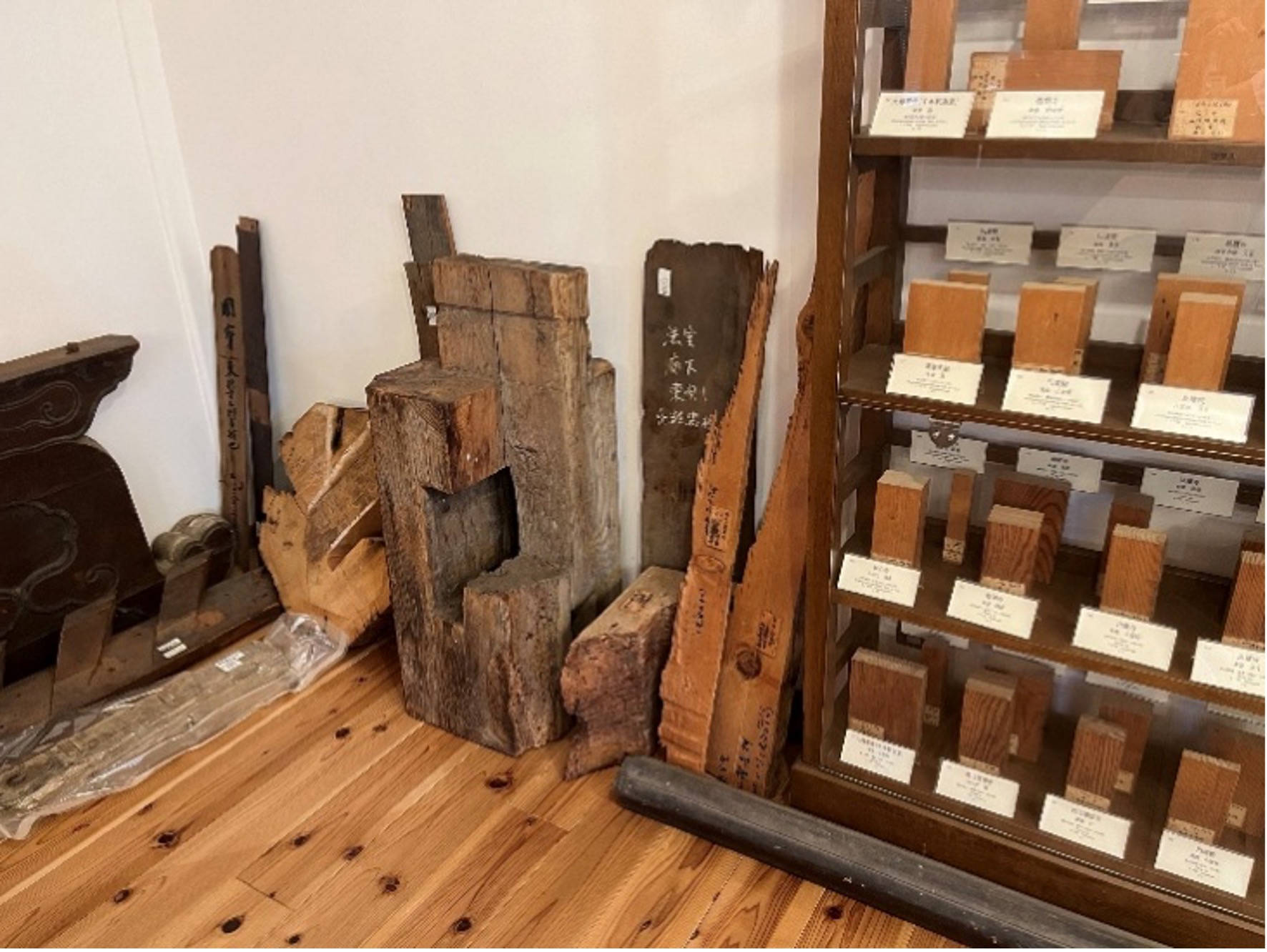
Located in a corner of the Uji Campus is the Wood Specimen Survey Room of the Institute for Human Ecology. Many people may not be familiar with the term “wood specimen survey room.” In short, it is a facility that organizes and manages wood specimens collected from Japan and around the world; in English, it is called a “xylarium.” The Xylarium was established in Showa 55 (1980) within the then-Wood Research Institute, following its official registration in the International Directory of Wood Specimen Collections under the institutional abbreviation “KYOw” in Showa 53 (1978). In Showa 58 (1983), a dedicated building was constructed, and following renovations during the Heisei era, the facility remains in operation today. The “International Directory of Wood Specimen Collections” is a global directory that comprehensively lists wood specimen collections held by universities and research institutions worldwide; five institutions from Japan are registered, led by the Forestry and Forest Products Research Institute of the National Research and Development Agency, Forestry and Forest Products Research Organization.
Since the establishment of the Specimen Collection Research Office, the collection of specimens and the preparation of slides for optical microscopy have been vigorously pursued. The number of specimens, which stood at approximately 2,000 in Showa 55 (1980), doubled to 5,000 just two years later, in Showa 57 (1982). Thanks to the dedication of successive generations of researchers and staff, the collection has expanded, and today it comprises approximately 20,000 wood specimens and 15,000 standard microscope slides.
As a researcher in wood anatomy, I have been involved, under the guidance of my mentors, primarily in identifying the tree species of wooden cultural properties, such as historic buildings and wooden sculptures. I am fascinated by interdisciplinary research that goes beyond mere scientific identification of species to unravel the history of the relationship between people and wood, as well as the philosophy behind species selection—why people in those times chose those particular trees.
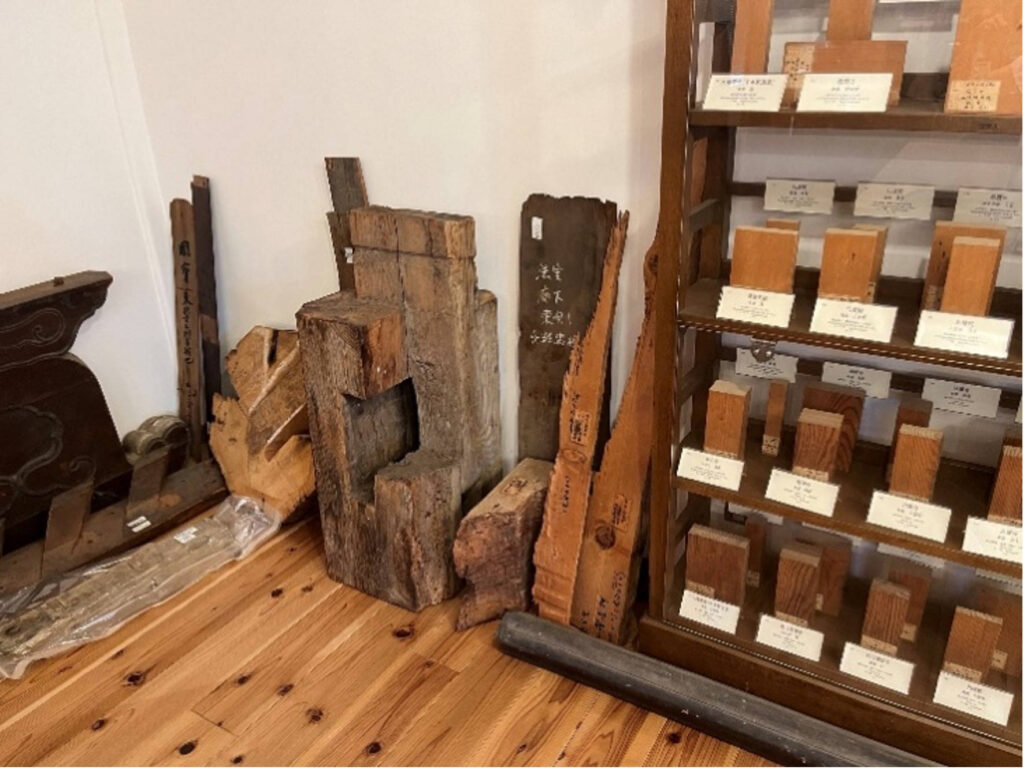
In postwar Japan, an archaeology boom took hold, creating a strong demand for the identification of tree species in wooden artifacts unearthed from archaeological sites. The Timber Identification Laboratory has a long history of responding to research requests from the field of archaeology since that time, and in recent years, its collection of historical timber samples from historic buildings has surpassed 600 items. Behind this achievement are the senior researchers who have tirelessly dedicated themselves to the study of historic timber. Today, the office continues to serve as a vital hub for the multifaceted study of wood culture, conducting wood species identification for cultural properties undergoing restoration (sculptures) based on a memorandum of understanding with the Agency for Cultural Affairs, as well as collaborating on wood species surveys with prefectural cultural property protection divisions and museums and art galleries both in Japan and abroad.
By the way, to identify a tree species, we examine thin sections of wood tissue under a microscope. I’ve peered through a microscope countless times, and beyond the delicate, beautiful wood structure—which remains exquisite even after years of aging—I feel as though I can see the figures of carpenters, sculptors, and lumberjacks from centuries ago, and it feels as if I’m having a conversation with them across time. “Do you know what kind of wood I chose?” “Do you understand why I used this wood?” I can’t help but feel as though they are asking me these questions. Identifying tree species is a painstaking task that involves meticulously checking anatomical features one by one, and it comes with a great sense of responsibility. As an inexperienced student of the craft, I have had more than one or two dreams in which I made a mistake in identification and found myself prostrating myself in apology before a stern-looking carpenter from centuries past. Even so, these are trees that live many times longer than humans, and even after they fall, they continue to support people physically and spiritually as lumber, and as buildings and Buddhist statues, they help preserve our culture. Every time I touch their bark or a small splinter used for identification, my heart fills with a sense of awe.
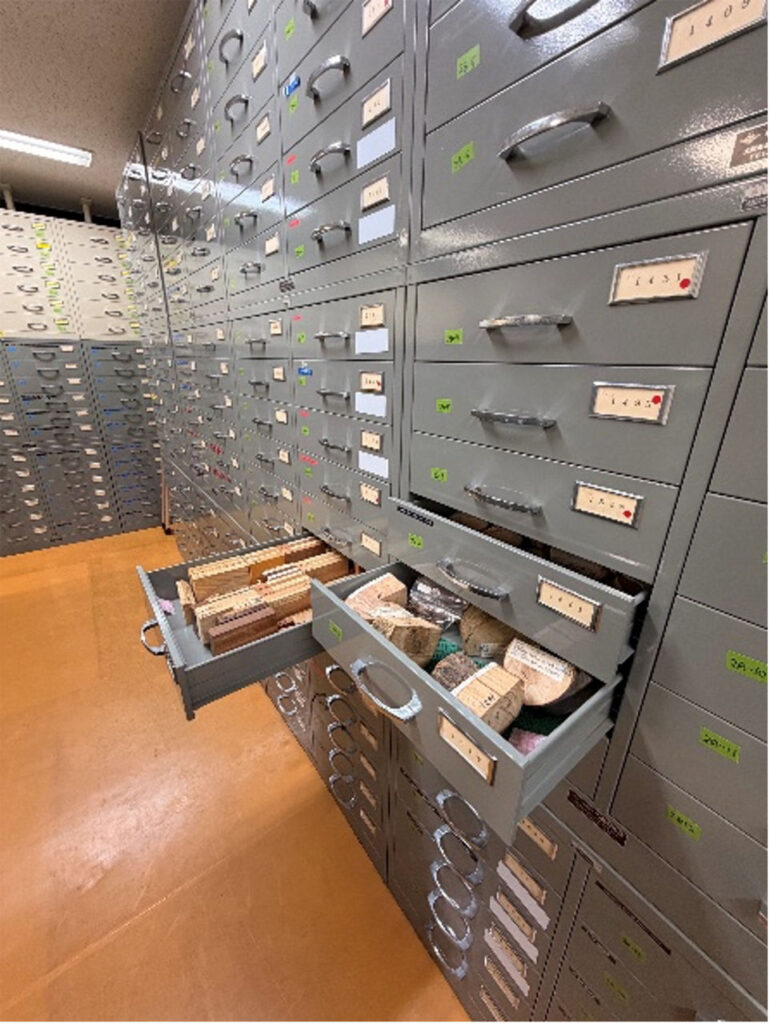
We continue to acquire new specimens—including samples of old wood—and exchange specimens with institutions both in Japan and abroad. In addition, as part of database-driven collaborative research conducted at the Center for Collaborative Use and Research in Biosphere Sciences, the Wood Identification Laboratory serves as a facility open to researchers from Japan and abroad.
The Wood Materials Research Laboratory goes beyond the traditional development of wood science—such as wood physics, wood chemistry, and wood biology—to encompass architectural history, cultural history, archaeology, chronology, climatology, and folklore, and will continue to serve as a hub for passing on to future generations the wisdom and philosophy that humanity has entrusted to wood.
The symbol tree of Kyoto University is the camphor tree. It’s one of my favorite trees. When I look at the camphor tree spreading its branches and leaves wide in front of the clock tower, I feel as if I’m being protected.
I remember when I came across Keigo Higashino’s best-selling novel *The Guardian of the Camphor Tree* at a bookstore a while back—I headed straight for the register without a second thought. And after devouring the book in one sitting, a thought suddenly crossed my mind. Even if the tree in the title hadn’t been a camphor tree, would it have moved the hearts of so many readers to this extent?
There are surely many trees that move the hearts of the Japanese people. However, in this story centered on a single tree that has received countless prayers from people, I felt that it simply had to be a camphor tree. The camphor tree has long been revered as a sacred tree imbued with spirituality, and was even used in the creation of Buddhist statues during the Asuka period. Even now, after so many centuries since ancient times, the camphor tree’s unique fragrance and presence continue to resonate deeply within the Japanese spirit. Even in the modern era, where our relationship with nature has changed, there remains a certain philosophy or faith that Japanese people harbor deep within their hearts toward the camphor tree. I hope that this spirituality—which, though invisible to the eye, has nurtured the Japanese spirit and culture—can be passed on to the future alongside these wood specimen samples.
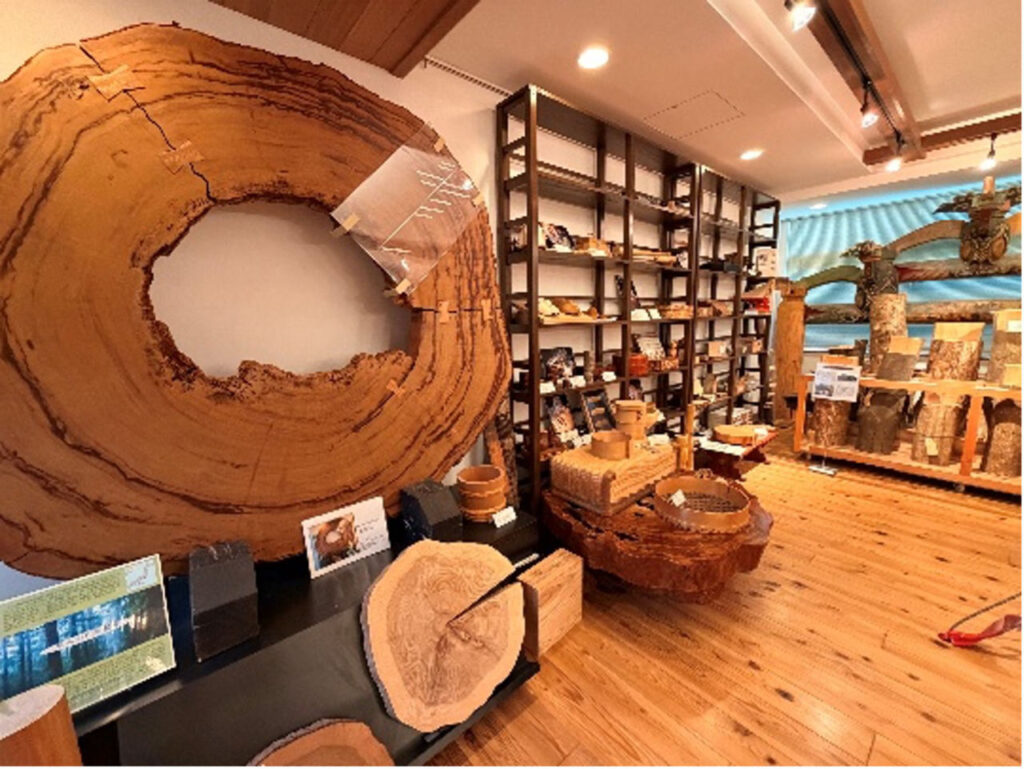
Currently, there is renewed interest in forests and the use of wood. I believe it is important, as we consider the future of Japan’s forest cycle and wood culture, to once again focus on the spiritual aspects—how people have interacted with trees and what feelings they have harbored toward them. I believe that only when both the “hard” and “soft” aspects are in place will Japan’s wood culture shine even brighter, and will the forest cycle take on a better form.
Although the Timber Research Laboratory is not a permanent exhibition facility, it is open to the public every fall during the Uji Campus Open House. We hope you will visit us and experience the grandeur of history as told through wood. (Tsuruko Tazuru, Associate Professor, Institute for the Study of Human Survival, Kyoto University)
*Reference site
Kyoto University Institute for the Study of Human Survival, Timber Appraisal Research Office
