Updated by the Editorial Department of *Forest Circular Economy* on October 6, 2026, at 5:57 p.m. JST
Editorial Board, Forest Circular Economy
Forestcircularity-editor
We aim to realize "Vision 2050: Japan Shines, Forest Circular Economy" promoted by the Platinum Forest Industry Initiative. We will disseminate ideas and initiatives to promote biomass chemistry, realize woody and lumbery communities, and encourage innovation in the forestry industry in order to fully utilize forest resources to decarbonize the economy, strengthen economic security, and create local communities.
Efforts to secure and train a stable workforce of on-site workers and technical specialists are gaining momentum to ensure the sustainable development of forests, forestry, and the timber industry. Until now, the sector has faced structural challenges—including an aging workforce, a shortage of young workers, and a high rate of workplace accidents—as well as high barriers to entry and low retention rates. However, practical approaches are now emerging in various areas, including policy, education, local government support, and job matching. These include comprehensive support spanning the entire supply chain—from upstream to downstream—as outlined by the Forestry Agency in its preliminary budget request for Reiwa 9, as well as collaborative efforts to recruit and train foreign workers through the Specified Skilled Worker Program, the launch of entrepreneurship training programs, hands-on training in traditional construction methods for students in urban areas, scholarship repayment assistance provided by local governments, and the introduction of “scouting” features on job-search websites—a wide range of multifaceted initiatives aimed at securing, retaining, and developing talent are expanding. Going forward, the challenge will be to coordinate these measures and design a “cycle” in which people move freely across industries, regions, and national borders throughout the entire supply chain—from forests to construction.
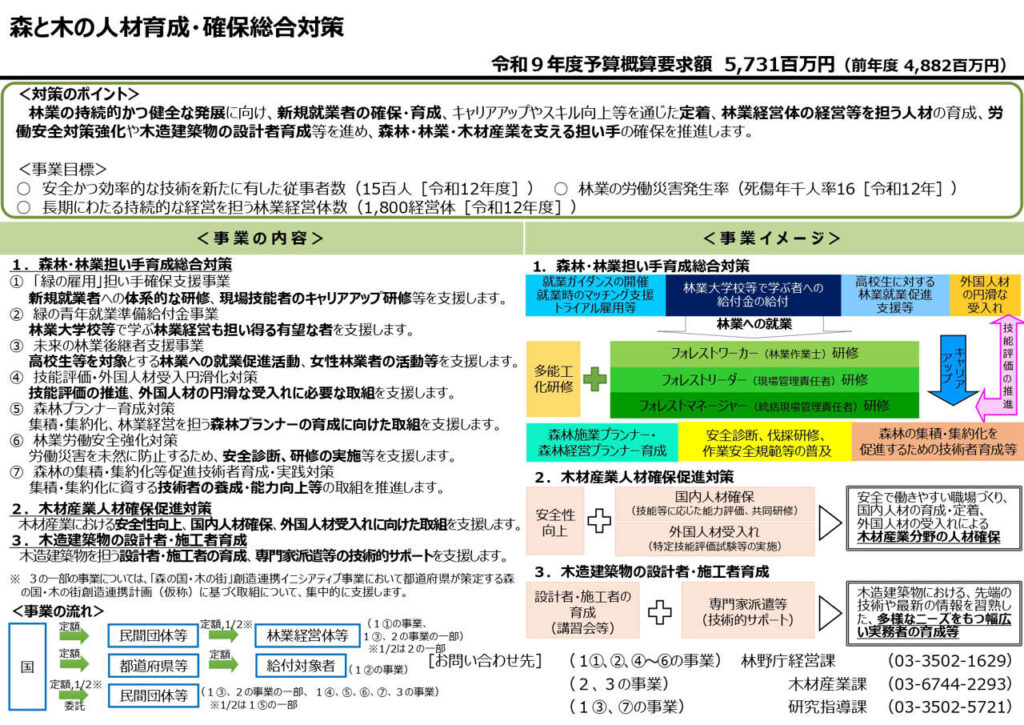
In its preliminary budget request for fiscal year Reiwa 9, the Forestry Agency requested 5.731 billion yen—an increase of approximately 850 million yen from the previous fiscal year—for the “Comprehensive Measures for Training and Securing Personnel in the Forestry and Timber Sectors.” This initiative is designed to address structural challenges such as a severe shortage of workers and specialized technicians in the forestry, timber, and construction sectors, as well as high rates of workplace accidents. The initiative consists of three pillars—“Development of Forest and Forestry Workers,” “Securing Personnel for the Wood Products Industry,” and “Training of Designers and Contractors for Wooden Buildings”—and provides comprehensive support for the entire supply chain, from upstream to downstream. Specifically, the initiative will be implemented from multiple angles, ranging from “Green Employment” training—which supports everything from new entrants acquiring technical skills to the career advancement of mid-level skilled workers—to the provision of grants to students at forestry colleges and others; support for the next generation to encourage the entry of high school students and women; and the training of “Forest Planners” responsible for management and consolidation. Efforts will also be made to facilitate the acceptance of foreign workers and strengthen safety measures. The goals are to achieve “1,500 workers equipped with new, safe, and efficient skills” and “1,800 sustainable forestry operations” by fiscal year Reiwa 12, and to achieve an “annual injury and fatality rate of 16 per 1,000 workers” (a reduction in the occupational accident rate) by Reiwa 12. In response to the chronic labor shortage facing the industry, the request for a budget exceeding that of the previous fiscal year reflects a proactive stance toward resolving these challenges. By simultaneously promoting measures to strengthen on-site safety and support workforce retention through skills assessments, the industry aims to build a sustainable industrial foundation.
*Reference link
Comprehensive Measures for Training and Securing Forestry and Timber Industry Personnel | Forestry Agency
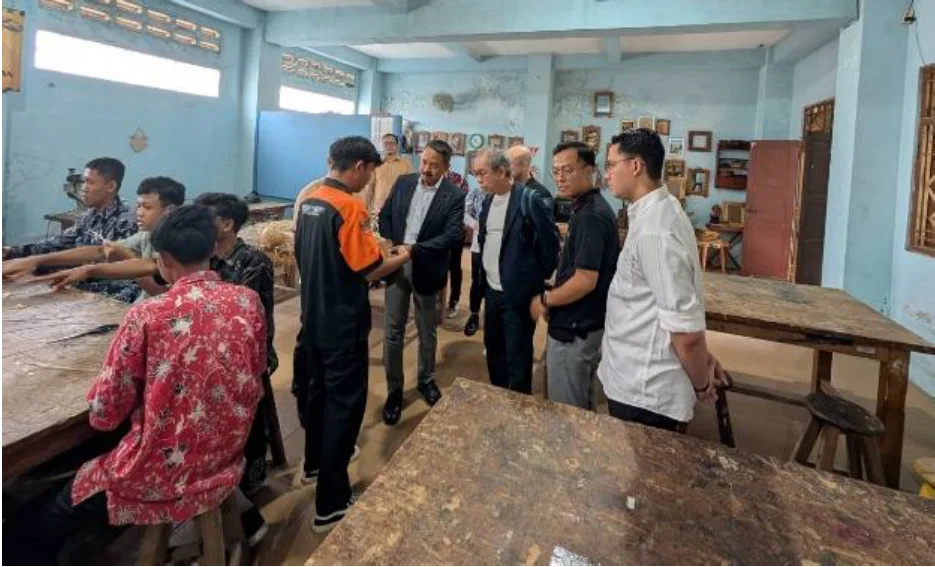
A-station, which provides recruitment support for foreign workers with “Specified Skilled Worker” status, has partnered with vocational education institutions in Indonesia to begin developing a new human resources development model for Japan’s timber industry. In addition to introducing Japanese language education as a formal, credit-bearing curriculum at local wood-related universities and other institutions, the initiative aims to develop “Japan Employment Curricula” that teach Japanese workplace culture and industry knowledge, thereby cultivating talent ready for immediate employment while still in school. At a seminar held in Indonesia in July, participants—including government officials, university presidents, and school principals—engaged in in-depth discussions with approximately 50 attendees regarding a system that integrates education and employment. Hasegawa Manji Shoten, a major timber company that gave a presentation at the seminar, reportedly has already decided to hire 15 “Specified Skilled Workers.” These efforts to secure and develop talent with both specialized expertise and language skills are expected to serve as a new model for the timber industry, which continues to face a severe labor shortage.
*Reference link
[New Human Resource Development Model for the “Wood Industry” Specific Skills Program] | Press Release from A-station Co., Ltd.
The Japan Federation of Young and Middle-Aged Timber Industry Organizations (Japan Wood Youth Federation) launched “Bundle,” a program aimed at fostering the next generation and entrepreneurs in the forestry and timber industries, in July. Through a total of six online lectures and fieldwork in Shinshiro City, Aichi Prefecture, the program provides comprehensive training ranging from an understanding of the industry’s fundamental structure to case studies of startup companies, as well as business model development and fundraising strategies. The program features instructors who are practitioners and executives with proven track records on the front lines of the industry, and it also offers ongoing support to help participants commercialize their ideas, culminating in a final presentation (pitch) session. In the forestry and timber sectors—where barriers to entry from outside the industry have traditionally been high—Bundle’s initiative to accept and train young successors from within the industry as well as aspiring entrants from other sectors serves as a crucial foundation for retaining new talent and fostering innovation.
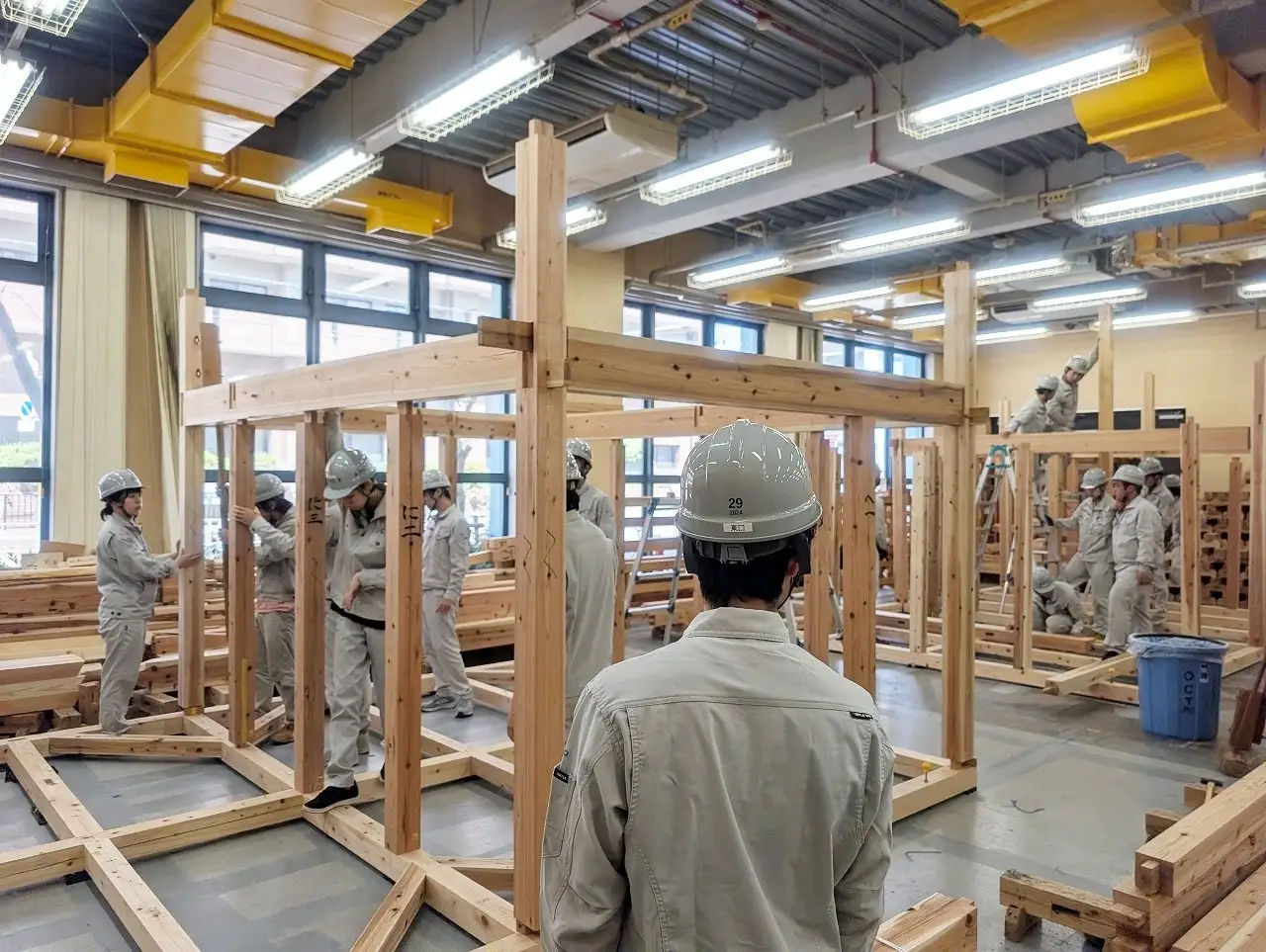
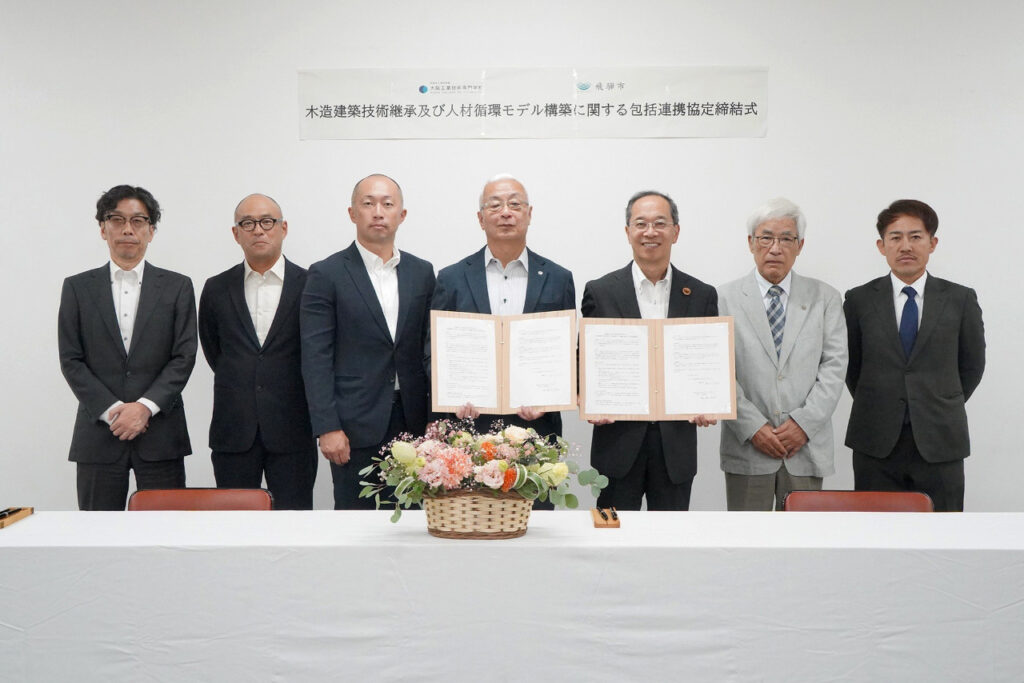
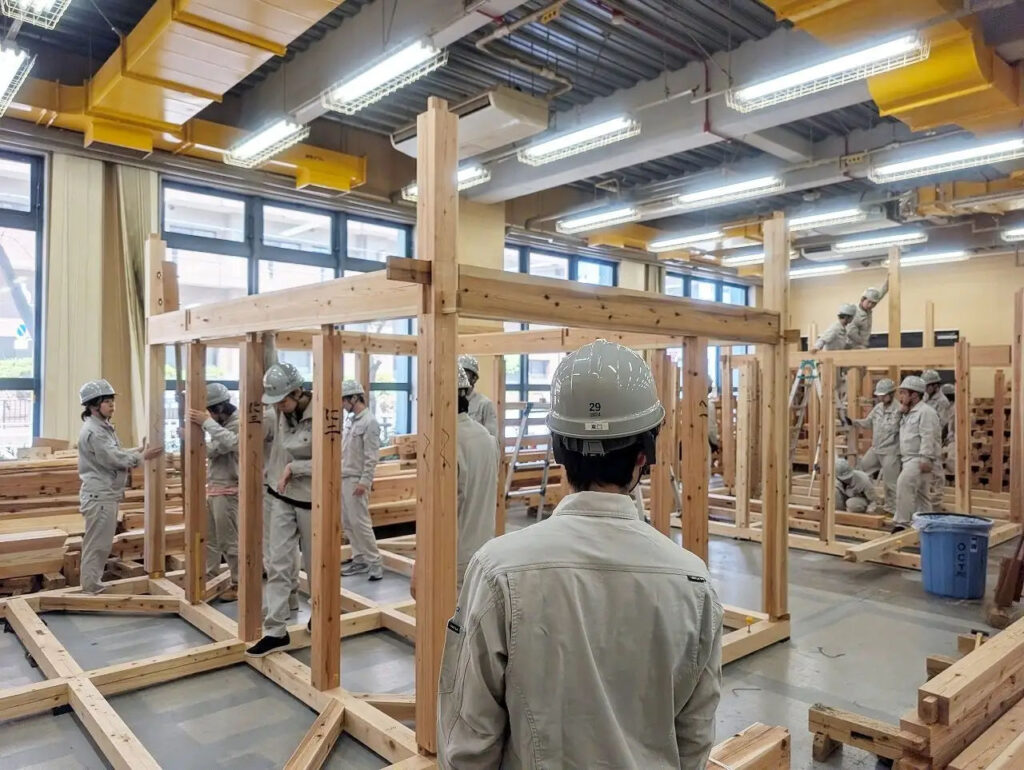
In September, Hida City, Gifu Prefecture, and the Osaka College of Technology (OCT) signed a “Comprehensive Partnership Agreement on the Preservation of Wooden Construction Techniques and the Development of a Human Resource Circulation Model,” aimed at fostering highly specialized professionals, preserving traditional townscapes, and passing down wooden construction techniques. By linking the region’s forest resources and the broader “timber culture”—including forestry, lumber processing, and carpentry techniques—with specialized education in urban areas, the initiative aims to build a new human resource development and circulation model in which “the town and students grow together.” As a concrete initiative to study architectural techniques and artisan culture, a “roof-raising practicum” has been planned, in which students from the Department of Carpentry Skills will tackle traditional construction methods that rely solely on manual labor and a “kakeya” (wooden mallet). Furthermore, initiatives are underway to supply cedar from Hida City as teaching materials for Osaka, and plans are being developed for a satellite campus concept where students would “study fundamentals in Osaka during their first year and gain practical experience in Hida during their second year.” Through collaboration between local resources and educational institutions, this initiative is drawing attention as a model for fostering talent to lead the future of the forestry and construction sectors and for promoting the use of domestically sourced timber.
*Reference link
Osaka College of Industrial Technology and the City Sign a Partnership Agreement | Press Release from Hida City, Gifu Prefecture
[Hida City, Gifu Prefecture] On September 17, students studying architecture in the city took on the challenge of a “topping-out ceremony” in Hida City! A town of master craftsmen where you can experience the reality of wooden architecture—from forestry and lumber processing to carpentry, plastering, construction, and historic preservation | Press Release from Hida City, Gifu Prefecture
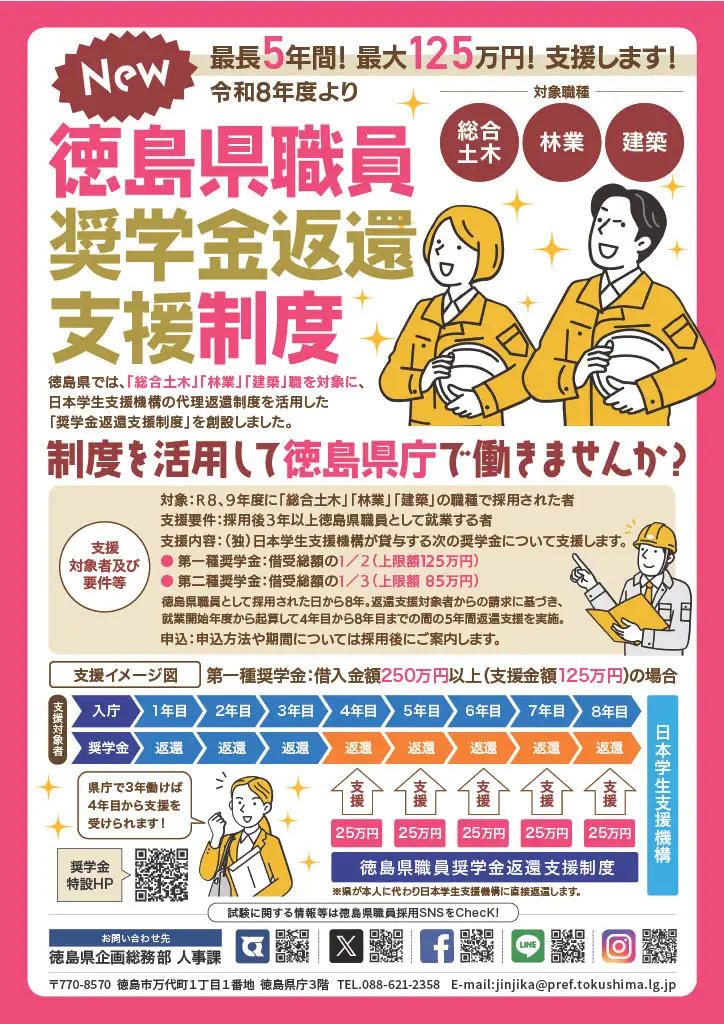
Tokushima Prefecture has established the “Tokushima Prefectural Employee Scholarship Repayment Assistance Program” to strengthen efforts to secure technical personnel. Eligible recipients are prefectural employees hired in the Reiwa 8 and Reiwa 9 fiscal years in the categories of “Forestry,” “General Civil Engineering,” and “Architecture,” who work at the Tokushima Prefectural Government Office for at least three years after being hired. Utilizing the Japan Student Services Organization’s (JASSO) proxy repayment support system, the prefecture will provide repayment assistance for five years—from the fourth to the eighth year of employment—covering one-half of the total amount borrowed (up to 1.25 million yen) for interest-free Type 1 scholarships and one-third (up to 850,000 yen) for interest-bearing Type 2 scholarships. Amid intensifying competition for technical civil service positions, this initiative aims to alleviate the financial burden on young employees and secure and retain personnel responsible for regional forest management and infrastructure development.
RINDO, which operates a job-search site specializing in the forestry industry, launched a “scouting feature” in February that allows hiring companies to approach job seekers directly. The system allows companies to send direct scouting offers after verifying a job seeker’s qualifications and work history; according to the company, this is a first for the forestry industry. In addition, the company provides resume-writing support and career counseling tailored to the forestry sector, aiming to thoroughly minimize mismatches after hiring. This is expected to help prevent early employee turnover and promote greater labor mobility across the industry as a whole.