


"Do 90% as You Like, Cooperate on the Other 10%": A Blueprint for Japan's Revival Through Autonomous, Decentralized, Cooperative Systems
Updated by Hiroshi Komiyama on September 29, 2026, at 6:02 p.m. JST
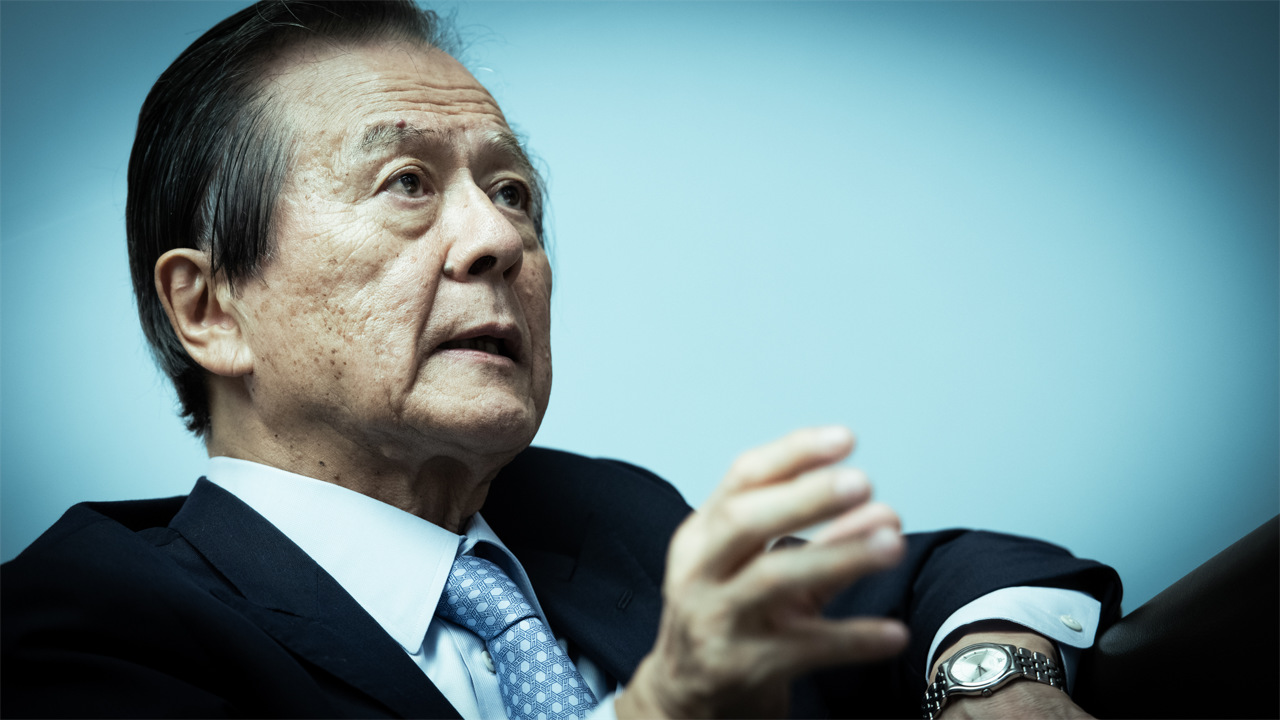
Hiroshi KOMIYAMA
(Platinum Initiative Network, Inc.
After serving as Professor at the University of Tokyo, Dean of the Graduate School of Engineering and Dean of the Faculty of Engineering, and President of the University of Tokyo (28th), he was appointed Chairman of the Mitsubishi Research Institute in 2009, and Chairman of the Platinum Initiative Network in 2010 (to be incorporated as a general incorporated association in 2022). Other positions include President of the STS Forum, Chairman of the Association for Super-Education, Chairman of the United Nations University Cooperation Foundation, Chairman of the International Science and Technology Foundation, and Chairman of the Heat Pump and Thermal Storage Center Foundation. He also received the Dubai Knowledge Award (2017), the Order of the Star of Solidarity of Italy (2007.) and "Information and Communication Month" Commendation from the Minister of Internal Affairs and Communications (2014), the Zaikai Award Special Prize (2016), and the Commendation for Merit in Promoting a Maritime Nation (2016), among many other national and international awards.
Now that the Earth’s finite resources have been laid bare and the conventional economic system has reached its limits, where should we go from here? I find the answer in the concept of an “autonomous, decentralized, and cooperative system”—which I proposed during my tenure as President of the University of Tokyo—and in the activities of the Platinum Vision Network, where I currently serve as Chairman. Drawing on economist Hirofumi Uzawa’s concept of “social common capital” and the latest digital technologies, I will explain why this approach is necessary now and propose a blueprint for revitalizing Japan through “10 percent participation” by each and every one of us.
An “autonomous, decentralized, and collaborative system” is a social design that maximizes respect for individuals’ freedom of action (autonomy and decentralization) while incorporating a small amount (10%) of cooperation (collaboration) into its structure to ensure the system’s overall sustainability and the achievement of common goals.
The origins of this philosophy can be traced back to my experience with the “Alliance for Global Sustainability”—an academic alliance established in the 1990s to address global warming (launched through a collaboration between the University of Tokyo, MIT, and the Swiss Federal Institute of Technology [ETH]). While serving as a coordinator at that time, I became convinced that global crises cannot be resolved by relying solely on fragmented specialized knowledge; rather, a design that takes a holistic view and fosters collaboration is essential.
Around the time I was stepping down as Dean of the School of Engineering, I received requests from the Council on Economic and Fiscal Policy and the Council for Science and Technology Policy—through the Cabinet Office—to lead a project aimed at strengthening Japan’s competitiveness. Amid the sense of stagnation following the bursting of the economic bubble, I enlisted the participation of about 200 researchers and spent a year launching the “Move, Japan!” project. When I argued in the interim report that “universities hold the seeds to save society,” Mr. Hiroshi Okuda of Toyota Motor Corporation—who was then chairman of the Japan Business Federation (Keidanren)—questioned me, asking, “Do universities really have any such seeds?” I replied, “If that’s the case, please come to the University of Tokyo,” and I actually extended an invitation to him. Six handpicked faculty members responded with earnest presentations—each lasting six minutes—and I gained a sense that we could generate immense collective intelligence.
Later, as I pushed forward with reforms in my role as President of the University of Tokyo, I incorporated this philosophy into the university’s organizational structure. University faculty members form a “self-governing and decentralized” group that pursues scholarship based on their own convictions. While academic freedom and university autonomy are indispensable, if everyone simply conducts research in isolation, society will lose sight of outstanding intellectual achievements. So I appealed to the faculty members: “As before, you are free to do as you please 90 percent of the time, based on your own convictions. But for the remaining 10 percent, please turn toward the President’s Office (the university as a whole) and cooperate.”
The results of designing this “10 percent cooperation” as an institutional mechanism were spectacular. By integrating specialized knowledge from within the university—such as “robotics,” “geriatrics,” and “psychology of aging”—the “Institute for Comprehensive Research on Aging Society” was established as a new center for academic inquiry. Even within a group of strong individualists, simply embedding a mere 10 percent of cooperation into the institutional framework can generate a vast collective intelligence that contributes to society. Academic freedom and university autonomy are not inherent rights; they are guaranteed only when recognized by society. This achievement is the source of my conviction that it can serve as a methodology for designing society itself.
Currently, Japanese society is facing not only global warming but also rapid population decline, fiscal constraints, the challenge of maintaining social security, and the decline of local communities.
We are facing the harsh reality of being a “pioneer in tackling global challenges.” The fundamental reason why existing systems are no longer functioning is that we are confronting the “finite nature of the Earth.”
The system proposed by Adam Smith, the father of modern economics, was a pure “autonomous decentralized system” based on the idea that if individuals compete, society as a whole will prosper through a preordained harmony. Marx warned of the danger of economic crises, Keynes advocated for adjustment through effective demand, and Friedman once again called for free competition; however, I believe all of these arguments were based on the premise of “infinity.” In the modern era, where resources and the environment have become “finite”—as exemplified by global warming caused by carbon dioxide—the old system, which relies solely on competition and the scramble for money, has reached its limits.
Money was once a tool that allowed individuals and businesses to compete in an autonomous and decentralized manner to maximize wealth. However, in the coming era, as we face the finite nature of our planet, it must be redesigned as a tool that supports social sustainability and “cooperation.” While maintaining the premise of free economic activity by individuals (autonomous and decentralized), we must intentionally design “cooperation”—aimed at safeguarding the survival of the whole—as an integral part of society’s structure.
So, what exactly should we protect and preserve in an autonomous, decentralized, and collaborative system? I find the answer in the concept of “social common capital” proposed by Hirofumi Uzawa. Social common capital refers to shared assets that should not be consumed within the market economy, but rather maintained and managed by society as a whole and passed on to future generations. Specifically, this includes forests, water, education, and infrastructure (such as schools and hospitals).
Recently, there have been news reports about local governments “closing elementary school swimming pools because they can no longer be maintained” due to aging facilities and budget shortages. When I heard this, I felt an intense sense of anger. In a mature, affluent society, children’s educational environments and public assets such as swimming pools are “fundamental values that must be secured as a top priority” and should not be cut.
However, if we rely solely on national or local government budgets for our shared social capital—or remain optimistic that “someone will naturally take care of it”—it will collapse amid today’s severe fiscal situation and population decline. Neither should we leave everything entirely to the government nor leave it entirely to free market competition; rather, residents should collectively own these assets and maintain and manage them together—this “resident-funded society” model is the blueprint that embodies cooperation.
A concrete example of this can be found in Nichinan Town, Tottori Prefecture. In this town, with a population of just 3,800, building a factory to process wood into high-value-added LVL (laminated veneer lumber) required a massive investment—an amount that was impossible for any single person to shoulder alone. In response, local residents stepped up: “approximately 470 people”—about 10 percent of the total population at the time—contributed capital, and the factory was built with the forestry cooperative and those involved in the timber industry playing leading roles. Rather than sacrificing their entire livelihoods, they dedicated “10 percent of their time and funds” to the community—a concept that embodies the very essence of a real-world implementation of an autonomous, decentralized, and collaborative system.
Around the world, trends toward a decentralized society—such as “digitalization,” “AI,” “decentralized networks,” “micro-stocks,” and “decentralized local energy”—are rapidly gaining momentum, making it possible to realize autonomous, decentralized, and collaborative systems more powerfully and at a lower cost than ever before.
However, “resident investment” and “small-scale investment”—where many residents contribute small amounts—presented practical challenges: even as the number of shareholders increased, the total investment amount did not grow significantly, while administrative costs—such as mailing reports—continued to rise, making it difficult to sustain the system. By utilizing the latest digital technology to handle all procedures, document distribution, and communication entirely online, we can significantly alleviate this challenge.
Using small-denomination “digital micro-shares,” people can participate in local “solar sharing” and “forest sustainability initiatives” with the same sense of ease as giving shares as a gift for a child’s birthday. Digital technology and AI are not ends in themselves, but rather powerful “tools” for realizing a society where every ordinary resident can effortlessly contribute “10 percent” to their community as part of their daily lives.
There’s no need to wait for a special superstar to emerge. A society that relies on such a model is extremely fragile. The reason Japan has been able to demonstrate its true strength up to now is none other than the fact that there has been a functioning structure in which not only outstanding geniuses but also each and every one of us—who may seem ordinary—have joined forces. Both the faculty at the University of Tokyo and the residents of local communities were able to mobilize immense collective intelligence and systems simply by directing the cooperation of just 10 percent of the total population toward the greater good.
A system that demands “100 percent dedication” is impossible to design and cannot be sustained. However, if the system is designed so that people “contribute just 10 percent of their time, money, and resources to maintain social common capital—such as local forests, energy, and education”—then anyone can take the lead starting today. Digitally connecting each individual’s “10 percent proactive participation” and ensuring the proper circulation of social common capital—this is the solid blueprint for Japan’s revitalization that Japan, as a nation at the forefront of addressing these challenges, should present to the world. (Hiroshi Komiyama, Chairman of the Platinum Vision Network and Honorary Editor-in-Chief of *Forest Circular Economy*)
*Related Sites*
AGS (Alliance for Global Sustainability) | The University of Tokyo Center for Future Vision Research
The University of Tokyo, Institute for Research on Aging Society
How Did the Lumber Mill, Funded by 470 Local Residents, Turn a Profit? The Orochi LVL Mill: 20 Years of Management Reform [Nichinan Town: The Front Lines of Forest Resource Circulation, Part 2]
