


Precut Timber Processors Hold the Key to Expanding the Use of Regional Timber
Updated by Yasunari Kobayashi on November 18, 2026, at 8:36 p.m. JST
Yasuhisa KOBAYASHI
Alpha Forum, Inc.
President of Alpha Forum, Inc. and Steering Committee Member of the Platinum Forest Industry Initiative. Ltd. in 2001, taking advantage of the company's venture support program. In September 2023, he received the Wood Use System Research Association Award.
If a friend says, “I don’t have any change—can you lend me 500 yen…?” you’d probably lend it to them if you had the money on hand. But if they asked, “Can you lend me 100,000 yen…?” you’d probably hesitate, and might even ask for a written promissory note. How much are you willing to lend someone? This might be a banking term, but it’s called “credit limit.”
This credit arrangement is a major factor in shaping the balance of power within the lumber supply chain. Generally, when purchasing lumber—assuming structural lumber—the client conveys their preferences to the contractor, who then places an order with a lumberyard or pre-cut factory. Between sellers and buyers, the buyers’ demands carry more weight; in other words, the balance of power is considered to favor the buyers.
Generally, for custom-built wooden homes, it takes about 3 to 4 months from the start of construction to completion. If minor design or construction changes are made during the building process, completion may be delayed by an additional 1 to 2 months. It is standard practice for contractors and builders to receive one-third of the payment from the homeowner at the time the home construction contract is signed before construction begins, one-third upon completion of the interim building inspection, and one-third upon completion and handover of the home. However, the homeowner’s loan funds are not disbursed until after the final inspection. Payments to the contractor or builder prior to completion must be covered by the homeowner’s own funds or a bridge loan.
Among wood products, precut products are those with a certain volume and a high unit price. Precut contractors deliver a complete set of lumber to the job site, including not only major structural members such as sills, posts, and beams, but also studs, rafters, siding, flooring, and plywood. For a 35-tsubo wooden house costing 30 million yen, the complete set of lumber supplied by a pre-cut contractor amounts to approximately 3 million yen. Since general homeowners (consumers) typically receive a combined estimate for both materials and labor—referred to as “carpentry work”—the material costs are often not itemized.
The pre-cut lumber factory delivers the lumber to the job site once the foundation work is complete. This occurs “early on” in the construction process, which typically spans several months. After delivery, the pre-cut lumber supplier issues an invoice to the general contractor and requests payment by the end of the following month.
Now, as you may be beginning to see, construction companies and builders looking to secure contracts may be willing to accommodate payment terms where the client pays in three equal installments. It is a common sales practice for them to secure a contract in exchange for making concessions on payment terms—such as allowing the client to avoid paying interest on bridge financing. Payments to pre-cut lumber suppliers come from the contractor’s own funds. Alternatively, the contractor may negotiate with the pre-cut lumber supplier to defer payment.
Construction projects involve a long period from groundbreaking to completion, making cash flow planning and consensus among stakeholders crucial.
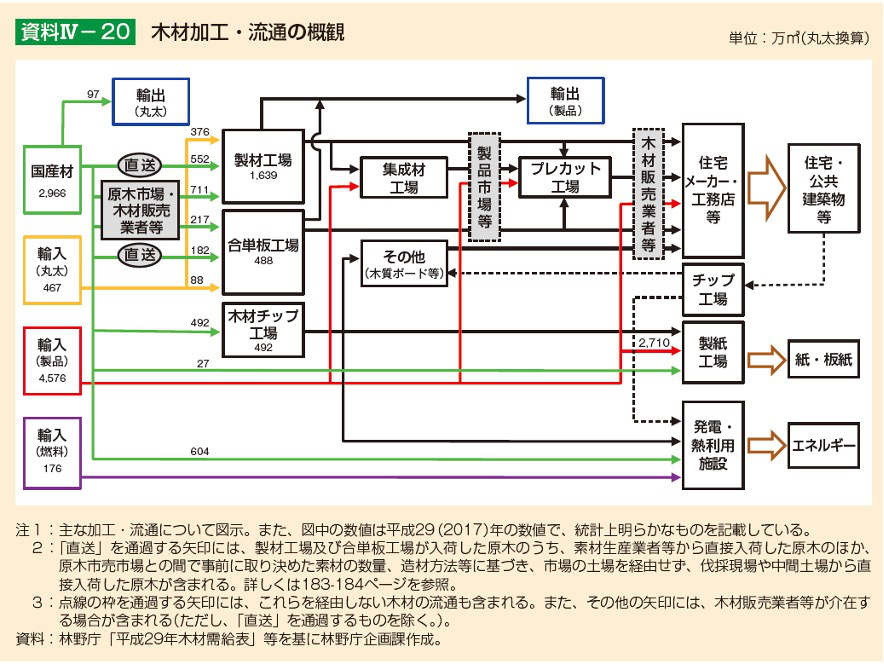
Until a project is completed and all funds are recovered, pre-cut lumber suppliers and building materials wholesalers—who sell kitchens, prefabricated bathrooms, and other interior finishes—are left with accounts receivable ranging from several million yen and up. While some contractors and builders may settle payments with promissory notes that can be converted to cash several months later, this does not change the fact that they are extending credit—in other words, lending money. In the case of promissory notes, if a check bounces and bankruptcy proceedings begin, the assets of the construction company or builder will be distributed among creditors in proportion to the amount of their accounts receivable. However, with invoices based on cash transfers, there is always the possibility of hearing, “Please give me a little more time…” Depending on the circumstances, additional interest may be charged, but the main concern is whether payment will actually be received.
One characteristic of pre-cut lumber mills and construction materials wholesalers—which operate as intermediaries in the supply chain—is that they must wait several months to collect accounts receivable; in other words, the period during which they are effectively lending money is prolonged. This differs somewhat from the accounts receivable collection practices in other industries.
Intermediary companies, such as pre-cut lumber suppliers, set “credit limits” for each construction contractor or builder to establish guidelines for how much they can extend credit. Basically, construction contractors cannot purchase materials—that is, incur accounts payable—beyond their credit limit.
It is generally considered that construction companies that take on two to three custom-built homes per year have a lower risk of defaulting on payments—that is, a lower risk of bankruptcy. This is because their construction projects do not overlap (they do not have multiple projects underway at the same time), resulting in clear cash flow.
On the other hand, home builders who receive orders for 10 or more homes per year have multiple construction sites underway simultaneously, which means there are multiple timing points for both incoming payments and outgoing payments. Since cash on hand isn’t color-coded, they use the payment received for House A to cover the payment for House B. This works fine as long as it’s manageable, but if they push themselves too hard, they risk running out of cash. When this happens, they have to ask suppliers—such as pre-cut lumber companies—to hold off on receiving all or part of the payment for pre-cut lumber. The amounts involved range from several million to tens of millions of yen.
To improve cash flow, people tend to think in terms of “buying low and selling high,” but a business will be more sustainable if it thoroughly cuts costs to the point where it can successfully “buy high and sell low.”
While structural members are the essence of a building’s value, in today’s world—where hidden-column and -beam wall-bearing structures dominate—people have come to believe that as long as the floor plan works, it’s fine, and that columns and beams hidden behind walls should be as inexpensive as possible, and that whatever precut factories recommend will suffice.
Even if the client requests, “Please use local materials—high-quality cedar or cypress,” the pre-cut contractor will end up prioritizing their own convenience by citing reasons such as, “European engineered wood is better because it warps less, and it’s cheaper.”
Business is built on a positive relationship between seller and buyer—one based on expressions of gratitude such as “Thank you for letting me sell this to you” and “Thank you for buying this.” Typically, this relationship involves showing respect for the fact that customers are paying for the product and doing one’s best to provide items that meet their preferences.
However, home builders who borrow money for a period longer than specified in the invoice (or contract) end up feeling grateful simply for the opportunity to make a sale and for the business they’re receiving, leading them to adopt the mindset that “as long as we can win the contract and build the house, that’s good enough” or “it’s better than nothing, as long as we can keep working.”
With custom-built homes, it’s not uncommon for design changes to occur during the construction process. While making changes does incur additional costs, it’s easy to overlook the importance of clearly agreeing on and adhering to the payment schedule.
There are quite a few homeowners who want to build their homes using locally produced and processed lumber. Even though there is an abundance of materials in the region, the utilization rate of locally sourced lumber remains low. Unless they collaborate with major players who hold significant influence in the local supply chain, the proportion of locally sourced lumber used will not increase at a rapid pace.
We believe that collaboration with pre-cut lumber suppliers is valuable when it comes to structural lumber. Given that the number of new housing starts is expected to decline in proportion to the shrinking population, we should select pre-cut lumber mills capable of adapting to these changes and aim to establish new systems for utilizing locally sourced lumber, as well as the distribution hubs that are needed.
Regional support measures to enhance the competitive advantage of the pre-cut industry—such as streamlining the creation of data for “CAD input for processing” and “CAM for controlling processing machinery,” which are core areas of expertise for pre-cut manufacturers—should also be considered. If pre-cut manufacturers can bring structural design capabilities for wood-frame buildings in-house, the proportion of wood-frame construction in the non-residential sector will increase. Few pre-cut manufacturers are capable of logically separating and handling “CAD input for machining” and “structural design (structural calculations) for wood-frame buildings.”
Partly due to the success of the Forestry Agency’s initiatives, the proportion of domestically produced lumber being used has been increasing. The strong dollar and euro are also contributing to the rise in the use of domestically produced lumber.
Efforts to expand the production and use of locally sourced timber—including the exploration of new distribution hubs to support these goals—are beginning in various regions. The key elements of these distribution hubs are “full-volume purchasing,” “sawmills prioritizing yield that process 30,000 to 40,000 cubic meters of logs per year,” and “open CAD pre-cut factories.” To assess the current situation, we need to examine the balance of power among the players and aim for regional commerce based on an ideal balance of power. (Yasunari Kobayashi, President and CEO, Alpha Forum Co., Ltd.; Member, Platinum Forest Industry Initiative Steering Committee)
