The Aesthetics of Wood and Musical Instruments as They are Carved and Polished - The Structure of Wood Value as Seen from a "35% Yield"
Updated by Yasunao Kobayashi on April 09, 2026, 9:21 PM JST
Yasuhisa KOBAYASHI
Alpha Forum, Inc.
President of Alpha Forum, Inc. and Steering Committee Member of the Platinum Forest Industry Initiative. Ltd. in 2001, taking advantage of the company's venture support program. In September 2023, he received the Wood Use System Research Association Award.
Round objects become square. Wood is formed from logs, which are then shaped into square posts and beam girders. Since they are shaved from their original volume, it is probable that the remaining product will be more expensive than the log. So, what is the yield from logs? Let's do some simple calculations.
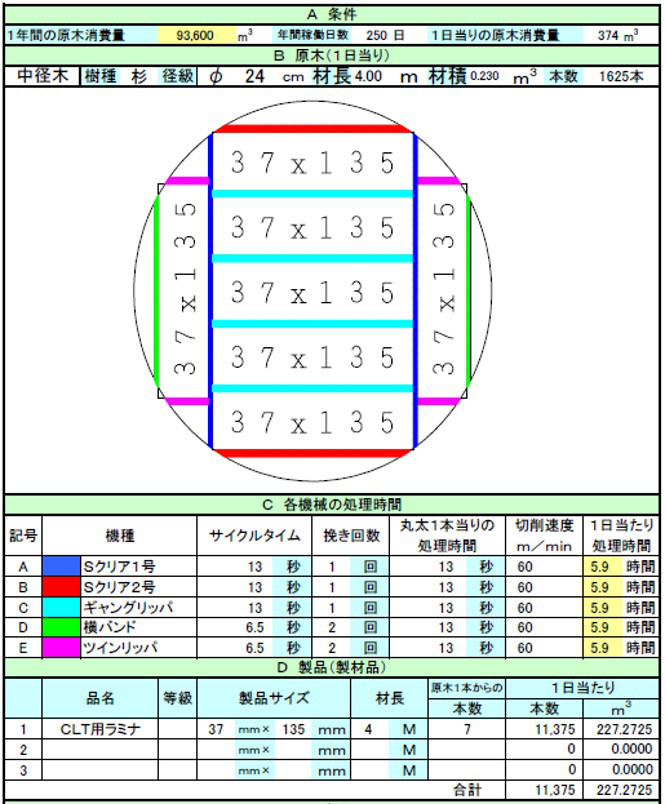
In our forestry industry, volume is calculated by multiplying the square of the diameter of the end of a log by its length. The volume that will be a log for lumber is assumed to be 100. Since the percentage of laminated lumber is increasing, laminated lumber is assumed here. Glued laminated lumber is made from ground lamina (primary lamina), then the surface is flattened for easy gluing, glued, and finally formed into a product.
About 50% of the volume is shaved off when making primary ground lamina. Even the highest yielding medium grain log (24cm diameter) has a volume of about 60% to become rough sawn lamina. Grinding allowance (sawdust) from band saws and gang rippers, and back plates (long crescent-shaped pieces of wood) are removed. The primary ground lamina has a rough surface of wood, and the surface needs to be flattened to reduce the amount of glue.
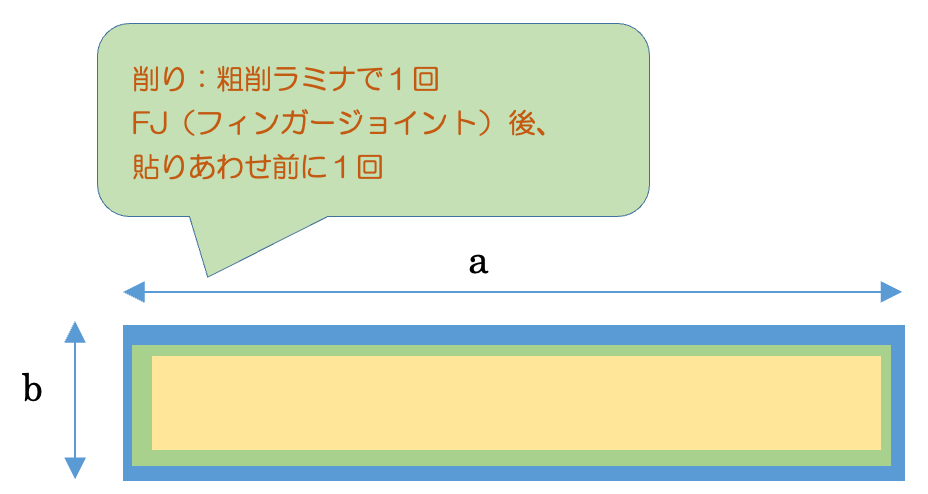
<Dimensional change of rough sawn dry lamina
The wood shrinks when dried (15% d-b); a section of 37 mm✕135 mm becomes about 36 mm×127 mm.
After drying, shave b by 1.5 mm at the top and bottom, for a total of 3 mm with a moulder.
Then finger-jointed (FJ) and shaved 1.5mm by 1.5mm with a total of 3mm moulder before pasting together as laminated wood or CLT.
Cut 6 mm in total b direction. The finished product is30mm
Molda a 1 to 2 mm after drying, 2 to 4 mm total, and 1 to 2 mm after FJ, 2 to 4 mm total.
Shave about 4 to 8 mm in total a direction. The finished product is120mm
<Yield by Moulder Cutting
After processing: 30 x 120 = 3600
Before processing: 37×135=4995
∴ (hence) 3600/4995 = 0.721 ≈ 72%.
<Honey ratio due to defect excision
Dead sections of lamina and roundness above a certain level are excised and sent to FJ. In addition, the entire lamina may spring in the delivered lamina (including bends during transportation, etc.). This will reduce the yield by at least an estimated 2-31 TP3T.
∴ 72%-2%=70
Since the yield can be assumed to be 70%, from the raw logs, 50% x 70% = 50%.35%.becomes a product.
<Considering the price based on log yield...
Assuming that logs for lamina lumber are priced at 15,000 yen per cubic meter, 35% of the log volume is used for products, so 15,000 yen/0.35≒42,857 yen. If processing fees, transportation fees, other expenses, and profits of sawmill companies are included, the unit price per cubic meter of laminated lumber or CLT would be 70,000 to 80,000 yen.
In fact, sawmills are making effective use of the 65% of the volume that is removed before the final product is produced by selling it as pulp chips or shipping it to livestock producers, rather than treating it as waste.
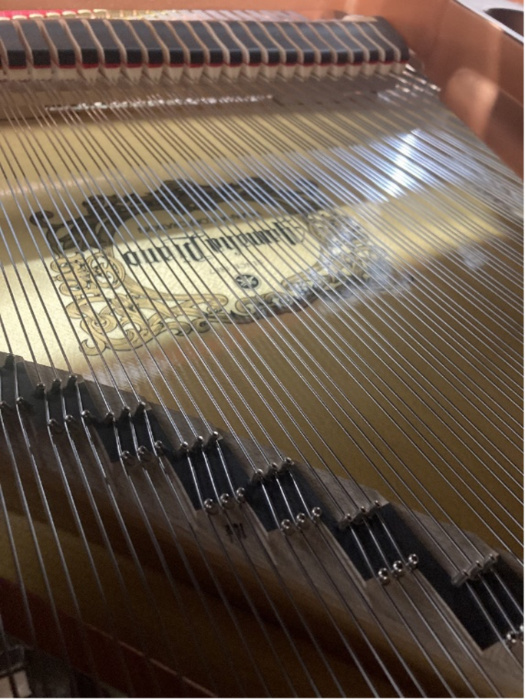
I am relearning classical piano as a hobby, having taken piano lessons from the age of three through junior high school, and then for the first time in 40 years when I joined a tennis and ski gymnastics club. Reading music has slowed down, and I'm finally back to the point where I can play Beethoven's piano sonatas and Chopin's nocturnes and waltzes for others. The sound of the piano, in fact, is the sound of wood. After the strings are plucked, the sound is amplified by a wooden board called a "soundboard. The soundboard is often made of quarter-sawn coniferous wood called spruce.
I was going to compare this wood usage to the price of a grand piano, but since I am interested in more expensive instruments, let's consider the violin.
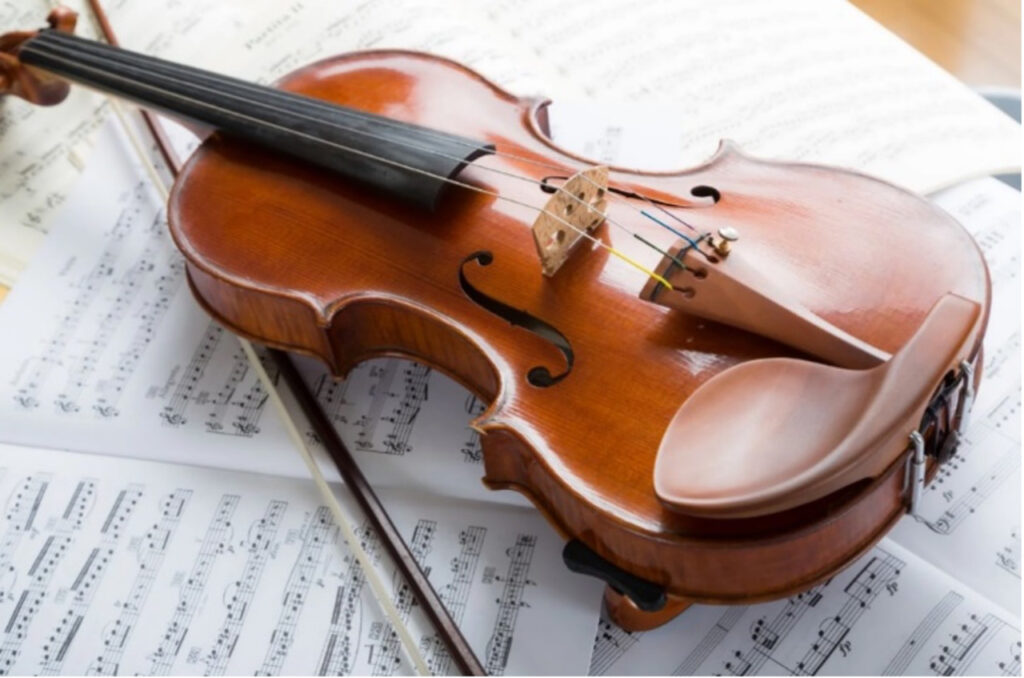
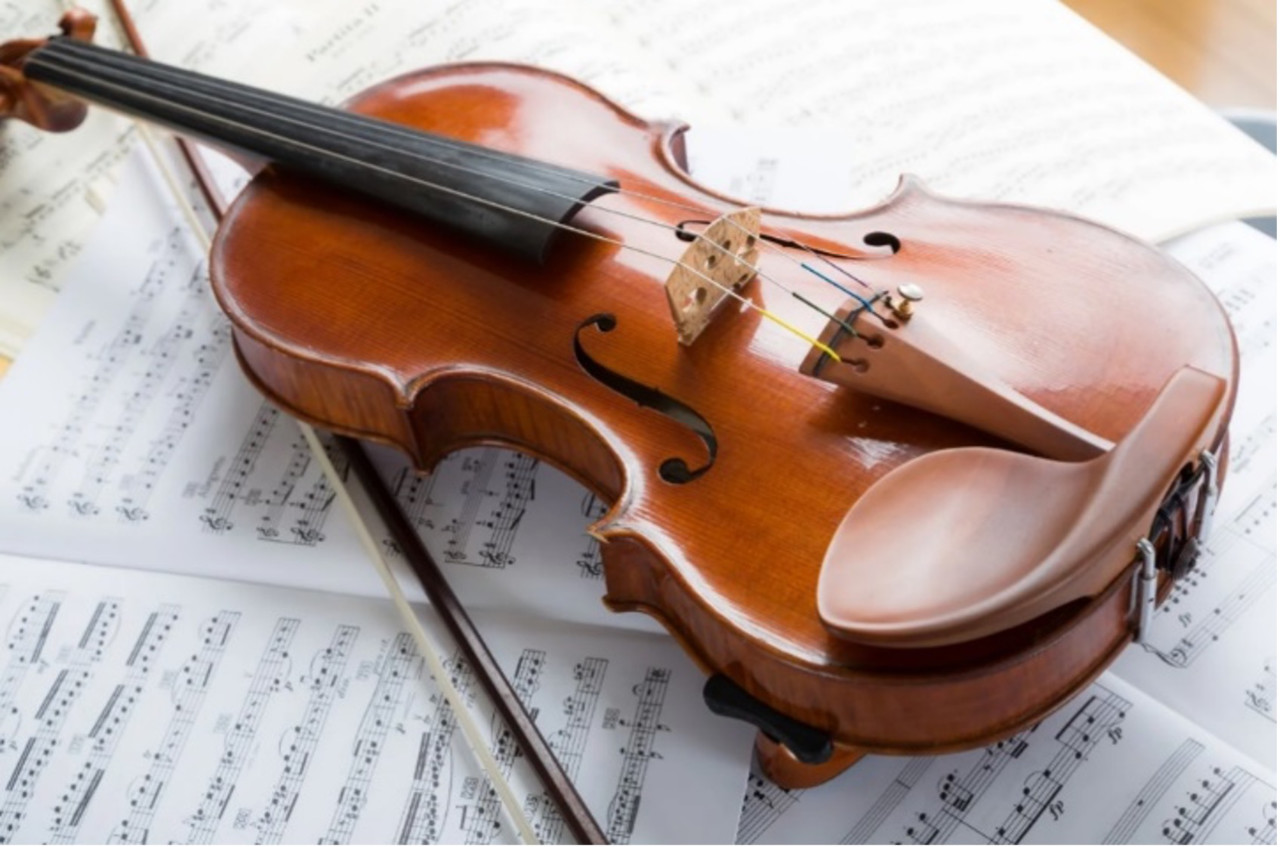
A finished violin instrument weighs about 400-500 grams. This weight includes varnish and metal parts, so let's assume that the weight of the wood alone is 300 grams. The price of a violin ranges from less than 100,000 yen for an introductory practice violin to over 100 million yen for a Stradivarius. A violin used by an orchestral concertmaster would probably cost around 10 million yen.
300 grams of wood is not in an absolutely dry state, consider this to be 7% (dryness by weight: DB). How many cubic meters would this be? If the specific gravity of the spruce is 0.42, 1 cubic meter is 420,000 grams. 1:420,000 = x:300, so x = 0.000714 cubic meters. However, we assume that about 1/3 of the value, 3.5 million yen, is the value of wood, including the artistic value of the wood.
∴ 0.000714 cubic meters costs 3,500,000 yen, so about 4.9 billion yen/cubic meter!
Even if the value of the wood of a violin is 1/300, it is 49 million yen/cubic meter. One 4-meter log with a 50-cm end diameter is 1 cubic meter, and even if each log costs 1 million yen, it is 300 grams of wood selected from 49 logs.
Woods are carefully selected to be used for musical instruments. That is why the wood used in woodwind instruments such as clarinets, bassoons, and oboes, and string instruments such as violins and cellos are the most expensive among the elite of wood.
Rachmaninoff's Piano Concerto No. 2 begins playing with an orchestra in the background. I gently close my eyes. First the piano, then the strings begin to resonate. I feel that this resonance is "another color of the tree. Please enjoy a new way to enjoy trees... (Yasunao Kobayashi, President, Alpha Forum, Inc. and Steering Committee Member, Platinum Forest Industry Initiative)