Updated by "Forest Circular Economy" Editorial Board on May 01, 2026, 2:28 PM JST
Editorial Board, Forest Circular Economy
Forestcircularity-editor
We aim to realize "Vision 2050: Japan Shines, Forest Circular Economy" promoted by the Platinum Forest Industry Initiative. We will disseminate ideas and initiatives to promote biomass chemistry, realize woody and lumbery communities, and encourage innovation in the forestry industry in order to fully utilize forest resources to decarbonize the economy, strengthen economic security, and create local communities.
Against the backdrop of the profitability challenges facing Japan's forestry industry and social demands for a decarbonized society, the social implementation of "new wood-based materials" using components extracted from wood resources is advancing in terms of both policy and technology. At the end of March, the Forestry Agency formulated a new vision for building a next-generation biomass chemical industry with forests as its starting point. The private sector is also making concrete moves one after another, including the demonstration of pavement materials using lignin, the mass production of reinforcing materials derived from wood fiber, and the commercialization of paper binding materials that will accelerate the de-plasticization of logistics. New value is being added to unused forest resources and manufacturing by-products, and their use as chemical and industrial materials is expanding.
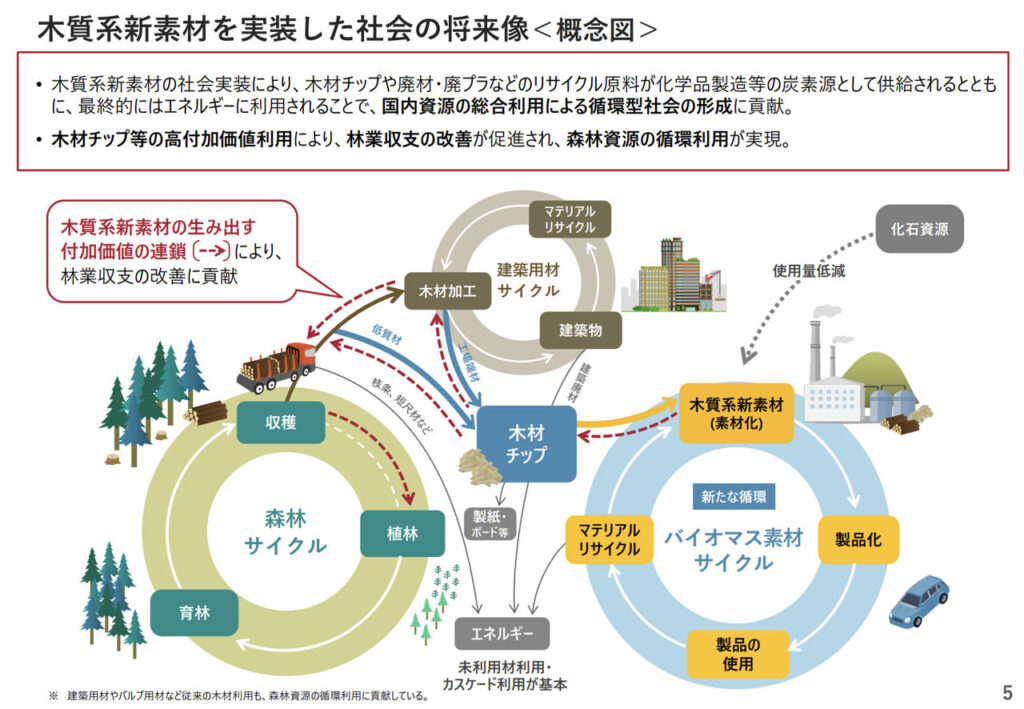
On March 30, the Forestry Agency released its "Vision for Social Implementation of New Wood-based Materials" as a new guideline for promoting forestry innovation. The vision positions the importance of securing stable demand for wood chips and developing high-value-added applications from low-quality wood and mill residues that cannot be used as building materials, in order to improve the forestry industry's balance of payments. The report outlines the development of new materials using components such as "modified lignin" and cellulose nanofiber (CNF) made from cedar, and the progress of manufacturing technologies for biomass plastics, etc., and outlines a policy of promoting industry-academia-government collaboration in all stages from research to verification and commercialization. The goal is not to stop at materials development, but to establish a supply chain starting from forest resources to achieve both the establishment of sustainable industries and decarbonization.
*Reference link
Publication of the Vision for the Implementation of Smart Forestry Technology and New Wood-based Materials | Forestry Agency
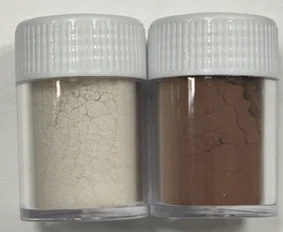
Taisei Rotec has conducted a demonstration test of CF Mix, an environmentally friendly pavement material that utilizes unused resources such as scallop shells and lignin. The road surface temperature on extremely hot days was reduced by up to 18.7°C compared to conventional asphalt pavement, mainly because calcium carbonate derived from scallop shells increases the brightness of the pavement surface and reflects sunlight. Meanwhile, the use of high-purity lignin (lignova) derived from forest residues as a partial replacement for petroleum asphalt contributes to the reduction of supply chain emissions during asphalt production and transportation, and to the long-term storage of carbon accumulated by wood inside infrastructure. The project is expected to be a model for complex solutions to the different challenges of underutilized resources, extreme heat, and CO2 emissions reduction.
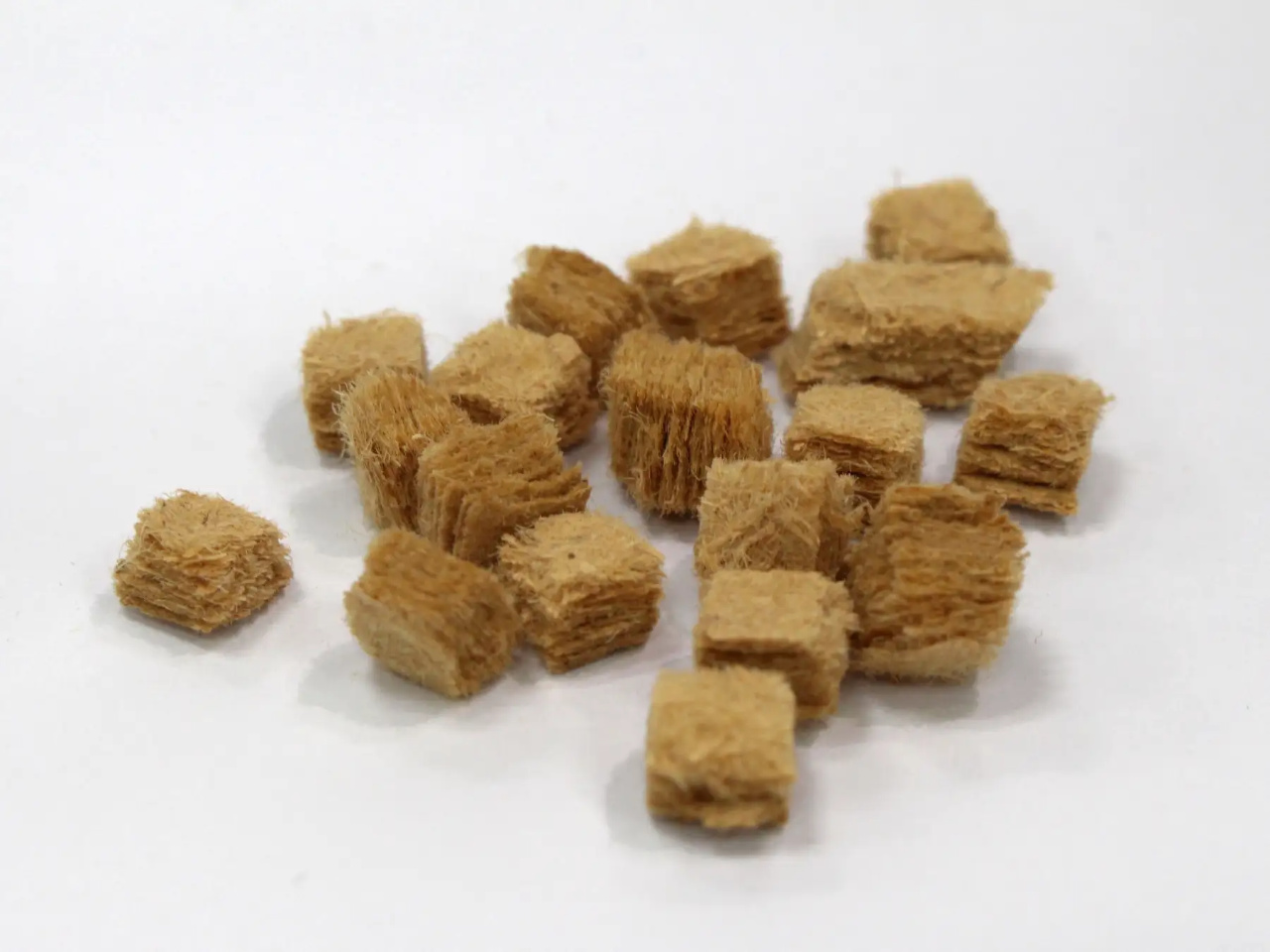
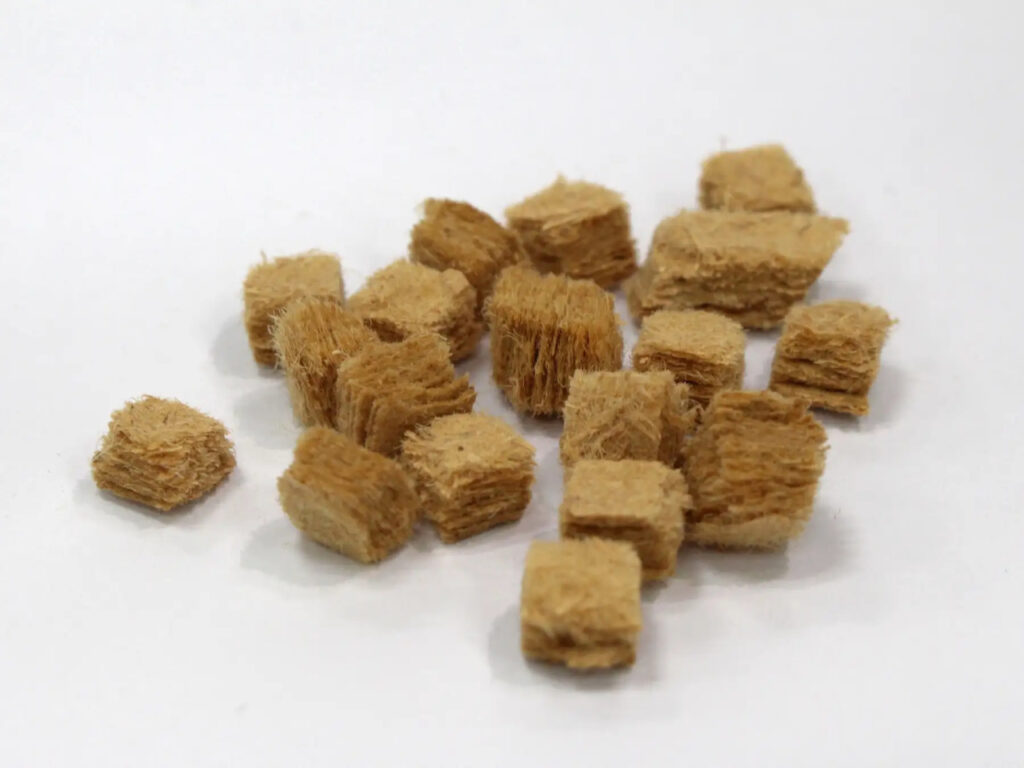
DAIKEN has established a mass production system for Wood Fiber Dice, a reinforcing fiber for plastic molding, at its manufacturing base in New Zealand, applying its wood fiber processing technology cultivated through the manufacture of MDF (medium density fiberboard). Wood fiber is a lightweight, high-strength material that can be used as an alternative to glass fiber and mineral fillers that have been used to reinforce plastics. Wood fiber is lightweight, strong, and heat resistant, and is expected to be used in plastic products such as vehicle interiors and exteriors, home appliances, furniture, and tableware. The company plans to support decarbonization in a wide range of industries through the development of new applications for wood, and aims to achieve annual sales of 6 billion yen by FY2035.
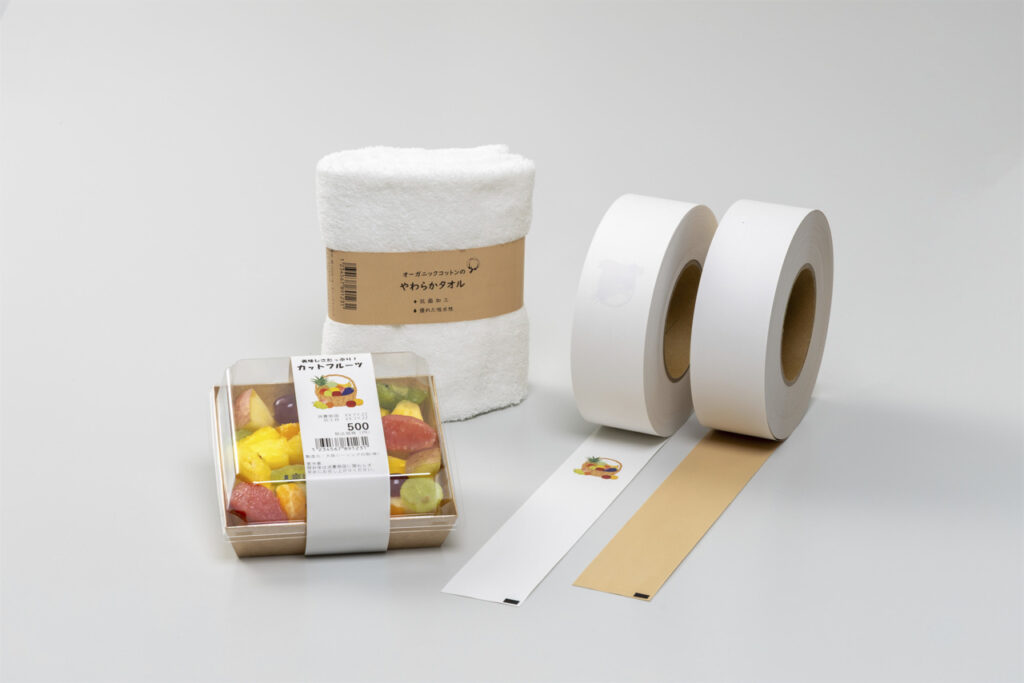
OSP Holdings will release paper bundling bands with direct thermal printing on May 21. The product does not use plastic film, but is thermo-compression bondable, and features direct thermal printing on the surface. In addition to solving the problems of conventional binding materials that use adhesive, the new product combines the functions of label (printing) and band (binding) into one, and reduces the amount of plastic used by using paper material. Noteworthy is the use of kraft lignin as part of the color developer responsible for the coloring of thermal paper. The use of petroleum-derived raw materials has been reduced by upcycling the components contained in the liquid waste generated when pulp is extracted from wood as a chemical raw material.
The destabilization of the Middle East over the Strait of Hormuz has once again highlighted the vulnerability of Japan's energy and economic security due to its dependence on overseas sources of fossil fuels. Amid the urgent need to secure resources and make a drastic structural shift toward decarbonization, a concept to utilize Japan's abundant "forest resources" as raw materials for fuels and chemical products and to build a domestic production base is gaining momentum in earnest.
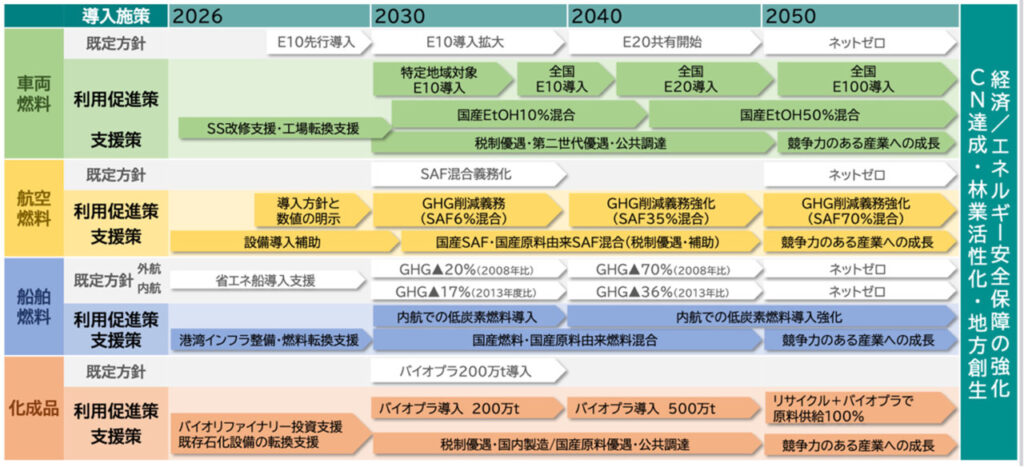
Platinum Initiative Network (Chairman: Hiroshi Komiyama) released "Promoting a Growth Strategy-oriented Bioeconomy Utilizing Domestic Forest Resources" on April 2. After presenting a vision of a "circular forest economy" that combines decarbonization and economic growth, the report presents a realistic roadmap for how to overcome the challenges of high costs and lack of a market, and how to implement it as a business in society.Read the full story