


Updated by the Editorial Department of *Forest Circular Economy* on August 3, 2026, at 5:45 p.m. JST
Editorial Board, Forest Circular Economy
Forestcircularity-editor
We aim to realize "Vision 2050: Japan Shines, Forest Circular Economy" promoted by the Platinum Forest Industry Initiative. We will disseminate ideas and initiatives to promote biomass chemistry, realize woody and lumbery communities, and encourage innovation in the forestry industry in order to fully utilize forest resources to decarbonize the economy, strengthen economic security, and create local communities.
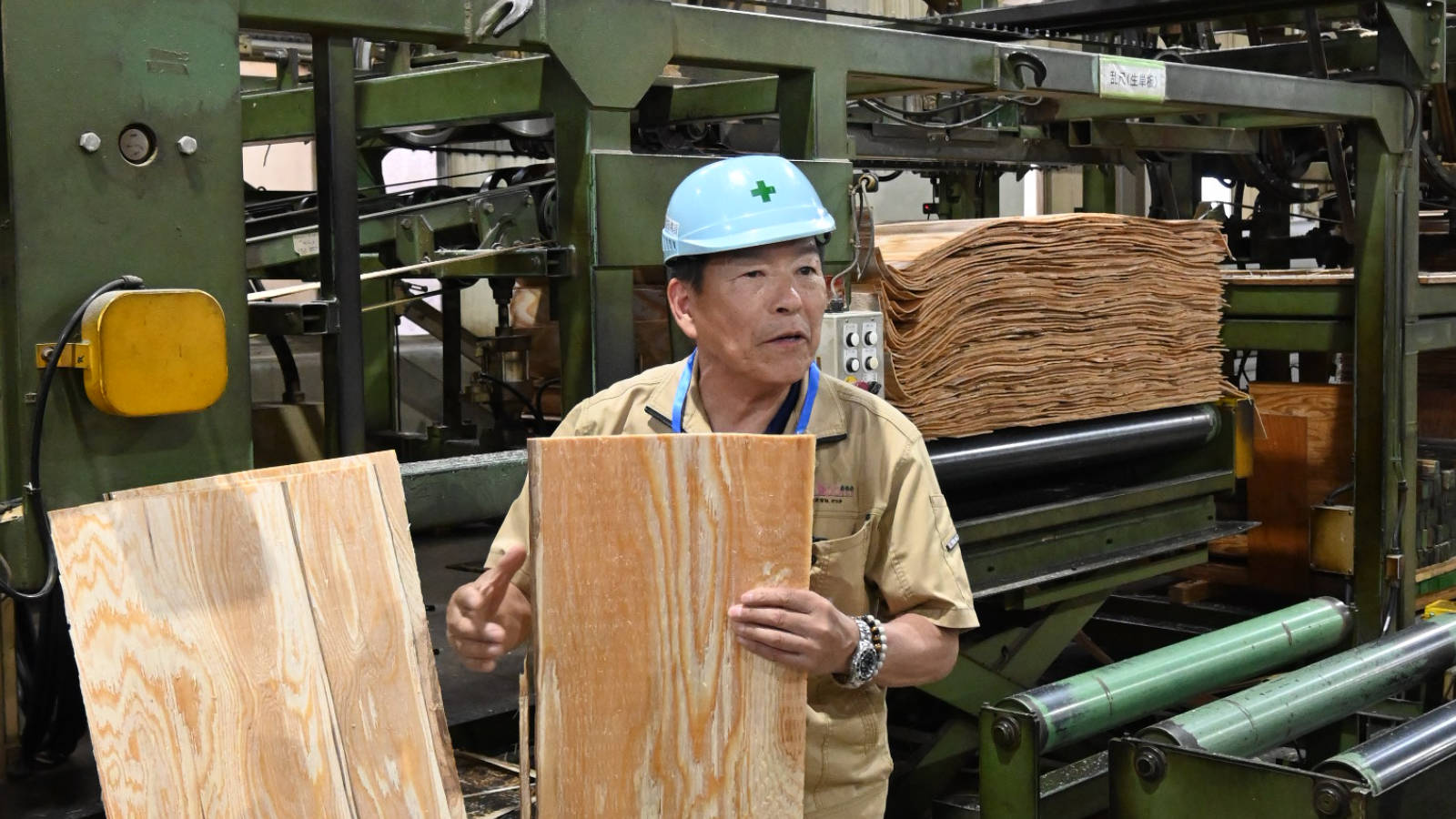
Ninnan Town, located in southwestern Tottori Prefecture, has a population of approximately 3,700. At the heart of a forest循環 model that involves “purchasing the entire volume” of logs harvested from the mountains is the “Orochi” LVL (laminated veneer lumber) factory, located in a corner of the timber industrial park. This factory, which accepts a diverse range of timber gathered from the mountains, did not get off to a smooth start. Having been shunned by the market and struggled with losses during its early years, how did this factory—established with local capital—manage to turn a profit? We trace its 20-year journey, during which it shouldered its responsibility to the community while continuously refining its products, enhancing quality, making efficient use of resources, and confronting market realities and profitability.
A row of lumber mills stands within the vast grounds of the “Hino River Forest Lumber Complex.” The company’s unusual name, “Orochi Co., Ltd.,” is derived from the eight-headed serpent “Yamata-no-Orochi” in Japanese mythology. This factory was established in 2006, following the certification of Nichinan Town’s regional revitalization plan, through investments from approximately 470 residents, including members of the forestry cooperative and local landowners. Much of the 94 million yen in capital was raised locally, driven by the community’s desire to “revitalize the forestry industry.” Precisely because this factory was born from resident investment, the management team bears a heavy responsibility to ensure the business’s continued operation.
However, now that nearly 20 years have passed since its founding, the company is facing challenges unique to rural areas with aging populations. Orochi’s general affairs manager begins each day by checking the “obituaries” section of the morning newspaper. This is because many of the company’s shareholders are aging, and the number of deaths is on the rise. Even when an inheritance arises, many of the children have moved to urban areas, and it is not uncommon to be unable to even contact them.
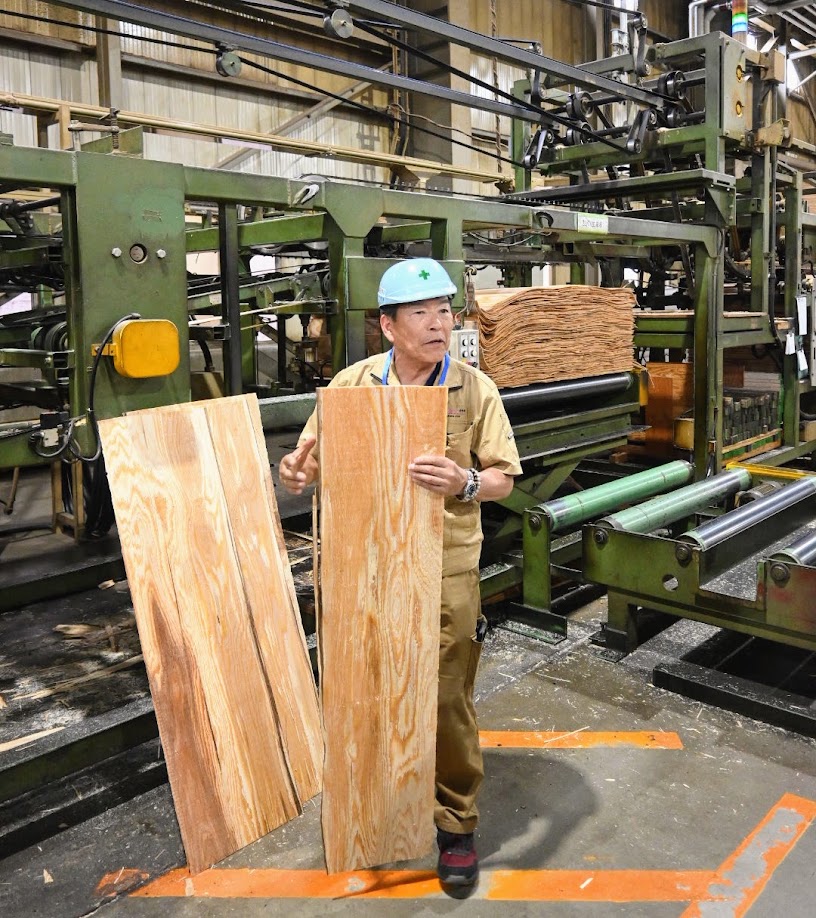
"Our staff members track down obituaries, locate the bereaved families in urban areas, and work tirelessly to settle each stockholding one by one," reveals President Haruhisa Aimi. The weight of responsibility borne by a local company, which carries the hopes of the community, is distilled into this daily, hands-on routine of checking the obituaries.
LVL stands for “Laminated Veneer Lumber” and is known in Japanese as “tanpan sekisōzai” (laminated veneer lumber). It is often confused with plywood, which is also made by bonding layers of wood, but the two differ in both structure and application.
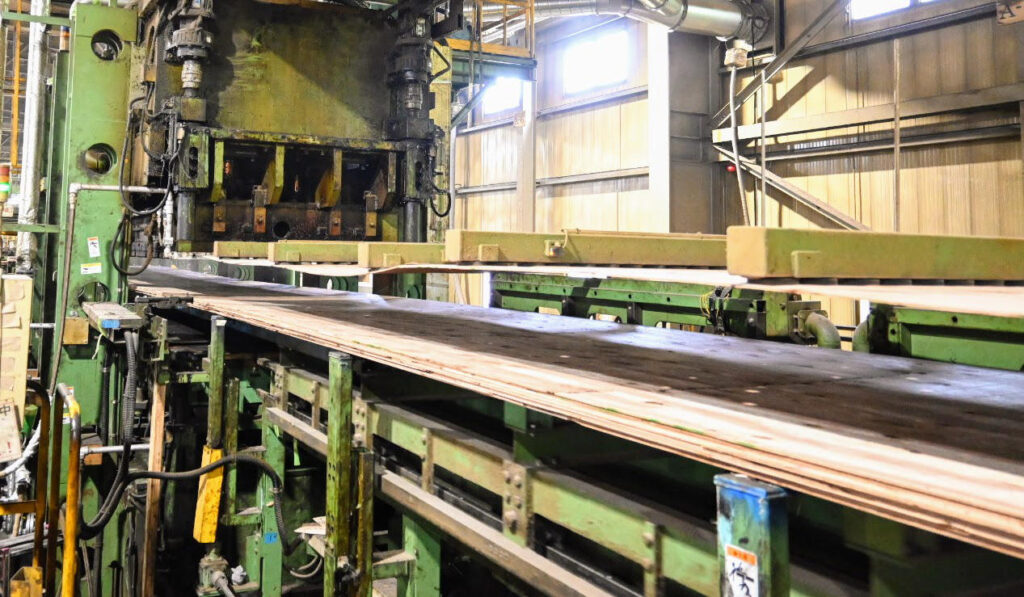
Plywood is made by layering thin sheets of wood (veneers) so that the grain directions are alternately perpendicular to one another. This creates a “surface” that is resistant to warping and shrinkage, making it suitable for use as subflooring and wall materials. In contrast, LVL is manufactured by layering veneers with their grain directions aligned in parallel (in the same direction) and then pressing and bonding them together. Aligning the grain directions gives the material the strength characteristics suitable for structural members such as columns and beams. Furthermore, compared to solid wood, LVL makes it easier to minimize variations in strength performance, making it simpler to determine the performance characteristics required for structural calculations.
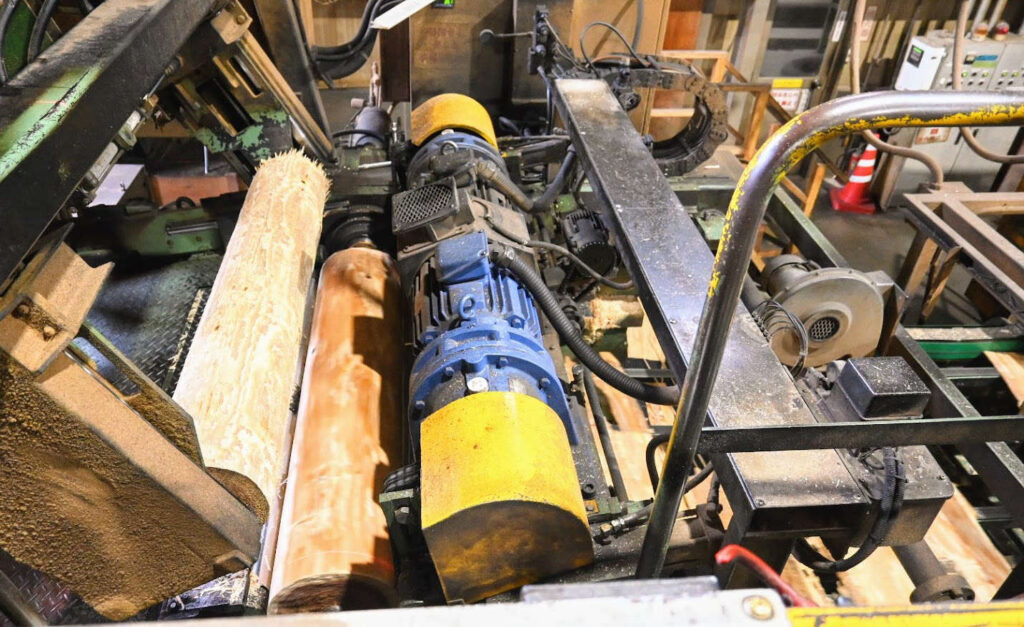
This is because the log is peeled into thin veneers, about 3 to 4 millimeters thick, in a process similar to “daikon peeling,” and by layering these veneers, the wood’s natural imperfections—such as knots—are dispersed throughout the entire piece.
It also offers the advantage of making it easier to utilize crooked logs and small-diameter logs that are difficult to use for lumber production. Within timber complexes where logs are sorted by intended use, Orochi serves as a key outlet that supports the full-volume procurement of timber.
Armed with this LVL technology and carrying the residents’ dreams, Orochi began operations—only to face a string of severe losses. Initially, Orochi aimed to manufacture and sell cedar structural columns. To sell “cedar LVL”—a product that was still relatively unknown at the time—President Aimi personally visited pre-cut lumber factories and building materials wholesalers across the country to promote the product, but he faced strong resistance.
"No matter where I went, people would brush me off, saying, 'Sugi LVL samples are just trash—take them home,'" President Aimi recalls. "It was really frustrating."
In the fifth or sixth year after the company’s founding, as accumulated losses had pushed the company to the brink of collapse, Mr. Aimori was appointed to the board of directors and took over the reins of management. The grim directive he was given was simply, “Stop these losses at all costs.” This marked the beginning of Orochi’s relentless product transformation. The company decided to shift its focus from load-bearing columns—for which demand was stagnating—to components used in residential structures and substructures, such as studs, framing lumber, and bracing.
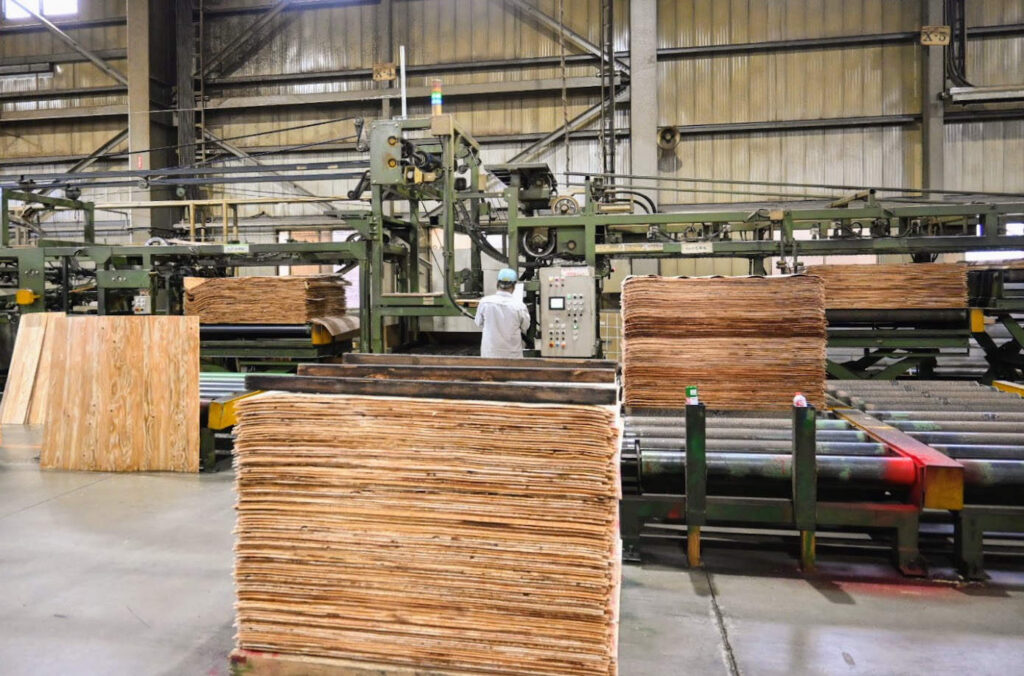
In 2008, the company was among the first to obtain JAS (Japanese Agricultural Standards) certification for structural LVL made from Japanese cedar. LVL, which is produced by aligning the fiber direction and then bonding and pressing the layers, effectively minimizes the warping typical of Japanese cedar during drying and processing, making it easier to achieve extremely stable strength performance.
Furthermore, as part of its commitment to the environment, the company has obtained “FSC Chain of Custody (CoC)” certification, an international forest certification covering processing and distribution. This recognition of the company’s commitment to quality and the environment has enabled it to align with the procurement policies of major homebuilders, leading to the development of stable sales channels.
Furthermore, to avoid dependence on any specific homebuilder, Orochi has deliberately declined offers of exclusive distribution agreements with individual companies and instead established a policy of purchasing from multiple companies (joint purchasing) to diversify its sales channels. The company continues to operate while taking the utmost care to maintain a stable business foundation.
After the product transition, quality control within the factory became crucial for maintaining business relationships with major homebuilders. This is supported by a rigorous “100% inspection system for veneer sheets.” Veneer sheets—thin slices of wood peeled from logs—inevitably vary in strength and moisture content (moisture percentage) from sheet to sheet. At Orochi, every single veneer is passed through an inspection line equipped with ultrasonic measuring devices and moisture sensors to measure its Young’s modulus (strength) and moisture content for sorting.
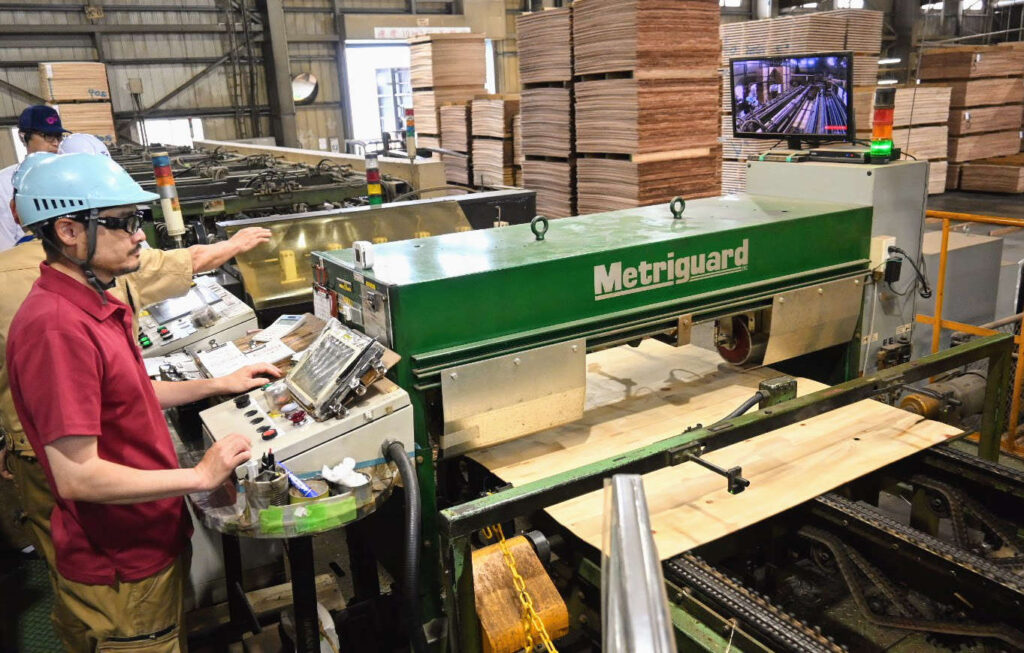
Controlling moisture content is particularly important. LVL is produced by laminating multiple layers of veneer with adhesive and heat-pressing them; however, if the moisture content of the veneer is too high, the internal moisture vaporizes during heat pressing, causing “puncture” (delamination during heat pressing), which results in the product delaminating. According to President Aimi, to prevent bonding failures, the company controls the moisture content of the veneers to 7% or lower, in accordance with internal standards. By laminating veneers that have been sorted based on their strength and moisture content, the resulting LVL ensures high and consistent quality.
"We have been supplying products to major homebuilders—who demand strict quality control—for nearly 16 years without a single serious complaint. This is a source of pride for everyone on the job site," says President Aimi.
Having laid the foundation for its business on quality, Orochi then took the next step by focusing on reducing the burden on customers’ construction sites. This is “just-size production,” which effectively cuts costs.
At typical lumber mills, it is standard practice to ship lumber in standardized lengths (e.g., 3 meters, 4 meters). However, this approach inevitably results in “offcuts” when the lumber is cut to fit the actual dimensions of a construction site, which in turn generates costs for industrial waste disposal on-site. Unbound by this conventional wisdom, Orochi has established a system whereby, if a builder requests “2,800 millimeters,” the factory performs precision cuts to the millimeter and ships the lumber in “exact-size” pieces.
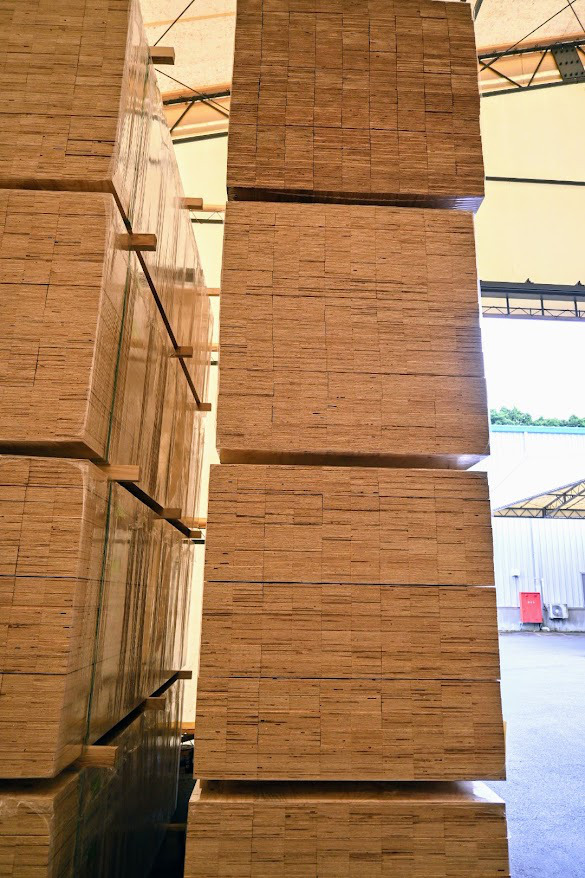
“It is precisely because LVL maintains uniform strength down to the millimeter that precise cutting in the factory is possible,” says President Aimi. “While it’s certainly not cheap when looking at the unit price alone, when you consider the ‘total cost’—which includes on-site construction waste and industrial waste disposal costs—using our product ends up being the most cost-effective option. Builders recognize the value in that.”
It is precisely this ingenuity—which eliminates waste at customers’ sites—that has become the company’s strength, enabling it to provide value beyond just price.
It is not just the technology and ingenuity within the factory that underpin the company’s operations. It also stems from a strong partnership with the Nichinan Town Forestry Cooperative and a resource recycling system that fully utilizes scrap wood and waste as resources.
For wood processing plants, maintaining a certain amount of log inventory tends to place a burden on working capital. However, Orochi maintains almost no log inventory of its own and has centralized its procurement through the Nichinan Town Forestry Cooperative. In fact, more than 95 percent of the cedar and cypress logs used by Orochi are sourced from within Nichinan Town through this channel.
The Forestry Cooperative temporarily stores the logs collected from the mountains at a collection yard within the lumber complex and supplies the required quantities at the right times to match Orochi’s production schedule. By fully assuming these temporary storage and logistics functions, the cooperative has significantly reduced the burden on Orochi’s working capital.
In addition, waste materials from the factory—such as scrap wood and bark—are thoroughly sorted and fully utilized as resources.
At Orochi, the yield rate—the percentage of a log that is turned into finished products—is generally 55–60 percent. The remaining 40–45% consists of offcuts, bark, and wood shavings generated during the process of shaping the logs and trimming the ends; however, Orochi never treats these as “waste” and has established a system to utilize them entirely without waste.
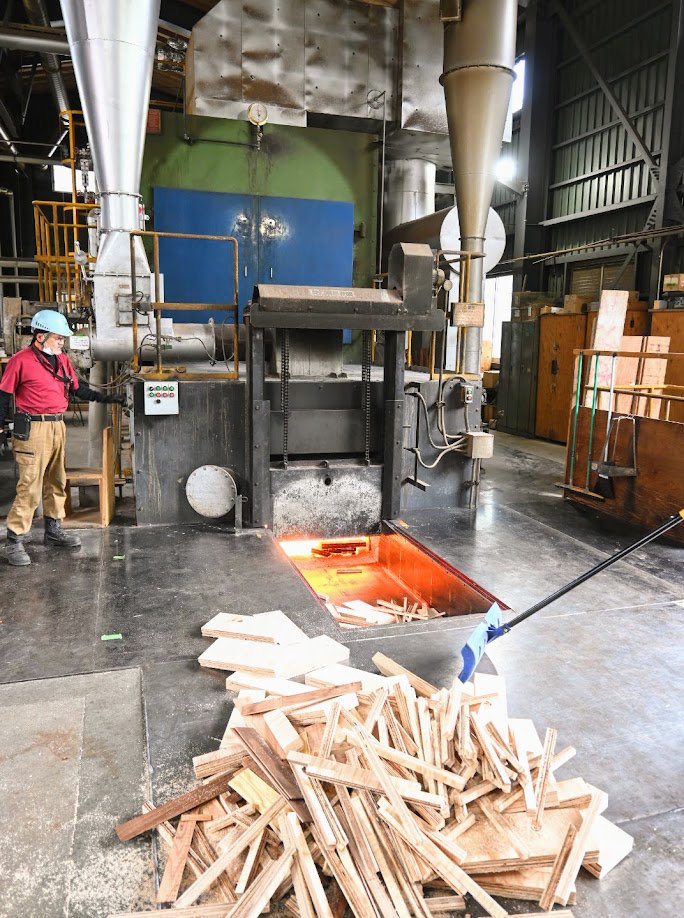
Some of the scrap wood and wood chips are used as a heat source for the company’s own biomass boiler, which is installed at the factory. The heat and steam generated are used in-house for the “steaming” process—which softens the logs—as well as for the dryers and presses used for veneer, directly contributing to a reduction in external energy costs.
Furthermore, clean scrap wood free of adhesive is sold to outside buyers as wood chips for paper manufacturing, while the bark is put to good use by local farmers, for example, as compost. A system has been established to ensure that all wood waste from the factory is fully utilized through a cascade of uses.
Orochi chose to maintain an appropriate scale by “deliberately not operating at full capacity.” There was a time when Orochi ran its factory at full capacity, pushing production to the absolute limit—exceeding 2,000 cubic meters per month. However, as a result, costs such as employee overtime pay and late-night electricity bills for the factory skyrocketed, and the company faced the challenge of declining profit margins despite growing sales.
"Data analysis showed that once production exceeds a certain level, costs rise sharply and profit margins decline," President Aimi revealed. "Therefore, we made the decision to deliberately cut production by 15 percent."
By limiting operations to an appropriate scale, the company saved on overtime pay and electricity costs, leading to an operational structure that generated profits. Rather than being at the mercy of market demand, the company made “subtractive decisions”—adjustments commensurate with local resource availability and factory capacity—which strengthened the company’s foundation.
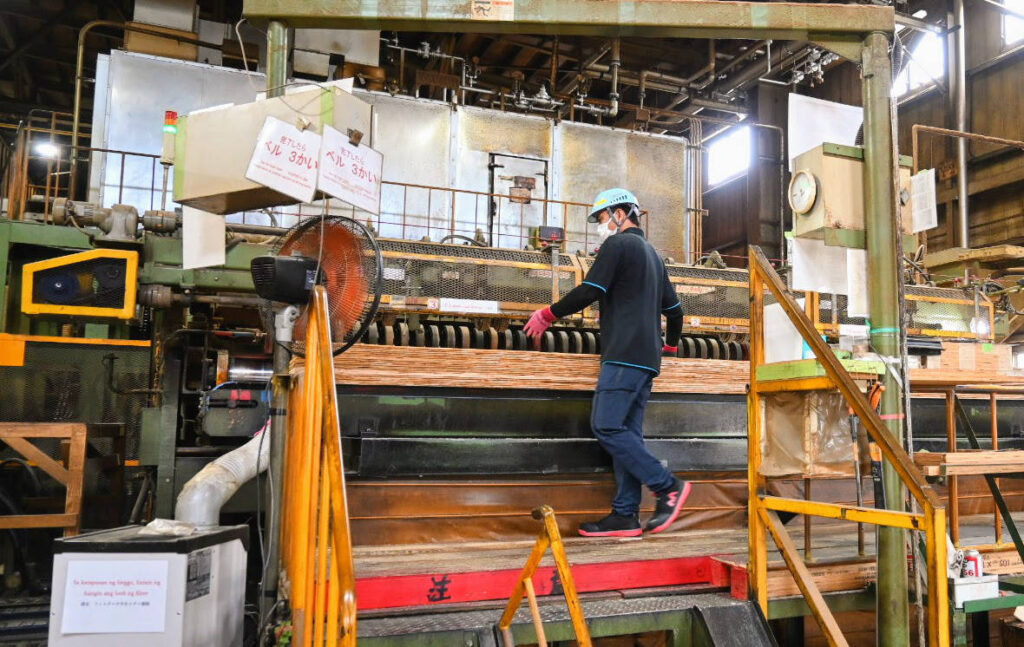
Furthermore, securing a workforce in Nichinan Town—where labor shortages are severe—is an essential element in supporting this stable operation. At Orochi, six technical interns from the Philippines are among the 73 employees, and they have become an indispensable part of the workforce for maintaining stable operations on-site. The company works in partnership with the local community to arrange housing and provide daily living support so that these trainees can live with peace of mind, thereby laying the foundation for sustaining operations in this rural area.
Orochi, established through resident investment, has now grown to an annual sales volume of approximately 1.6 billion yen and has become a hub supporting the distribution of domestically sourced timber in the Chugoku and Shikoku regions, as well as the forest-based economy of Nichinan Town. It is precisely because Orochi serves as a reliable market that landowners can harvest timber with peace of mind, and the forest cooperative is able to uphold its promise to “purchase the entire harvest.”
To keep the factory—entrusted to them by approximately 470 resident shareholders at the time of its founding—in operation, the company reevaluated products that were not selling and consistently focused on meeting customer expectations for quality and cost while ensuring the factory’s profitability. This journey offers valuable insights for regional companies that continue to operate with the support of their local communities.
The town has been able to sell its timber and maintain a massive market outlet. However, further obstacles stand in the way of a sustainable forest circular economy. In the next installment, we’ll explore the innovation of the Nichinan Town Tree Nursery Center (Wood Company Nichinan), which has transformed the site of a defunct school into a state-of-the-art “seedling factory” to carry forward the cycle of “cut and replant.” = To be continued
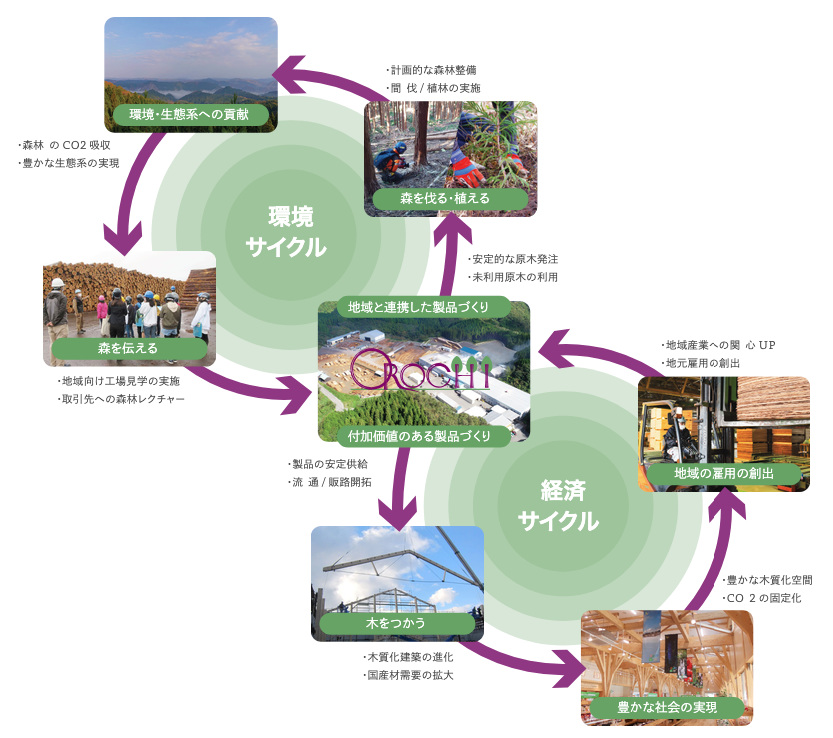
*Reference link
Orochi Co., Ltd.
