


Updated by the Editorial Department of *Forest Circular Economy* on August 20, 2026, at 6:43 p.m. JST
Editorial Board, Forest Circular Economy
Forestcircularity-editor
We aim to realize "Vision 2050: Japan Shines, Forest Circular Economy" promoted by the Platinum Forest Industry Initiative. We will disseminate ideas and initiatives to promote biomass chemistry, realize woody and lumbery communities, and encourage innovation in the forestry industry in order to fully utilize forest resources to decarbonize the economy, strengthen economic security, and create local communities.
Against the backdrop of efforts to utilize cities as “second forests”—harnessing their carbon storage potential and local resources—to realize a decarbonized society, the push for medium- to large-scale wood-frame construction is gaining momentum. Until now, various bottlenecks have existed, including legal regulations such as height restrictions and fire resistance standards, design complexity, construction costs, and difficulties in procuring domestically produced timber. However, to address these challenges, practical approaches are emerging one after another across various fields, including policy, design, cost, technology, procurement, and resource recycling. Concrete initiatives are expanding, ranging from promotion projects led by the Ministry of Land, Infrastructure, Transport and Tourism (MLIT) to the opening of a nine-story hybrid-structure office building in the city center; AI-assisted design; optimization of structural costs; technological developments to overcome urban height restrictions; and the promotion of domestic timber use in the rental apartment sector.
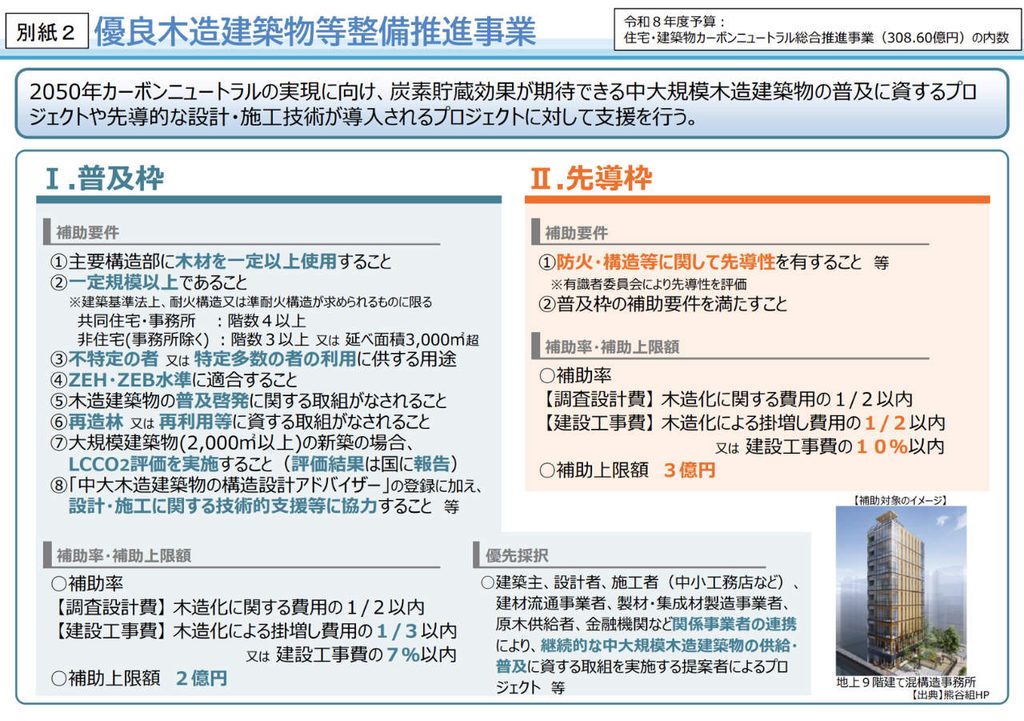
With the expectation that the use of wood in building construction will contribute to carbon sequestration, the Ministry of Land, Infrastructure, Transport and Tourism has selected 13 projects for the “Promotion of Medium- to Large-Scale Wooden Buildings” category under the Reiwa 8 “Project to Promote the Development of High-Quality Wooden Buildings and Related Structures.” This program supports initiatives that employ plans or pioneering design and construction technologies leading to the widespread adoption of medium- to large-scale timber-frame buildings. Under this round of the “Promotion Category,” projects such as new construction of apartment buildings, retail stores, offices, and nursing care facilities were selected based on requirements including the use of a minimum amount of wood in the main structural components and compliance with ZEH or ZEB standards. By subsidizing survey and design costs, as well as the additional construction costs associated with using wood, the program aims to accelerate the creation of model projects and the widespread adoption of medium- to large-scale wooden buildings in the private sector.
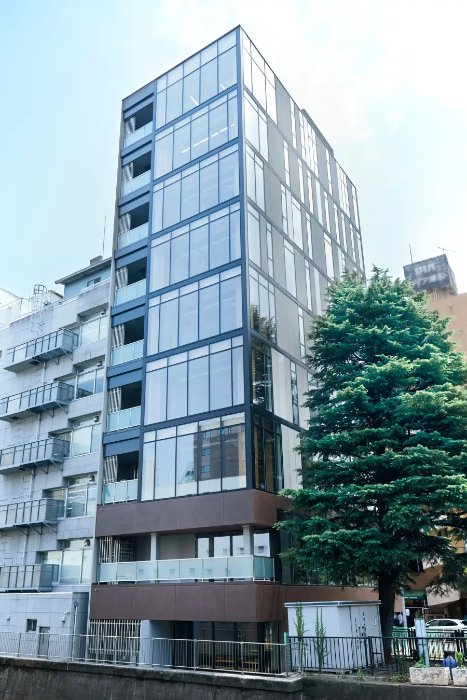
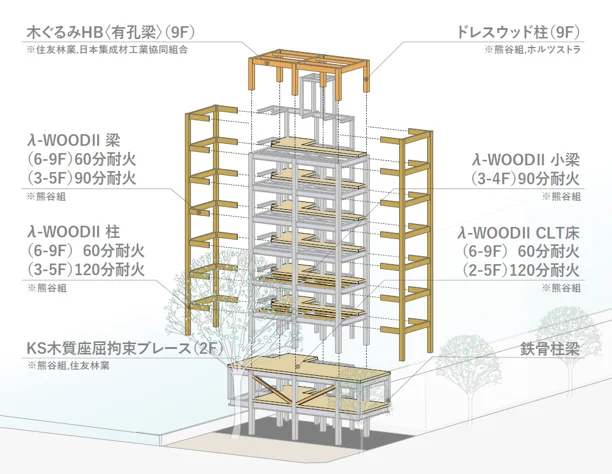
Sankei Building opened “KiGi AKIHABARA,” a nine-story office building combining wood and steel construction, in July. In the city center, where structural and construction constraints have made it difficult to utilize wood, the building employs a hybrid structure featuring a steel core in the center and a wood frame on the outer perimeter. The project incorporated technologies from Kumagai Gumi and Sumitomo Forestry, including the wood-based fire-resistant component “Environmentally Friendly λ-WOOD II (Lambda Wood II),” “Dresswood”—steel members with a fire-resistant wood coating—and the “KS Wooden Buckling-Restrained Brace,” a seismic-resistant component made of wood-based materials. The company estimates that this approach will reduce CO₂ emissions during construction by approximately 112.3 metric tons compared to a steel-frame building of the same scale. Wood has also been generously incorporated into the common areas and lounges, for which Puddle served as the spatial design consultant, achieving a balance between comfort and environmental consideration. This marks the company’s first venture into the development of a mid- to high-rise wooden office building. By combining multiple wood-based technologies and types of wood, the project is drawing attention as a new model for mid- to large-scale wooden buildings in urban areas.
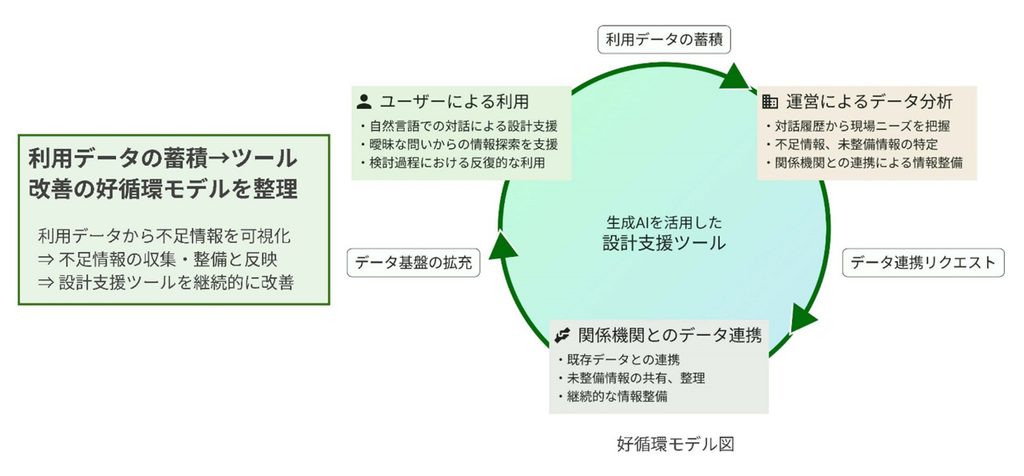
A project by four companies—Nikken Sekkei, Nippon Sekkei, Mitsubishi Jisho Sekkei, and ArchiTech—to develop an AI-based design support tool specialized for medium- to large-scale timber buildings has been selected for a subsidy program by the Forestry Agency for the second consecutive year. The project aims to build a chat-based AI tool that aggregates and structures reliable information from public documents and other sources, providing answers while citing the original sources. Following last year’s selection, the project has once again been chosen for the “CLT and Other Wooden Building Materials Technology Development and Dissemination Program.” In the practical design of medium- to large-scale timber buildings, a major challenge is the significant burden of gathering information. This is due not only to the need for advanced specialized knowledge in areas such as structural engineering, fire resistance, and timber procurement but also to the fact that laws, regulations, and guidelines are scattered across various relevant agencies. A survey conducted by four companies targeting 460 designers revealed that approximately half (46.7%) spend at least one hour per day gathering information. Under a framework in which the three design firms will collect reference data and conduct pilot operations, while ArchiTech is responsible for system development, the project will focus on establishing response accuracy and update workflows, as well as expanding the network of data integration partners, with the goal of putting the system into practical use.
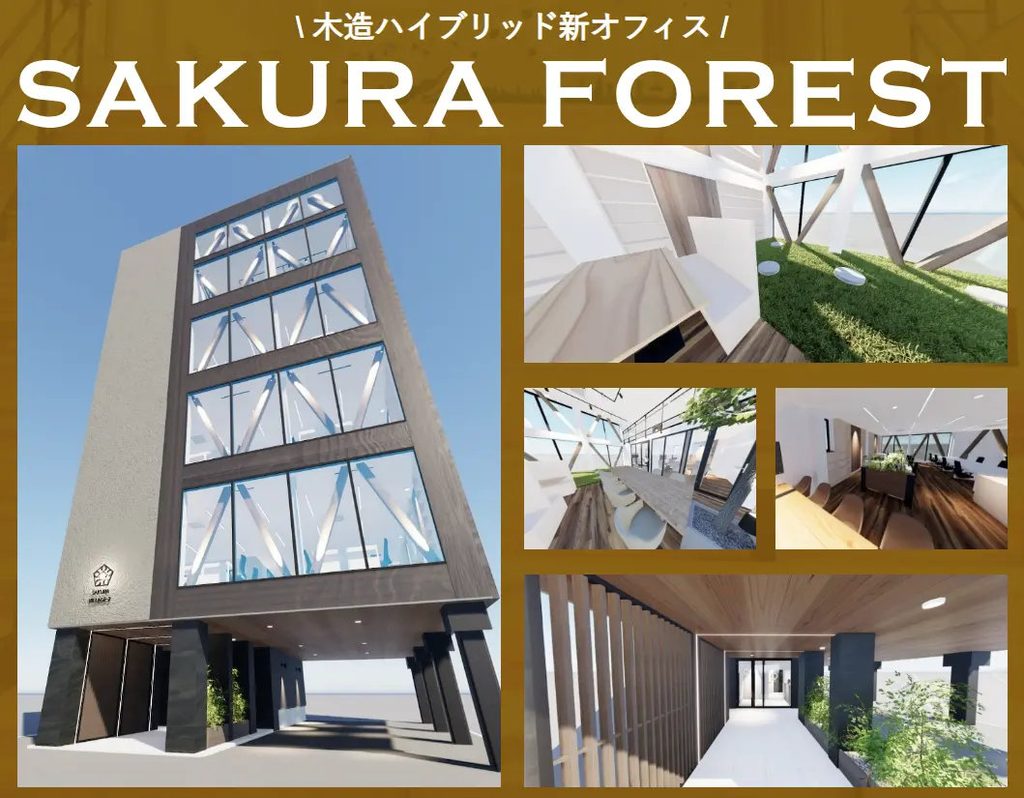
Sakura Structural Engineering, a structural design firm, began offering “Select Wood” in May—a new wood-frame service designed to maximize cost-effectiveness in medium- to large-scale buildings. The service leverages the company’s expertise in optimizing structural frame design—gained through experience with steel-frame and reinforced concrete (RC) construction—as well as the technical foundation for seismic resistance developed in collaboration with Kyoto University. According to the company, the service enables cost reductions of up to approximately 35% when switching from other structural systems and also flexibly accommodates hybrid structures that combine wood with other materials. Concurrently, the company is demonstrating the service’s cost-effectiveness and constructability through the construction of its own five-story office building, “SAKURA FOREST.” Furthermore, the company is simultaneously recruiting partners—including general contractors, construction firms, and pre-cut lumber suppliers—to handle construction and lumber processing. Amid the worsening surge in construction costs, this initiative aims to present a realistic option for medium- to large-scale timber construction from a perspective not bound by any specific structural system, thereby lowering the barriers to adoption for project owners.
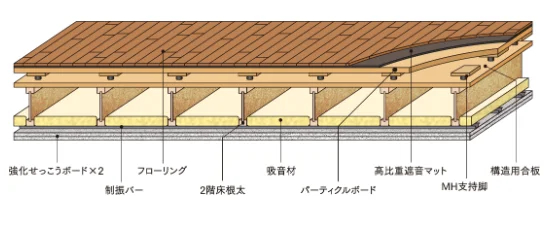
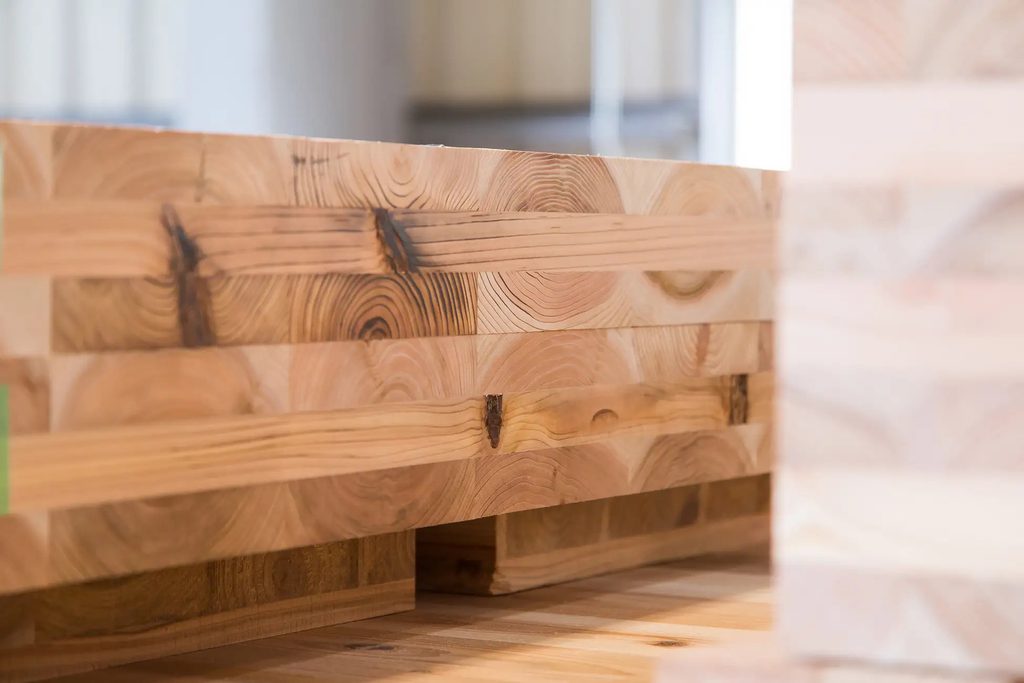
Mitsui Home and Meiken Kogyo have jointly developed a new sound-insulating floor structure that combines sound insulation with a slim profile using cross-laminated timber (CLT). In areas where the maximum building height is limited to 10 meters or less, the thickness of the floor structure—which was traditionally about 500 mm—has been a major obstacle, and due to floor-to-floor height restrictions, three-story wooden buildings have effectively been the upper limit. In this joint development, domestically produced CLT manufactured by Meiken Kogyo was used for the floor joists and combined with Mitsui Home’s proprietary high-sound-insulation floor specification, “MOCX MUTE,” to reduce the floor structure’s thickness to 300 mm or less while ensuring sufficient sound insulation. This technology is expected to expand the possibilities for constructing four-story wooden apartment buildings in areas with strict land-use restrictions.
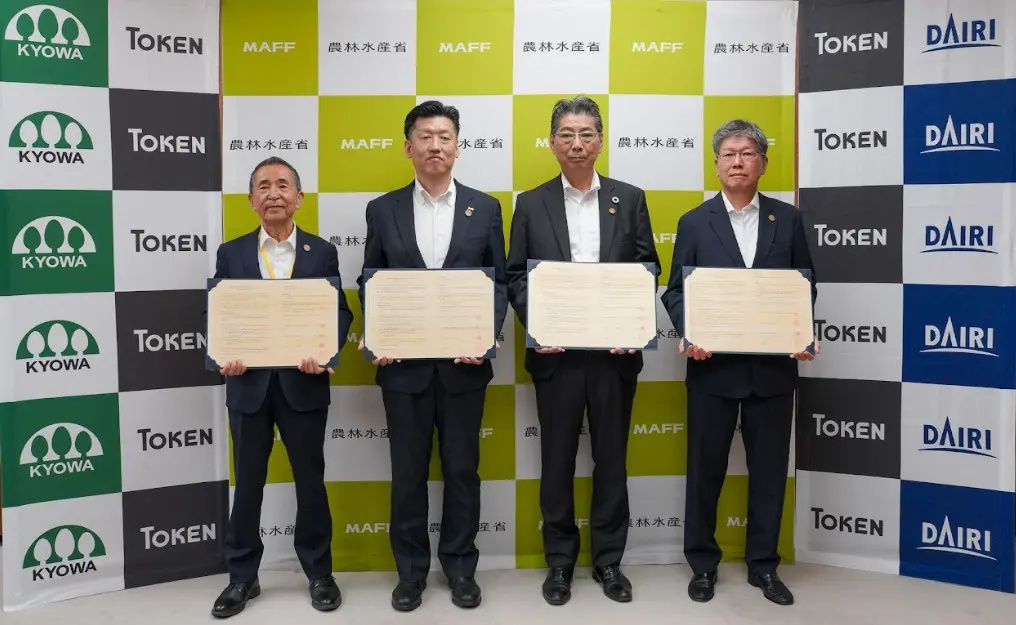
In May, the Ministry of Agriculture, Forestry and Fisheries signed the first-ever “Agreement to Promote the Use of Wood in Buildings” in the rental apartment sector with three companies: Token Corporation, Kyowa Lumber, and Dairi FPC. The agreement sets a target of using a total of 30,000 cubic meters of domestically produced lumber—equivalent to approximately 1,200 housing units—over a three-year period. For the wide-width lumber used in the 2x4 construction method, reliance on imported lumber—such as that from North America—persists due to a shortage of large-diameter logs and constraints on drying technology and processing facilities; procurement risks stemming from international political situations and exchange rate fluctuations remain a challenge. Kyowa Lumber of Fukushima Prefecture and Tokushima Prefecture’s Dairi FPC—which has been conducting joint research with Tokushima Prefecture for about 15 years on the effective utilization of large-diameter logs and has established a mass production system for 5-meter-wide lumber, a rarity even in Japan—will serve as the main suppliers. By developing an integrated domestic supply chain—spanning everything from log procurement to processing and delivery to construction sites—the industry aims to establish a procurement base that does not rely on imported lumber, while also creating domestic demand for large-diameter logs, thereby revitalizing the forestry sector and advancing decarbonization efforts.
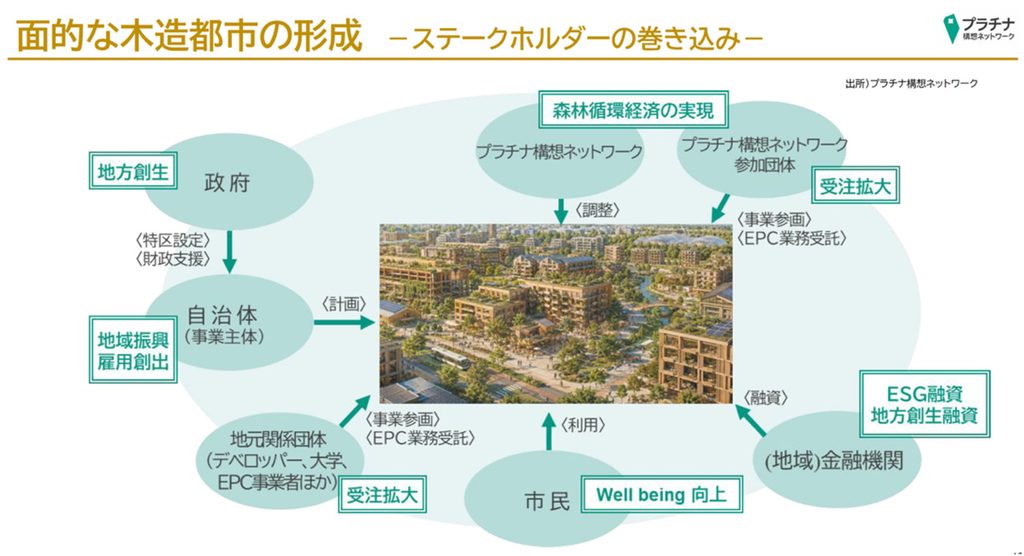
On July 6, the Platinum Vision Network held the “Platinum Forest Industry Initiative Phase 4 Results Presentation.” The “Wooden City Subcommittee” is focusing in Phase 4 on “developing area-wide projects to accelerate the creation of wooden cities” in order to realize the vision of “9-story wooden buildings by 2050,” which was formulated by the end of Phase 3. Specifically, the network is sending proposal documents to member municipalities intended for local government leaders and is promoting the formation of project teams and providing ongoing support on a city block or area-by-area basis in promising regions such as Iida City, Nagano Prefecture (around the Maglev station) and Okayama Prefecture (wooden buildings in downtown areas). Furthermore, to refine the business environment, we continue to propose to the government and other relevant bodies measures such as “revising the implementation of JAS certification” through the use of specialized drying and grading contractors, as well as support for the rollout of a “CO₂ sequestration offset system (revision of the SHK system)” for local governments and businesses. Furthermore, by thoroughly disseminating the durability evaluation guidelines to encourage the extension of loan terms to 50 years (equivalent to those for steel-frame and reinforced concrete structures), we are strongly advocating for the societal implementation of a “forest circular economy” driven by both demand creation and institutional reform.
*Related Articles
[Trends in Fire-Resistant Wooden Construction 2026] Ministerial Certification for Fire-Resistant Structures Expanded; Use of Wood Expands from Wooden Apartment Buildings to Retail Spaces and Interiors
Targeting 70% domestic timber content and 30% increase in use of domestic timber for building materials by 2030 Accelerating implementation of non-residential and mid-rise buildings by the public and private sectors [Trends in Domestic Timber Construction 2026].
[Case Studies of Wooden Offices and Commercial Facilities] Understanding Wooden Architecture in the Era of Decarbonization and Well-being Through Leading Examples and Policies
