Updated by "Forest Circular Economy" Editorial Board on May 08, 2026, 6:19 PM JST
Editorial Board, Forest Circular Economy
Forestcircularity-editor
We aim to realize "Vision 2050: Japan Shines, Forest Circular Economy" promoted by the Platinum Forest Industry Initiative. We will disseminate ideas and initiatives to promote biomass chemistry, realize woody and lumbery communities, and encourage innovation in the forestry industry in order to fully utilize forest resources to decarbonize the economy, strengthen economic security, and create local communities.
In recent years, as the number of bears appearing in the wild increases and damage to forestry and agriculture caused by deer and wild boars becomes more serious, a shift is rapidly taking place from traditional methods relying on "human power" to "efficiency" and "wide-area collaboration" utilizing digital technology in the field of countermeasures. From the construction of a wide-area network connecting local government officials with hunting licenses that transcends administrative frameworks, to the automatic detection of bears using AI, and even a pest control system using robot dogs, unprecedented solutions are being implemented and demonstrated on the frontlines.
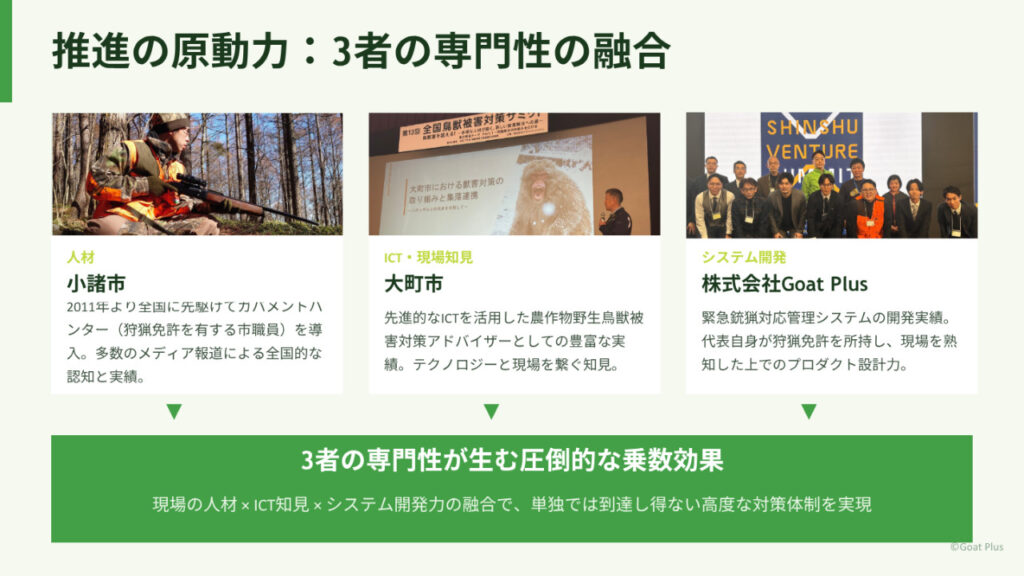
The "Shinshu Government Hunters Council (SGHC)," initiated by the cities of Komoro and Omachi in Nagano Prefecture, with Goat Plus as the planning and management secretariat, held its first regular meeting on April 27. The SGHC will be a wide-area network with the main focus on "government hunters," city employees with hunting licenses who are responsible for hunting and countermeasures, to prevent the isolation of those in charge and the impersonalization of their know-how. It will combine digital aspects, such as the creation of a database of solution cases and the sharing of grant information through a dedicated application, with realistic activities such as on-the-job training. Through information sharing and the training of highly specialized staff, the entire region will improve its ability to deal with wild birds and beasts. This pioneering initiative, in which local governments are at the forefront of the field, is attracting attention as a new model case for sustainable wildlife management in the midst of a shortage of hunters.
*Reference link
The first regular meeting of the Shinshu Government Hunters Council (SGHC) will be held in Komoro City.
Komoro and Omachi Cities Establish "Shinshu Government Hunter Council. A New Field-Led Network for Bird and Animal Damage Control Launched|Goat Plus Inc.
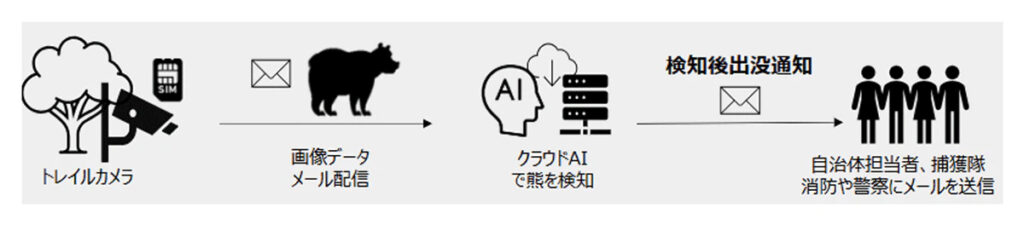
NTT DOCOMO Business launched on April 1 a "bear control solution" that uses digital technology to support everything from early detection of bears to information sharing and on-site surveys. It is equipped with a trail camera with communication function and AI analysis for early detection and automatic notification functions to enable prompt dissemination of information to residents. The drone not only checks the situation, but also "chases away" the animals with a speaker and identifies animal trails by tracking them at night. In addition to alerts from the local government, the regional application also has a "reporting function" for residents, which helps reduce the burden on local government officials by preventing the concentration of calls to the telephone counter. With bear damage becoming more serious nationwide, this digital solution is attracting attention as a means of both protecting human life and improving operational efficiency.
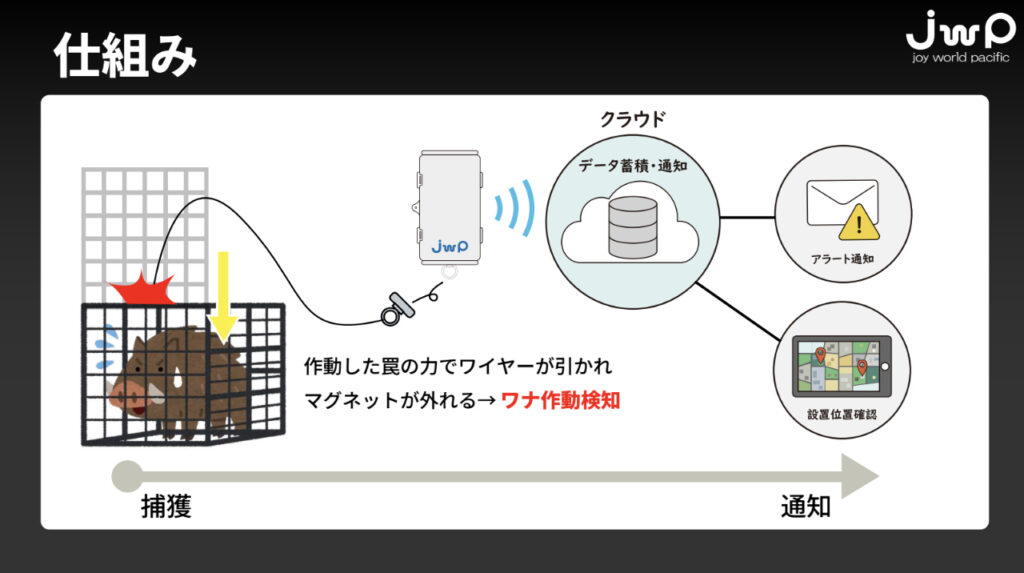
Solacom, an IoT platform provider, and Joy World Pacific (JWP), an agricultural ICT company, introduced an example of combining devices and AI to improve on-site efficiency at a seminar on bird and beast control held in March. In a demonstration experiment using "WanaBell," an IoT device that detects the opening and closing of trap doors, the company reduced man-hours from 36 hours to 3.4 hours, an approximate 90% reduction, by eliminating unnecessary on-site checks. In addition, a system in which AI identifies the target animal and uses sound and light to drive it away has also been verified, effectively functioning as a tool for farmers to confirm safety before going into the field. The combination of onsite knowledge and IoT technology has made the further advancement of measures against birds and beasts a reality.
*Reference link
Reducing the Burden of Patrols by 90% and Driving A.I. Bears Away - IoT and Bird Control | Solacom Inc.
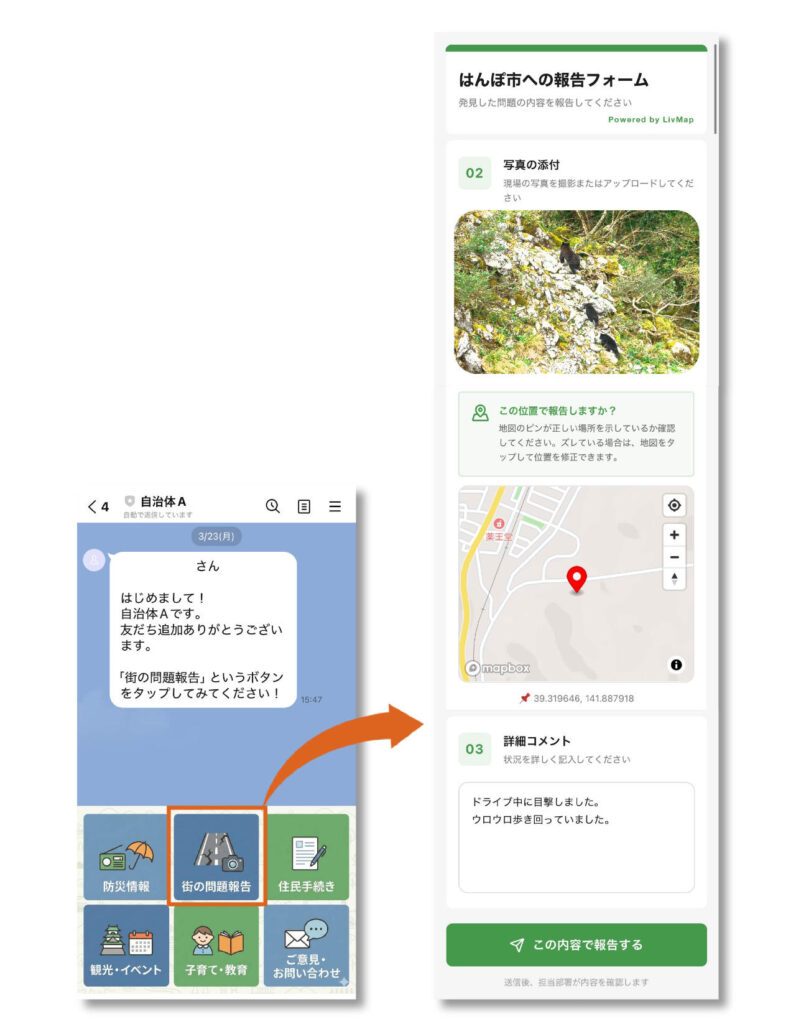
Hanposaki, a geographic information-based DX support company, has begun offering a free "bear countermeasure package" on its shared map platform "LivMap" that allows users to post sightings from LINE and consolidate them on a map. The first 30 organizations, including local governments and public institutions, are eligible for this service. By using LINE, which residents are familiar with, as the information window, accurate data including photos and location information can be collected in real time and visualized on a map. The collected data will facilitate prompt response by local governments and hunting clubs, as well as enable recording of response status and accurate risk sharing with local residents. The system's strengths lie in the immediacy and visualization of information, and it is expected to prove useful in the field of wildlife control, where initial response is key.
*Reference link
LivMap launches "anti-bear package" - LivMap - shared maps for teams
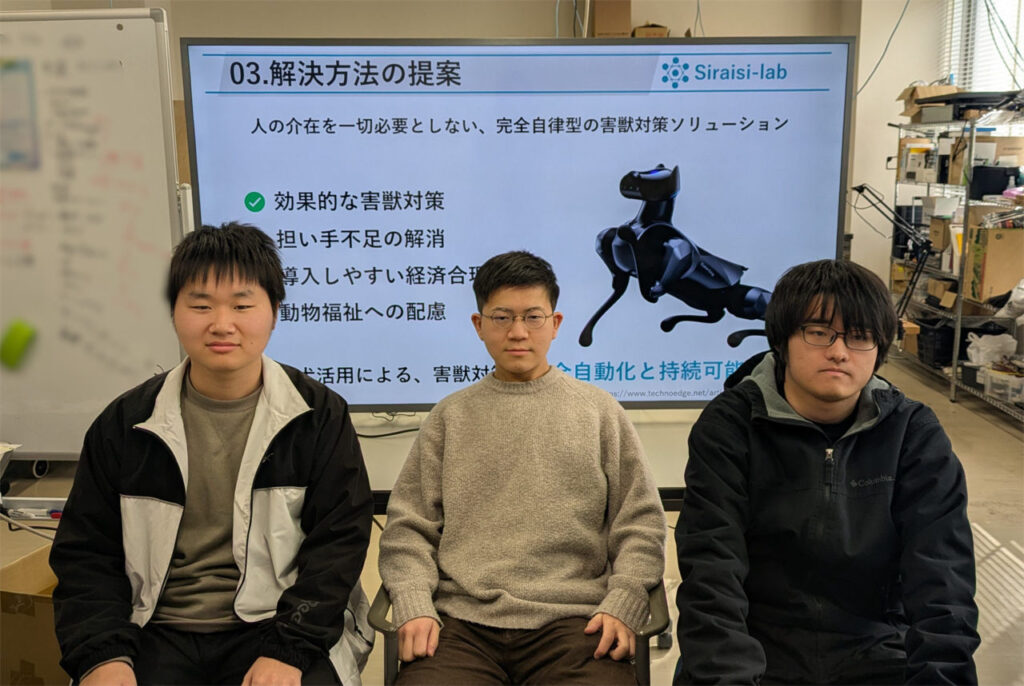
A student team from the Department of Information and Mechanical Systems Engineering at Toba College of Maritime Technology won the sponsor's award (Ando Hazama Award) for their "Fully Automatic Vermin Control System Using Robot Dogs" at WiCON 2025, held on March 11, 2012. The system is designed to solve the agricultural damage caused by monkeys, which is becoming increasingly serious in Mie Prefecture's Mihama Town. When an AI camera detects a vermin, the robot dog moves autonomously to the site and chases it away. The system also utilizes "LoRaWAN communication" so that it can operate even in mountainous areas where mobile communication networks are not well developed, and farmers can remotely monitor detection information via LINE notifications. This is a remarkable attempt to demonstrate the feasibility of using robotics and communication technology to solve problems in the field, where it is difficult for humans to keep a watchful eye on the farmers 24 hours a day.
*Reference link
Ando Hazama Prize and Encouragement Prize from the Sponsors at WiCON2025 | National Institution of National Colleges of Technology, Japan
Introduction of the adopted team |Siraisi-lab(Toba College of Maritime Technology) |WiCON2025
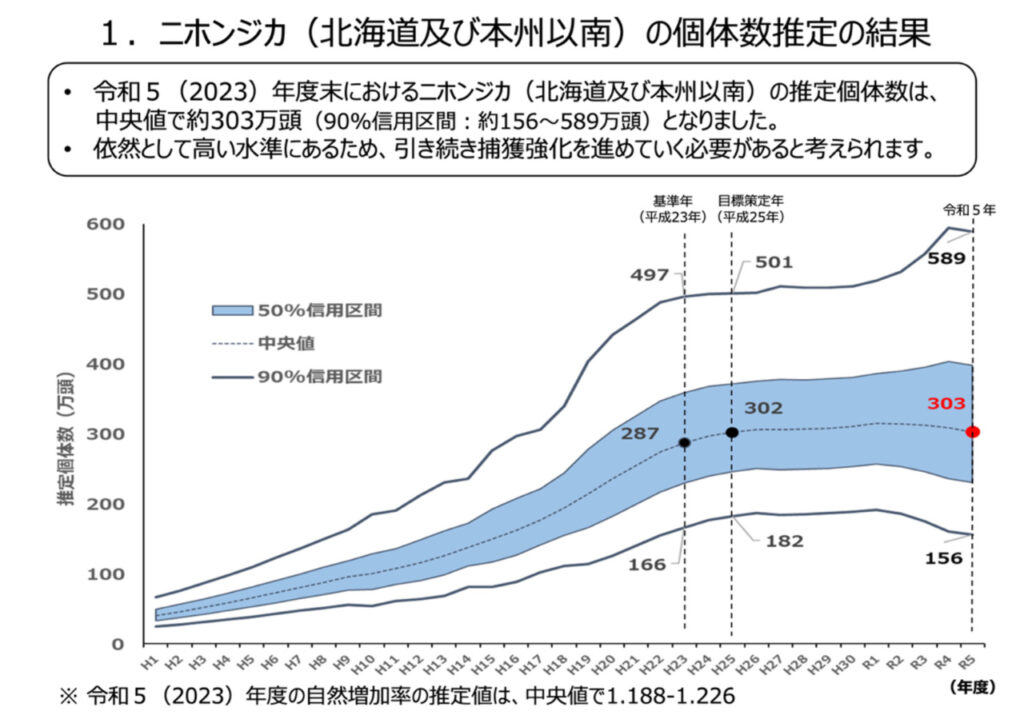
On April 23, the Ministry of the Environment (MOE) released the estimated results of the population of Japanese deer and wild boar at the end of FY2023 (FY2023). The median number of Japanese deer nationwide is approximately 3.03 million, and approximately 2.3 million south of Honshu. The median number of wild boars is estimated to be approximately 1.22 million, and both remain at high levels. The "target of halving the number of wild boars by the end of the next 10 years," which was set for FY 2013, has become difficult to achieve, and it was decided to extend the target to FY 2028. The data presented here will provide indispensable evidence for future wide-area management plans. In order to control the population, further advancement of habitat monitoring and capturing measures is required, combining the expert knowledge of skilled personnel and digital technology from various perspectives.
*Reference link
Results of the Estimation of the Nationwide Population of Japanese Deer and Wild Boar|Enviroment of the Japanese Government