Image by photoAC
Updated by the editorial staff of *Forest Circular Economy* on June 24, 2026, at 6:55 PM JST
Editorial Board, Forest Circular Economy
Forestcircularity-editor
We aim to realize "Vision 2050: Japan Shines, Forest Circular Economy" promoted by the Platinum Forest Industry Initiative. We will disseminate ideas and initiatives to promote biomass chemistry, realize woody and lumbery communities, and encourage innovation in the forestry industry in order to fully utilize forest resources to decarbonize the economy, strengthen economic security, and create local communities.
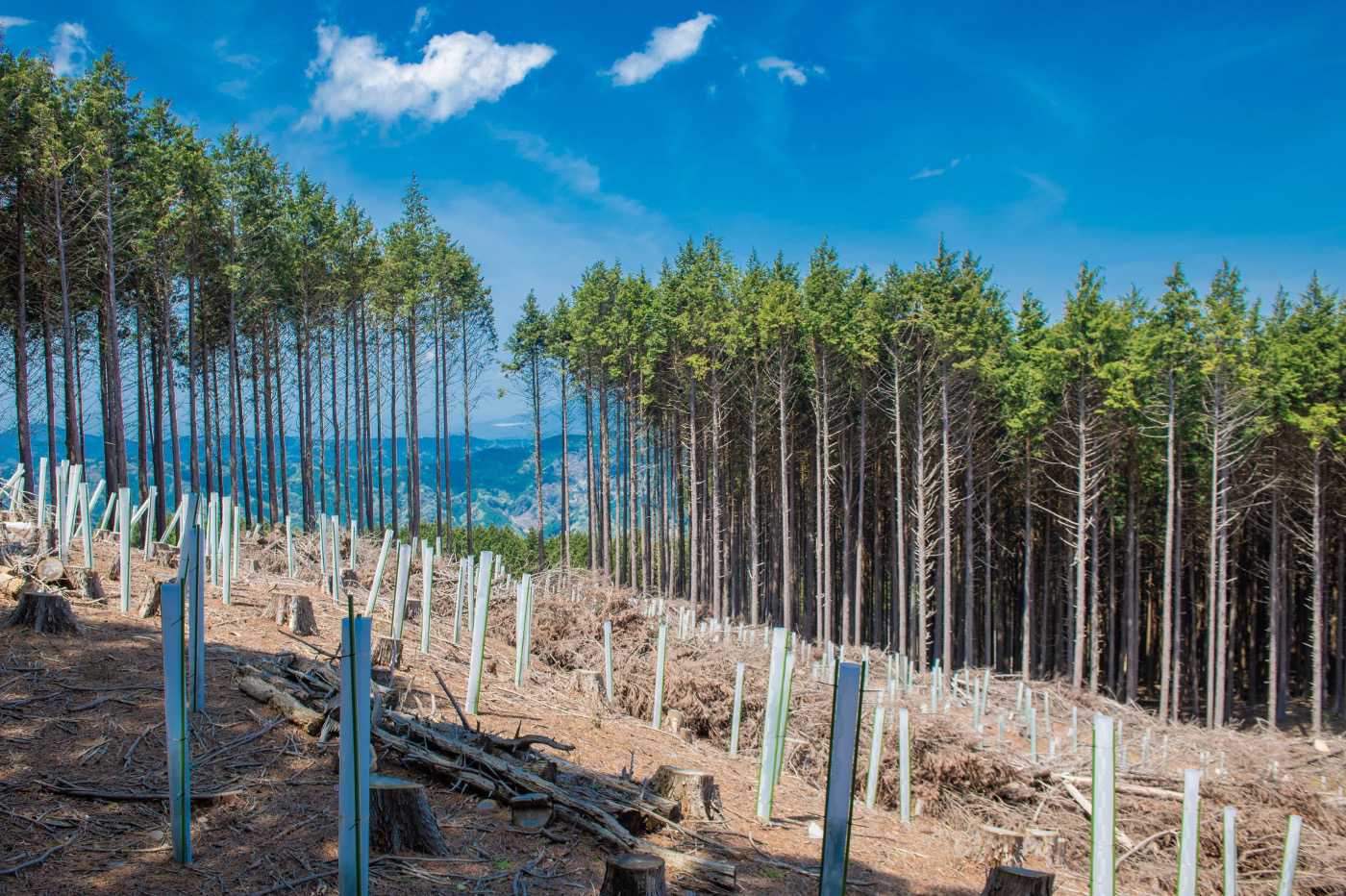
“Reforestation”—which is essential for harnessing the multifaceted functions of forests and establishing sustainable forestry—is not easily achievable by forest owners and forestry businesses alone due to rising afforestation costs and a shortage of workers. The Forestry Agency has announced revisions to the new “Basic Plan for Forests and Forestry” and the “National Forest Plan.” Under the vision of “Toward a ‘Forest Nation and Wooden Cities’ That Will Last a Hundred Years,” it has outlined the future direction of forest and forestry policies, including ensuring reliable reforestation in areas suitable for forestry and accelerating zoning efforts. In response to this policy, a series of agreements have been signed with local governments, private companies, and forest conservation organizations. Pioneering initiatives are underway in various regions, including the restoration of mountain forests that have been neglected due to declining profitability; the revival of traditional forestry in areas that suffered extensive damage from earthquakes and torrential rains; and the creation of mechanisms to encourage participation from a diverse range of companies.
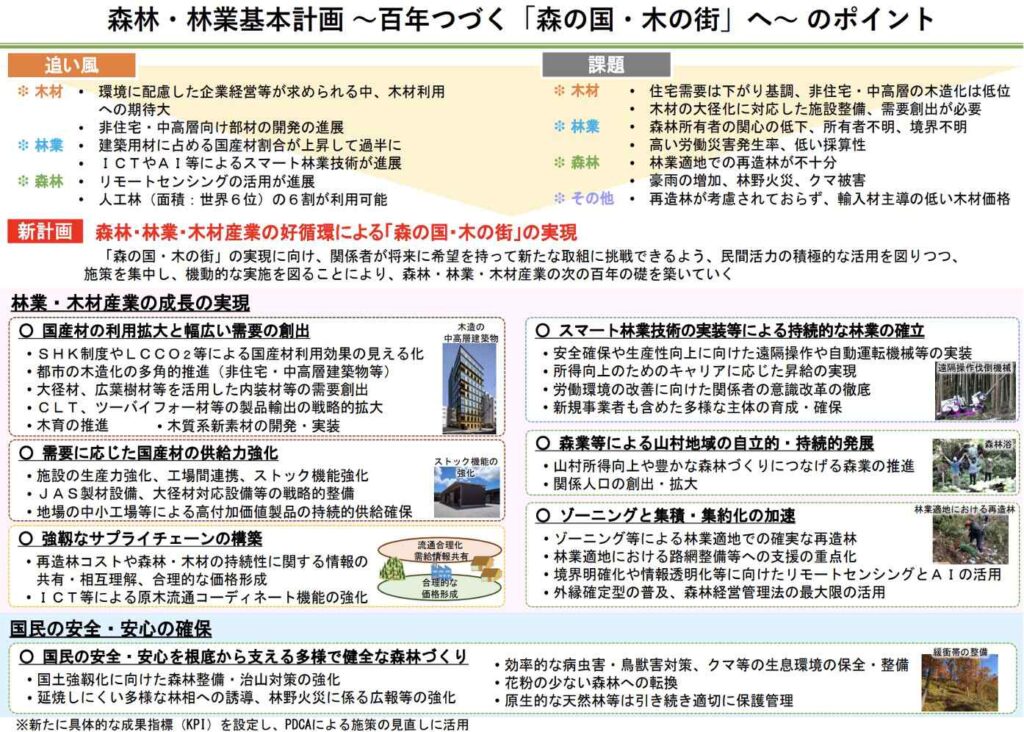
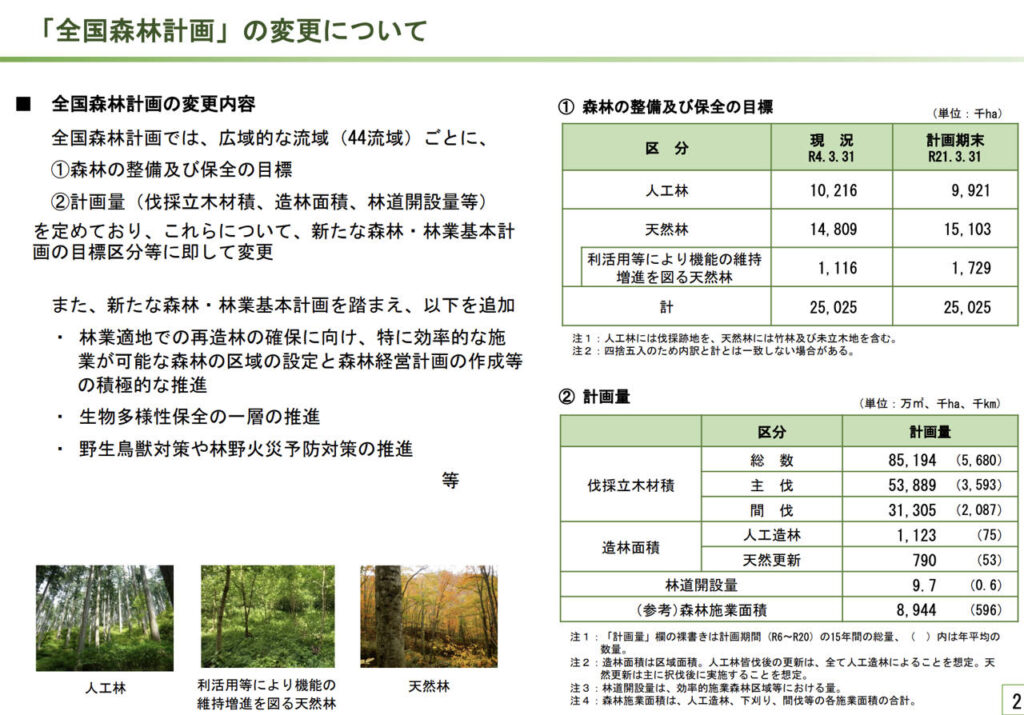
Amendments to the “Basic Plan for Forests and Forestry” and the “National Forest Plan” were approved by the Cabinet on June 5. The new Basic Plan features the subtitle “Toward a Forest Nation and Wooden Cities That Will Last a Century”—a first for the plan—clearly articulating a commitment to preserving Japan’s rich forests and national strength for the next century. This initiative is driven by favorable trends, including growing expectations for the use of wood from the perspectives of environmentally conscious corporate management and well-being. On the other hand, challenges remain, such as difficulties in sustaining forest management due to sluggish timber prices and a shortage of workers, as well as stagnation in reforestation and an increase in wildlife damage. To overcome these challenges, the new plan is built on two pillars: “Growth of the Forestry and Timber Industries” and “Safety and Security in People’s Lives.” In terms of growth, the plan aims to create demand for domestically produced timber, implement “smart forestry,” concentrate resources in areas suitable for forestry, and promote zoning to ensure reliable reforestation; build a supply chain through information sharing, mutual understanding, and rational price formation; and further pursue the sustainable development of mountain villages through forestry. On the safety front, the plan promotes the strengthening of landslide prevention measures, the conservation of biodiversity, and the transition to low-pollen forests. In conjunction with this, the “National Forest Plan,” which serves as a concrete guideline for forest management, has also been revised. In addition to revising various planned targets—such as logging volumes and afforestation areas—new measures have been added, including policies to promote reforestation by designating areas where efficient forest management is possible, as well as strengthened measures to address wildlife and forest fires.
*Reference link
Revisions to the “Basic Plan for Forests and Forestry” and the “National Forest Plan” | Forestry Agency
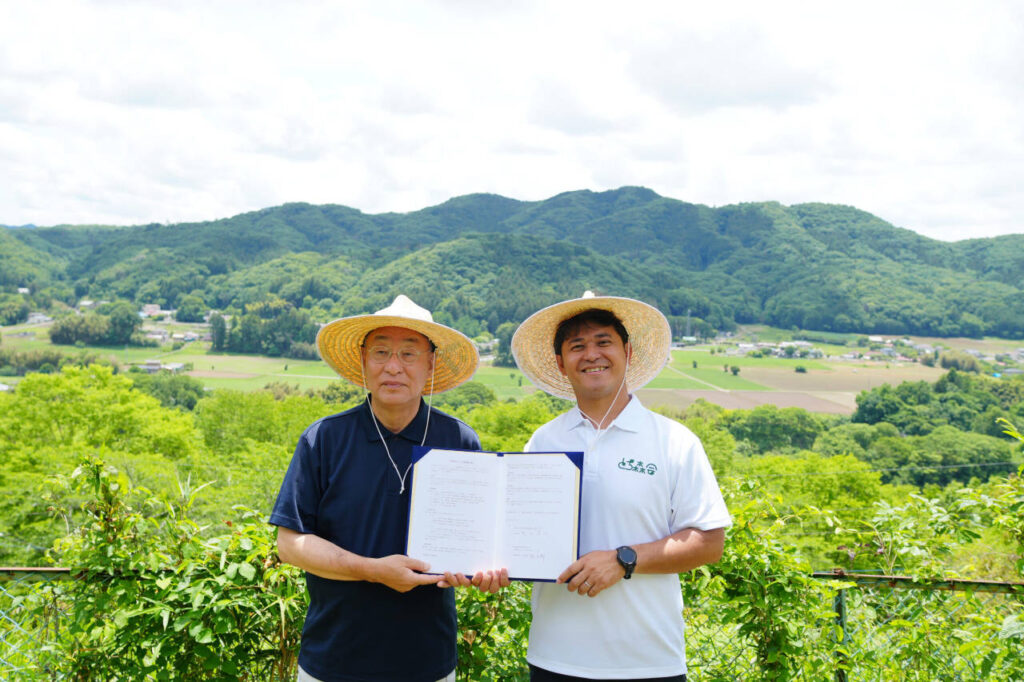
On May 27, Motegi Town in Tochigi Prefecture and the General Incorporated Association “Tochigi Hundred-Year Forest Initiative” signed a “Partnership Agreement for Building Natural Capital.” The association is a general incorporated association established through a partnership between Aoba-gumi and Forest One, both of which are engaged in nature restoration and forest management. With corporate support, it operates a unique system based on long-term contracts spanning over 30 years, in which it comprehensively handles “logging, reforestation, and forest cultivation” without imposing any financial burden on forest owners. Based on the agreement, the “Mogi Town Natural Capital Vision” will be formulated, and work will begin on consolidating and restoring mountain forests that have fallen into disrepair. Furthermore, the association plans to aim for designation as a “Forest Management Support Corporation” under the revised Forest Management Act, and will proceed with surveys and the acquisition of forests with unknown owners. The deterioration of mountain forests due to factors such as low timber prices is a serious issue from the perspectives of disaster prevention and environmental conservation, and the importance of proper maintenance and reliable reforestation is extremely high. In addition to ensuring a sustainable supply of timber through reliable reforestation and contributing to carbon neutrality, this collaboration is characterized by its focus on the rich satoyama landscapes—home to rare species such as the Japanese sparrowhawk and the giant water bug, whose populations are declining sharply nationwide— including the creation of wetlands and grasslands (Nature Positive), and revitalizing the local economy through nature restoration.
*Reference link
We Have Signed a “Partnership Agreement for Building Natural Capital” with Mogi Town | Aoba-gumi Co., Ltd.
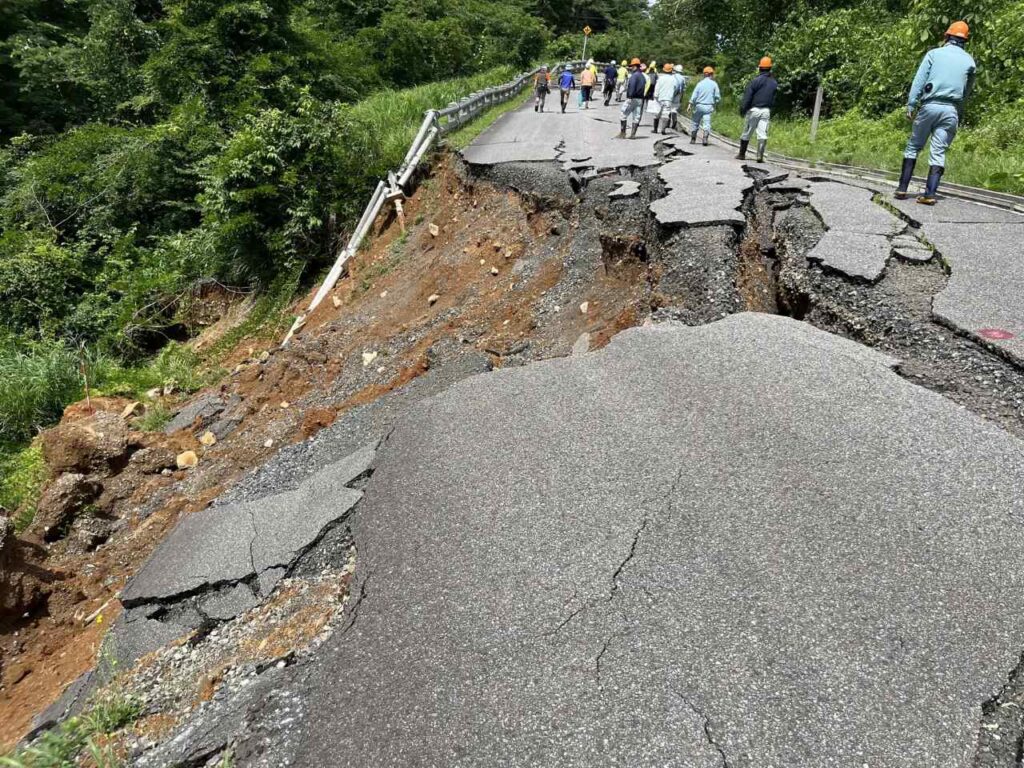
As a result of the 2024 Noto Peninsula earthquake and torrential rains, Noto’s forest environment suffered unprecedented damage, including more than 100 instances of mountainside collapses and sediment runoff, more than 2,000 instances of damage to forest roads and other infrastructure, and damage to more than 30 timber processing and distribution facilities, severely undermining the production infrastructure itself. To support reforestation in the disaster-affected areas and the revitalization of local communities, Wajima City, the Noto Forestry Cooperative, and the General Incorporated Association “more trees” signed the “Noto: Co-Creating Forests for Our Hometown” agreement on June 3. In addition to promoting the sustainable use of “Ate” (Noto hinoki)—a forest resource that has long supported the region’s traditional culture and industries—and fostering diverse forest management, the initiative aims to enhance the value of locally sourced timber, attract new residents with ties to the region, and secure and train the personnel necessary to implement these efforts. Leveraging the expertise of “more trees”—led by architect Kengo Kuma, who also serves as a reconstruction advisor for Wajima City—and in collaboration with the existing “Creative Reconstruction Platform (ATE-NET),” the initiative will encourage participation from various companies and organizations moving forward. The initiative aims to rebuild the foundation for sustainably passing on the reforestation of disaster-stricken forests and the livelihoods of local residents to the next generation, thereby achieving the creative reconstruction of Noto.
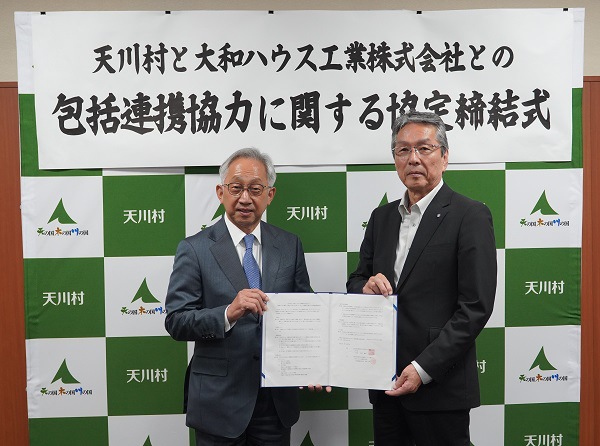
Amakawa Village in Nara Prefecture and Daiwa House Industry have signed a comprehensive partnership agreement to promote the “development of mountain villages where people can continue to live in harmony with the forest.” Amagawa Village is a lush mountain village where forests cover 97% of its total area. However, it has faced challenges such as forest owners neglecting management and difficulties in sustaining reforestation efforts due to declining profitability resulting from falling timber prices and shrinking demand. The Daiwa House Group has set a goal of “zero deforestation” in its timber procurement across all business operations by 2055. This partnership was formed because both parties share the common vision of passing on forests as a local resource to future generations. In addition to their existing efforts—such as expanding the use of locally sourced timber through woody biomass and other means—the two organizations aim to create living environments that encourage future relocation and generate opportunities for people with ties to the region, targeting the younger generation interested in careers in forestry. Forest degradation not only reduces the contribution to decarbonization but also poses serious challenges in disaster prevention, such as increasing the risk of landslides and other disasters; therefore, restoring the forest cycle through appropriate logging and reforestation is essential.
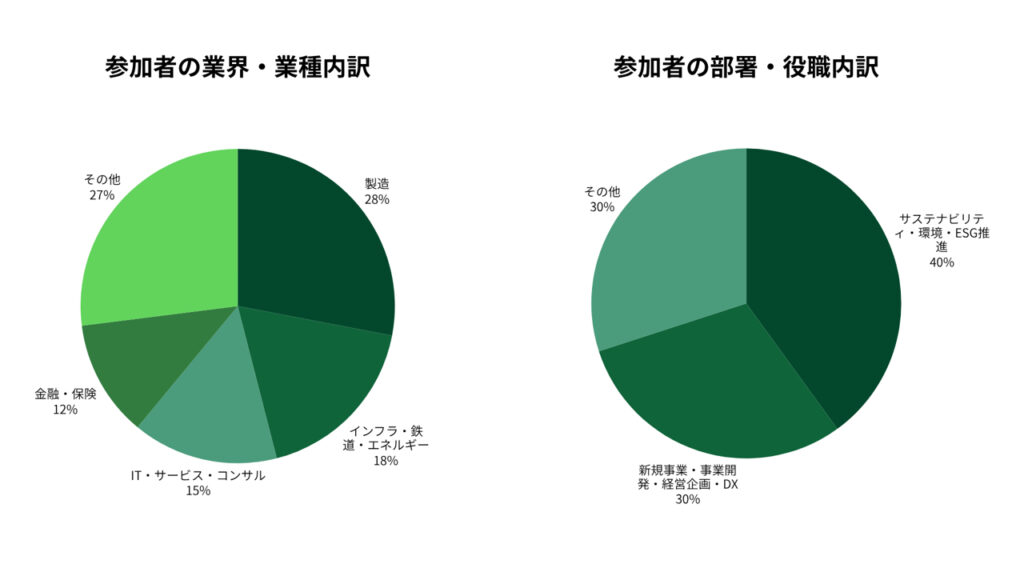
Somanobase, an organization dedicated to creating forests that are less prone to landslides, has released a report on the “Forest Action Forum 2026” held in Otemachi, Tokyo, in March. With the aim of shifting corporate engagement with forests from “CSR focused solely on conservation” to “CSV (Creating Shared Value) that generates business value,” the event drew over 100 participants, primarily practitioners from non-forestry sectors. At the forum, four companies—including those from industries seemingly unrelated to forestry, such as railways, construction, and IT, as well as forestry companies—presented on the cutting edge of forest utilization. Additionally, booth exhibitions and workshops were held by companies providing support for TNFD disclosures, “Nature-Harmonious Site” certification, and the generation of J-Credits. To ensure sustainable reforestation, the participation of diverse stakeholders beyond the traditional framework of the forestry industry is essential. Rather than limiting themselves to traditional corporate social responsibility activities that end with tree planting, companies are expected to redefine forests as clear business targets and integrate them into the economic cycle. This is expected to create new value through collaboration with other industries, which in turn will serve as a solid foundation for sustaining “reliable reforestation.”