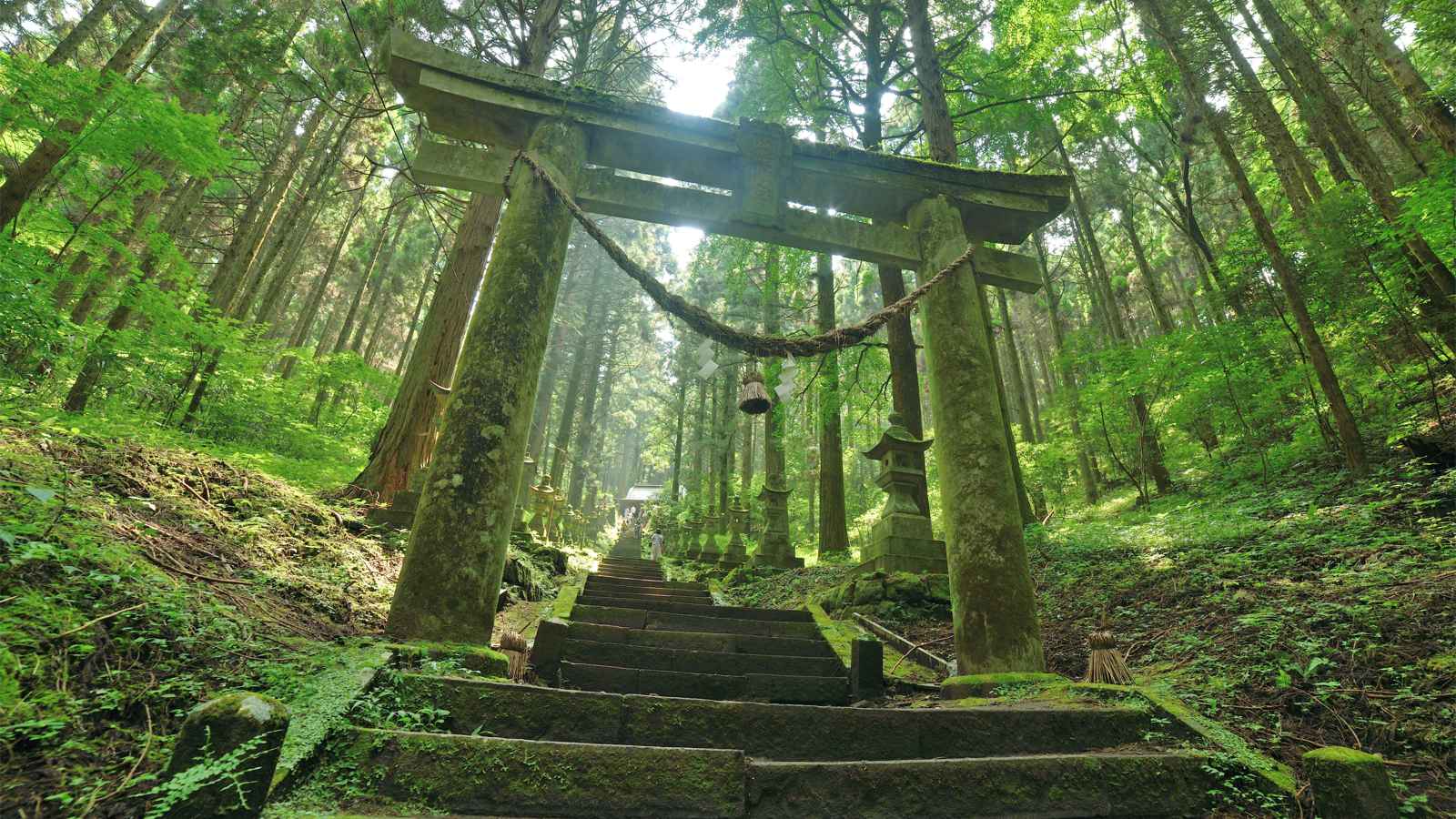
Image by Adobe Stock
[The Priest’s View] How Should the Value of Corporate Green Spaces Be Communicated? — Natural Capital Management in the TNFD Era, Viewed from the Perspective of Sacred Groves
Updated by Kazuhiro Aoki on July 1, 2026, at 11:02 a.m. JST
Kazuhiro AOKI
Representative Director, WSense Corporation / DELTA SENSE Production Committee
Representative Director, WSense Corporation / DELTA SENSE Production Committee Born in Aizuwakamatsu City, Fukushima Prefecture. From a family background of flower arrangement, tea ceremony, and Noh theater, he has been exposed to Japanese culture from an early age. His interest in wood began when he witnessed a shrine carpenter "sharpening a plane" and became aware of the depth of the craft. Currently, based on the knowledge he gained as a Shinto priest, he is promoting initiatives that lead to the public interest. He is a member of the Tokyo Junior Chamber of Commerce, holds a graduate degree and an MBA (Master of Business Administration), and has been a Boy Scout and a soccer player since he was 4 years old.DELTA SENSE Official HP WSense Corporation
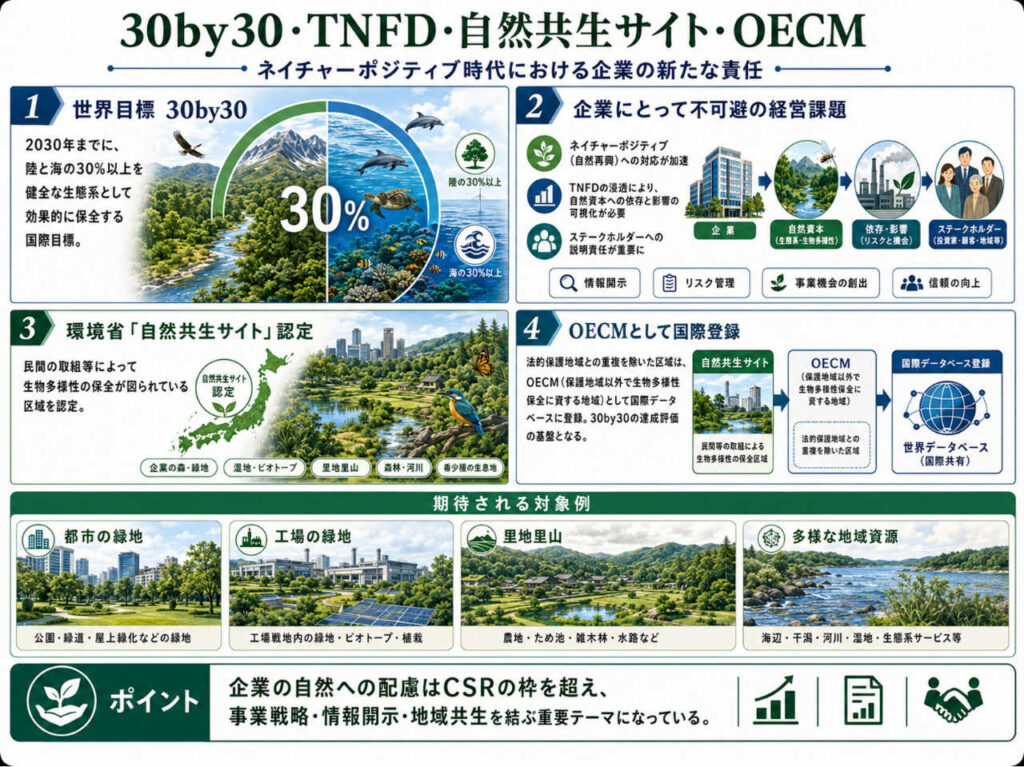
The “30by30” goal—which aims to effectively conserve at least 30% of land and marine areas as healthy ecosystems by 2030—has become a global agenda, and addressing nature-positive initiatives has become an unavoidable and top-priority management issue for companies. In particular, as the TNFD (Task Force on Nature-related Financial Disclosures) framework rapidly gains traction, companies now bear a heavy responsibility to accurately visualize the impact their business activities have on natural capital—as well as the benefits they receive from nature—and to explain these to their stakeholders.
Amid this historic trend, Japan’s Ministry of the Environment is promoting a groundbreaking initiative to designate “areas where biodiversity conservation is being achieved through private-sector initiatives and other efforts” as “Nature Coexistence Sites.” Among the areas that have received this designation, those that do not overlap with legally protected areas are registered in an international database as “OECMs (Other Effective Area-based Conservation Measures: areas outside protected areas that contribute to biodiversity conservation),” serving as the foundation for evaluating progress toward the global 30x30 target. In Japan, a diverse range of locations—including green spaces in cities and industrial areas, as well as rural landscapes and satoyama—are expected to qualify as OECMs.
Many forward-thinking companies have already joined this framework.
For example, NEC’s Abiko Plant (Yotsuike), the “Kimitsu Green Center” developed by Uchiyama Green Space Construction, “Shira-be Forest” located within Takenaka Corporation’s Technical Research Institute, and Shimizu Corporation’s “Yatsubori Shimizu Yatsu”—a diverse range of green spaces owned and managed by corporations are being certified by the national government one after another. This signifies that spaces previously maintained by companies as part of “factory greening” or “employee welfare” programs are now being reevaluated as the forefront of international natural capital conservation.
However, sustainability managers and corporate planning departments at many companies are facing an extremely high “barrier” here. They are grappling with a serious dilemma: “While being certified under the OECM is an honor, how can we incorporate this into our management as part of the company’s financial and qualitative value, and how can we explain it rationally to investors?” In many organizations, even after certification, the maintenance costs for green spaces are still treated as a “cost center,” and the benefits are discussed only in emotional terms such as “CSR activities” or “social contribution.” The limitations of the modern capitalist approach are already becoming apparent in the attempt to measure nature’s “invisible value” solely through quantitative economic indicators and short-term ROI (return on investment).
The key to breaking through this impasse lies not in the latest environmental frameworks imported from the West, but rather in “a unique system” that the Japanese have nurtured within their local communities for over a thousand years. That system is the “Chinju no Mori” (sacred forests).
From the perspective of a Shinto priest, the guardian forests are nothing less than the “ultimate OECM” still existing in Japan. Many of the approximately 80,000 shrines scattered throughout Japan are surrounded by lush forests. What is important is that these forests have not been forcibly protected by the state as legally designated absolute protected areas, such as national parks. Rather, they are spaces where local communities (private citizens) have voluntarily established and maintained rules over the course of a long history. Why have these forests survived to the present day without being swept away by the tide of modern development or subjected to indiscriminate logging?
This is because the ancient Japanese defined forests not merely as “sources of timber (resources),” but as “sacred sanctuaries where the gods dwell.” From the Shinto perspective, forests are perceived, first and foremost, as “places,” “vessels of relationships,” and “boundaries where an invisible order resides.” It was believed that the gods descended upon mountains, forests, and trees, so people stretched shimenawa (sacred straw ropes) and erected torii gates to draw a clear line, declaring, “Beyond this point lies an inviolable realm where human economic rationality does not apply.”
Viewed from a different perspective, this process of “sanctification” was an extremely sophisticated design concept that made nature’s “invisible value” visible and embedded it in the community as a powerful social norm. While the sacred groves are governed by strict taboos—such as the prohibition against taking even a single fallen leaf or twig—they have also served as venues for local community festivals, playgrounds for children, and, at times, evacuation sites during disasters.
The root cause of the problem modern companies face—namely, the inability to articulate the value of green spaces—lies in the fact that forests are viewed solely through a reductionist framework that treats them as mere “resources” or “objects of environmental protection.” Debates framed by simple binary oppositions—such as “log or preserve” or “profit versus public interest”—strip away the inherent complexity of forests. Simply reducing the value of nature to binary figures—such as area (hectares) or carbon credits (tons)—causes the true value of forests—including their complex ecosystems and the spiritual enrichment they provide to humans—to be lost.
What is required here is not to treat Shinto’s ancient Japanese sensibility of “revering and respecting invisible values” as mere philosophy or a moral slogan, but rather to meticulously translate it into a “design philosophy for decision-making” from the perspective of business administration (MBA).
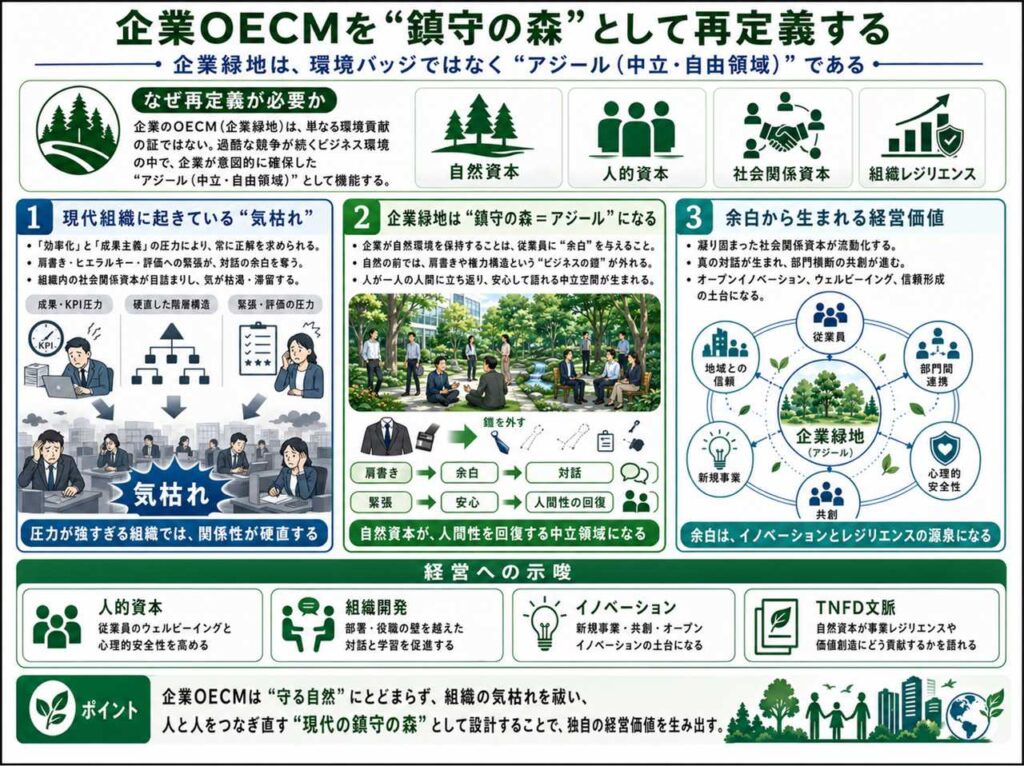
Let’s redefine corporate OECM (Organizational Ecological Conservation Management) as the “sacred forest” of modern business. It is not merely a badge of environmental contribution, but rather an “asylum” (a neutral, free zone) that companies have deliberately secured of their own volition on the fiercely competitive battlefield of business.
Modern organizations are bound by an obsession with “efficiency” and “performance-based evaluation,” and under constant pressure to provide the “right answer,” they are experiencing “kegare” (a state in which one’s energy is depleted and stagnant). In this context, when companies preserve a rich natural environment on their premises or in surrounding areas, they are essentially providing “breathing room” for employees to shed the “armor of business”—such as job titles and hierarchy—and return to being simply human beings. In the face of overwhelming natural capital, humanity’s insignificant power structures are rendered null and void. It is precisely this breathing room that serves as a resilient foundation for liquefying the social capital that has become clogged and rigid within organizations, thereby fostering genuine dialogue and open innovation. = To be continued (Kazuhiro Aoki, Representative Director, WSense Co., Ltd. / DELTA SENSE Production Committee)