Updated by the Editorial Department of *Forest Circular Economy* on July 13, 2026, at 11:43 a.m. JST
Editorial Board, Forest Circular Economy
Forestcircularity-editor
We aim to realize "Vision 2050: Japan Shines, Forest Circular Economy" promoted by the Platinum Forest Industry Initiative. We will disseminate ideas and initiatives to promote biomass chemistry, realize woody and lumbery communities, and encourage innovation in the forestry industry in order to fully utilize forest resources to decarbonize the economy, strengthen economic security, and create local communities.
Driven by the pursuit of a decarbonized society, growing interest in well-being, and strengthened public-private partnerships spurred by the “Act on the Promotion of Wooden Construction in Cities,” demand for wood-based construction in offices, public facilities, and commercial buildings is expanding. However, conventional wood-based construction methods and products have faced various hurdles, including ensuring durability, the specialized skills required for installation, cost, and the difficulty of relocating or reusing structures after construction. To overcome these challenges, the private sector has been introducing a series of innovations—such as the development of highly durable flooring materials using locally sourced wood, space design concepts centered on furniture, and modular and magnetic systems. With the call for entries for the “Wood Design Award 2026” now open, wood-based spaces are moving into a phase where they are creating new value while expanding the range of options for their uses and implementation methods.
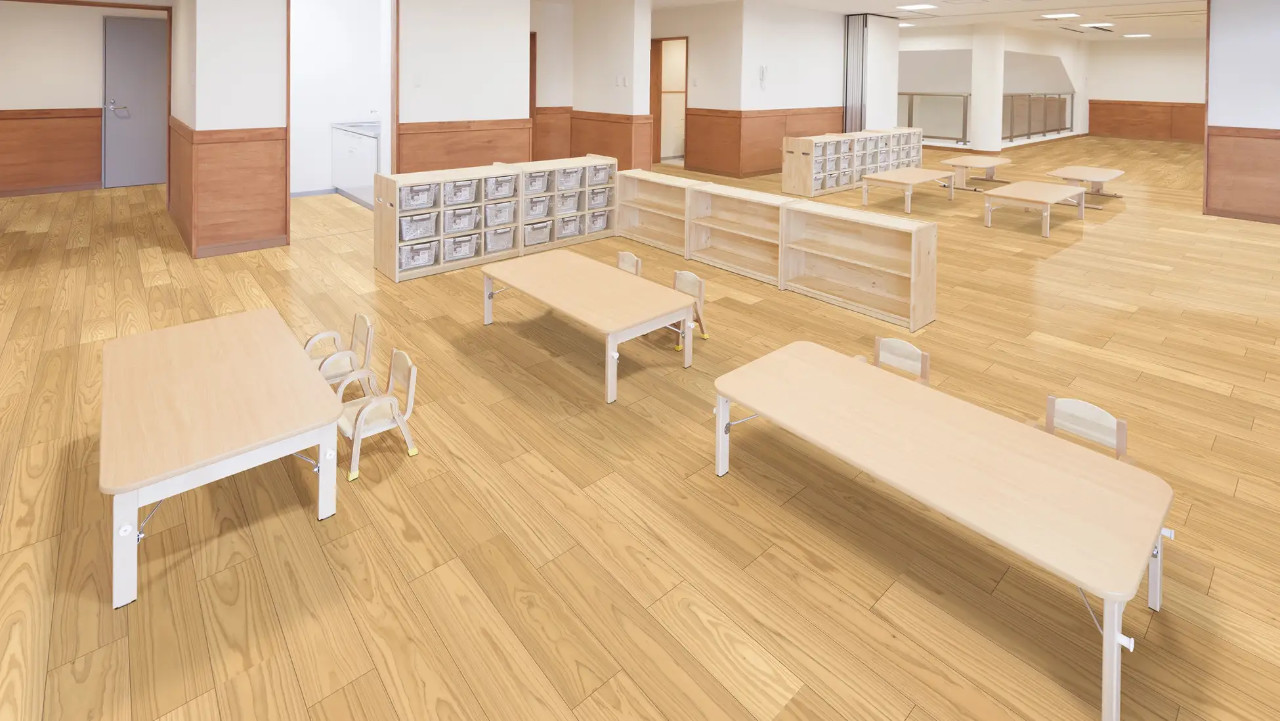
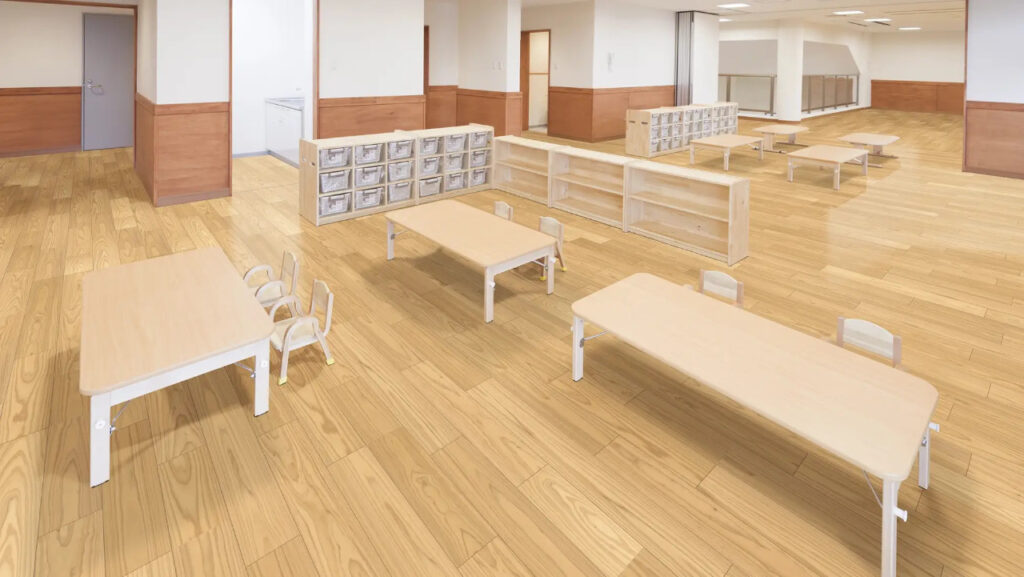
Noda, a comprehensive wood-based building materials manufacturer, has begun offering “Regional Wood-Compatible Flooring (for Light Foot Traffic)” to meet the demand for domestic and regional wood in public facilities and local projects. The product utilizes a hybrid plywood substrate that combines hinoki cypress and cedar from Shizuoka Prefecture. By subjecting 50–60% of the regional timber to a pressure-strengthening treatment and integrating the company’s proven coating technology, the product achieves both high durability and ease of installation, making it suitable for light-foot traffic applications where high foot traffic can lead to scratches and stains. The product is available in both sawn board and veneer types, and customers can select surface materials from regional timber sourced from across Japan. The company is promoting initiatives to support a sustainable cycle of forest resources, such as signing the “Shizuoka Prefecture Timber Utilization Promotion Agreement” with Shizuoka Prefecture in March. Going forward, the company will also strengthen its proposals for using regional timber in exterior construction through collaboration with group companies. By aligning with the “local production for local consumption” timber utilization policies promoted by local governments, the company will support the sustainable circulation of forest resources while promoting the creation of wooden spaces tailored to regional needs.
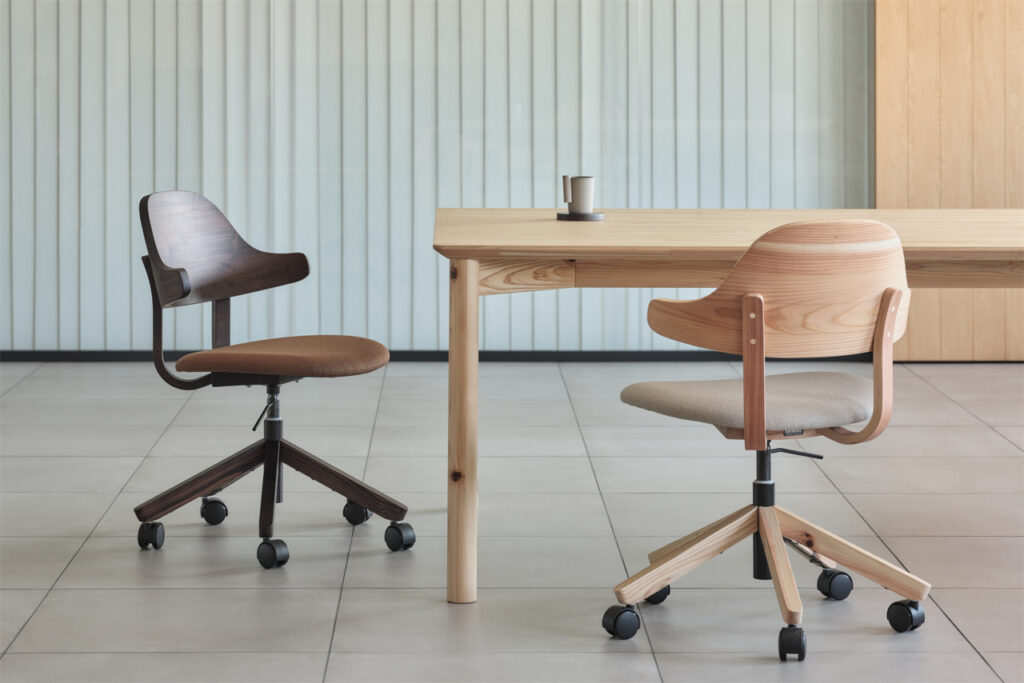
Karimoku Furniture, a manufacturer of wooden furniture, has announced “MORIWA,” a new collection made primarily from Japanese cedar. The collection was developed through a collaboration among three companies—including architect Keiji Ashizawa—and originated from a forest management project in Okutama Town led by the Nomura Real Estate Group. It utilizes small-diameter, knotty lumber—which was previously burned as biomass fuel—as furniture material. The collection was brought to market by combining softwood—which offers softness and lightness—with hardwood in areas requiring greater strength. Furthermore, the development process adopted “inclusive design,” involving people with disabilities and wheelchair users, to pursue beauty and usability for everyone. The collection is primarily targeted at contract projects—such as offices and commercial facilities—where the use of locally sourced wood is sought. By using furniture as a starting point to expand the use of regional timber nationwide, the initiative aims to create rich, wood-filled spaces in places where people gather and contribute to the sustainable cycle of forests.
*Reference link
Karimoku Furniture Unveils New “MORIWA” Collection | Karimoku Furniture Co., Ltd.
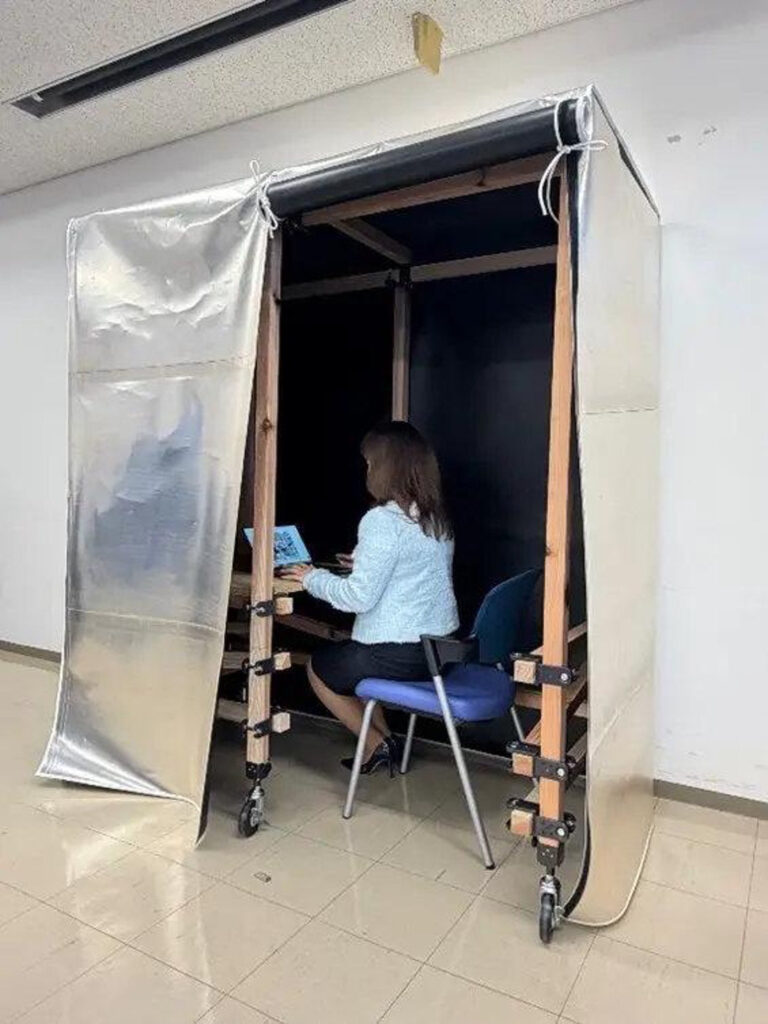
Osaka Gas donated two “Tsunagi” wooden spatial units—which make effective use of the outer membrane used in the “Gas Pavilion: Obake Wonderland” at the Osaka-Kansai Expo—to the Kita Ward Office in Osaka City. “Tsunagi” is an architectural unit jointly developed by Nikken Sekkei and Sanshin Metal Industries, characterized by a hybrid structure that combines the warmth of wood with the strength of metal. Using wood and specialized clamps, the units can be assembled for a wide range of purposes and in various sizes; they are not only suitable for events but can also be widely utilized as private spaces—such as medical booths or shelters—during disasters and emergencies. The side walls and ceiling membranes utilize “SPACECOOL,” a radiative cooling material developed by Osaka Gas that can lower the temperature below the outside air temperature. This can be considered a symbolic example of upcycling the Expo’s legacy into wooden units that can be utilized in everyday public spaces.
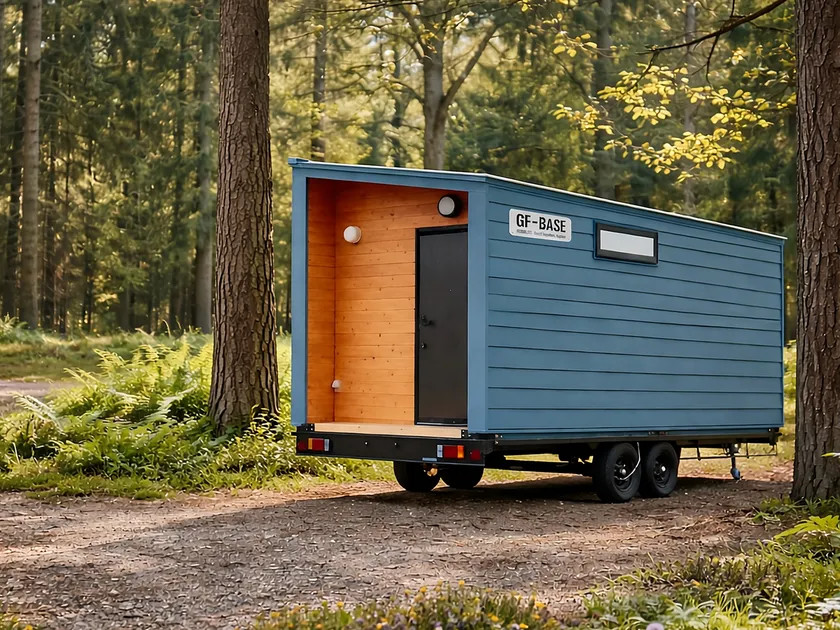
Yamagataya Industries, a distributor of lumber and construction materials, has partnered with Taihei Housing to develop “GF-BASE,” a trailer-style house that makes extensive use of timber from Gifu Prefecture. Based on the concept of “bringing the forest experience anywhere,” the design fuses a wooden interior with mobility. It overcomes common issues with traditional trailer homes—such as “artificial-looking interiors” and “incompatibility with Japan’s humid climate”—by utilizing solid wood and plastered wooden walls for humidity control and odor elimination, combined with specifications equivalent to thermal insulation performance grade 6. Leveraging the advantages of being classified as a vehicle—which makes it easy to move and reuse—it accommodates a variety of uses, including offices, lodging, and retail spaces. Furthermore, since it can be installed in a matter of hours to days compared to conventional temporary housing, it can also function as a disaster relief hub in emergencies. By bringing the warmth of real wood to areas where construction is difficult, this product can be considered a solution that expands the possibilities of wood-based spaces.
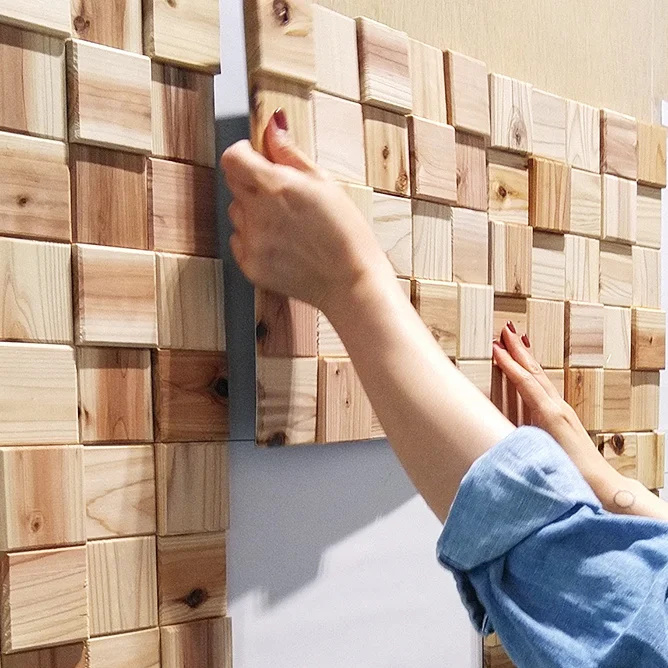
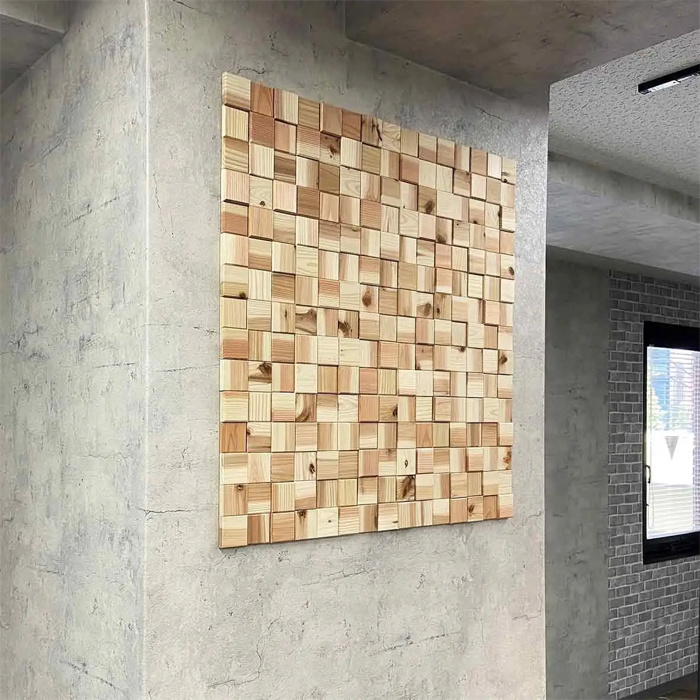
Mosaic Style, a manufacturer of magnetic art panels for walls, is holding a special exhibition of its “Natural Wood Magnet Squares”—which can be freely attached and removed with magnets—from July 1 to 14 at “MOCTION,” a hub for the utilization of domestically sourced wood located in Shinjuku, Tokyo. Traditionally, installing wood paneling on walls has faced challenges such as high installation costs, lengthy construction periods, and the difficulty of restoring walls to their original condition, making it difficult to implement in rental offices and temporary stores. The company has adopted a unique “magnetic installation method” in which steel sheets are secured to the wall with a staple gun, and the panels are then attached to them using magnets. This method eliminates concerns about restoring the space to its original condition thanks to its unparalleled ease of use, and it flexibly accommodates partial replacements as well as reuse—such as peeling the panels off during a move to take them to the next location. It is expected to serve as an innovation that makes it easy to create wood-based spaces that incorporate the warmth of natural wood into a wide variety of buildings.
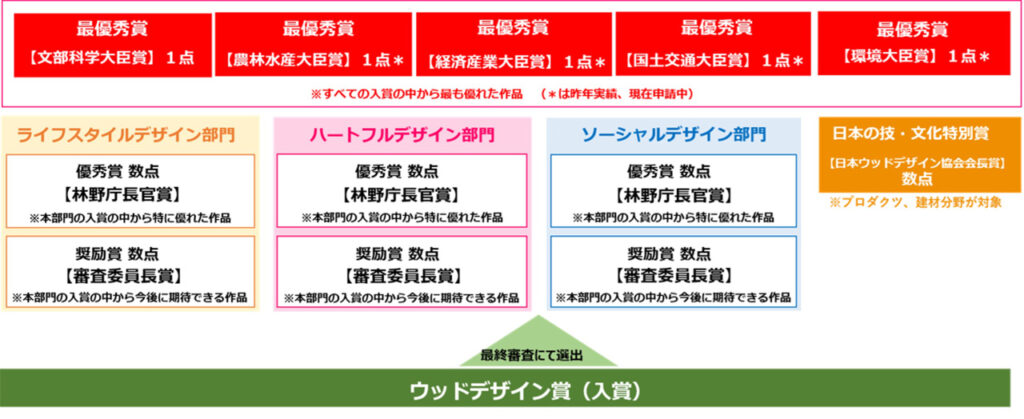
The Japan Wood Design Association, a general incorporated association, is accepting entries for the “Wood Design Award 2026” until July 31. The award recognizes excellence in five categories: architecture and spaces using wood; technology and building materials; products; communication; and research and studies. By leveraging the power of design to redefine the appeal and value of wood, the association aims to solve social issues and promote enriched lifestyles, playing a key role in driving domestic trends in the use of wood. Starting this year, in addition to the four existing Ministerial Awards (Ministry of Agriculture, Forestry and Fisheries; Ministry of Economy, Trade and Industry; Ministry of Land, Infrastructure, Transport and Tourism; and Ministry of the Environment), it has been decided to introduce a new “Minister of Education, Culture, Sports, Science and Technology Award.” This will strengthen the criteria for evaluating the use of wood across an even broader range of fields. The initiative is expected to expand the market through publicity for the winning entries and business matching, while also fostering a broader societal understanding of forest resource circulation and wood utilization, and further improving the quality of wood-based spaces that enrich daily life.

In recent years, against the backdrop of efforts to achieve a decarbonized society, the expansion of ESG investing, and growing interest in well-being, attention has been rapidly increasing toward wood-frame offices and commercial facilities. At the same time, information regarding how the adoption of wood construction in non-residential buildings is actually progressing—including leading examples, technologies, and regulatory frameworks—is scattered across various media, making it difficult to gain a systematic understanding. In this 23-page document, the “Platinum Forest Industry Initiative: Wooden City Subcommittee” of the Platinum Vision Network (a general incorporated association) has compiled four leading case studies of wooden offices and commercial facilities, along with the concepts, technologies, and institutional trends related to wooden cities. Please use this document as a resource for planning and proposing wood-frame buildings, gathering information, and staying abreast of the latest trends in non-residential wood-frame construction.Read More