


The Bamboo Chopstick Project: Taking on the Challenge with Bamboo and Urushi Lacquer Sourced from Kyoto
Updated by Masako Danura on November 20, 2026, at 7:04 p.m. JST
Masako DANNOURA
Kyoto University
Associate Professor, Department of Forest Science, Graduate School of Agricultural Science, Kyoto University / Specializes in forest ecology and forest carbon cycles. Vice President of the Japanese Society for Root Research. I am investigating how carbon is taken up from the atmosphere by trees, sequestered, and released. I am also interested in traditional crafts such as lacquerware, bamboo, and washi paper; recently, while conducting ecological surveys of raw materials with my students, I have been amazed by the wisdom of our ancestors.
The Kyoto University North Cafeteria has introduced 3,000 pairs of bamboo chopsticks. Launched in 2023, this project aims to reduce the use of plastic—a petroleum-based resource—and promote the use of local wood resources by introducing chopsticks made from Kyoto-grown bamboo and coated with Kyoto-produced lacquer.
I specialize in forest science and have conducted field surveys to study the ecological functions of forests and the carbon cycle. Through this work, I have experienced firsthand the threat of global warming in northern forests and witnessed the accumulation of plastic waste in mangrove forests, which has made me acutely aware of the significant impact human activities have on the global environment. This experience led me to strongly believe that concrete action is necessary, so I decided to start close to home by launching an initiative to introduce bamboo chopsticks in the university cafeteria.
Last year, we introduced bamboo chopsticks finished with a “fuki-urushi” (also known as “suri-urushi”) coating using Tamba lacquer. The introduction of these bamboo chopsticks not only helps reduce carbon dioxide emissions by shifting from petroleum-based resources to wood and bamboo products, but also helps curb the generation of harmful microplastics. At the same time, we hope this initiative will address local issues such as abandoned bamboo groves and support traditional crafts like lacquer production.
There are many convenient plastic materials all around us. Plastics are polymer compounds primarily made from petroleum and are also known as synthetic resins. They are lightweight and easy to process, making them suitable for a wide range of applications, including industrial products and textiles. As production volumes increase, not only does the amount of plastic waste grow exponentially, but the plastic also breaks down into tiny pieces after disposal or during the cleaning process, circulating throughout our environment. These tiny plastic particles are called microplastics and nanoplastics; they do not decompose and have the ability to adsorb various substances, including harmful ones. Plastic waste breaks down into these tiny particles not only in the ocean and due to ultraviolet radiation but has also been detected in washing machines after washing synthetic fibers and in dishwashers after washing plastic tableware.
Reports indicate that microplastics are not only increasing in the ocean but are also being detected on land and even on mountain peaks; furthermore, they are dispersing into the atmosphere and have been found in the human body. The plastic problem is an urgent environmental issue, and regulations banning the distribution of single-use plastics have already taken effect in Europe. However, in Japan, public awareness remains low, and the reality is that plastic products are still widely used due to their strength and cost-effectiveness. Therefore, we believed that we could begin raising public awareness by starting with something as basic as chopsticks—which come into direct contact with the mouth—and gradually switching to products made of wood or bamboo.
In the old days, every household had bamboo planted on their property, which they used for rain gutters and as water pipes (bamboo conduits) to channel water to rice paddies and vegetable gardens. As evidenced by the abundance of kanji characters containing the “bamboo” radical—such as those for bamboo shoots as food, clotheslines, brooms, and baskets—there were undoubtedly countless ways to use it. With the rise of plastic products today, bamboo is increasingly being left to grow unchecked. As you know, bamboo consists of clones connected by underground rhizomes and grows extremely vigorously. As bamboo groves expand, the original forests are declining, leading to a loss of ecological diversity. It is well known that using wood and bamboo—which absorb carbon dioxide—is crucial as a key strategy in combating global warming. In this context, bamboo production is thriving in Kyoto, and given the issue of neglected bamboo groves, it is a natural resource that must be utilized.
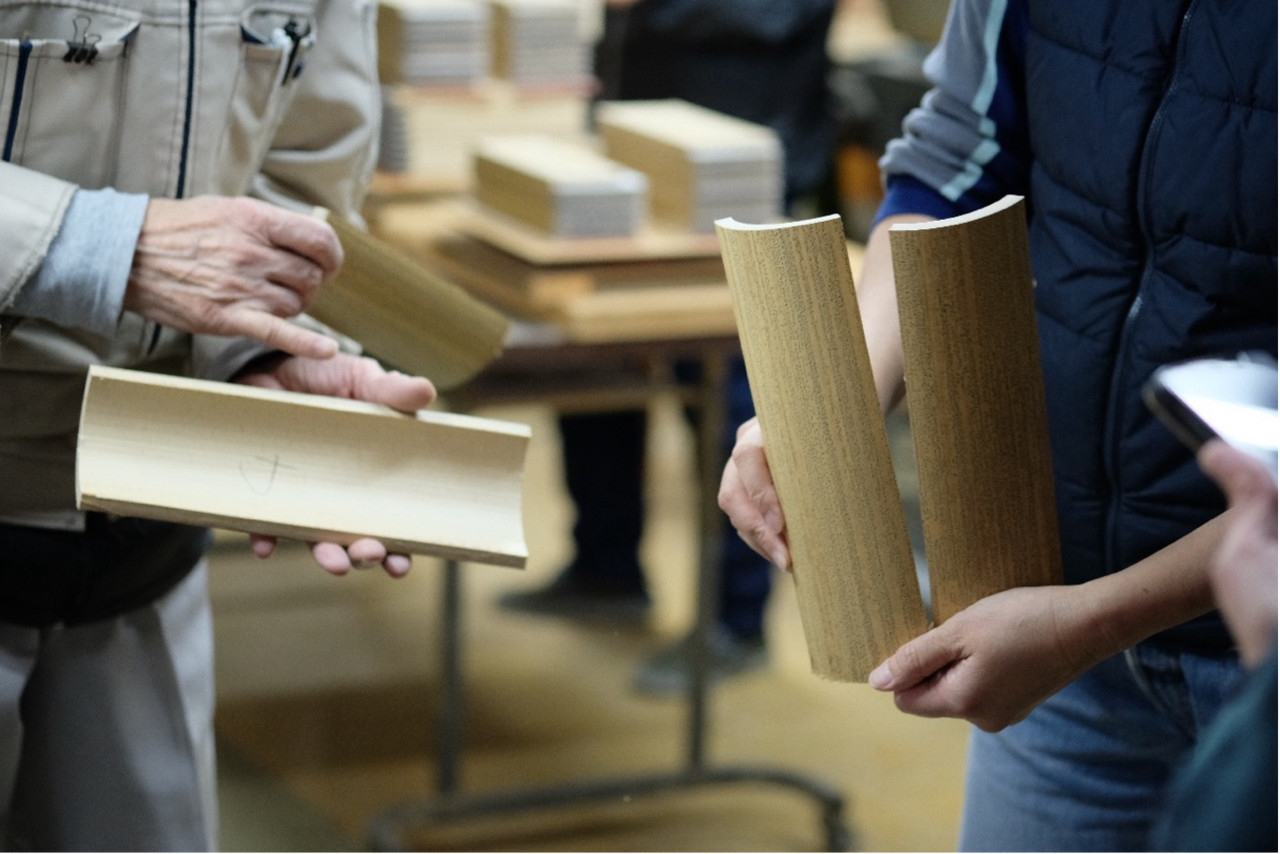
For this project, we are introducing bamboo chopsticks with the cooperation of Takano Chikuko, a company that crafts tea ceremony utensils using bamboo from Kyoto. A set of chopsticks consists of two pieces, but in the bamboo chopstick-making process, two pieces taken from adjacent sections of the bamboo are always paired together and, through processes such as carving and bending, are transformed into a pair of bamboo chopsticks. Since bamboo chopsticks are made from a natural material, they may bend slightly with use; however, because the two pieces come from adjacent sections of the same bamboo, they will bend to the same degree, allowing them to be used without issue. However, if one of the two chopsticks has a defect—such as an irregular color—both must be discarded.
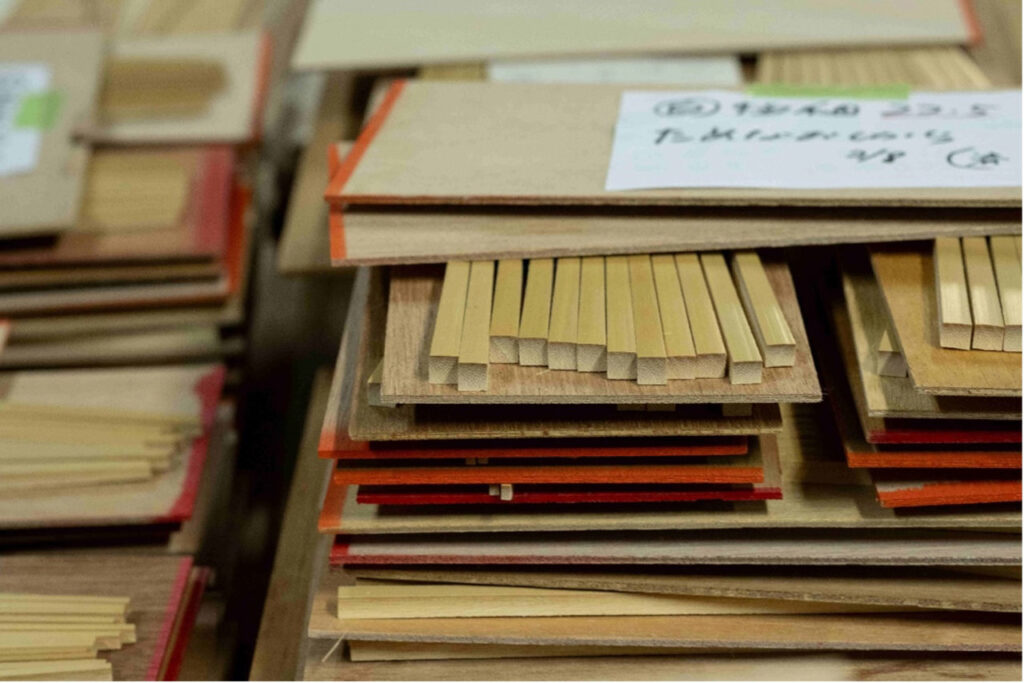
We purchase and use these “second-grade” chopsticks in our school cafeteria. Even though they’re considered “second-grade,” they have very delicate tips. The lips are an organ with many sensory receptors and are highly sensitive. Just as a thin-walled glass allows you to taste a drink more clearly, the slender tips of these chopsticks don’t interfere with the taste of the food. If you have the chance, I hope you’ll give them a try.
In cafeterias and other dining facilities frequented by large numbers of people, dishwashers are used; for hygiene reasons, alkaline detergents are employed, and items are washed at high temperatures. This is a harsh environment for bamboo chopsticks. In fact, they can warp or break, and leaving them soaking or unattended can easily cause them to turn black or develop mold. Furthermore, bamboo chopsticks are more expensive than plastic ones, so even when replacing them, it is desirable to use them for as long as possible. For this reason, we have decided to begin applying lacquer to them starting in 2025. Kyoto is home to Tamba Urushi, a traditional lacquer-producing region. Lacquer is a natural adhesive and preservative that also contributes to the strength of bamboo chopsticks. It’s amazing just how resilient natural materials can be. We are constantly amazed by the ancient wisdom of our ancestors, which we had nearly forgotten. As part of the Bamboo Chopsticks Project, we conduct strength tests on the chopsticks we’ve introduced, as well as regular hygiene inspections. If they become dishwasher-safe, it will be much easier to introduce them into many cafeterias in the future.
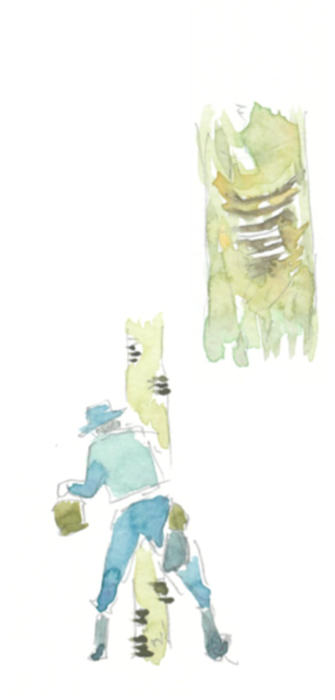
Lacquer is a natural resin produced by the lacquer tree; by making incisions in the tree once every four days from spring through fall, a lacquer-tapping artisan can harvest approximately 200 cc from a single tree. Japan’s self-sufficiency rate for domestic lacquer is only 7% (Reiwa 7 fiscal year), and there is a growing call for increased production, bolstered by a decision to use domestic lacquer for cultural properties. Kyoto Prefecture is home to a traditional lacquer-producing region that yields Tamba lacquer, and production continues there to this day. (https://www.tanbaurushi.org/)
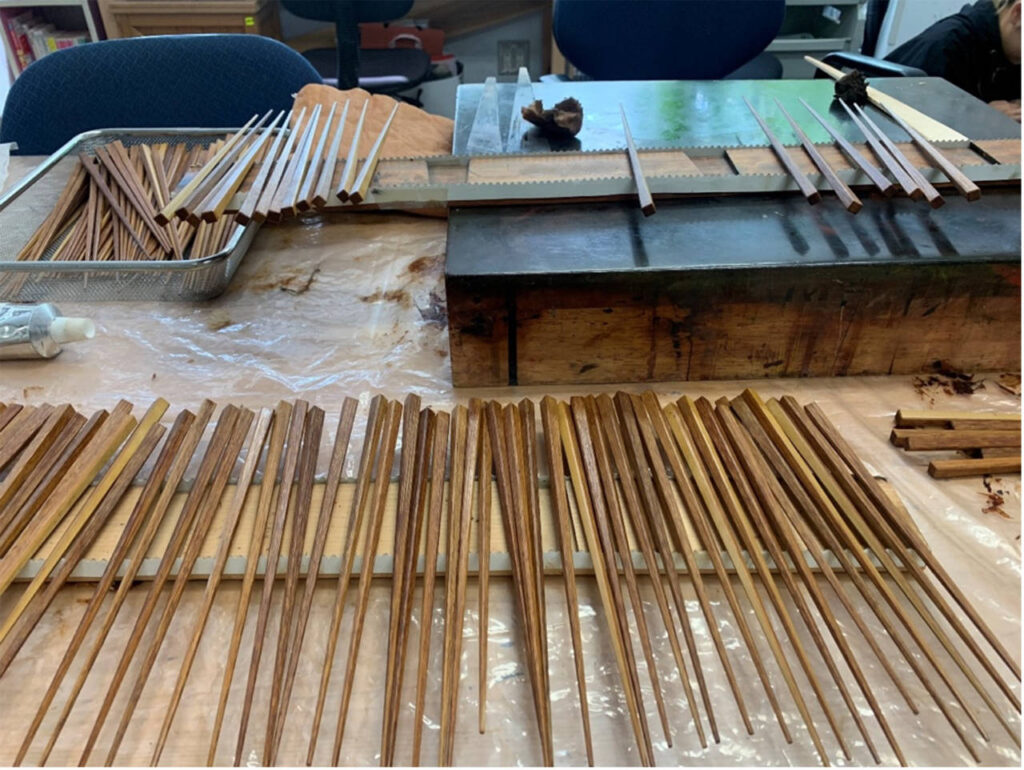
However, it is also true that the lacquer industry faces a shortage of practitioners and is at risk of losing its traditions if things continue as they are. We purchase this lacquer and, under the guidance of a Kyoto lacquer artisan (Takagi Shikkō), have been introducing the technique of “wiping lacquer” to our students through hands-on practice. Wiping lacquer is not completed in a single application; its luster is enhanced by applying multiple layers. We also hold lacquer-coating workshops where members of the public can experience the process firsthand and participate in the activity of applying successive layers of lacquer.
We are conducting a survey of cafeteria patrons to gauge students’ environmental awareness. The use of bamboo chopsticks has generally been well-received. Does changing the type of chopsticks change people’s environmental awareness? Humans are, after all, deeply market-driven creatures. Even if we think a particular product might be better for the environment and the future of the planet, it’s hard to beat the allure of a lower price. The bamboo chopsticks we currently use are carbon-neutral because, even when they become worn out and are incinerated, they are not derived from petroleum. Furthermore, since they are entirely natural, they do not release any harmful substances. We hope that by regularly replacing them with new ones, we can foster a circular economy.
Currently, this initiative is limited to the Northern Cafeteria at Kyoto University, but we hope to expand it to all university campuses and then to school cafeterias throughout Kyoto Prefecture. By utilizing readily available local resources such as bamboo and lacquer, we can preserve traditional practices, and by sourcing these materials locally in Kyoto, we can also reduce CO2 emissions associated with transportation. Furthermore, in addition to bamboo chopsticks, we plan to address lunchbox containers and packaging to reduce the use of single-use plastics. We believe it is also important to share various scientific findings and initiatives, and to clearly demonstrate the added value that goes beyond mere cost savings, so that we can all make informed choices to improve the global environment for the future. (Masako Danura, Associate Professor, Department of Forest Science, Graduate School of Agricultural Science, Kyoto University)
*Related Links*
Bamboo Chopsticks Project Website
Bamboo Chopsticks Project Instagram
