Updated by "Forest Circular Economy" Editorial Board on January 17, 2026, 4:04 PM JST
Editorial Board, Forest Circular Economy
Forestcircularity-editor
We aim to realize "Vision 2050: Japan Shines, Forest Circular Economy" promoted by the Platinum Forest Industry Initiative. We will disseminate ideas and initiatives to promote biomass chemistry, realize woody and lumbery communities, and encourage innovation in the forestry industry in order to fully utilize forest resources to decarbonize the economy, strengthen economic security, and create local communities.
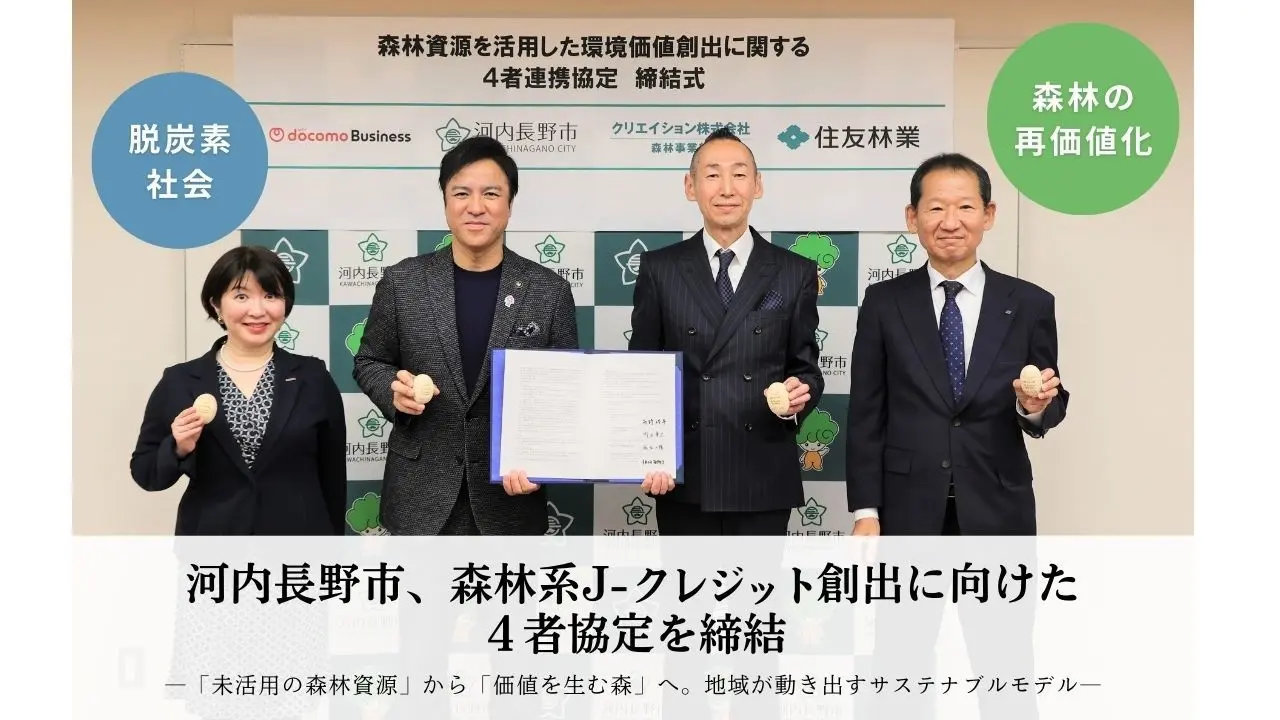
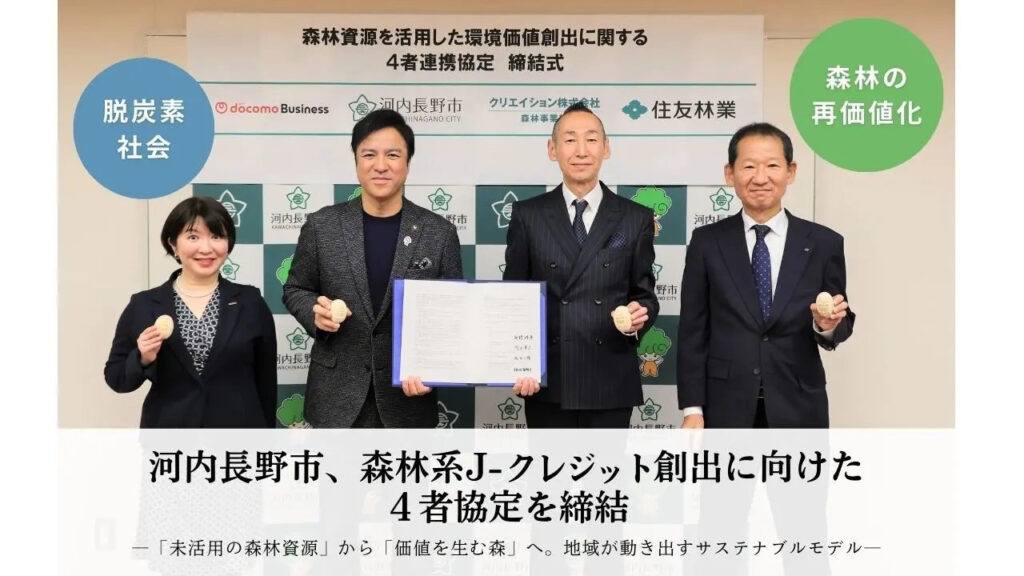
Kawachinagano City in Osaka Prefecture signed a four-way partnership agreement with Creation, Sumitomo Forestry, and NTT Docomo Business in November 2025 to create forest-based J-credits. The city, where forests cover approximately 70% of the city area, will be the first attempt in Osaka Prefecture to create forest-derived credits. By converting underutilized private forests into "value-generating assets" and returning the proceeds to forest maintenance and education, the city aims to build a cyclical model in which forests protect, earn, and nurture people.
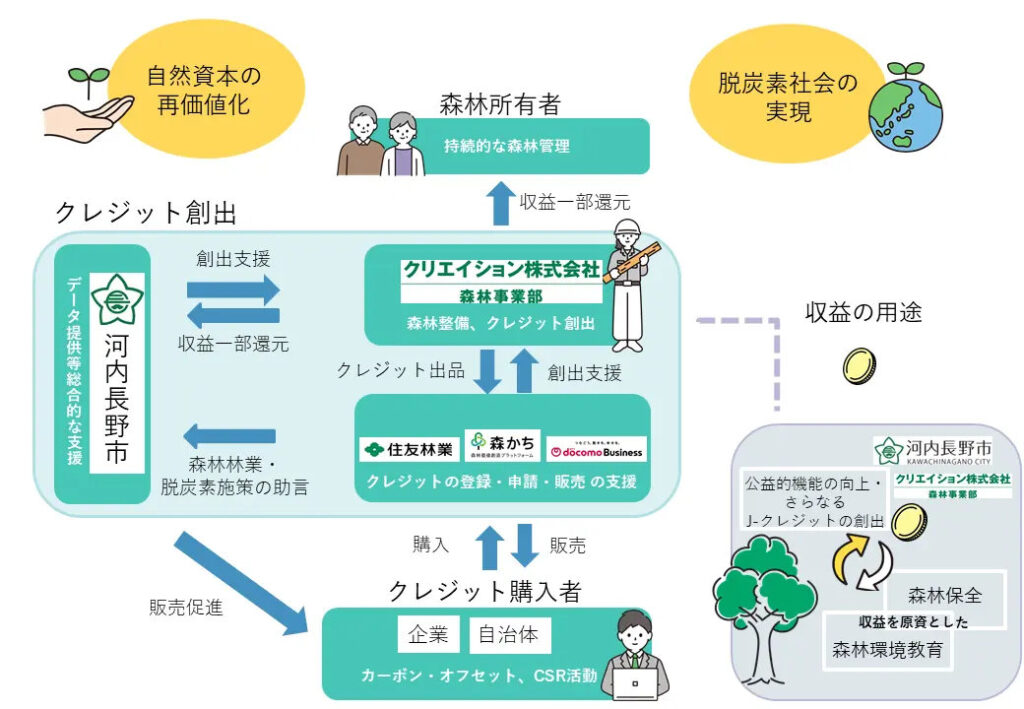
Under the agreement, the local government and the three private companies will bring their respective strengths to create a system to generate value from the city's "private forests. Creation will be responsible for thinning and other maintenance work in the city's approximately 800 hectares of private forests, and will support the registration, application, and sale of credits through the Forest Value Creation Platform (Mori Kachi), which is jointly operated by Sumitomo Forestry and NTT Docomo Business.
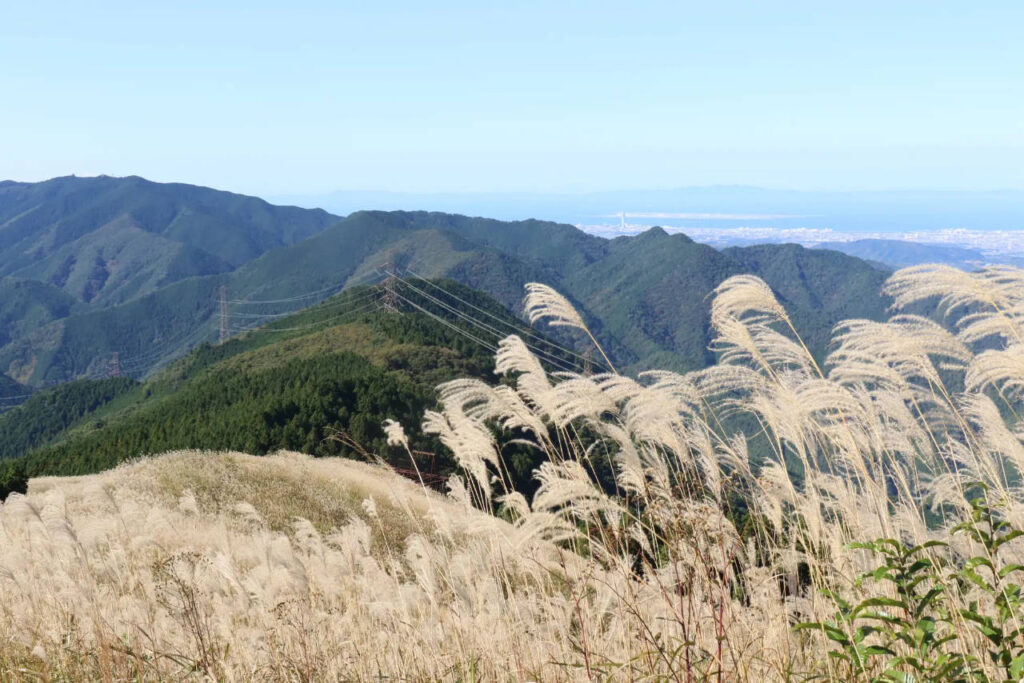
Kawachinagano City has the headwaters of several rivers, including the Iwami River, which is connected to the Osaka Plain through forests. Forest management is closely related to water source recharge and watershed environmental conservation.
Kawachinagano City has long been known as a Kawachi forestry area, but in recent years, the shortage of forestry leaders and increasing management costs have resulted in an increase in forests that are not well cared for. In order to break through the current situation in which owning a mountain is seen as a "negative legacy," such as when a mountain is inherited but left with unclear boundaries, the J-Credit system is being used to return profits to the owner and rebrand the mountain as "an asset that creates value for the community.
A portion of the proceeds from the sale of the generated credits will be donated to the city to be used for continued forest maintenance and environmental education for children. This project, which simultaneously promotes regional development and the realization of a decarbonized society centered on forests, will be one solution to the common challenges faced by local governments.
Reference Links
Kawachinagano City's first "forest-derived J-credit" creation - Kawachinagano City Web Site