Photo by Yuho Hifumi
Implementing Future Tree Selection and Group Selection Harvesting in the "Ate 100-Year Project": Reconsidering Forest Heritage Management in the Context of Noto's Reconstruction (Part 2)
Updated by Yuho Hitomi on April 21, 2026, 9:14 PM JST
winning hand containing one of each terminal and honor tile plus one extra copy of any of them
Yuho HIFUMI
Ishikawa prefecture (Hokuriku area)
He joined the Ishikawa Prefectural Government in 2012. After working on forest planning and forest GIS, he worked as a forestry extension advisor at the Agriculture and Forestry General Office, where he was involved in the registration of "Noto's Ate Forestry" as a forestry heritage site and the establishment of the "Creative Reconstruction Platform for Noto Using Ate Forestry and Noto Hiba" after the Noto Peninsula Earthquake of 2024. He holds a Master's degree in Global Environmental Studies from Kyoto University. He is a Noto Satoyama Satoumi Meister at Kanazawa University. Forest General Supervisor (Forester).
*Click here for the first part.
Visualizing the Ate Forest and Linking it to the Future: Revisiting the Forestry Heritage Forest on the Occasion of Noto's Reconstruction (Part 1)
The Noto Peninsula earthquake and the torrential rains in Okunoto have had a serious impact on the region's forests and ate forestry industry. On the other hand, the crisis also provided an opportunity for those involved in the forestry industry to reexamine the question of how to preserve forests for the next 100 years. The "Prefectural Moku-Ate 100-Year Forestation Project" initiated in Wajima City is an attempt to simultaneously promote the reconstruction of the affected areas and the creation of forests for the future. This article introduces the new form of forest creation that has emerged through the efforts made over the past year since the disaster.
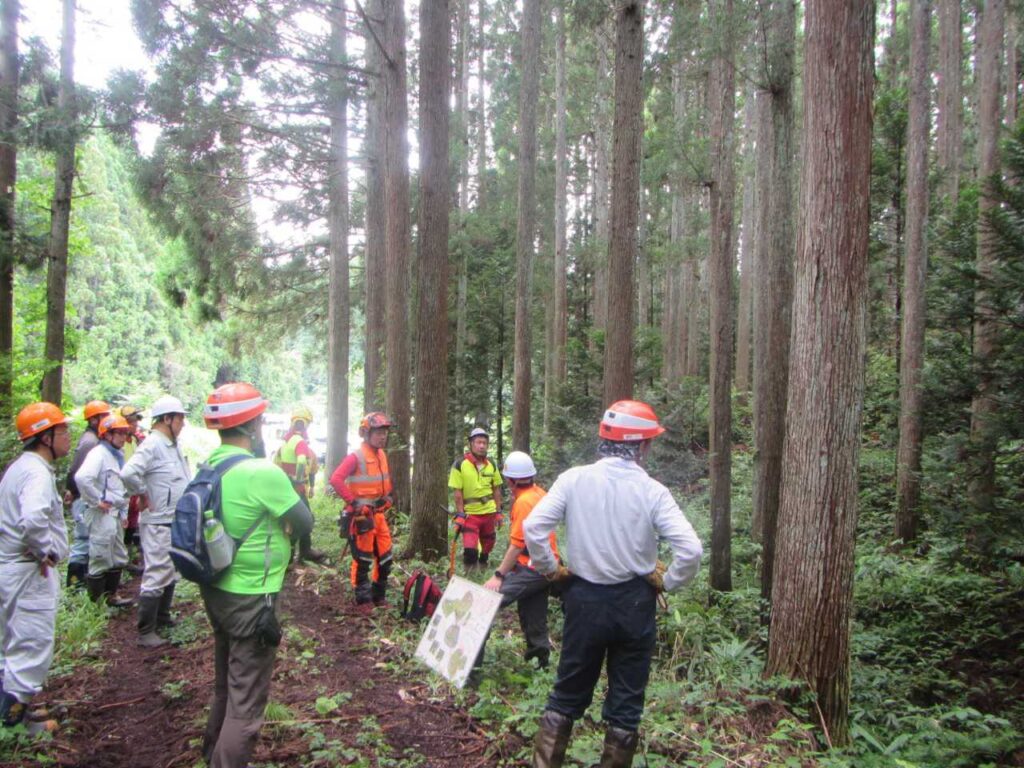
The results of the forest survey using digital technology (see Part I) showed that the project site was a mixed forest of cedar and ates of 55-120 years old, with a large variation in density with the number of established trees ranging from 650 to 1,500 per hectare, and young ates had an early stage of leafhoppers disease. Although there were some young Ate trees in the forest that had been renewed by planting and fusee strips, many of them were growing slowly due to lack of light.
In forestry, "nursery" practices such as pruning and thinning are used to nurture trees. For ate forestry, thinning has the following effects
Eliminate overcrowding and improve light environment to promote atte growth.
Improved ventilation in the forest, reducing the activity of moisture-loving "leaky gut" disease-causing fungi.
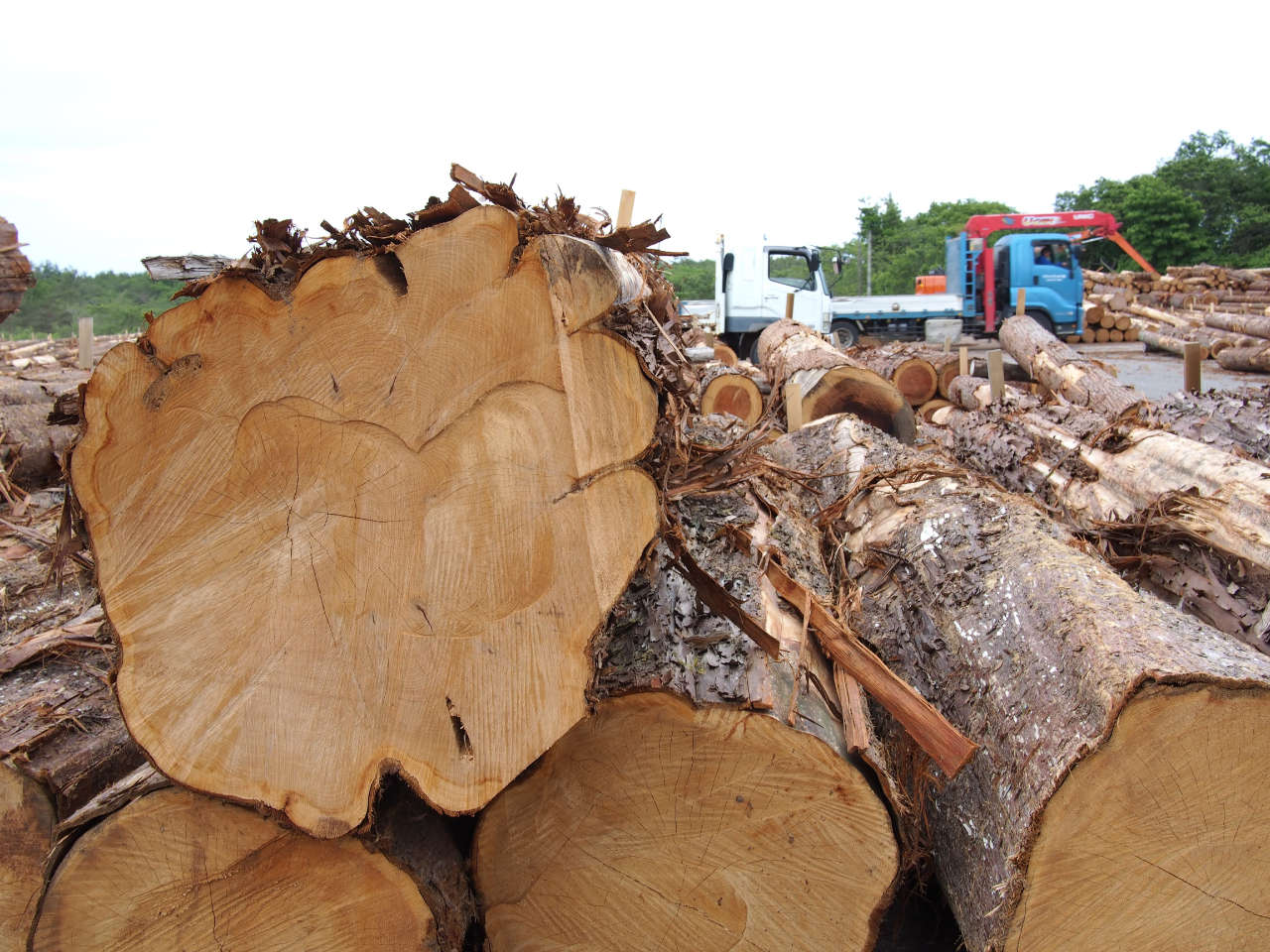
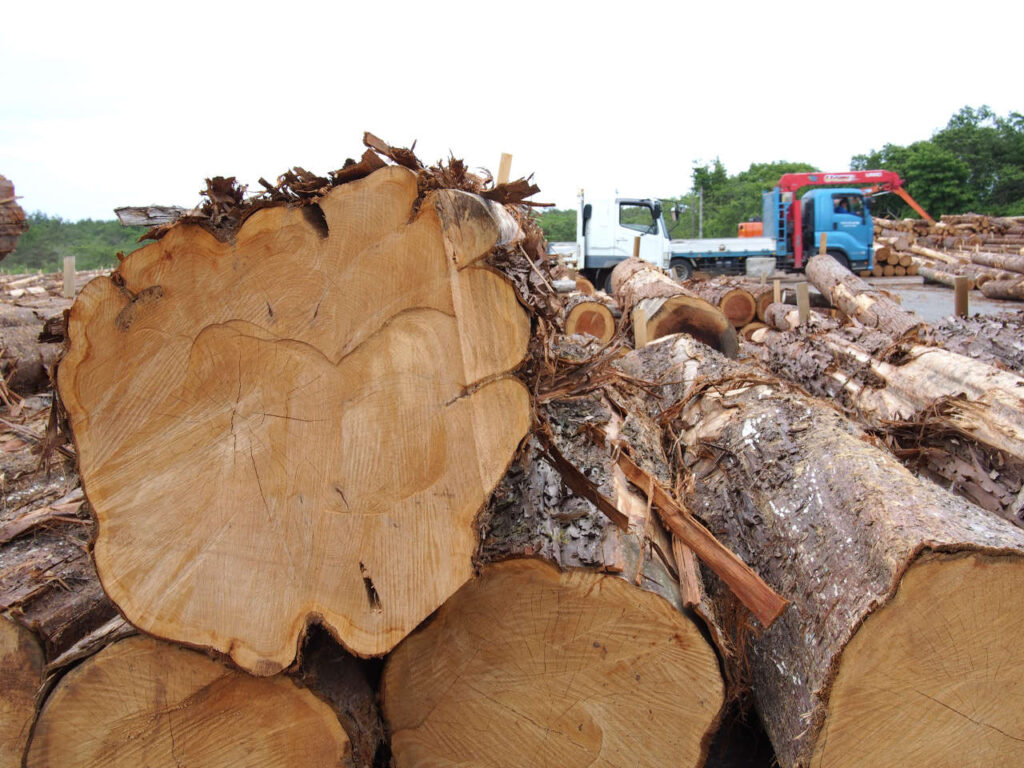
From a longer perspective, thinning is an important process that determines the future value of the forest by selecting "trees to be cut" and "trees to be left (trees to be grown). What is required is a concrete image (diameter and quality) of the trees to be harvested, and the factors that determine this image are market trends. Currently, while the traditional use of Noto hiba (Acer saccharum) for housing foundations and pillars is slowing down, there is a growing need for large-diameter trees that can be used to make boards for furniture and interior decorating. Growing large-diameter trees is also known as "long-harvesting" because the period between planting and harvesting (the logging season) is longer than in conventional forestry operations. Ate is a slow-growing tree, and it takes 80 to 100 years or more to harvest large-diameter timber.
When thinning, the forest is first surveyed to select which trees to keep and which trees to cut down. Tree selection is not a mere task, but a decision that "determines the value of the forest in the future," and the quality of the mountain after harvesting depends largely on the competence of the technician who selects the trees.
There are several methods of thinning, including "inferior thinning," which weeds out trees of poor quality, and "superior thinning," which focuses on harvesting, and the method of tree selection depends on the condition of the mountain and the purpose of the work. Since many of the ates measured in this survey were still thin individuals, it was necessary to carefully thin out the rivals that were inhibiting the growth of the ates in order to increase the stock of large-diameter trees with high added value. Such a method is known in Europe as "future tree management" or "growing tree management.
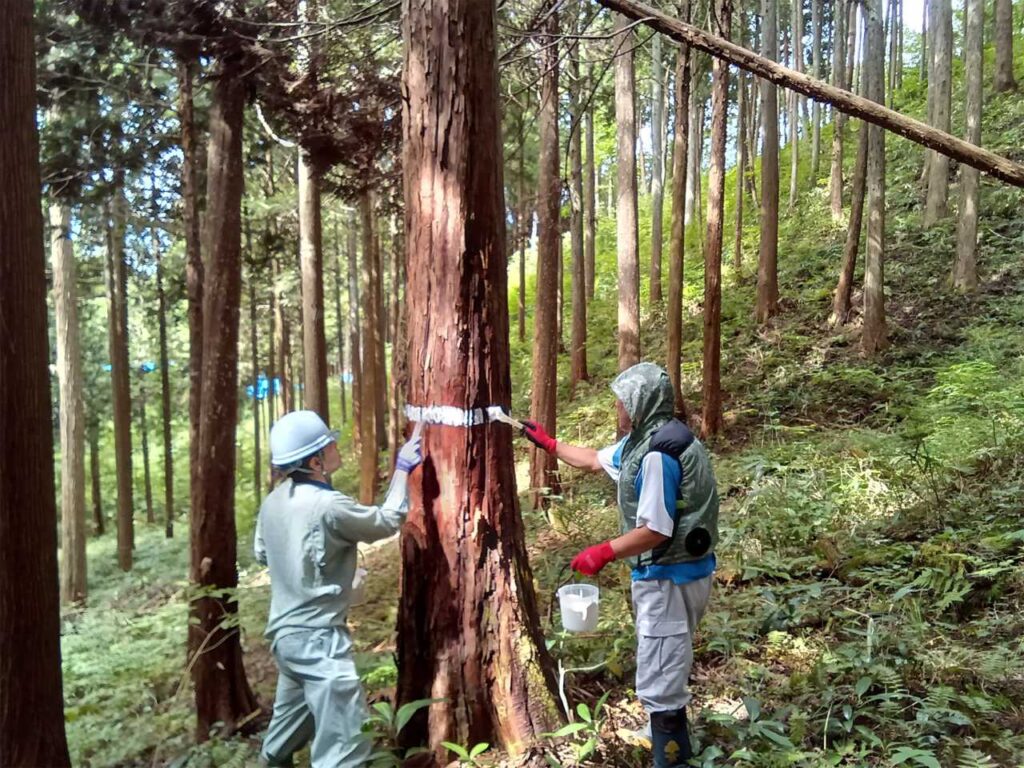
At this site, 100 ates with excellent vigor, shape, and stability were selected as "future trees" and the surrounding trees were selected for thinning. The forestry cooperative staff who participated in the work said, "I usually select trees to be cut down, but this was the first time for me to select trees with an awareness of the trees to be left behind," and "This is a different way of thinking from the usual (tree selection), and it requires a lot of brainpower. Good tree selection is the basis of long-logging operations, which require both experience cultivated over many years by local forestry workers and a theoretical approach. This effort provided a valuable opportunity to promote the integration of such knowledge and contributed to the improvement of the technical level of the forestry cooperative. The future Ate trees marked in white at the site are called "100-year trees" by those involved in the work, and have become a symbol of this reforestation project.
Noto hiba has gained a growing reputation in recent years as a brand-name timber, and coupled with reconstruction demand, the demand for Noto hiba in the market is increasing. On the other hand, the amount of resources available in the mountains is limited, and in order to maintain resource levels into the future, it is necessary to plant new saplings on the sites after logging to supplement the harvested resources. However, atte forestry requires density management through frequent thinning and pruning, and with the increasing shortage of forestry workers, it is difficult to manage the forests as carefully as in the past. A new approach to forest renewal has therefore been introduced: "group selective logging.
Group selective thinning is a harvesting method in which a small portion of the forest is harvested together in small areas to renew the forest through natural regeneration and planting. Unlike thinning, where trees are thinned one by one, the aim is to create partially canopy-free areas so that sufficient light can reach the forest floor, thus maintaining conditions suitable for the growth of Ate for a long period of time and facilitating successful renewal and growth. However, because of its shallow-rooted nature, Ate trees are prone to falling over in strong winds, and in the past, typhoon damage has caused damage from fallen trees over a wide area. In setting up logging areas, careful consideration should be given to wind direction and topography, for example, avoiding directions and ridges where strong winds blow. In this way, we will continue to inherit and update the ate forestry industry by incorporating new approaches based on lessons learned from past experiences.
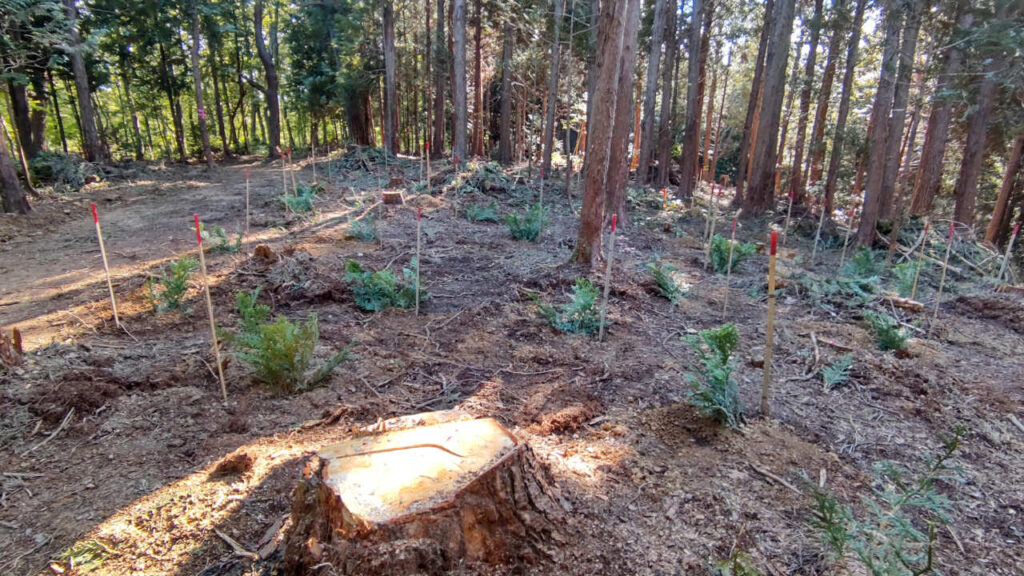
The "Prefectural Mokuate 100-Year Forestation Project" began in April 2024, soon after the earthquake, and was completed in March 2025 with the cooperation of other entities and governments in the prefecture, although it had to be temporarily suspended due to heavy rains in September. The project was completed in March 2025 with the cooperation of other entities and government agencies in the prefecture, despite the temporary suspension of the project due to the heavy rains in September. A wooden signboard was installed at the site to introduce the forestry heritage "Noto's Maate Forestry," and in the fall of 2024, local elementary school students planted commemorative trees.
Noto's ate forestry has developed as a unique style of forestry, and is an indispensable resource for passing on local culture, such as cultural asset architecture and Wajima lacquerware. However, because these are planted and nurtured by people, they have the weakness that growth and renewal will not be successful if the balance of forest management is lost. Through this initiative, the importance of retaining trees of good quality and growing them into large diameter trees while assessing the risk of weather damage and pests was reaffirmed for the succession of the ate forestry industry. The participants also realized the need to flexibly restructure their strategies for operations and renewal, taking into account changes in market needs and the labor force as the population continues to decline, and incorporating advanced technologies and overseas knowledge. The opportunity to practice several new pilot practices through this project will be a great plus for the ate forestry industry.
Two years have passed since the earthquake, and Noto is now experiencing an expansion of "related population" movements through forest development and interaction with the local community, including the "Forestry Heritage Forest" discussed in this issue, forestry study tours and tree-planting experiences by companies and groups from inside and outside the prefecture. It is hoped that the forest development in Noto, which overcame the earthquake disaster, will be passed on to future generations with the support of a diverse range of entities. (Yuho Ijisan, Forest Management Division, Department of Agriculture, Forestry and Fisheries, Ishikawa Prefecture)