Updated by the Editorial Department of *Forest Circular Economy* on August 7, 2026, at 8:36 p.m. JST
Editorial Board, Forest Circular Economy
Forestcircularity-editor
We aim to realize "Vision 2050: Japan Shines, Forest Circular Economy" promoted by the Platinum Forest Industry Initiative. We will disseminate ideas and initiatives to promote biomass chemistry, realize woody and lumbery communities, and encourage innovation in the forestry industry in order to fully utilize forest resources to decarbonize the economy, strengthen economic security, and create local communities.
In Japan’s forestry sector, which faces challenges such as labor shortages and declining profitability, efforts toward sustainable forest management are advancing rapidly. From the automation of management and operational planning using AI, to public-private partnerships for management support, fundraising to unlock the value of neglected forests, the visualization of environmental value in corporate-owned forests, and even the practice of “conservation forestry” that prioritizes ecosystems, a diverse range of approaches—combining digital technology with financial methods and new forms of administrative collaboration—is gaining traction.
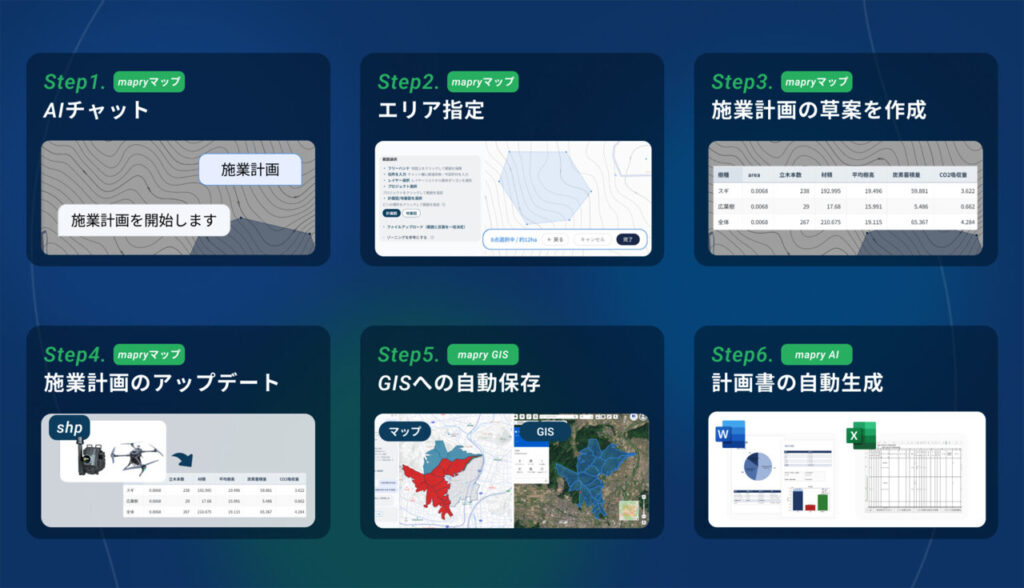
Mapry, a company specializing in geospatial information apps and solutions, announced its “mapry AI” platform initiative and, as its first offering, began providing “mapry Map”—a web service that automatically generates forest management plans—in June. In traditional planning, a major challenge was the heavy burden on field staff, including compiling data from tree-by-tree surveys and transcribing it into complex forms. “mapry Map” uses AI-powered chat interactions to automatically handle everything from specifying the target area to editing and updating data, and creating draft management plans in Excel and Word formats. Furthermore, using proprietary models tailored to the characteristics of specific regions and tree species, it can predict future growth and calculate CO₂ absorption volumes in accordance with J-Credit calculations. By incorporating on-site ground measurement data, the system enhances the accuracy of its analyses and generates well-documented plans. This AI-driven automation, which requires no specialized GIS skills, significantly lowers the barriers to adoption in the field and is expected to strongly support the practice of data-driven, sustainable forest management.
The Yamashigoto Kobo General Incorporated Association has been designated as a “Forest Management Support Organization” under the Forest Management Act by Mima City and Tsurugi Town in Tokushima Prefecture. Acting on behalf of local governments struggling with a lack of expertise and personnel, the organization provides comprehensive support for all practical aspects of forestry administration—including surveying landowners’ intentions, assisting with the certification of forest management plans, and managing municipally-owned forests. By maintaining its independence—that is, by not conducting forest management projects itself—the organization ensures administrative impartiality, and its strength lies in its superior analytical capabilities derived from forest digital transformation (DX) using drones and laser scanners. In Mima City and Tsurugi Town, the organization has already achieved results such as the consolidation of approximately 2,000 hectares of forest land and the creation of new forestry businesses. As a pioneering public-private partnership model that alleviates the practical administrative burden on local governments, the organization aims to contribute to building the foundation for sustainable forest management in mountainous and rural areas across Japan.
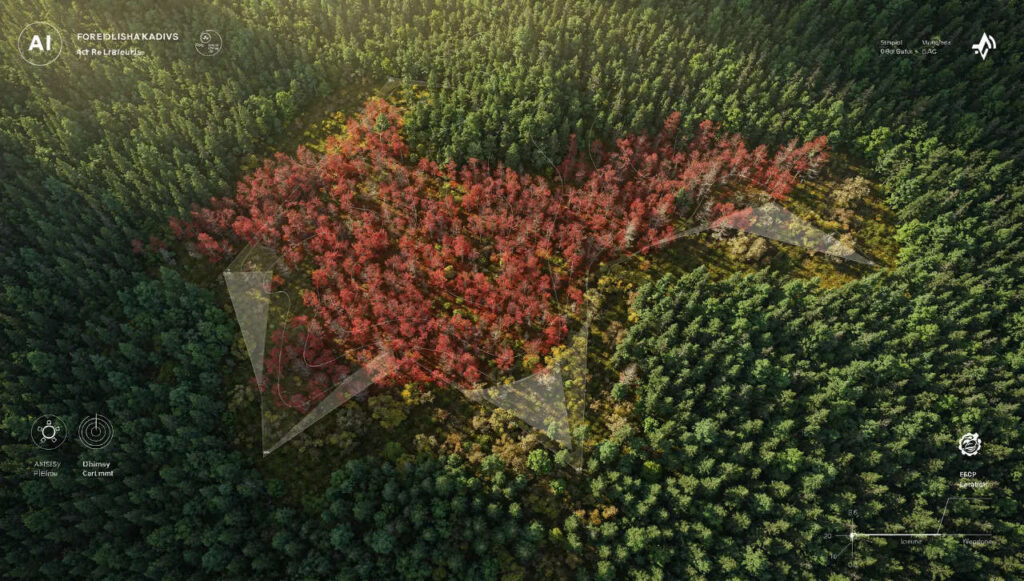
ForestFolks, a company engaged in forest asset management, has completed a seed round of funding led by several venture capital firms and other investors. The funds raised will be used to accelerate the development of “Forester Earth,” a management system that visualizes the asset value of forests by combining expert know-how with data, as well as to strengthen partnerships with local governments and recruit specialized personnel. Under the banner of “forest management that can be sustained for the next 1,000 years,” the company uses data to assign multifaceted value—such as carbon credits, disaster prevention, and tourism resources—to neglected forests that lack proper management. With plans to launch the beta version of “Forester Earth” and commence operations in three regions within Japan during fiscal year 2026, the company aims to transform forests into “sustainable assets” by leveraging on-site expertise and technology.
*Reference link
Completes Seed Round Funding | ForestFolks, Inc.
The amount of CO₂ absorbed through forest management in the approximately 850-hectare forest owned by the Mizkan Group in Shikoku has been officially registered and certified under the J-Credit system. Since its founding, Mitsukan has been deeply connected to the bounty of nature. Building on a history rooted in its core business—which includes the procurement of timber for the barrels and vats used in traditional vinegar production, as well as for the Benzaisen boats that once served as a means of transportation—the company has been engaged in forest management for approximately half a century, beginning in 1975. The CO₂ absorption volume certified this time amounts to 2,836 metric tons per year, which is equivalent to approximately 7.6% of the greenhouse gas emissions (Scope 1 and 2) from factories and offices of the company’s domestic group companies in fiscal year 2024. The company plans to use the issued credits to offset emissions that are difficult to reduce internally, as well as to reinvest in conservation activities such as reforestation and forest nurturing.
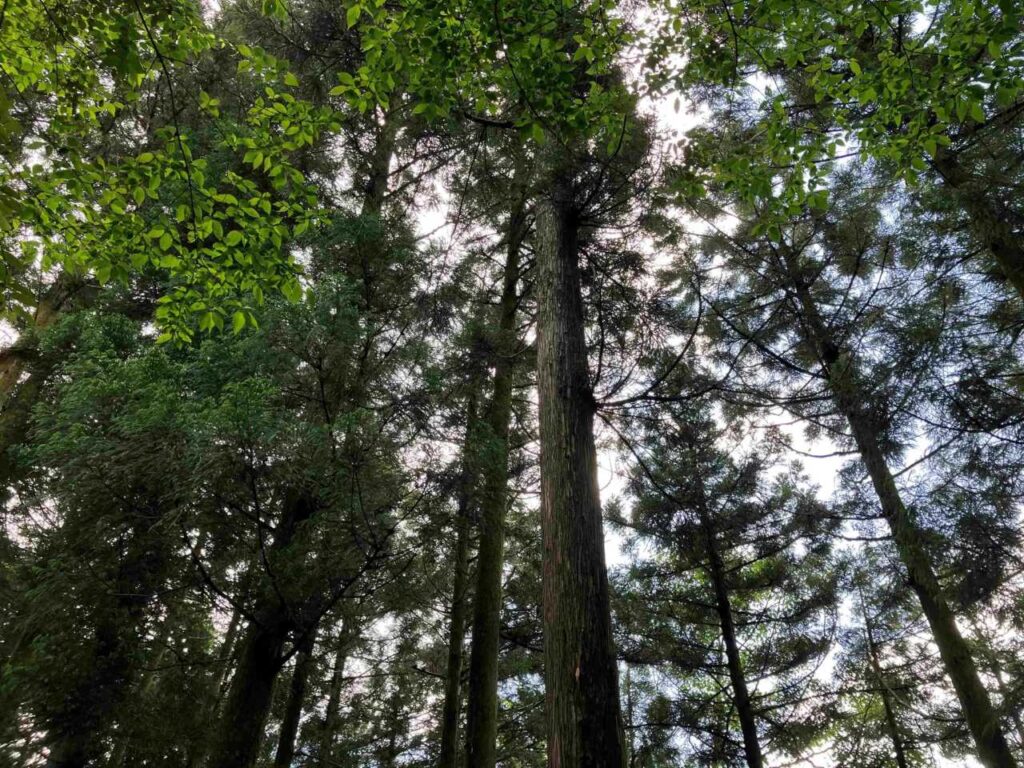
Mori Mirai has co-produced and released a promotional video highlighting “retention forestry,” an environmentally conscious approach promoted by Oji Holdings in its company-owned forests. Conservation forestry is a method in which trees necessary for the preservation of ecosystems and biodiversity are intentionally left standing during logging operations. In Japan, the company has a history of conducting joint research on this topic for over 10 years with institutions such as Hokkaido University and the Forestry and Forest Products Research Institute. According to the company, this marks the first instance in Japan of a private company publicly advocating for and practicing conservation forestry. In addition to interviews with relevant parties, the video features drone footage depicting lush forests, actual forestry operations, and birds inhabiting the forests. It vividly conveys the company’s commitment to timber production that respects the habitats of wildlife.
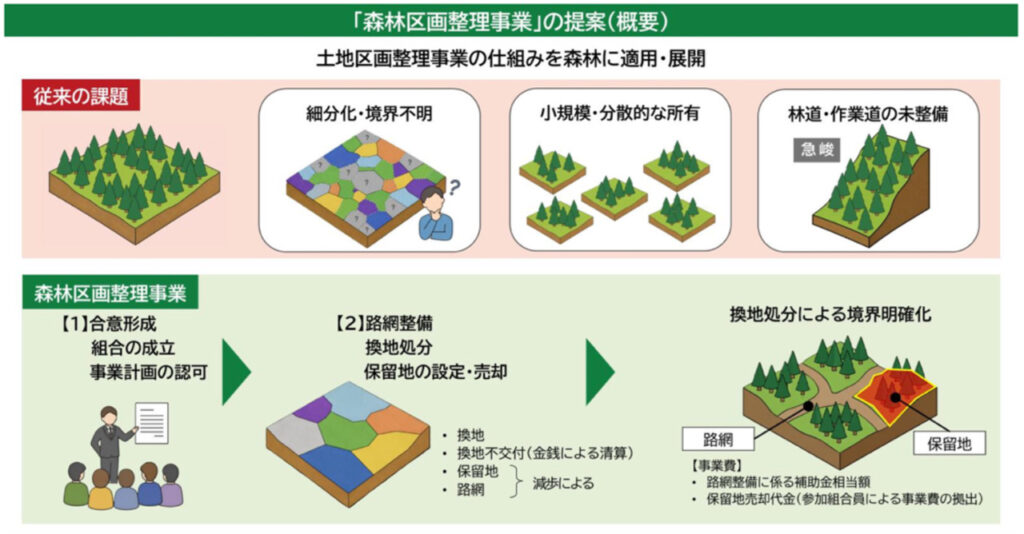
On July 6, the Platinum Vision Network held the “Platinum Forest Industry Initiative Phase 4 Results Presentation.” The “Forest and Forestry Innovation Subcommittee” is focusing on resolving land-related issues—such as fragmented ownership and unclear boundaries—which are the greatest barriers preventing individual operators from implementing detailed forest management plans and effective management. Specifically, the subcommittee proposes piloting consolidation plans based on the Forest Management and Administration Act, as well as introducing “forest land readjustment projects” that integrate “road network development” and “boundary clarification” by applying urban planning methodologies. Furthermore, the subcommittee is calling for “forest boundary clarification” in coordination with cadastral surveys (utilizing designations under Article 19, Paragraph 5 of the National Land Survey Act and applications under Article 8 of the Cadastral Survey Act). Additionally, to stimulate the creation of financial products (funds) and private-sector transactions based on forest land consolidation, the group is proposing “tax incentives and burden reductions”—such as reductions in registration and license taxes and real estate acquisition taxes—and is strongly advocating for a shift toward “profitable forestry” through macro-level institutional design.