Updated by "Forest Circular Economy" Editorial Board on January 10, 2026, 12:35 PM JST
Editorial Board, Forest Circular Economy
Forestcircularity-editor
We aim to realize "Vision 2050: Japan Shines, Forest Circular Economy" promoted by the Platinum Forest Industry Initiative. We will disseminate ideas and initiatives to promote biomass chemistry, realize woody and lumbery communities, and encourage innovation in the forestry industry in order to fully utilize forest resources to decarbonize the economy, strengthen economic security, and create local communities.
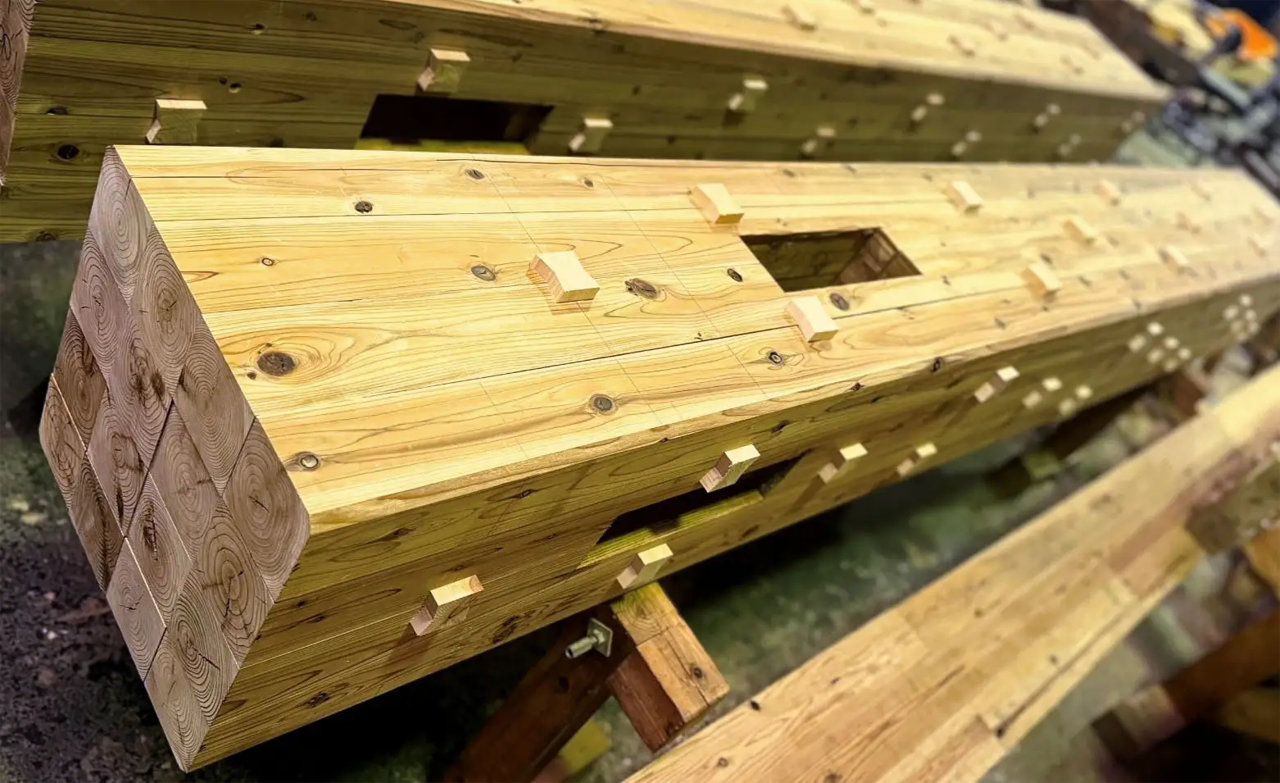
Takamatsu Construction Group has recently been granted a patent for "bundling lumber," which is based on the traditional techniques of temple carpenters. This is a method of construction in which lumber is bound together using only ki (tear-off) lumber, utilizing the knowledge of Kongo Gumi, a group company, and can be disassembled and reused. By utilizing the traditional building techniques inherited from the miya carpenters, the company aims to solve two problems: the recycling of planted forests that have reached the optimum harvesting season, and the securing of large-diameter pillars that are indispensable for traditional construction.
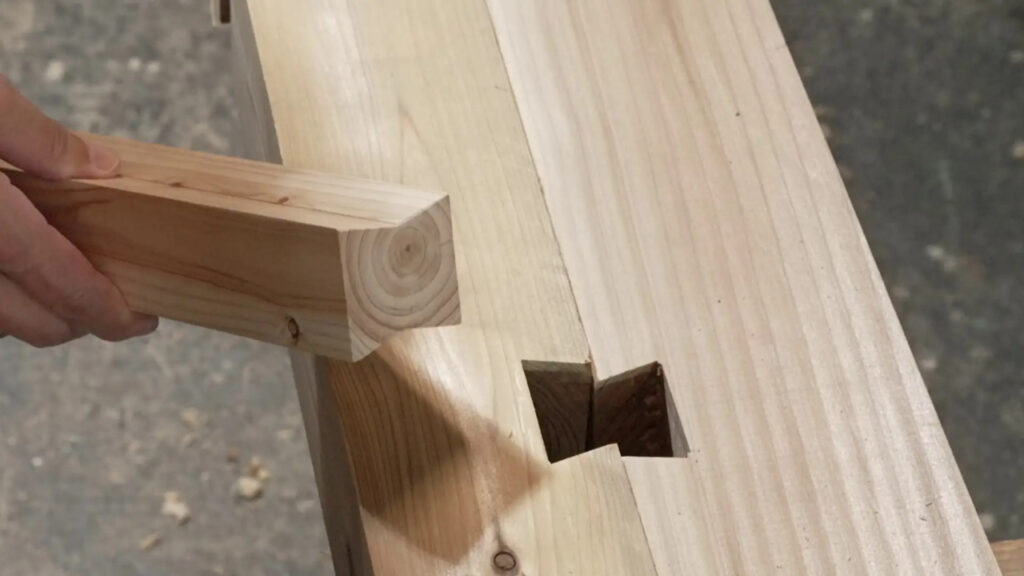
Bundling lumber" is based on the wood processing and joining techniques cultivated over many years by the Kongo-gumi palace carpenters, who were founded in 578 AD. The wood is bound together using only the same "wood" bonding material, without the use of nails, bolts, or other metal hardware, or adhesives. The major advantage of this method is that there is no concern about deterioration due to metal corrosion, and the wood can be reused after dismantling.
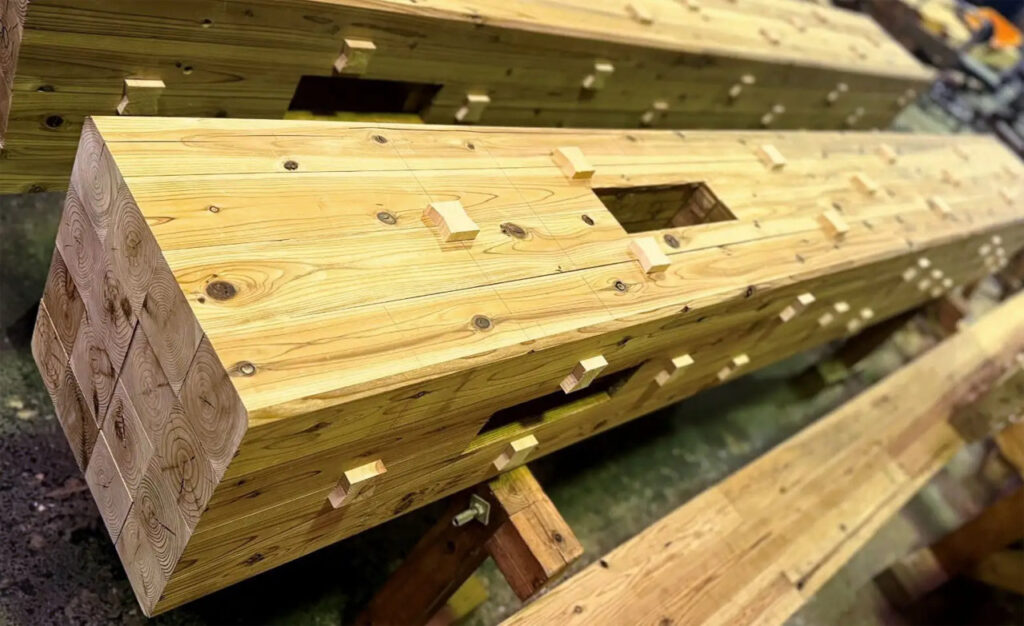
By bundling multiple small-diameter lumber, a structure that can be used as a substitute for large-diameter lumber is achieved. The use of core-supported small-diameter lumber can provide higher strength at a lower cost than solid lumber of the same cross-sectional diameter.
Currently, in Japan's planted forests, trees planted after World War II are reaching the optimum harvesting season, but the utilization of small- and medium-diameter timber produced domestically is not sufficient, due to inexpensive imported timber. On the other hand, at sites of traditional architecture such as shrines and temples, it is difficult to secure large-diameter timbers needed for repairs and rebuilding. The patented "bundled lumber" solves the supply-demand problem of "forest resources waiting to be utilized" and "large-diameter lumber in short supply" at the same time.
Providing a new outlet for timber produced from planted forests will help revitalize the forestry industry and provide a driving force for continued proper forest management. In addition, establishing a stable supply of materials necessary for traditional architecture will contribute to the maintenance of Japan's cultural heritage.
The company plans to use "Sokunezai" not only for design and construction within Kongo Gumi, but also in cooperation with major construction companies and design firms. The company's efforts to address the issues of healthy forest circulation, securing materials, and stable employment of temple carpenters from the perspective of traditional techniques will expand the possibilities of wooden construction in the future.
■Summary of Patent Acquisition
Title of invention: Bundling material
Patent number: Patent No. 7767507 (Registration date: October 31, 2025)
Application No.: JP-A2024-98937 (Application date: June 19, 2024)
Inventor: Shigeo Kiuchi
Patent Holder: Takamatsu Construction Group Inc.