


[Report from Biodiversity COP17] Vultures Return to Mountainous Armenia
Updated by Takanobu Aikawa on November 16, 2026, at 8:19 p.m. JST
Takanobu AIKAWA
PwC Consulting Godo Kaisha
Senior Manager, PwC Intelligence, PwC Consulting LLC / With a background in forest ecology and policy studies, he has been extensively engaged in research and consulting for the forestry and forestry sectors for the Forestry Agency and local governments. In particular, he contributed to the establishment of human resource development programs and qualification systems in the forestry sector in Japan, based on comparisons with developed countries in Europe and the United States. In the wake of the Great East Japan Earthquake, engaged in surveys and research for the introduction of renewable energy, particularly biomass energy; participated in the formulation of sustainability standards for biomass fuels under the FIT system; since July 2024, in his current position, leads overall sustainability activities with a focus on climate change. He holds a master's degree in forest ecology from the Graduate School of Agriculture, Kyoto University, and a doctorate in forest policy from the Graduate School of Agricultural Science, Hokkaido University.
In October 2026, the 17th Conference of the Parties (COP17) to the Convention on Biological Diversity was held in Yerevan, the capital of Armenia. I attended the conference in person, where I observed the negotiations and various events to gather information, and also spoke at a side event. I also exchanged views with participants from both inside and outside the country.
Since there have been various reports on the outcomes of the international negotiations at COP17 and the private-sector initiatives announced in parallel, I invite you to refer to those. In this article, I would like to share my impressions from a tour of an ecosystem conservation area that I participated in during my stay. My impression is a simple yet positive and powerful realization: that nature can recover if it is properly conserved.
Armenia is a former Soviet republic with a population of approximately 3 million. Located in the South Caucasus region of Eurasia, it has a land area of just under 30,000 square kilometers, which is about one-thirteenth the size of Japan.
A distinctive feature of this country is that it is a mountainous nation with an average elevation of approximately 1,800 meters. Furthermore, because it is landlocked, it has a dry climate with an average annual precipitation of about 500 mm.
Given these natural conditions, irrigation farming and pastoralism have traditionally been practiced here. However, overgrazing has degraded the vegetation in mountainous areas, caused soil erosion, and reduced the water conservation capacity of the watershed. I also heard from locals that, amid the economic turmoil following the collapse of the Soviet Union, energy supplies were disrupted, leading to the felling of many trees for firewood. Consequently, since the mid-1990s, active reforestation efforts have been underway to restore the ecosystem.
Furthermore, the Caucasus region, including Armenia, is home to rare ecosystems and is counted among the world’s 36 biodiversity hotspots. Having emerged from a period of environmental degradation as described above, the country aims to expand its protected areas—which currently cover only about 13 percent of its territory—to more than 20 percent by 2030 through mechanisms such as national reserves, national parks, and national sanctuaries. The Arpa Protected Area, which the author visited, was established in 2013 as the Gnishik Protected Landscape (renamed Arpa in 2019) and is Armenia’s first community-managed protected area, administered by a foundation composed of representatives from surrounding villages.
We left Yerevan early in the morning and arrived at the Arpa Nature Reserve after about a two-hour drive.
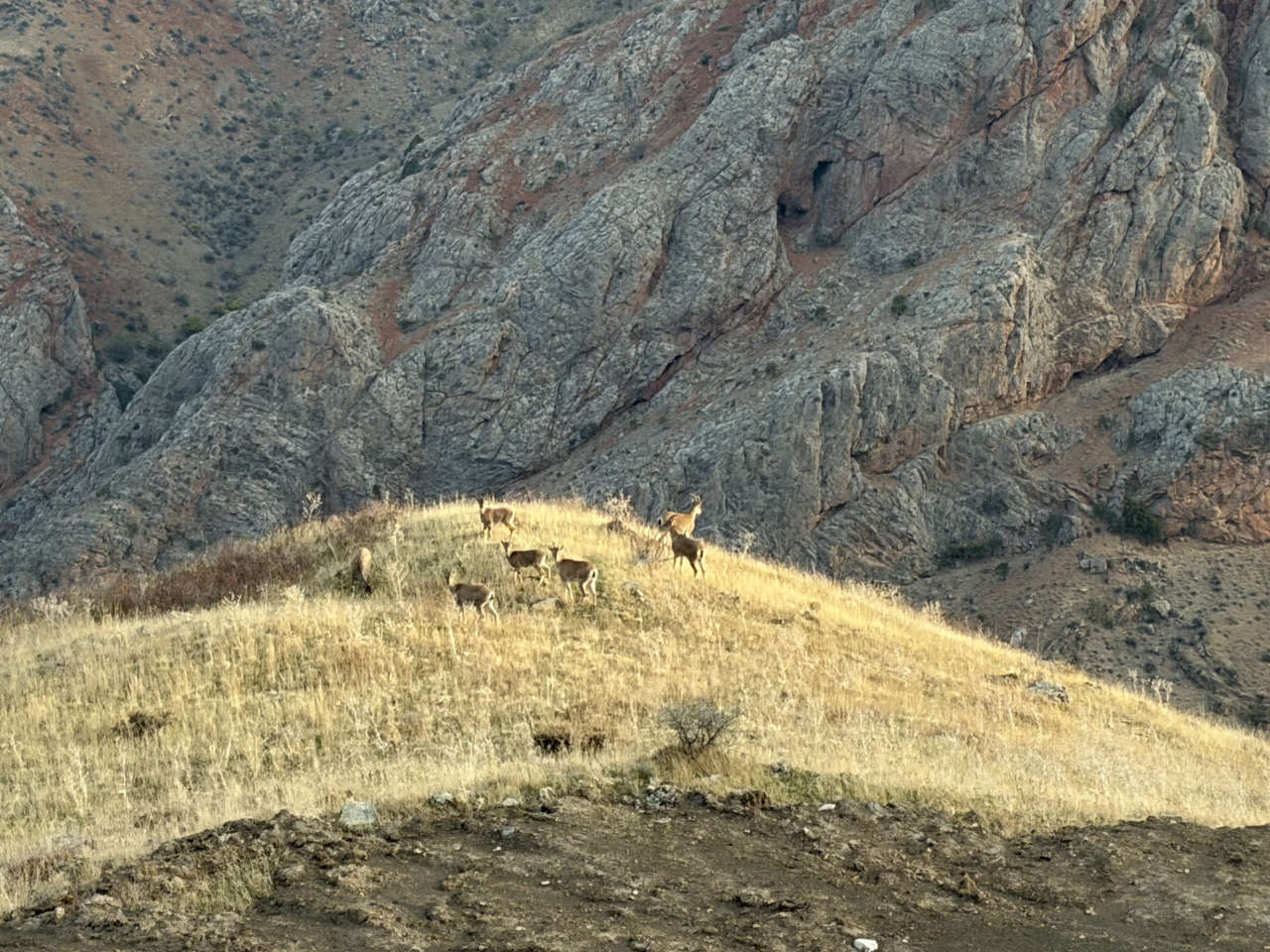
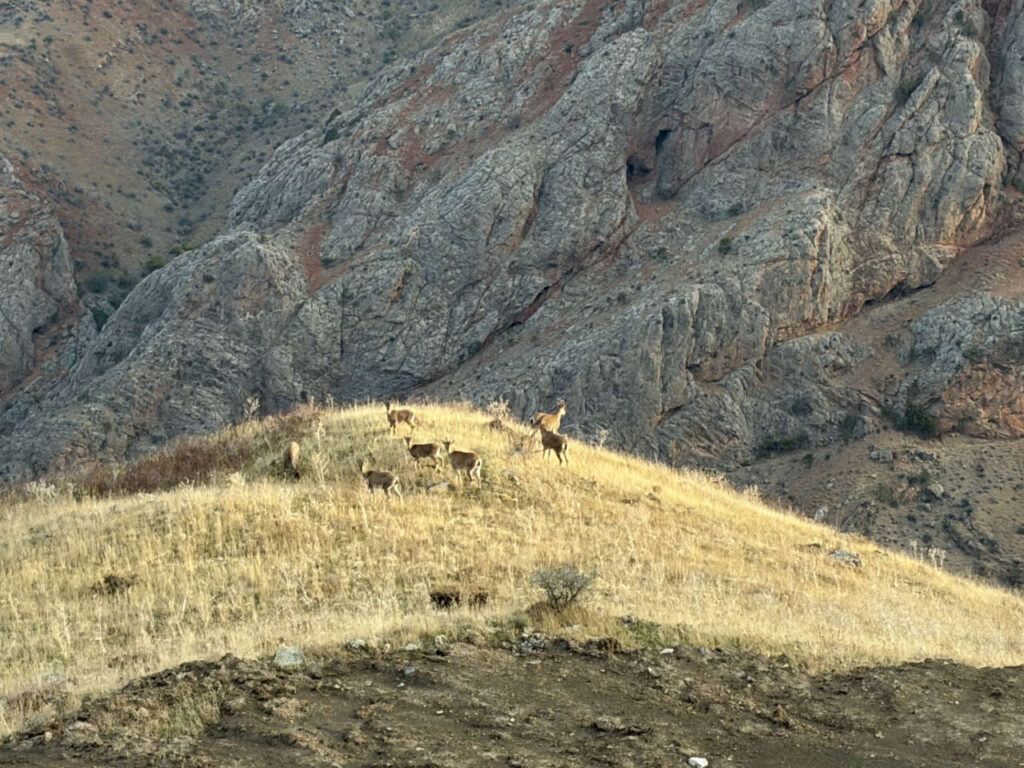
As dawn broke and it began to get light, we entered the reserve after the ranger opened the gate for us. As we drove along the rough road in a large pickup truck, we could hear the varied calls of birds that had begun their day, coming from among the grasslands and shrubs. The bird we saw most frequently was the rock partridge, a member of the pheasant family. From a spot with an unobstructed view, we were able to see a herd of wild goats (Pasang—English name: Bezoar Goat), which are a priority conservation species.
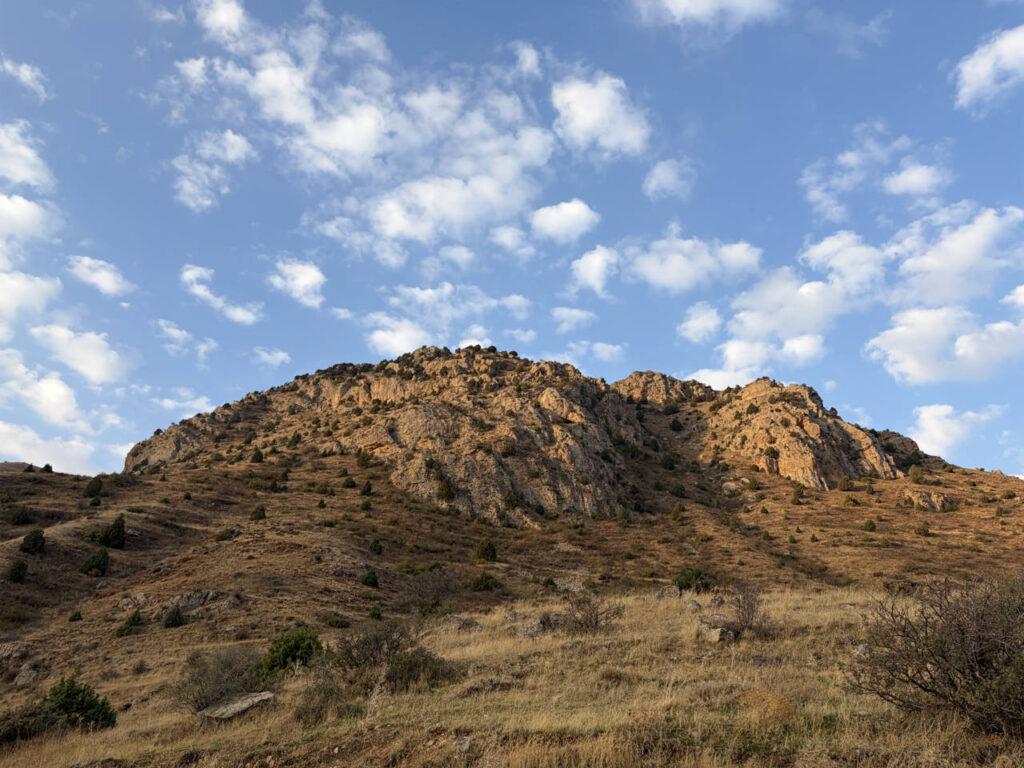
In addition, in the valleys surrounding the reserve, we were able to spot about five white-necked vultures nesting on the cliffs. Vultures do not hunt directly; they are scavengers that feed on weakened or dead wild animals. It is therefore believed that they may have returned due to the increase in wild goats and other animals, which has led to a greater number of carcasses available as food.
It is also worth noting that the Arpa Nature Reserve is a place where visitors can enjoy the blooms of alpine plants in the spring and spot butterflies. Incidentally, the COP17 logo is designed based on a blue butterfly (scientific name: Polyommatus eriwanensis) found in the vicinity of Yerevan, the capital of Armenia.
In this way, it was truly impressive to witness firsthand how the ecosystem in the Arpa Nature Reserve has recovered 13 years after the foundation began its activities. The vultures and wild goats we observed are, so to speak, symbols of this ecological recovery. While revenue from ecotours is important, what is even more vital for Armenia and the region is that the degraded natural environment has been regenerated and is once again functioning as the infrastructure that supports the nation and society.
In fact, cases of ecosystem recovery like this have been reported not only in Armenia but also in various parts of the world.
For example, at Lake Chilka—India’s largest brackish lake—a new outlet was artificially excavated to restore the flow of water between the lake and the sea. As a result, it has been reported that the fish catch increased approximately sevenfold.
Furthermore, a report released by the FAO, UNEP, and the Secretariat of the Convention on Biological Diversity during COP17 also noted that ecosystem restoration is taking place on an unprecedented scale of 250 million hectares. However, while restoration has progressed relatively well in terrestrial ecosystems, some observers point out that efforts in marine and inland water ecosystems are lagging significantly behind.
Furthermore, the WWF, one of the world’s leading conservation organizations, released the “Living Planet Report 2026” prior to the opening of COP17; its subtitle was “Science of Hope.” Citing examples such as the growing populations of tigers, bluefin tuna, southern African elephants, and green sea turtles, the report argues that appropriate conservation efforts can be applied to other species and regions as well. Based on this, the report points out that, just as with solar power in the field of climate change—where adoption was minimal at first but expanded rapidly following a decline in costs—it is necessary to intentionally create a “positive tipping point” in the field of nature conservation as well.
Even though such positive developments are evident, the Global Review—conducted for the first time at COP17—yielded harsh results, expressing “deep concern” that the 2030 targets cannot be achieved unless implementation is rapidly accelerated.
However, I believe that the surest way to accelerate these efforts overall is to build on successful examples while paying close attention to the results on the ground. This is an advantage of nature-based solutions that sets them apart from climate change measures, where it is difficult to tangibly feel the effects of mitigating global warming even when individual regions or companies reduce their carbon dioxide (CO2) emissions. In addition, the “State of Nature” indicators—designed to quantitatively assess the state of nature—were released prior to COP17, making it possible to quantitatively demonstrate ecosystem restoration.
The key to initiatives that originate on the front lines is,The 10 Principles of Landscape ArchitectureAs mentioned earlier, the process will likely begin with “shared concerns.” In the case of the Arpa Reserve, the establishment of a protected area led to the conservation of vegetation, the recovery of the wild goat population, and the successful reintroduction of vultures. As previously mentioned, Minakami Town in Gunma Prefecture and Minamisanriku Town in Miyagi Prefecture are working to restore forest ecosystems, using the conservation of golden eagles and Japanese goshawks as symbols of their efforts. In this way, it is important to build a track record of nature restoration at the landscape level by starting from “shared interests.” (Takanobu Aikawa, Senior Manager, PwC Intelligence, PwC Consulting LLC)
*References
・ Minister of the Environment, Armenia (2026) “Goals for Biodiversity Conservation in the Republic of Armenia”
・ Martirosyan, M. (July 11, 2026, Hetq article) “Armenia to Designate 20% of Its Territory as Specially Protected Nature Areas by 2030”.
interpoint (interword separation) Arpa Environmental Foundation Website
interpoint (interword separation) Caucasus Nature Fund Website
• “Seawater Pumped into ‘Dying Lake’ Boosts Catch Sevenfold: Ongoing Efforts Toward ‘Wise Use’ on the Shores of Lake Chilca in India,” Asahi Shimbun, August 14, 2025 (https://globe.asahi.com/article/15924379)
・ WWF (2026) “Living Planet Report 2026: The Science of Hope”
・ FAO, UNEP, and SCBD (2026), “Restoration Progress Report: Nature’s Comeback—Scaling Ecosystem Restoration for People and the Planet.” Rome. https://doi.org/10.4060/ce2114en
・ Takanobu Aikawa (2026), “A Forest-Based Landscape Approach: Defining “Nature Positive” at the Watershed Level」
・ PwC Japan Group (2026), “Realizing Nature-Positive Management Through a Landscape Approach」
