


Case Studies on Returning Biomass-Derived Materials to the Soil (1): Can Pelletization and Drones Reduce the Labor Involved in Spreading These Materials at Plantation Sites?
Updated by Yasunori Nakagawa on September 30, 2026, at 6:54 p.m. JST
Yasunori NAKAGAWA
Amaki Editorial Production
Forest Science Advisor / Began researching material cycles in forest ecosystems while in graduate school and earned a Ph.D. in Agricultural Sciences. After completing graduate school, he conducted research on material cycles in wetland forests as a Japan Society for the Promotion of Science (JSPS) Research Fellow. He subsequently worked on nature restoration projects and biomass energy initiatives.
In previous articles, we proposed returning biomass-derived materials to forest land to prevent the loss of soil functions in biomass afforestation sites or to restore lost functions. We also introduced compost, biochar, combustion ash, and components of digested liquid as materials that can be utilized. In this installment, we will describe the actual application methods for these materials and examine their applicability to biomass afforestation sites.
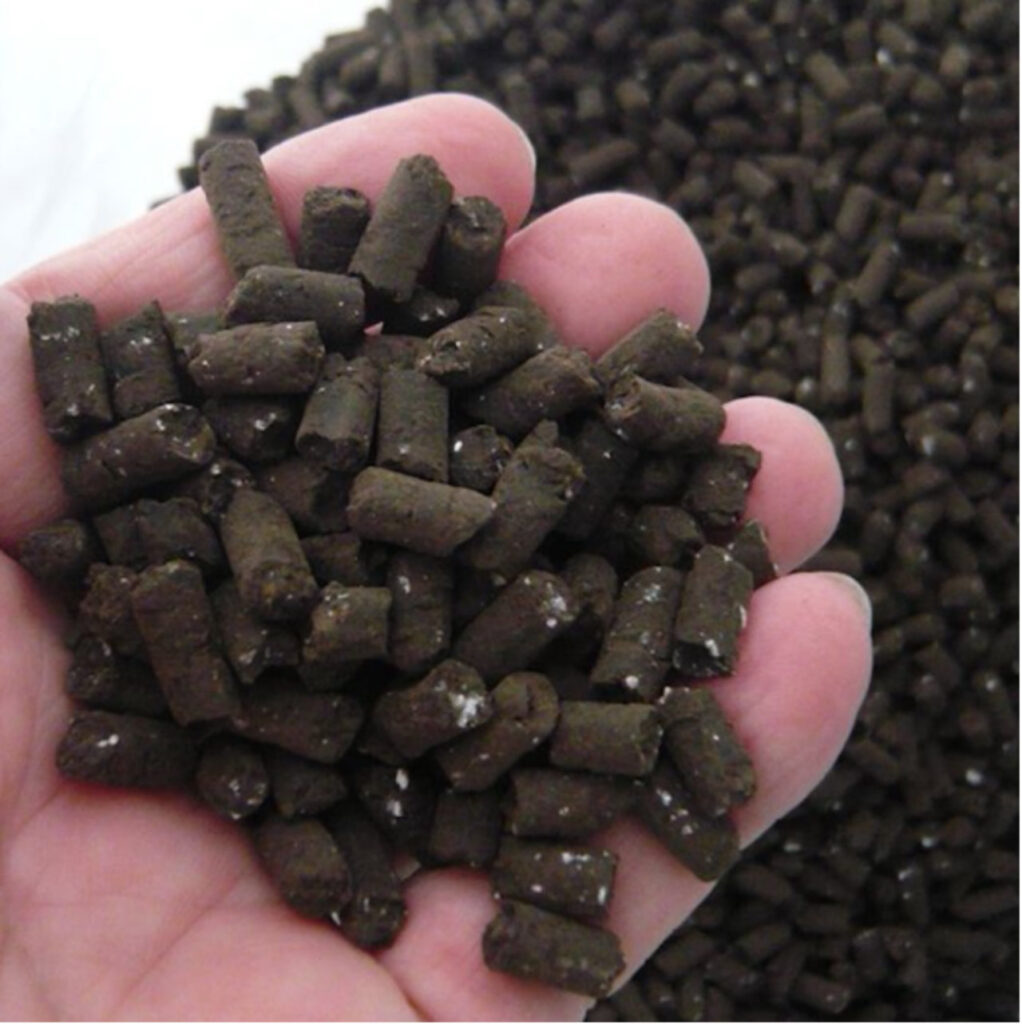
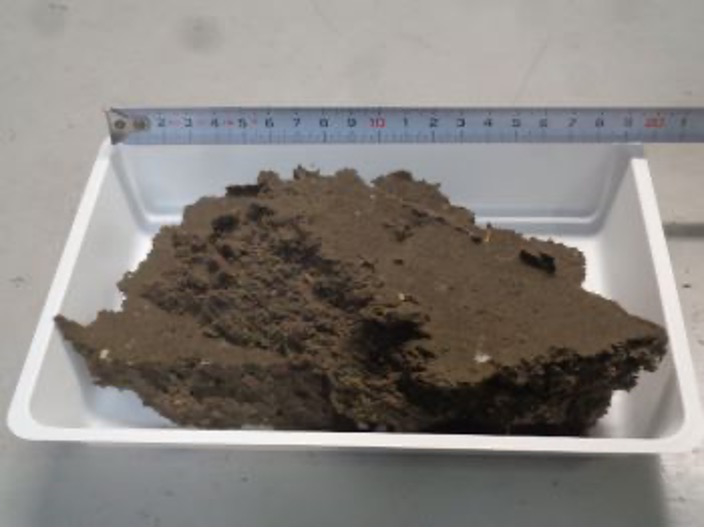
The Ministry of Agriculture, Forestry and Fisheries’ “Compendium of Case Studies on the Use of Fertilizers Derived from Domestic Resources” presents examples of compost derived from livestock manure and urine being processed into pellets to streamline long-distance distribution and application (see Reference 1). Regarding sewage sludge, the same compendium also presents numerous examples of composting it after processing it into dewatered cake with reduced moisture content. Furthermore, there are cases where dewatered sewage sludge cake is pelletized after composting before being applied to fields (*See Reference 1). Images of the pellets (Fig. 1) and the dewatered cake (Fig. 2) are shown below.
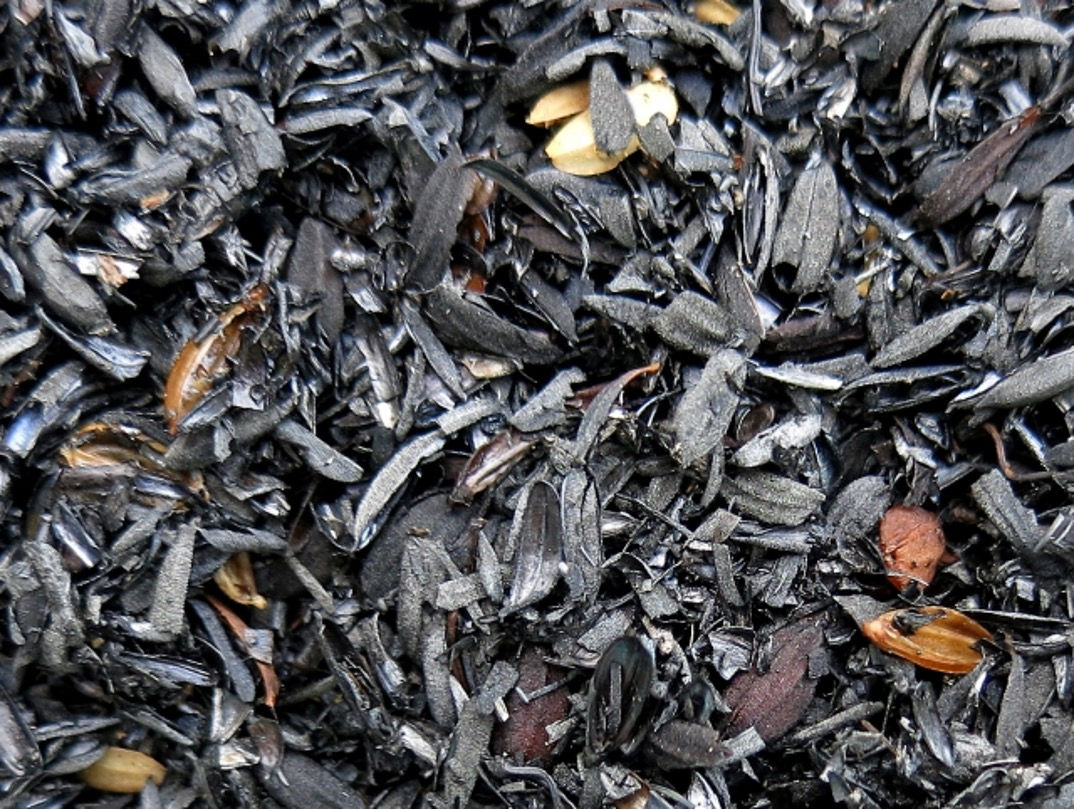
As an example of biochar, Figure 3 shows “Rice Husk Charcoal,” which is made from rice husks (*See Reference 4). The “Guidebook on Agricultural Applications of Biochar and Its Utilization,” edited by the Consortium for Agricultural and Forestry Environmental Research toward Decarbonization (see Reference 5), introduces biochar made from thinned wood chips, chestnut husks, bamboo, pruned pear branches, and rice husks. According to the guidebook, livestock manure and urine, such as chicken manure, as well as sewage sludge, are also sometimes used as raw materials (*See Reference 5).
Figure 4 shows an image of combustion ash (derived from wood and palm kernel shells) placed in a petri dish (see Reference 6). Combustion ash also includes ash generated after using livestock manure and urine as fuel (see Reference 7) and ash remaining after the incineration of sewage sludge (see Reference 8).
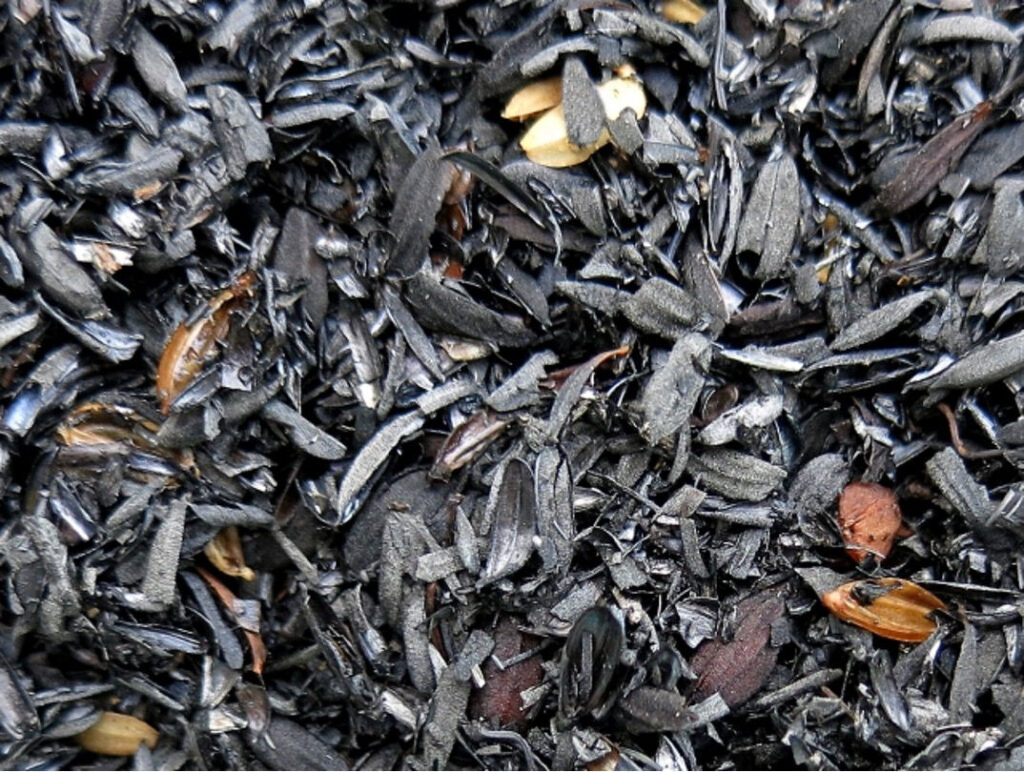
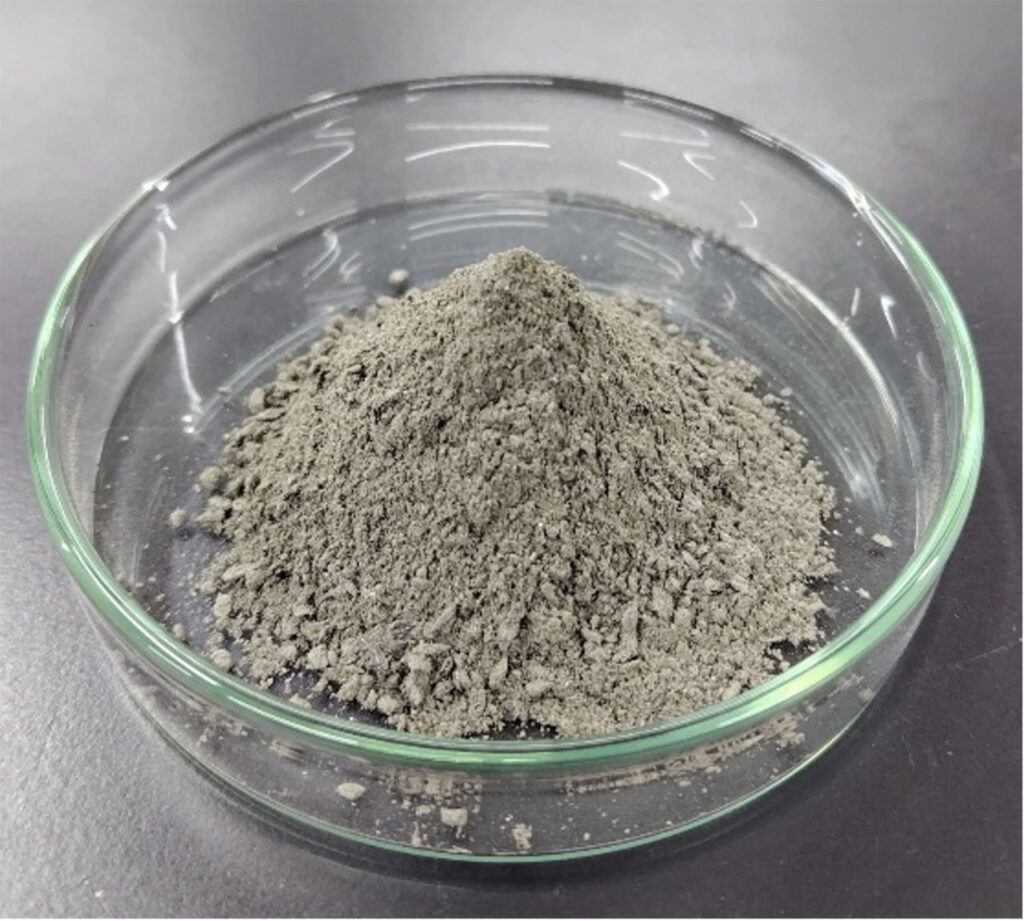
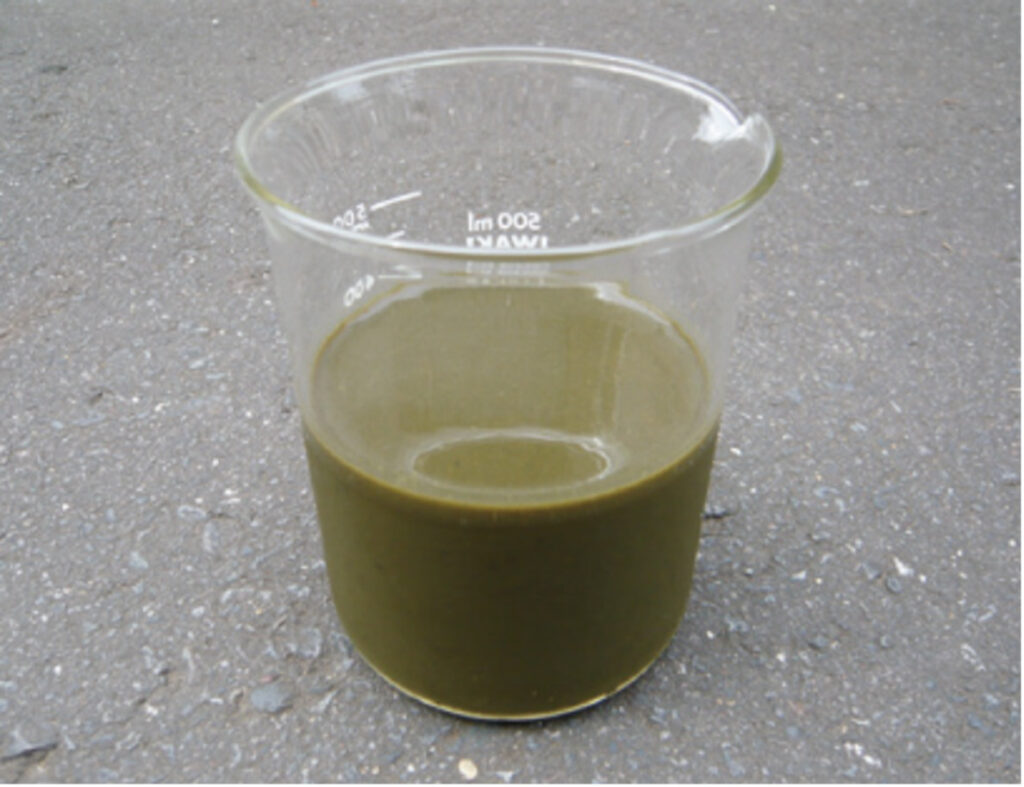
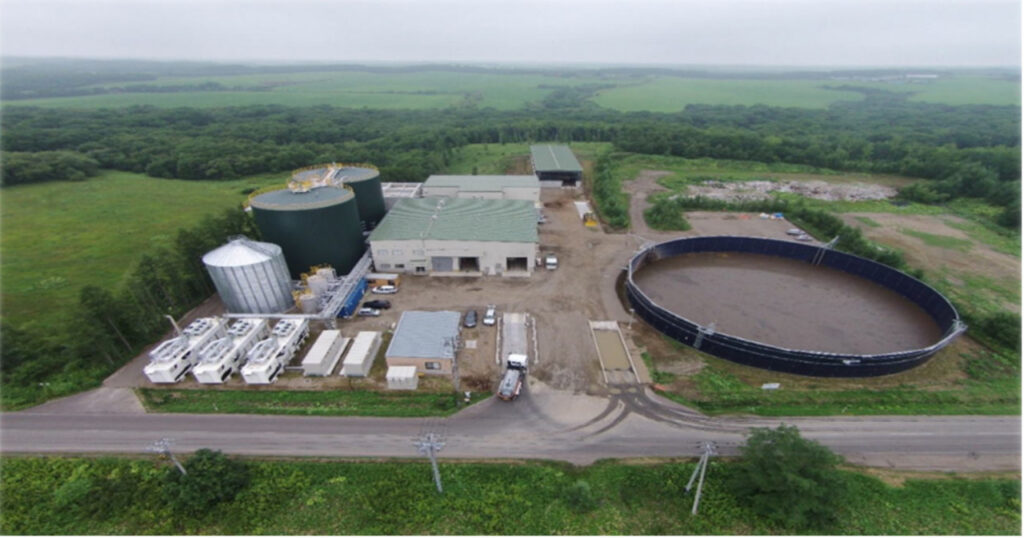
Figure 5 shows the digested liquid in a beaker (see Reference 9). Figure 6 shows an overview of the biogas plant (see Reference 10). This biogas plant is located in Betsukai Town, Notsuke District, Hokkaido. Betsukai Biogas Power Co., Ltd., the project operator, was established in 2013, and the plant began operations in July 2015. The green cylindrical building on the left side of Figure 6 is the methane digester, and the circular, pond-like structure on the right is the digested slurry storage tank. The digested slurry is stored in this manner until it is spread on farmland. This biogas plant processes 280 metric tons per day of livestock manure (equivalent to 4,500 dairy cows) and 5 metric tons per day of industrial food waste, for a total of 285 metric tons per day of feedstock (figures released by the company as of April 2019). This is an extremely large-scale facility; the vastness of the site can be appreciated by referring to the truck connected to the tire tracks in the center-foreground of Figure 6.
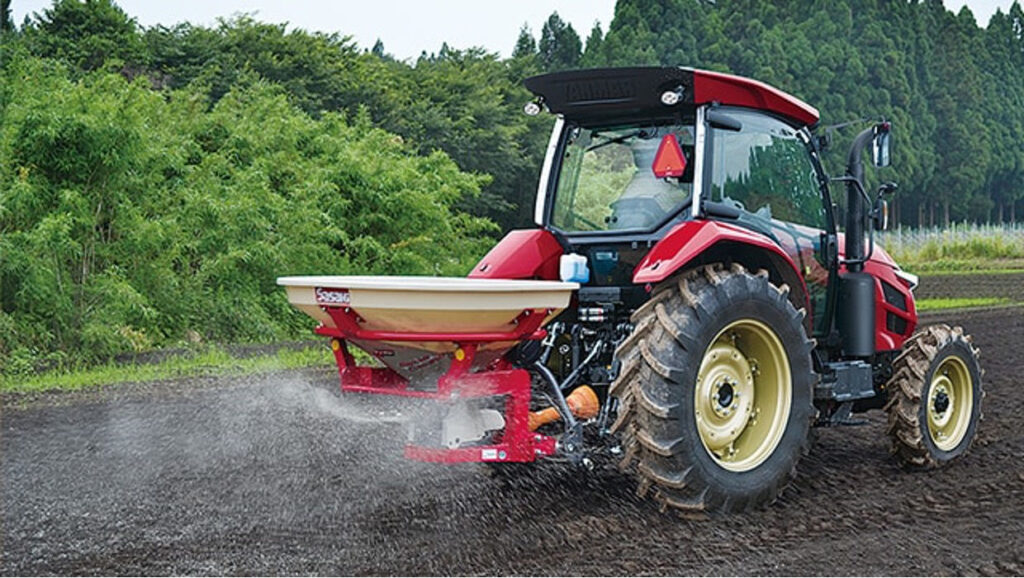
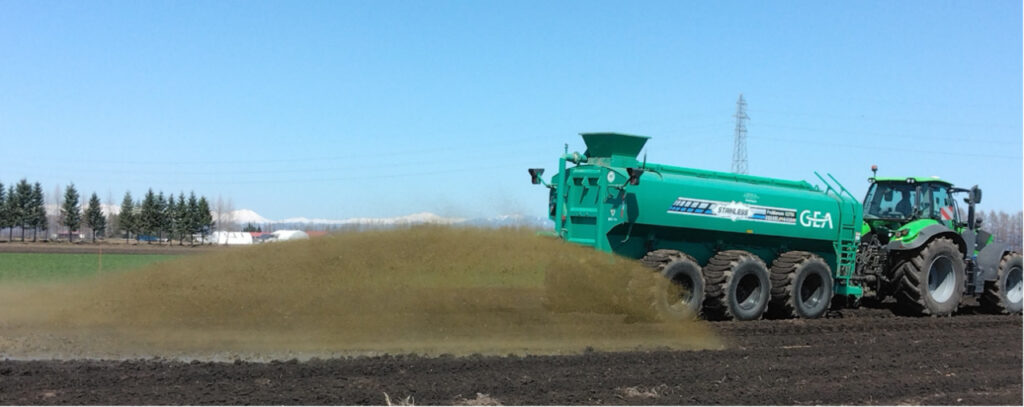
Among biomass-derived materials, solid materials are processed into pellets or granules and spread onto the soil surface using equipment such as that shown in Figure 7 (*See Reference 11). Digestate is spread using equipment such as that shown in Figure 8 (*See Reference 12). This equipment is designed for use on flat ground. However, biomass afforestation sites may include sloped terrain, and in such cases, spreading using the equipment shown in Figures 7 and 8 may be difficult.
The author has previously stated that, to prevent soil erosion, biomass afforestation is best suited for flat land or gently sloping terrain (see *Reference 13*). In sloped areas where machinery has difficulty accessing, the use of drones can also be considered a viable means of application. In the agricultural sector, drones are already being used to apply pesticides, fertilizers, and seeds (see Reference 14). Pest and disease control technologies have also been developed for sloped areas such as orchards (see Reference 15), and there are even cases in Hokkaido’s Todomatsu plantation areas where plant growth promoters were applied using nozzles designed for pesticide spraying (see Reference 16). Such technologies could potentially be applied to the application of biomass-derived materials as well. In fact, the Ministry of Land, Infrastructure, Transport and Tourism’s “Civil Aviation Bureau Standard Manual (Aerial Spraying)” covers the aerial application of pesticides, fertilizers, seeds, and de-icing agents on agricultural land and other areas, and the aerial application of fertilizers is already provided for under the regulations (*See Reference 17).
That said, while the nature of the hazards posed by pesticides and biomass-derived materials differs, there are common elements in the concerns of nearby residents regarding dispersion, odors, and impacts on their living environment. When implementing this technology, it is necessary to confirm whether permits or approvals under the Civil Aviation Act are required, taking into account the flight location, flight methods, aircraft, and the particle size, viscosity, and weight of the materials (see *17, 18, 19*). In addition, in accordance with the requirements for pesticide spraying (*See 18), it is necessary to establish criteria for suspending spraying based on factors such as wind speed; determine spraying locations by considering the relative positions of residences, roads, and water sources, as well as wind direction; provide advance notice to the surrounding community; manage access to the spraying area; and develop operational methods to minimize drift and odors. Following this, a test spray should be conducted; if the operation qualifies as a “specified flight,” a flight plan must be submitted prior to flight, and a flight log must be maintained to record information regarding flights and maintenance without delay. Even if the operation does not qualify as a “specified flight,” it is advisable to keep a record of the operation.
One challenge associated with applying digestate is that its moisture content exceeds 95% (see Note 9). As introduced in the previous article (see Reference 20), the total nitrogen concentration of the digested liquid was 3.40 g/L. If 1.0 kg of total nitrogen were to be applied from this digested liquid, approximately 290 L would be required. Considering the need to transport the solution to mountainous areas, it is likely necessary to concentrate it to reduce its volume. In case studies on the use of bio-liquid fertilizers, concentration to improve the efficiency of transportation and application has been highlighted in several examples (*See Reference 21).
In addition, for liquid fertilizers such as digestive fluids, it may be possible to use tubular materials such as drip irrigation tubes. In fact, there are cases where liquid fertilizers have been applied in asparagus cultivation (see Note 22). Other examples include a case in Tsukigami Town, Fukuoka Prefecture, where liquid fertilizer derived from human waste and septic tank sludge was concentrated after solid matter removal and applied via irrigation tubes in greenhouse strawberry cultivation, and a case in Yaese Town, Okinawa Prefecture, where duct hoses were installed in sugarcane fields to apply digested slurry (※Reference 21). When using irrigation tubes, it is likely that treatments such as solid-liquid separation or filtration will be necessary to prevent clogging. On the other hand, in Yaese Town, digested slurry that had not undergone solid-liquid separation was applied via duct hoses, suggesting that the extent of pretreatment required may vary depending on the material. Regardless of the equipment used, viscosity, odor, and uniformity of application rates can all pose challenges. When installed outdoors, measures may be necessary to prevent damage from small animals or trampling by large animals. Improvements to the distribution system may also be required for use on gently sloping terrain.
With equipment such as that shown in Figures 7 and 8, trees can become an obstacle after planting, making the equipment difficult to use. However, if it becomes possible to apply liquid fertilizer using tubular materials such as irrigation tubes, the likelihood of being able to fertilize regularly even after trees have been planted will increase.
In this article, we have outlined the forms of biomass-derived materials and presented examples of methods for returning them to the soil. In future articles, we will continue to present practical examples of these methods and further examine their applicability to biomass afforestation sites in Japan. (Amaki Editorial Production; Forest Science Advisor: Yasunori Nakagawa)
*Reference Sites*
(1) Production Materials Policy Office, Technology Extension Division, Agricultural Products Bureau, Ministry of Agriculture, Forestry and Fisheries. Case Studies on the Use of Fertilizers Derived from Domestic Resources. (Accessed September 16, 2026)
(2) Tamagoya Shoten Website. Fermented Bokashi Chicken Manure Pellets Product Page. (Accessed September 16, 2026)
(3) Kagawa Prefecture website. Provision of Sewage Sludge (for Research and Testing). (Accessed September 16, 2026)
(4) Photo AC. Rice Husk Charcoal (Stock Photo). (Accessed September 19, 2026)
(5) Edited by the Consortium for Environmental Research in Agriculture and Forestry toward Decarbonization (2025) Case Studies on the Agricultural Use of Biochar and a Guidebook for Its Application. (Accessed September 16, 2026)
(6) Tomakomai Minpo. “Turning Combustion Ash into Fertilizer: Nippon Paper’s Yufutsu Biomass Power Plant Aims to Sell 5,000 Metric Tons Annually.” Article dated February 20, 2024
(7) Nankoku Kosan Co., Ltd. website. Resource Recycling Business. (Accessed September 16, 2026)
(8) Saitama Prefecture website. Conversion of Sewage Sludge Combustion Ash into Fertilizer. (Accessed September 16, 2026)
(9) National Agriculture and Food Research Organization, Institute of Rural Engineering (2012) Use of Methane Fermentation Digestate as Liquid Fertilizer in Field Crops—Fertilizer Effects and Environmental Impacts—. (Accessed September 16, 2026)
(10) Betsukai Biogas Power Generation Co., Ltd. Company Profileinterpoint (interword separation)Facility Overviewinterpoint (interword separation)Business Overview. (Accessed September 16, 2026)
(11) Yanmar Agri Co., Ltd. website. Farming Information: Farming PLUS - Fertilizer Application. (Accessed September 16, 2026)
(12) Agriculture Division, Industrial Promotion Department, Hokkaido Tokachi Regional Development Bureau. Why not try using “methane fermentation digestate” in your field crop cultivation?. (Accessed September 16, 2026)
(13) Yasunori Nakagawa (2026) Maintaining Biomass Afforestation in the Era of Short-Rotation Harvesting: The Potential for Returning Biomass-Derived Materials to Forest Lands. Forest Circular Economy, July 21, 2026. (Accessed September 16, 2026)
(14) Technology Dissemination Division, Agricultural Products Bureau, Ministry of Agriculture, Forestry and Fisheries. Public-Private Council for the Wider Adoption of Agricultural Drones. (Accessed September 16, 2026)
(15) Research Planning Division, Secretariat of the Council for Agricultural, Forestry, and Fisheries Technology. Implementing Drone-Based Pest and Disease Control in Sloped Orchards. (Accessed September 16, 2026)
(16) Hokkaido National Land and Disaster Prevention Technology Co., Ltd. Landscaping Using Drones (Small Unmanned Aircraft) — The Challenge of Smart Forestry. (Accessed September 16, 2026)
(17) Ministry of Land, Infrastructure, Transport and Tourism website. Procedures for Obtaining Flight Permits and Approvals for Unmanned Aircraft. (Accessed September 16, 2026)
(18) Ministry of Agriculture, Forestry and Fisheries website. Information on the Aerial Spraying of Pesticides and Other Substances Using Unmanned Aerial Vehicles. (Accessed September 16, 2026)
(19) Civil Aviation Bureau, Ministry of Land, Infrastructure, Transport and Tourism. Handling of Flights for Which Approval Regarding Flight Methods Is Not Required Pursuant to Article 236-82, Paragraph 1, Item 2 of the Enforcement Regulations of the Civil Aviation Act. (Accessed September 24, 2026)
(20) Yasunori Nakagawa (2026) Exploring the Potential for Returning Biomass-Derived Materials to Forest Lands Based on Nutrient Data from Combustion Ash, Biochar, Compost, and Digestate. Forest Circular Economy, August 21, 2026 article. (Accessed September 16, 2026)
(21) Japan Organic Resources Association (2024) Collection of Best Practices for Using Bio-Liquid Fertilizers. (Accessed September 16, 2026)
(22) Keiko Inoue, Takeshi Koga, and Takaaki Ishimatsu (2018) The Effects of Simultaneous Fertilization via Drip Irrigation on the Chemical Properties of the Soil, Yield, and Quality of Asparagus. Research Reports of the Fukuoka Prefectural Agricultural and Forestry Research Center. 4, 135–140
